
Incoterms define shipping responsibilities, not payment terms: Learn what the 11 Incoterms 2020 rules mean, who bears the cost and risk at each stage, and how to choose the right one for your exports.
There are no new Incoterms for 2025: The current standard remains Incoterms 2020, with updates such as DPU replacing DAT, revised insurance requirements for CIP, and changes to FCA documentation.
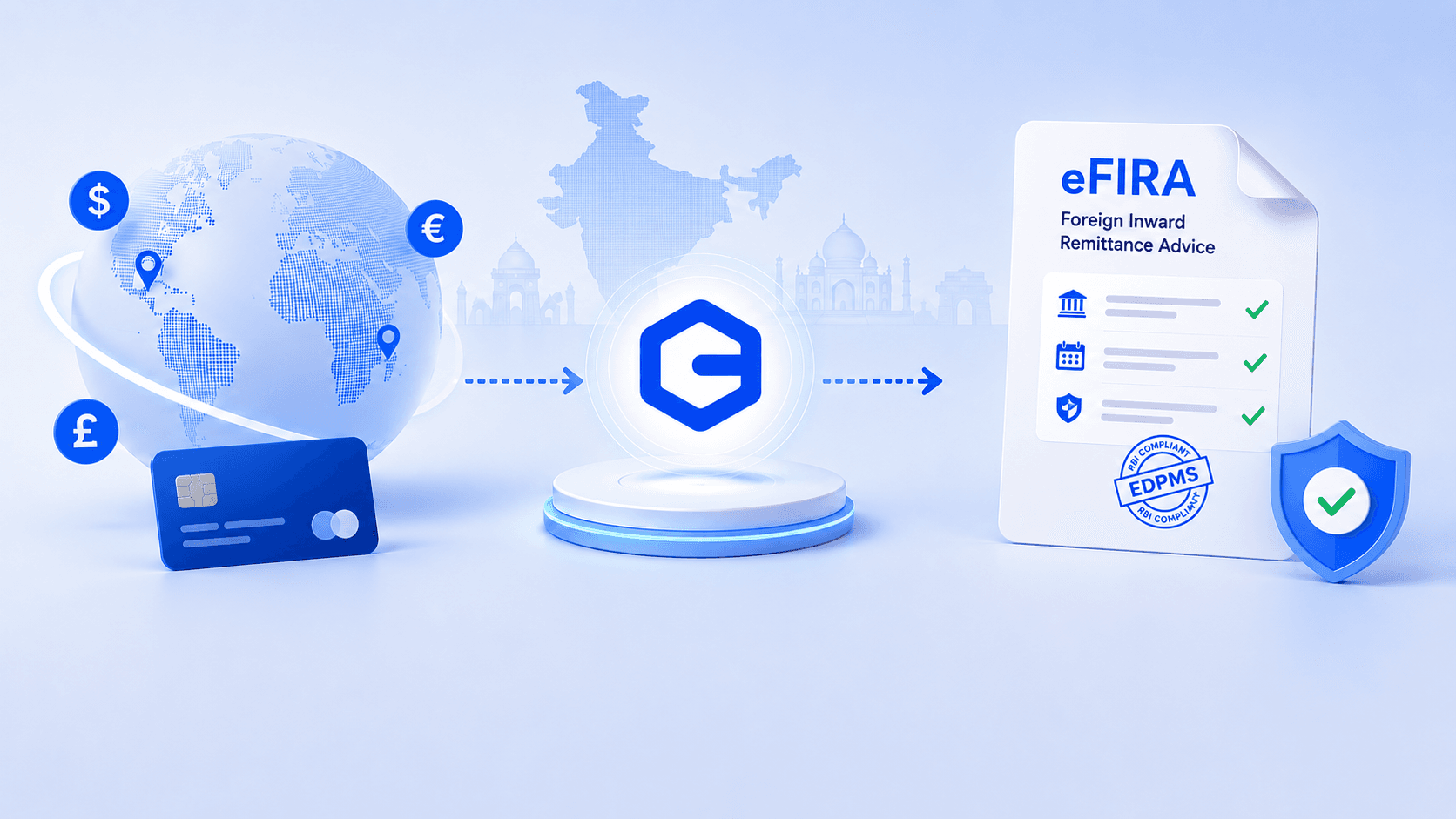
Incoterms protect your goods, but not your cash flow: While they determine delivery obligations, exporters still need a reliable cross-border payment setup to improve payment success rates, simplify settlements, and automate FIRA documentation.
There are no new Incoterms for 2025: The current standard remains Incoterms 2020, with updates such as DPU replacing DAT, revised insurance requirements for CIP, and changes to FCA documentation.
Incoterms protect your goods, but not your cash flow: While they determine delivery obligations, exporters still need a reliable cross-border payment setup to improve payment success rates, simplify settlements, and automate FIRA documentation.
TL;DR
- Incoterms define shipping responsibilities, not payment terms: Learn what the 11 Incoterms 2020 rules mean, who bears the cost and risk at each stage, and how to choose the right one for your exports.
- There are no new Incoterms for 2025: The current standard remains Incoterms 2020, with updates such as DPU replacing DAT, revised insurance requirements for CIP, and changes to FCA documentation.
- Incoterms protect your goods, but not your cash flow: While they determine delivery obligations, exporters still need a reliable cross-border payment setup to improve payment success rates, simplify settlements, and automate FIRA documentation.
What are Incoterms in a gist
Incoterms are the standard three-letter rules that decide who pays for shipping, who carries the risk, and at exactly which point that risk passes from seller to buyer. The International Chamber of Commerce (ICC) has published them since 1936 and updates them roughly once a decade.
That is the whole idea: one agreed word on your invoice, and both sides know who is responsible for the goods at every step from your warehouse to the buyer's door.
Are there new Incoterms in 2025?
No. The current rules are Incoterms 2020, effective 1 January 2020, and they are still in force. The ICC revises Incoterms roughly every ten years, so the next edition is expected around 2030, not before.
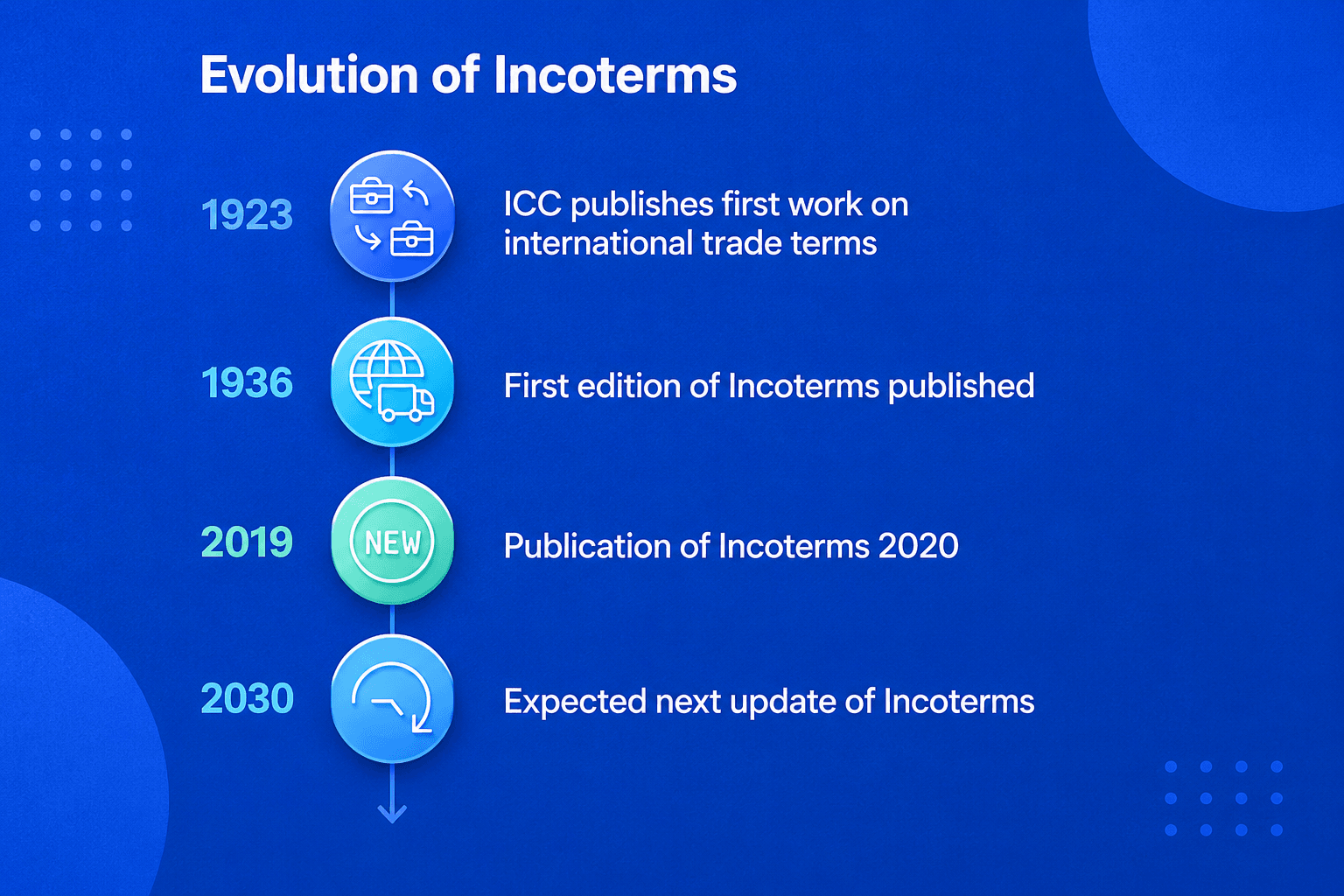
If you have seen headlines about "Incoterms 2024" or "2025 changes," they are describing the 2020 rules under a fresher date. There is no separate 2024 or 2025 edition. When you write a contract today, you reference Incoterms 2020 by name, because a term used without a year is legally ambiguous.
Here is the short version of what actually changed in the 2020 update, so you are not left wondering:
- DAT became DPU. The old "Delivered at Terminal" was renamed "Delivered at Place Unloaded," because delivery no longer had to be at a terminal.
- Insurance levels split. CIP now requires higher-grade insurance cover than CIF.
- FCA got a bill-of-lading option. Sellers using FCA can now arrange for an on-board bill of lading, which matters for letters of credit.
The 7 Incoterms 2020 rules for any mode of transport
Seven of the eleven rules work for any transport mode: sea, air, road, rail, or a mix. Use these unless your goods travel by sea and you specifically need a sea-only term.
| Incoterm | Seller's responsibility | Buyer's responsibility |
|---|---|---|
| EXW (Ex Works) | Makes goods available at their own premises. | Everything else: transport, export, and import duties. |
| FCA (Free Carrier) | Delivers goods to a carrier or agreed point. | Assumes risk and cost once goods are handed over. |
| CPT (Carriage Paid To) | Arranges and pays transport to the destination. | Assumes risk once goods reach the first carrier. |
| CIP (Carriage and Insurance Paid To) | Arranges transport and insurance to the destination. | Assumes risk once goods reach the first carrier. |
| DAP (Delivered at Place) | Delivers to the agreed place, ready to unload. | Handles unloading and import clearance. |
| DPU (Delivered at Place Unloaded) | Delivers and unloads at the agreed place. | Handles import clearance. |
| DDP (Delivered Duty Paid) | Delivers everything, including duties, to the buyer. | Takes over only after full delivery. |
The pattern to notice: EXW puts almost everything on the buyer, DDP puts almost everything on the seller, and the terms in between shift the line step by step.
The 4 Incoterms 2020 rules for sea and inland waterway transport
These four apply only when goods move by vessel and are loaded or unloaded at a port. Do not use them for air or courier shipments, a common and expensive mistake.
| Incoterm | Seller's responsibility | Buyer's responsibility |
|---|---|---|
| FAS (Free Alongside Ship) | Delivers goods alongside the vessel at the port of shipment. | All risk and cost from that point, including loading. |
| FOB (Free On Board) | Delivers goods on board the vessel at the port of shipment. | Responsibility once goods are loaded, including onward transport and insurance. |
| CFR (Cost and Freight) | Pays to transport goods to the destination port. | Assumes risk once goods are loaded onto the vessel. |
| CIF (Cost, Insurance and Freight) | Pays to transport and insure goods to the destination port. | Assumes risk once goods are loaded onto the vessel. |
Which Incoterm should an exporter actually pick?
There is no single right answer, but there is a useful default. For a small or mid-size Indian exporter shipping goods, FOB (for sea) or FCA (for air and courier) is usually the sensible middle ground: you handle everything up to the point the goods leave India, and the buyer owns the risk and cost of the international leg.
The catch worth naming: buyers often push for EXW because it looks cheapest for them, but under EXW you may still get stuck arranging export clearance in practice, and you lose visibility once the goods leave your dock. On the other end, agreeing to DDP means you are on the hook for the buyer's import duties in a country whose rules you may not know. Pick the term that matches how much of the journey you can genuinely control.
Where Incoterms end, and payment begins
Here is the part most Incoterms guides skip. Incoterms settle who owns the goods and the risk. They say nothing about when, and how reliably, the money reaches your account.
Consider a Surat textile exporter shipping FOB Nhava Sheva to a buyer in the US. The Incoterm is clean: risk passes when the container is loaded. But the payment is a separate problem entirely. If the buyer pays by international card and the transaction fails at checkout, or the funds take days to settle and arrive short after conversion, the tidy FOB arrangement has not helped the exporter's cash flow at all.
That gap, between a shipped order and settled money, is the real cost of a weak international payment setup. A strong Incoterm protects you on the goods. A strong payment stack protects you on the cash.
This is where the collection side matters as much as the shipping side:
- Payment Success Rate. International card payments fail more often than domestic ones, on authentication, issuer rules, and buyer context. Lifting the approval rate directly protects the revenue your Incoterm assumes will arrive.
- Multi-currency collection. Getting paid in your buyer's currency and settling into INR in your account, with the export paperwork (FIRA) generated automatically, keeps reconciliation clean.
- One platform. Cards, alternate payment methods, and recurring collections in one place, so the payment side is as standardised as your Incoterm.