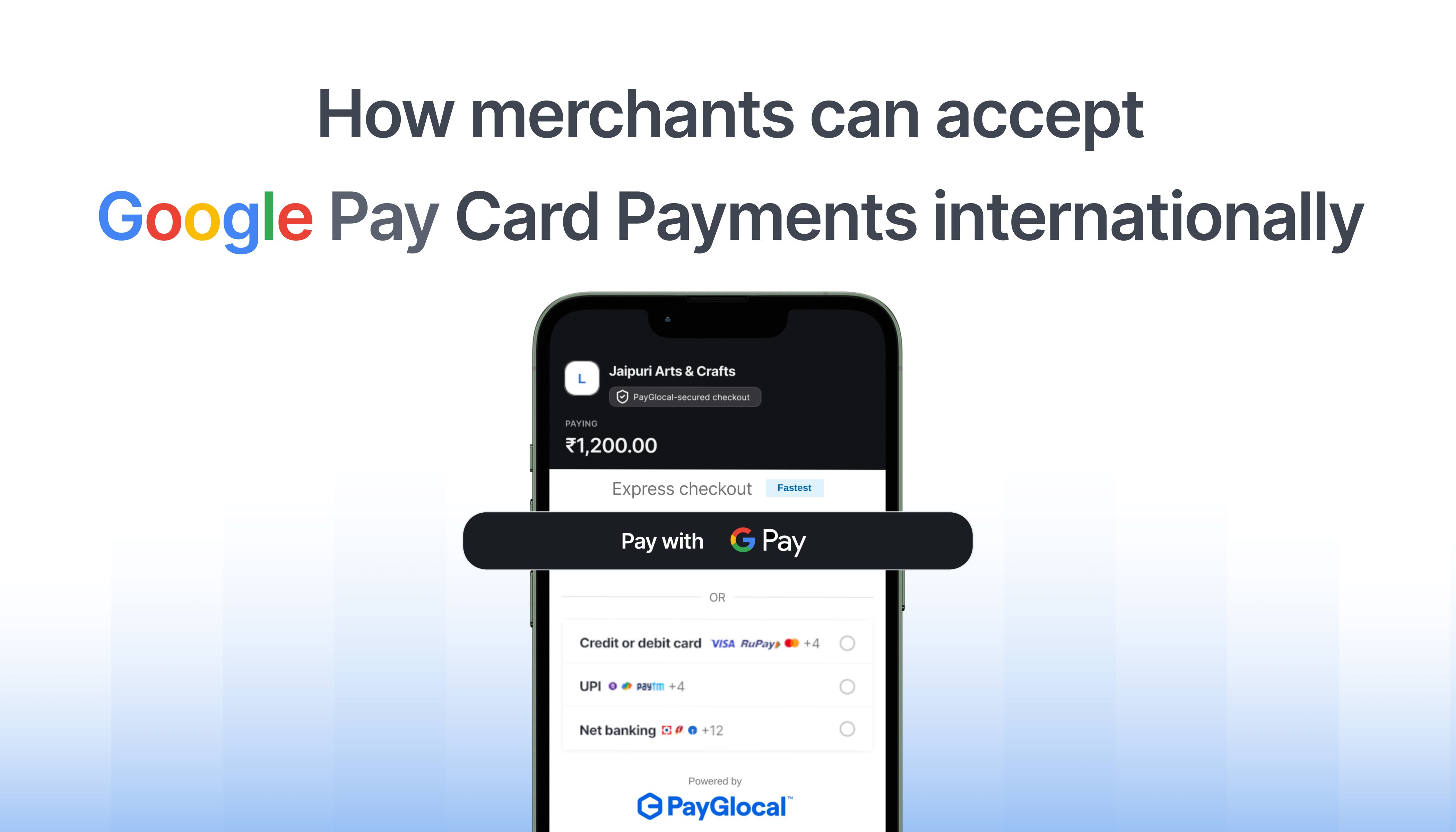

Choosing the right payment gateway for Shopify international can have a bigger impact on your revenue than attracting more visitors to your store. While many merchants focus on driving traffic, international sales are often lost at the final step when customers are redirected to an external payment page or face payment failures. In this guide, you'll learn what to look for in a payment gateway for Shopify international, why embedded checkout improves Payment Success Rate (PSR), and how PayGlocal's Xpress PayFlow helps Indian Shopify merchants deliver a faster, seamless cross-border checkout experience.
TL;DR
- Alternative payment methods are any way to pay other than cash or major international and domestic cards: bank transfers, wallets, buy now pay later, local cards, and cash-based methods.
- They matter because shoppers abandon checkouts that do not offer the option they trust. 56% of shoppers are permanently put off a site if they cannot find their preferred payment method.
- For a cross-border merchant, offering local payment methods widens reach, builds trust, and can lower fraud, which together lift completed sales.
The checkout problem alternative payment methods solve
Online payments have never been easier, and that has quietly raised the bar. A card declines, so the shopper switches to another site. A payment fails, so they leave a poor rating. Most of us have done exactly this.
The number behind that instinct is stark: 56% of shoppers are permanently put off a site if they cannot find the payment method they want. For a business selling across borders, the payment options at checkout are not a back-office detail; they decide whether the sale completes at all. Alternative payment methods are how you meet a customer on their own terms.
What are alternative payment methods?
Alternative payment methods are any payment option other than cash and the major international or domestic card schemes. They are sometimes called local payment methods, because many of them dominate a specific country or region rather than the whole world.
The clearest example is UPI in India, now close to the country's default way to pay. UPI volume grew from just INR 0.02 billion in FY17 to 60 billion in the fiscal year to December 2022, recording 7.82 billion transactions worth 12.82 trillion in December alone. That is what mass local-method adoption looks like.
Others are global. PayPal is recognised almost everywhere. Some are strongly regional: Alipay and WeChat Pay in China, Klarna for buy now pay later across Europe, Giropay in Germany, and GrabPay across Southeast Asian markets like Singapore and Malaysia. The pattern is consistent: in each market, a handful of methods carry a large share of checkouts, and they are often not cards.
The five types of alternative payment methods
Alternative payment methods fall into five broad categories:
- Bank transfers: the customer pays directly from their bank account, often through a real-time rail. UPI is the standout example.
- Wallets: stored-value or linked-account apps like PayPal, Alipay, and WeChat Pay that hold a customer's payment details for fast checkout.
- Buy now pay later (BNPL): deferred or instalment payment at checkout, led by providers such as Klarna.
- Local cards: domestic card schemes that sit outside the major international networks.
- Cash-based methods: vouchers and cash-on-collection options still important in markets with lower card penetration.
Why alternative payment methods boost sales
Offering local options is now closer to a necessity than a nice-to-have. 77% of all online purchases in 2021 were made using a local payment method. The setup time and cost are real, but the upside, more reach, a better experience, and more completed sales, tends to outweigh them. Here is how the gains break down.
Higher reach
Payment methods have evolved around customer convenience, which is why digital wallets have taken off even in markets where cards are already common. Where card adoption is low, the effect is sharper: a shopper who does not hold a major card can still pay with the local method they already use. Offering those methods lets you serve customers a card-only checkout would simply turn away.
Increased customer trust
Shoppers trust what they recognise. For a customer buying from a merchant in another country, seeing a familiar local payment method at checkout removes a layer of hesitation and makes the purchase feel closer to home. That familiarity reads as reliability, and a more comfortable checkout is a checkout that converts.
Lower fraud
Many local payment methods carry little to no chargeback risk, because the payment flow relies on multi-layered customer authentication before the money moves. That extra verification raises trust on both sides and reduces the chance of fraud, which is a meaningful advantage for a cross-border merchant exposed to card disputes.
Setting up alternative payments for a cross-border business
Knowing which methods matter is one thing; wiring them into your checkout without adding friction is another. This is where a cross-border payments partner earns its place: one integration that presents the right local methods to each customer, so you are not stitching together a different provider for every market.
PayGlocal is an RBI-authorised cross-border payments provider (a Payment Aggregator - Cross Border - Inward & Outward, PA-CB-I&O, and an Online Payment Aggregator, PA-O) and part of the ICICI Bank Group. Its Alternate Payment Methods and dynamic checkout help Indian businesses offer global customers the local options they trust, collect at a high Payment Success Rate, and settle in INR, so widening your payment mix does not mean widening your operational load.