Increase PaymentSuccess Rates Upto 96%With Apple Pay
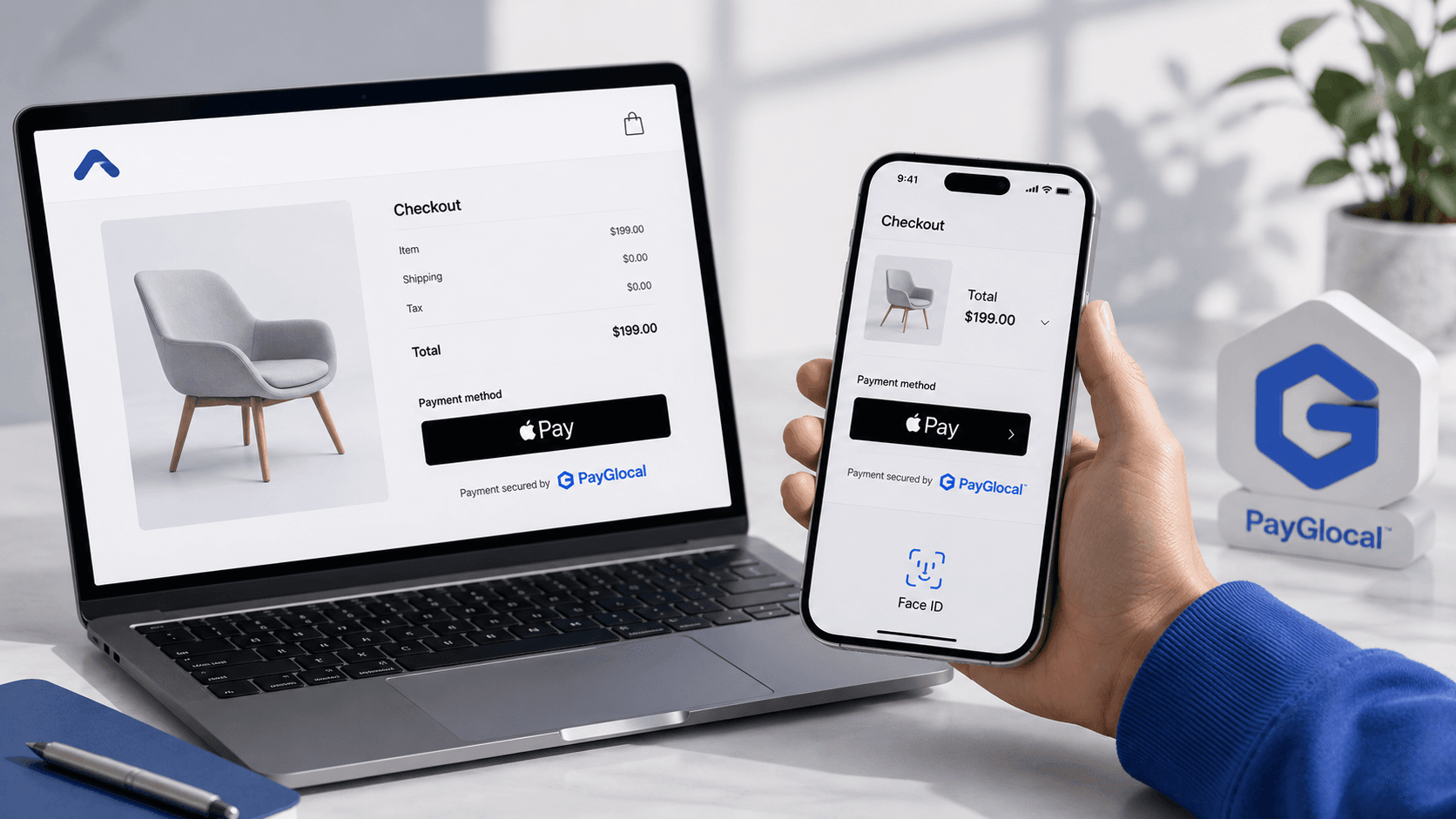
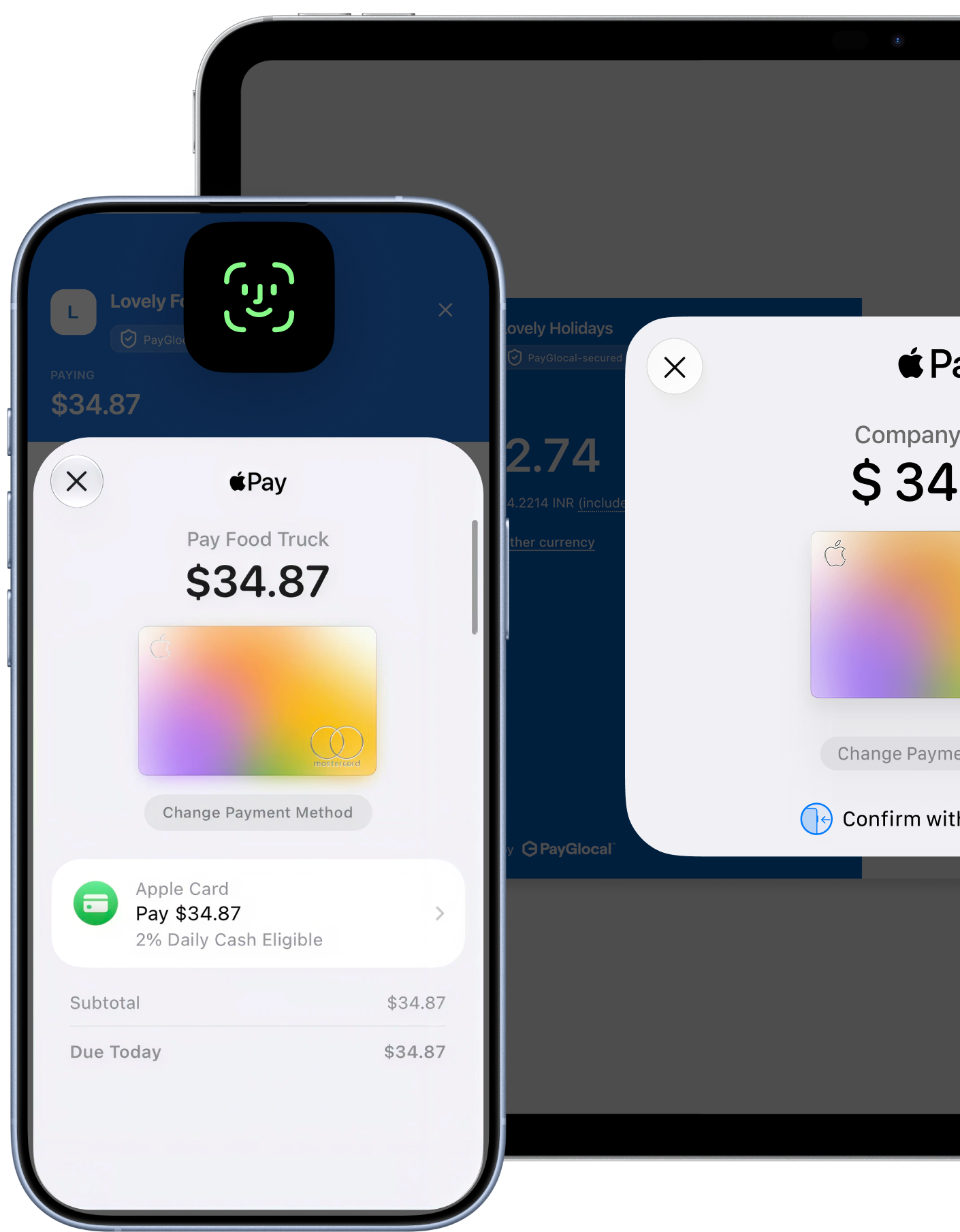
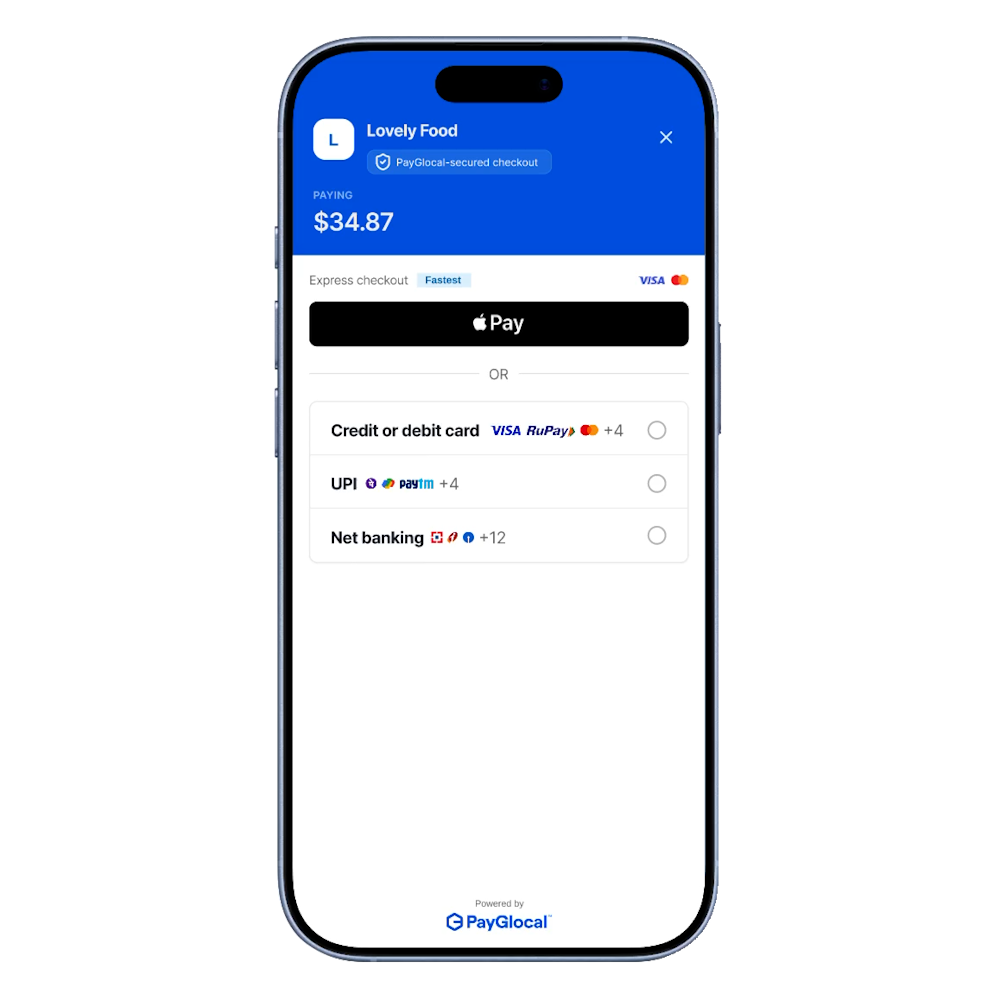
PayGlocal brings native Apple Pay checkout to your website, app, and platform integration. Shoppers pay with Face ID or Touch ID in one tap, no card entry and no OTP delays, so fewer carts get abandoned at the final step.
How Apple Pay Checkout Works On Your Store
PayGlocal brings native Apple Pay checkout to your website, app, and platform integration. Shoppers pay with Face ID or Touch ID in one tap, no card entry and no OTP delays, so fewer carts get abandoned at the final step.
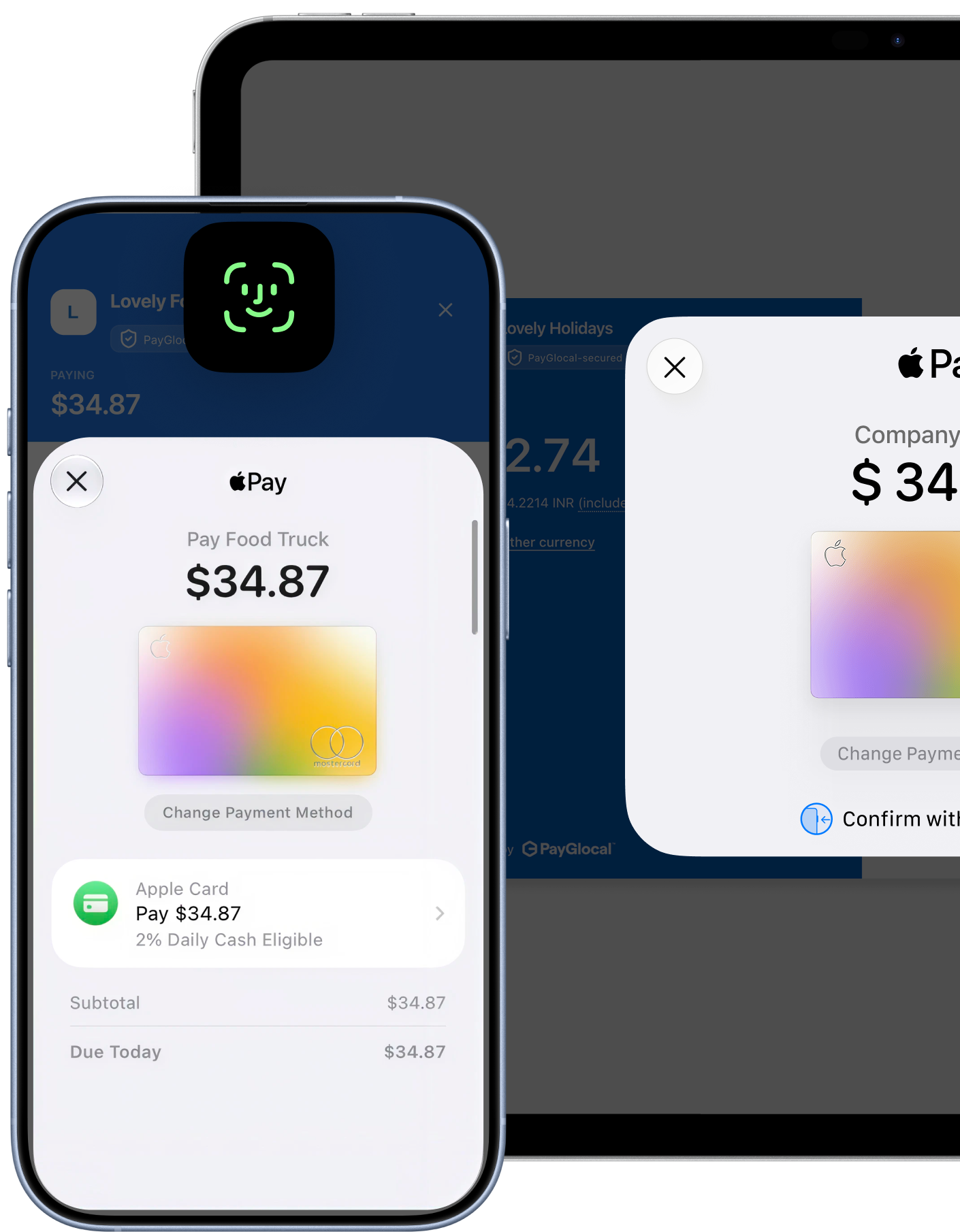
Select. Face ID.

Pay.
No OTP. No card numbers.

Purchase stays private
Apple Pay never shares card numbers with merchants or PayGlocal. Every transaction uses a device-specific number and a one-time security code.

Fewer disputes for merchants
Tokenized payments and biometric authentication cut fraud-related chargebacks, which means fewer manual reviews for your risk team.

Personal data protected
Apple does not track what customers buy, where, or for how much, so there is no purchase history tied to a customer's Apple ID.
Better Checkout. Better Business Outcomes.
Industry data backs up what merchants see in production: Apple Pay checkouts complete up to 5x faster than manual card entry, and businesses that enable Apple Pay report meaningful gains in cart conversion and repeat purchases. For a payment method used by hundreds of millions of shoppers across iPhone, iPad, and Mac, that speed advantage compounds at scale.
Easy Integration
Add Apple Pay to your checkout through the PayGlocal dashboard, no engineering sprint required. Toggle it on, verify your domain with Apple, and Apple Pay appears at checkout automatically for eligible customers.
For custom checkout flows, PayGlocal's REST API and SDKs let you control the Apple Pay button placement, styling, and merchant validation server-side, so it fits your existing payment stack instead of replacing it.
Already built on Shopify, WooCommerce, Magento, or Amazon Pay infrastructure? PayGlocal's Apple Pay integration works across major commerce platforms, so multi-platform merchants get one consistent Apple Pay setup instead of a separate integration per storefront.






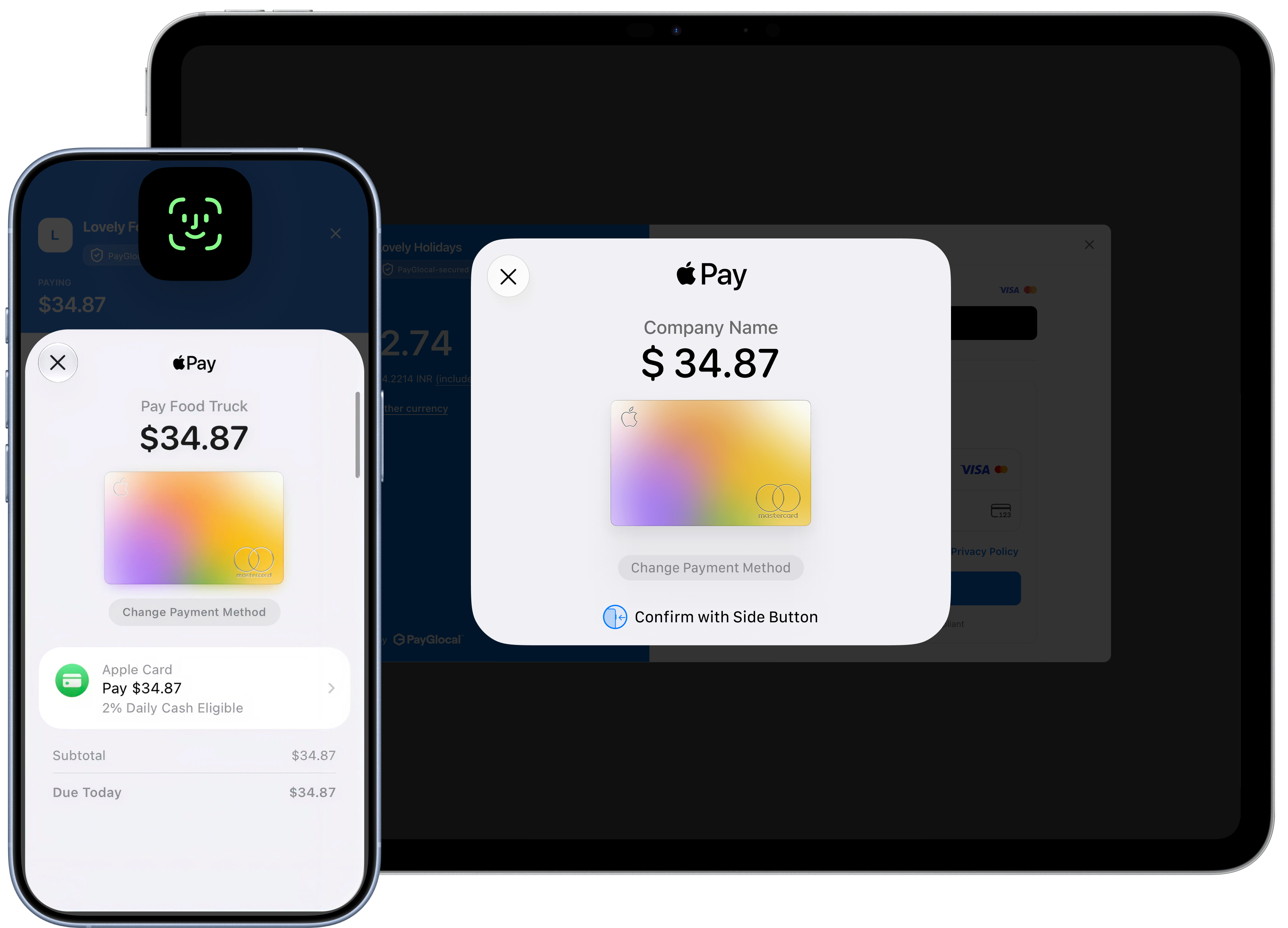
Select. Face ID.
Pay.
No OTP. No card numbers.
Purchase stays private
Apple Pay never shares card numbers with merchants or PayGlocal. Every transaction uses a device-specific number and a one-time security code.
Fewer disputes for merchants
Tokenized payments and biometric authentication cut fraud-related chargebacks, which means fewer manual reviews for your risk team.
Personal data protected
Apple does not track what customers buy, where, or for how much, so there is no purchase history tied to a customer's Apple ID.
Better Checkout. Better Business Outcomes.
Industry data backs up what merchants see in production: Apple Pay checkouts complete up to 5x faster than manual card entry, and businesses that enable Apple Pay report meaningful gains in cart conversion and repeat purchases. For a payment method used by hundreds of millions of shoppers across iPhone, iPad, and Mac, that speed advantage compounds at scale.
Easy Integration
Add Apple Pay to your checkout through the PayGlocal dashboard, no engineering sprint required. Toggle it on, verify your domain with Apple, and Apple Pay appears at checkout automatically for eligible customers.
For custom checkout flows, PayGlocal's REST API and SDKs let you control the Apple Pay button placement, styling, and merchant validation server-side, so it fits your existing payment stack instead of replacing it.
Already built on Shopify, WooCommerce, Magento, or Amazon Pay infrastructure? PayGlocal's Apple Pay integration works across major commerce platforms, so multi-platform merchants get one consistent Apple Pay setup instead of a separate integration per storefront.
Frequently Asked Questions.
Enabling Apple Pay through PayGlocal doesn't add a separate setup fee on top of your existing payment processing agreement. You pay standard transaction processing rates, the same as any other supported payment method.
Most merchants can enable Apple Pay through the PayGlocal dashboard in a few business days, since domain verification with Apple is the main step outside PayGlocal's control. Custom API integrations may take longer depending on your existing checkout setup.
No. PayGlocal's no-code toggle adds Apple Pay to an existing checkout without a rebuild. If you use a custom checkout flow, the API integration adds Apple Pay alongside your current payment methods rather than replacing them.
Yes. Apple Pay uses device-specific tokenization and biometric authentication instead of transmitting real card numbers, which typically results in lower fraud and chargeback rates than standard card-not-present transactions.
PayGlocal's Apple Pay integration works with major commerce platforms including Shopify, WooCommerce, Magento, and Amazon Pay-based storefronts, along with custom checkouts built on PayGlocal's API.
Apple Pay is supported across the countries and currencies PayGlocal already processes for, so cross-border merchants can offer it alongside their existing local and international payment methods.
Merchants generally see faster checkout completion and fewer abandoned carts with Apple Pay enabled, since customers skip manual card entry and OTP steps. Section 4 above covers the specific conversion and checkout-speed figures.