
Shipping products internationally can be overwhelming. Dealing with customs, tracking inventory, and ensuring timely delivery—all while keeping costs low—requires careful planning. And as you grow, all these can feel challenging. That’s where Amazon Global Logistics (AGL) comes in.
Amazon Global Logistics (AGL) technology has made it incredibly easy for vendors to connect with buyers worldwide. The best part? You don't have to stress over every little thing. AGL technology streamlines the entire process so you can focus less on shipping logistics and more on expanding your company.
Read on to see how Amazon Global Logistics Technology simplifies international shipping.
Amazon Global Logistics (AGL) is a full-service solution for moving products across borders.
AGL offers smooth, door-to-door service through Amazon's well-established worldwide network, streamlining every step from pickup to customs clearance and delivery. This network consists of alliances with numerous foreign freight forwarders, carriers, and transportation companies.
They leverage this network to offer competitive rates and options to sellers and customers worldwide when shipping products. Sellers benefit from Amazon’s resources to reach international customers more quickly, efficiently, and cost-effectively, all while tapping into the same supply chain that Amazon relies on for worldwide shipments.
Also Read: Sell and Ship Products Internationally from India using Amazon Global
Now, here are some key benefits you’ll enjoy with Amazon Global Logistics.
With AGL, Amazon handles many of the challenging tasks in international shipping. Here are some benefits you’ll notice right away:
Booking shipments through AGL is easy, as is managing payments with partners like PayGlocal, which supports multi-currency transactions for smooth international payments.
Related Read: Understanding International Transaction Fees: How Businesses Can Thrive Globally?
How does Amazon manage shipments worldwide, with orders coming from various countries? The answer lies in its sophisticated and intricate network of infrastructure and technology. Let’s see how.
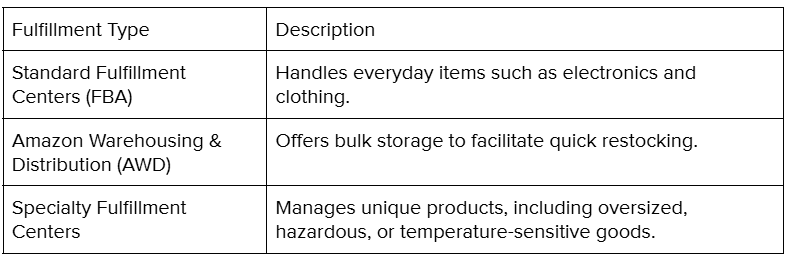
Amazon has fulfillment centers all over the world. These giant warehouses store products from sellers before they ship to customers, using integrated systems and data analytics to manage inventory, order processing, packing and delivery.
Fulfillment centers like Standard Fulfillment Centers (FBA) and Amazon Warehousing & Distribution (AWD) are the main components of Amazon’s logistics. They enable fast and cost effective shipping.
While Amazon Global Logistics has many benefits, there are some shipping challenges to consider. Let’s see how Amazon logistics technology solves that!
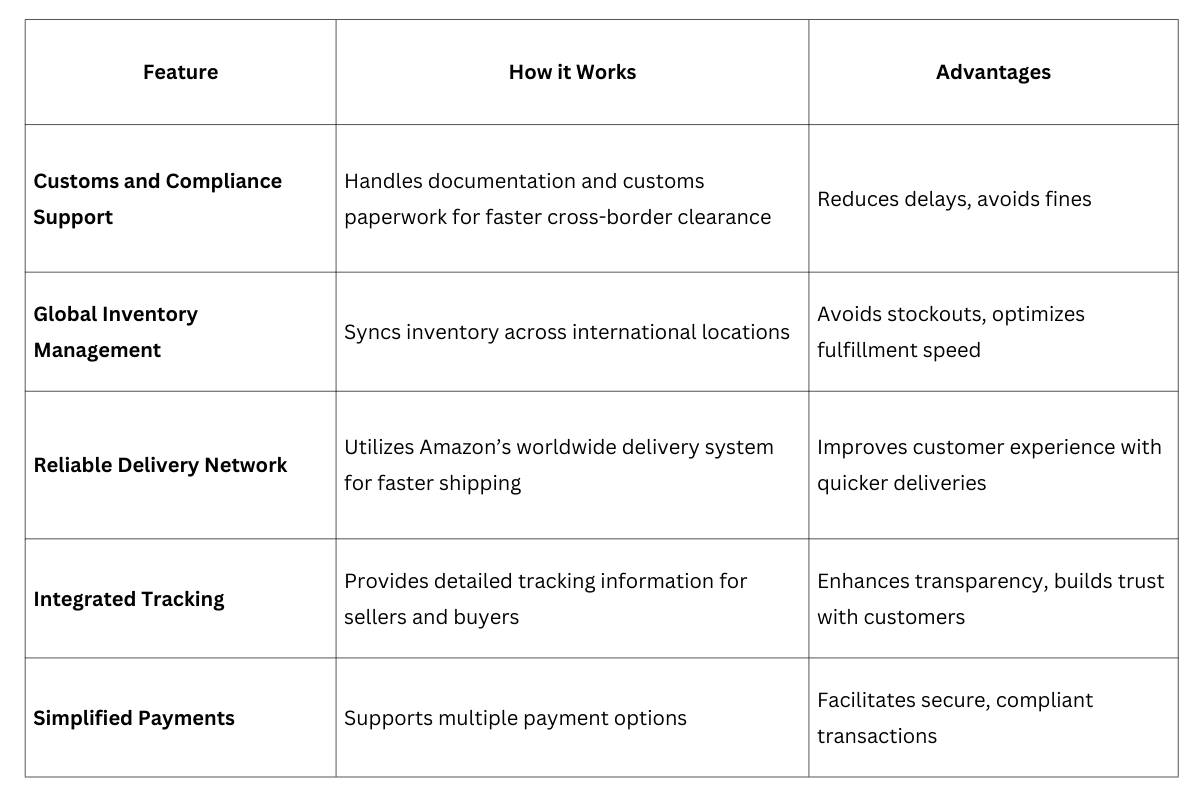
Shipping across borders can be tough, but Amazon Global Logistics can help you through the sticky bits with the right strategies. Here’s how Amazon Global Logistics can help:
International customs and compliance are complicated and can cause costly delays. AGL makes this easy by handling all the paperwork, including Harmonized System Codes, import duties, and export regulations. So you can stay focused on growing your business while your products clear customs smoothly.
International shipping can be expensive and eat into your profits. AGL reduces these costs with Standard and Fast Ocean freight options that balance speed and savings. With international payment solutions like PayGlocal you can further streamline your multi-currency transactions and save on transaction fees to make transactions easier.
Storing products near customers around the world can be tricky and expensive. Amazon’s global fulfillment centers and Amazon Warehousing & Distribution (AWD) act as hubs, giving you affordable storage options near key markets and reducing delivery times and costs.
Selling across borders brings tariffs, different regulations, language barriers and currency conversion. Staying on top of the legal and financial aspects of your target markets is key. AGL handles the logistics for you, while Amazon’s localization tools make it easy to serve international customers without the hassle.
Managing orders across platforms like eBay, Shopify and Etsy alongside Amazon can be complicated. Amazon’s integration options let you manage inventory and orders in one place so your products reach customers wherever they shop. An omnichannel strategy will help you get more visibility and customer engagement. Just make sure you comply with each platform’s rules for smooth operation.
Amazon’s network makes shipping faster and cheaper. When you’re dealing with cross border payments, PayGlocal helps by providing global payment methods, ensuring a smooth checkout experience for both you and your customers.
By understanding how these benefits can turn challenges into opportunities for growth, you can see why it makes sense to tap into this seamless global network. If you’re ready to expand your reach, let’s break down how to start with AGL.
Also Read: Amazon FBA Fees: What You Should Know
To start using Amazon Global Logistics, follow these steps:
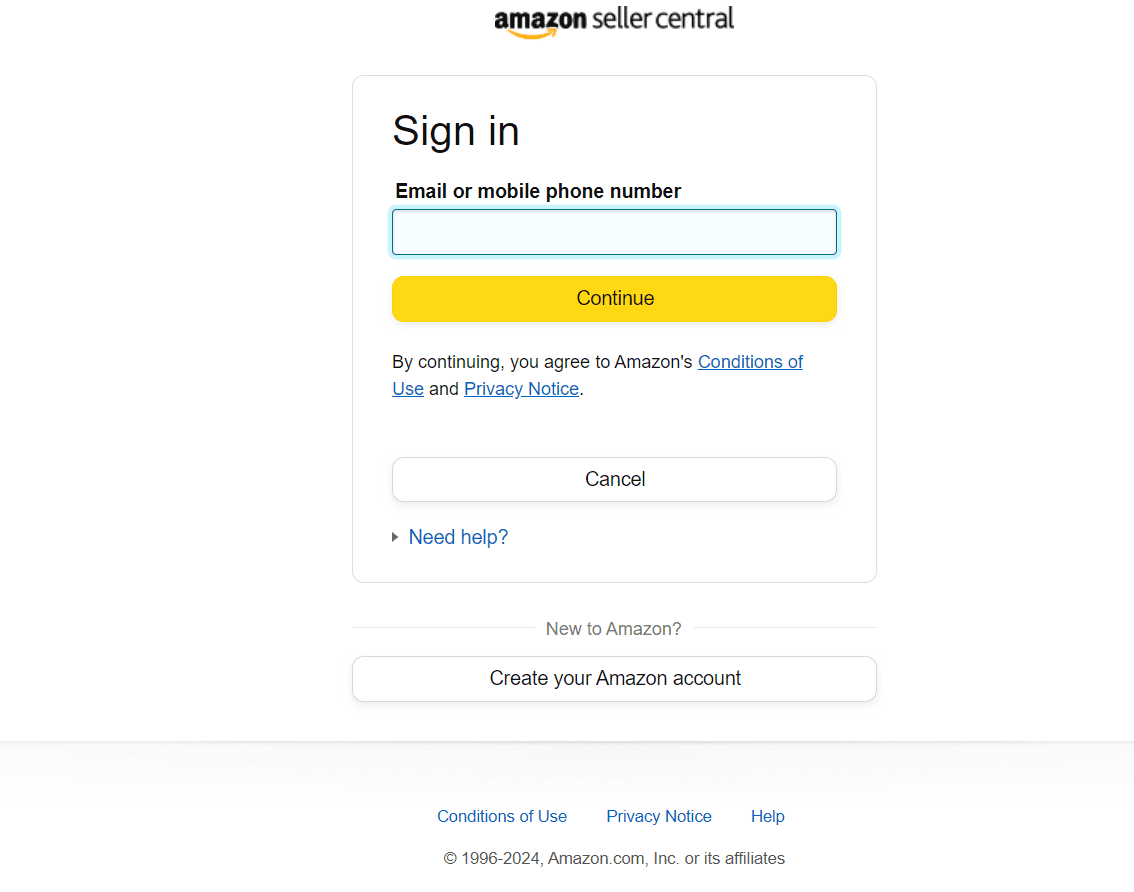
To set up your profile, go to the Amazon Global Logistics portal and register for a new account. You can log in using your existing credentials if you already have an established Amazon seller account.
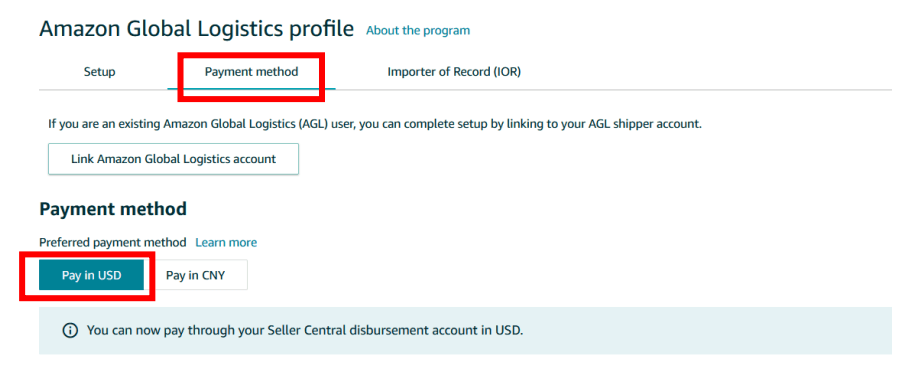
USD is the default payment method for your Seller Central account. To set up payment, select USD as the preferred payment method in the Payment method tab and no further action is required.
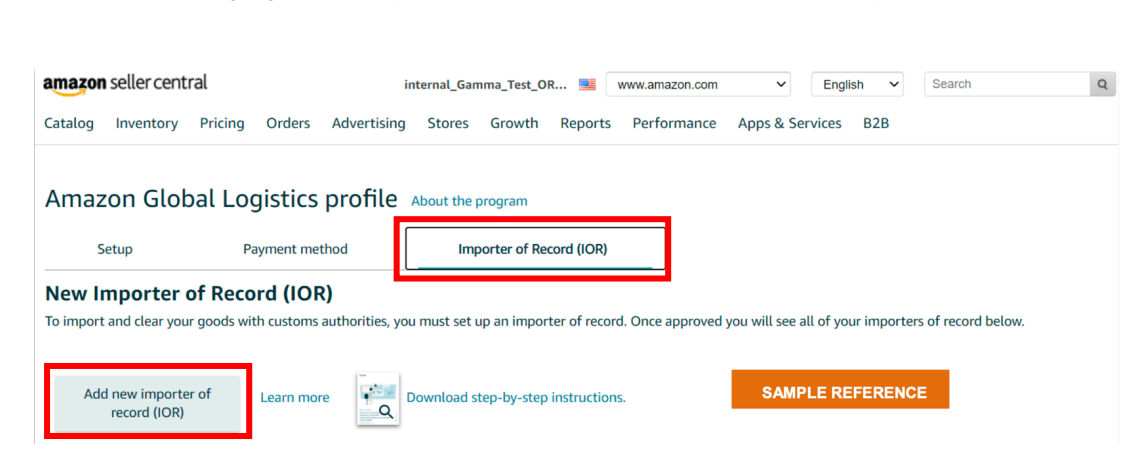
From the setup page, go to the Importer of Record (IOR), select Add new importer of record (IOR), and upload the required documents. This profile will allow Amazon to understand your shipping needs and match you with the right solutions.
Enter package details like dimensions and weight and select a suitable pickup spot.
You can start scheduling shipments in your Seller Central account after creating your profile. Amazon has a guide if you need assistance with the AGL onboarding process: Seller Central's US Guide to Amazon Global Logistics onboarding.
Now as you’re exploring Amazon Global Logistics, you might be also wondering about how it compares to other traditional shipping options.
Choosing the right logistics solution means comparing key features, such as cost, delivery speed, and customer experience. Here’s how Amazon Global Logistics stacks up against other popular options.
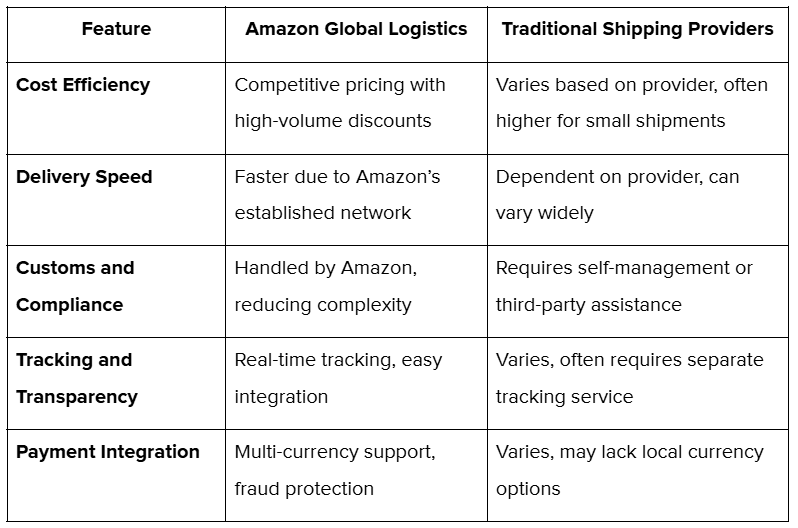
Getting your products across borders involves more than just putting them in a box. With Amazon Global Logistics, your cross-border e-commerce becomes more manageable as they take care of key logistics from pickup to delivery, reducing reliance on multiple third-party services.
Amazon’s vast network of storage and fulfillment centers offers shipping solutions that include full compliance support and cost-effective solutions to get products to customers faster. So you can focus on driving sales and customer experience without the usual cross-border troubles.
Plus, Amazon’s integration with other e-commerce platforms helps you scale easily. And with trusted payment solutions like PayGlocal, you’ll also benefit from easy, reliable, and secure multi-currency transactions. A solid strategy, with technology and expert support, will help you conquer e-commerce effectively.
Adopt AGL’s approach today and see how it can bolster your success in international markets.
Related Read: Choosing the Right Payment Gateway: Your guide to a Smooth International Customer Experience
Amazon Global Logistics (AGL) technology has made it incredibly easy for vendors to connect with buyers worldwide. The best part? You don't have to stress over every little thing. AGL technology streamlines the entire process so you can focus less on shipping logistics and more on expanding your company.
Read on to see how Amazon Global Logistics Technology simplifies international shipping.
What Is Amazon Global Logistics And How Does It Operate?
Amazon Global Logistics (AGL) is a full-service solution for moving products across borders.
AGL offers smooth, door-to-door service through Amazon's well-established worldwide network, streamlining every step from pickup to customs clearance and delivery. This network consists of alliances with numerous foreign freight forwarders, carriers, and transportation companies.
They leverage this network to offer competitive rates and options to sellers and customers worldwide when shipping products. Sellers benefit from Amazon’s resources to reach international customers more quickly, efficiently, and cost-effectively, all while tapping into the same supply chain that Amazon relies on for worldwide shipments.
Also Read: Sell and Ship Products Internationally from India using Amazon Global
Now, here are some key benefits you’ll enjoy with Amazon Global Logistics.
Benefits Of Amazon Global Logistics
With AGL, Amazon handles many of the challenging tasks in international shipping. Here are some benefits you’ll notice right away:
- Simplified Logistics: AGL simplifies international shipping, freeing up sellers to concentrate on product sourcing and marketing.
- Freight Pickup and Delivery: Amazon picks up the freight and delivers it right to your customers’ doors. There are no additional steps—just smooth, end-to-end service.
- Cost-Effective Ocean Freight: If you’re shipping internationally, AGL provides two ocean freight options: Standard for budget-friendly transport and Fast Ocean for quicker delivery, both more affordable than air freight.
- Air freight for Prime services: Amazon utilizes air freight for fast and reliable transportation of goods, especially for high-demand and time-sensitive products
- Customs Clearance Management: Amazon manages all required customs documentation and compliance, ensuring a seamless and delay-free border crossing.
- Direct Shipment to Fulfillment Centers: AGL facilitates the direct shipment of goods to Amazon's Fulfillment Centers and Amazon Warehousing & Distribution (AWD) facilities, which are prepared for immediate customer delivery.
- Streamlined Operations for Cost Savings: Integrating your supply chain with Amazon reduces management expenses, offers competitive freight rates, and minimizes delays, all of which lowers overall costs and guarantees quick and reliable international delivery.
- Easy Booking and Payment: Amazon's network enables economical bulk shipment, which lowers transportation expenses per unit.
Booking shipments through AGL is easy, as is managing payments with partners like PayGlocal, which supports multi-currency transactions for smooth international payments.
Related Read: Understanding International Transaction Fees: How Businesses Can Thrive Globally?
How does Amazon manage shipments worldwide, with orders coming from various countries? The answer lies in its sophisticated and intricate network of infrastructure and technology. Let’s see how.
How Does Amazon Global Logistics Technology Handle International Shipments?
Amazon has fulfillment centers all over the world. These giant warehouses store products from sellers before they ship to customers, using integrated systems and data analytics to manage inventory, order processing, packing and delivery.
Fulfillment centers like Standard Fulfillment Centers (FBA) and Amazon Warehousing & Distribution (AWD) are the main components of Amazon’s logistics. They enable fast and cost effective shipping.
While Amazon Global Logistics has many benefits, there are some shipping challenges to consider. Let’s see how Amazon logistics technology solves that!
How Does Amazon Global Logistics Technology Simplify Shipping Challenges?
Shipping across borders can be tough, but Amazon Global Logistics can help you through the sticky bits with the right strategies. Here’s how Amazon Global Logistics can help:
1. Handles Customs And Compliance
International customs and compliance are complicated and can cause costly delays. AGL makes this easy by handling all the paperwork, including Harmonized System Codes, import duties, and export regulations. So you can stay focused on growing your business while your products clear customs smoothly.
2. Saves On Shipping Costs
International shipping can be expensive and eat into your profits. AGL reduces these costs with Standard and Fast Ocean freight options that balance speed and savings. With international payment solutions like PayGlocal you can further streamline your multi-currency transactions and save on transaction fees to make transactions easier.
3. Offers Global Inventory Storage Options
Storing products near customers around the world can be tricky and expensive. Amazon’s global fulfillment centers and Amazon Warehousing & Distribution (AWD) act as hubs, giving you affordable storage options near key markets and reducing delivery times and costs.
4. Overcomes Cross-border E-commerce Challenges
Selling across borders brings tariffs, different regulations, language barriers and currency conversion. Staying on top of the legal and financial aspects of your target markets is key. AGL handles the logistics for you, while Amazon’s localization tools make it easy to serve international customers without the hassle.
5. Supports Multiple Sales Channels
Managing orders across platforms like eBay, Shopify and Etsy alongside Amazon can be complicated. Amazon’s integration options let you manage inventory and orders in one place so your products reach customers wherever they shop. An omnichannel strategy will help you get more visibility and customer engagement. Just make sure you comply with each platform’s rules for smooth operation.
Amazon’s network makes shipping faster and cheaper. When you’re dealing with cross border payments, PayGlocal helps by providing global payment methods, ensuring a smooth checkout experience for both you and your customers.
By understanding how these benefits can turn challenges into opportunities for growth, you can see why it makes sense to tap into this seamless global network. If you’re ready to expand your reach, let’s break down how to start with AGL.
Also Read: Amazon FBA Fees: What You Should Know
How To Get Started With Amazon Global Logistics?
To start using Amazon Global Logistics, follow these steps:
1. Create A Logistics Profile On Seller Central
To set up your profile, go to the Amazon Global Logistics portal and register for a new account. You can log in using your existing credentials if you already have an established Amazon seller account.
2. Choose Your Payment Method
USD is the default payment method for your Seller Central account. To set up payment, select USD as the preferred payment method in the Payment method tab and no further action is required.
3. Setup Importer Of Record (IOR)
From the setup page, go to the Importer of Record (IOR), select Add new importer of record (IOR), and upload the required documents. This profile will allow Amazon to understand your shipping needs and match you with the right solutions.
4. Schedule Shipment Via Amazon platforms
Enter package details like dimensions and weight and select a suitable pickup spot.
You can start scheduling shipments in your Seller Central account after creating your profile. Amazon has a guide if you need assistance with the AGL onboarding process: Seller Central's US Guide to Amazon Global Logistics onboarding.
Now as you’re exploring Amazon Global Logistics, you might be also wondering about how it compares to other traditional shipping options.
Amazon Global Logistics vs. Other International Shipping Options
Choosing the right logistics solution means comparing key features, such as cost, delivery speed, and customer experience. Here’s how Amazon Global Logistics stacks up against other popular options.
Final Thoughts
Getting your products across borders involves more than just putting them in a box. With Amazon Global Logistics, your cross-border e-commerce becomes more manageable as they take care of key logistics from pickup to delivery, reducing reliance on multiple third-party services.
Amazon’s vast network of storage and fulfillment centers offers shipping solutions that include full compliance support and cost-effective solutions to get products to customers faster. So you can focus on driving sales and customer experience without the usual cross-border troubles.
Plus, Amazon’s integration with other e-commerce platforms helps you scale easily. And with trusted payment solutions like PayGlocal, you’ll also benefit from easy, reliable, and secure multi-currency transactions. A solid strategy, with technology and expert support, will help you conquer e-commerce effectively.
Adopt AGL’s approach today and see how it can bolster your success in international markets.
Related Read: Choosing the Right Payment Gateway: Your guide to a Smooth International Customer Experience