
India’s export trade has shown consistent growth in recent years, with total exports reaching up to $824.9 billion in the financial year 2024-25, a 6.01% increase from its previous year’s total exports of $778.1 billion. For businesses dealing in global markets, this growth also means more exposure to currency movements.
Exchange rates change every second, and these changes can affect your international business. Whether you're an exporter waiting for payments or a service provider billing international clients, exchange rate fluctuations directly affect your cash flow and profits.
Get a complete breakdown of the 17 key factors that influence exchange rates. Find out how currency fluctuates due to these factors and protect your business from sudden financial losses.
Exchange rates show the value of one currency compared to another, basically the price you pay to change your rupees into dollars or euros. For businesses dealing internationally, these rates decide how much you actually get from foreign clients and how much you pay overseas suppliers.
When the Indian rupee gets stronger against the US dollar, your dollar payments are worth fewer rupees. When the rupee gets weaker, those same payments turn into more rupees in your local account.
For example, if you bill a US client $10,000 when USD/INR is at 82, you expect ₹8,20,000. But if the rate drops to 80 by the time payment comes, you only get ₹8,00,000, resulting in a loss of ₹20,000 even though you delivered the same work.
Exchange rate changes create real money problems that go way beyond simple currency conversion. For businesses working across borders, these changes directly affect every part of financial planning and profits.
Here's how exchange rate changes affect your business:
* Investment decisions: Currency ups and downs affect decisions about expanding into new markets or taking on international clients.
Currency values don't move randomly. They respond to specific economic, market, and global forces that create patterns you can spot over time. Here are the 17 key factors that drive exchange rate changes:
Countries with consistently lower inflation rates see their currency values go up over time. When one country keeps stable prices while another has rising costs, the low-inflation currency becomes more attractive to investors and traders.
Inflation creates currency strength by keeping buying power. For instance, if India keeps 4% inflation while European countries have 6% inflation, Indian goods become cheaper for European buyers. This increases demand for rupees as Europeans need more Indian currency to buy goods and services.
The relationship works because inflation weakens a currency's real value. Investors prefer holding currencies that keep their buying power over time, creating steady demand for low-inflation currencies.
Central banks use interest rates to control economic growth and inflation. Higher interest rates attract foreign investment because investors can earn better returns on their deposits and bonds in that currency.
When the Federal Reserve raises rates while other central banks keep rates the same, US dollar investments become more attractive. Foreign investors move money to take advantage of higher returns, increasing demand for dollars and making the USD stronger against other currencies.
This works through carry trades, where investors borrow in low-interest-rate currencies and invest in high-interest-rate currencies. The interest rate difference drives currency flows and exchange rate changes.
A country's current account measures the difference between what it exports and imports, including goods, services, and investment income. Large trade deficits create downward pressure on the currency because the country needs foreign currency to pay for extra imports.
India's current account deficit means there's constant demand for foreign currencies to pay for oil imports and other goods. When imports are more than exports, more rupees get sold to buy foreign currencies, putting downward pressure on the rupee's value.
Countries with current account surpluses see the opposite. Extra foreign currency from net exports creates demand for the local currency, supporting its value over time.
High government debt makes investors worry about a country's ability to pay its bills. When investors worry about default risk, they want higher returns to make up for it, which can weaken the currency as investors look for safer options.
Debt-to-GDP ratios work as key signs of financial health. Countries keeping manageable debt levels and strong financial policies usually keep stronger currencies because investors trust the government's financial stability.
Rating agencies watch debt levels and can cause currency changes through upgrades or downgrades. A country's credit rating directly affects investor opinion and currency demand.
Unstable environments create currency ups and downs as investors prefer predictable conditions for their investments. Elections, policy changes, and regional tensions can cause quick currency changes as markets reassess country risk.
Policy announcements about foreign investment rules or trade agreements immediately affect exchange rates. For instance, new rules favoring foreign investment can strengthen a currency as international money flows increase.
Stable governments with consistent economic policies attract long-term investment, supporting currency strength. Frequent policy reversals or unstable leadership create uncertainty that usually weakens currency values.
This measures the ratio of export prices to import prices. When a country's export prices rise compared to import prices, its terms of trade get better, usually strengthening the currency.
If global demand for Indian IT services increases while technology import costs stay the same, India's better terms of trade support a stronger rupee. The country earns more foreign currency for its exports while paying the same for imports.
Countries that depend on commodities see their currencies move with global commodity prices. When oil prices rise, oil-exporting countries often see currency gains due to better terms of trade.
Currency traders and large financial companies affect exchange rates through their trading activities, especially in the short term. Market feelings about a country's economic future drive buying and selling decisions that can move currencies quickly.
News events and economic forecasts shape trader expectations and positioning. Even rumors or unconfirmed reports can trigger big currency changes as automated trading systems react to headline news.
Global risk appetite affects currency flows. During uncertain times, investors move money to safe currencies regardless of economic basics, creating temporary but big rate changes.
Strong economic growth attracts foreign investment and increases demand for the local currency. Investors want exposure to growing economies where their investments can make better returns.
Key indicators like GDP growth, employment rates, and manufacturing output give signals about economic health and future currency performance. Good economic data usually strengthens currencies as investors become more hopeful about the country's future.
Regular economic releases create scheduled ups and downs in currency markets. Traders position themselves ahead of major announcements, and actual results versus expectations drive immediate rate changes.
Countries with large foreign currency reserves can better defend their currency during market stress. These reserves give central banks tools to step in currency markets when needed.
Higher reserves signal financial strength to international investors, supporting currency stability and confidence. Central banks can sell foreign currencies and buy their own currency to prevent too much weakening during crisis periods.
Reserve adequacy ratios help investors assess a country's ability to handle external shocks. Countries with reserves covering several months of imports usually keep more stable currencies.
The difference between exports and imports directly affects currency demand. Countries with trade surpluses have extra foreign currency flowing in, which supports their local currency value.
When Indian software exports are more than technology imports, the net inflow of foreign currency strengthens demand for rupees. Export-driven economies often see currency gains during periods of strong global demand for their products.
Monthly trade balance reports create regular currency ups and downs. Traders watch these figures closely as they show the basic supply and demand for currencies.
Central bank policies on money supply, interest rates, and currency intervention directly affect exchange rates. Hawkish policies fighting inflation usually strengthen currencies, while dovish policies supporting growth can weaken them.
Communication from central bank officials affects expectations and can move currencies even before actual policy changes happen. Markets study every word from central bankers for hints about future policy direction.
Money printing programs, where central banks create new money to buy bonds, usually weaken currencies by increasing money supply. The increased currency supply reduces its value compared to other currencies.
International crises, natural disasters, or global economic downturns cause investors to run to safe currencies like the US dollar or Swiss franc, affecting exchange rates worldwide.
Flight-to-quality movements can strengthen certain currencies while weakening others, regardless of individual country basics. The US dollar often benefits during global uncertainty as investors look for the world's most liquid currency market.
Regional tensions create immediate currency ups and downs. Events affecting major economic regions or trade routes can trigger quick shifts in currency demand as investors reassess global risks.
Large-scale foreign direct investment (FDI) creates steady demand for local currency. When multinational companies invest in new facilities or buy local businesses, they need local currency to complete deals.
FDI announcements can immediately strengthen currencies as markets expect increased demand. Countries actively attracting foreign investment through favorable policies often see currency benefits.
Investment flows work both ways. When domestic companies invest abroad or when foreign investors reduce their local holdings, it creates selling pressure on the currency.
Strong stock market performance attracts foreign investment, creating demand for local currency. International investors need local currency to buy stocks, bonds, and other financial assets.
Market rallies often happen with currency strength as foreign money flows in to participate in rising markets. Portfolio investment flows can be more volatile than direct investment but still significantly affect exchange rates.
Stock market crashes can trigger quick currency weakness as foreign investors sell local assets and convert proceeds back to their home currencies.
International rating agencies assess countries' creditworthiness, and rating changes directly affect currency values. Upgrades attract investment and strengthen currencies, while downgrades have the opposite effect.
Sovereign risk assessments include factors like debt levels, economic growth, and governance quality. Countries with higher ratings usually keep stronger currencies due to lower perceived risk.
Rating watches and outlook changes create currency ups and downs even before actual rating actions. Markets react to signals about potential future rating changes.
For commodity-dependent economies, global commodity prices significantly affect currency values. Oil, gold, agricultural products, and minerals affect different currencies based on each country's export profile.
Rising commodity prices usually strengthen the currencies of exporting countries while potentially weakening the currencies of importing nations. This relationship is particularly strong for countries where commodities represent a large portion of exports.
Currency connections with specific commodities can be very strong. The Canadian dollar often moves with oil prices, while the Australian dollar is affected by gold and iron ore prices.
Tourism earnings and service exports create demand for local currency as foreign visitors and clients need local currency for transactions. Countries with strong tourism industries often see seasonal currency patterns.
Service sector performance affects currency values, especially for economies dependent on software exports, financial services, or other tradable services. Growth in service exports increases foreign currency inflows.
Seasonal tourism patterns also create predictable currency changes. For instance, countries with winter tourism might see currency strength during peak season as tourist spending increases foreign currency conversion.
Exchange rate changes create both opportunities and risks for businesses working internationally. These effects go beyond simple currency conversion and affect basic business operations.
* Revenue effect: When you bill international clients in foreign currencies, rate changes directly affect your rupee receipts. A 5% currency change can really affect project profits and cash flow planning.
* Cost changes: If you pay overseas suppliers or contractors, currency changes affect your expenses. Budgeting becomes hard when rates change unpredictably between planning and payment dates.
Competitive positioning: Exchange rates affect your pricing competitiveness in international markets. A stronger rupee makes your services more expensive for foreign buyers, potentially affecting demand and market share.
Cash flow timing: The gap between invoicing and payment receipt creates exposure to rate changes. A project that looks profitable at invoice time might create losses if currencies move badly before payment comes.
Exchange rate changes are inevitable, but their effect on your business doesn't have to create constant uncertainty. International businesses need payment solutions that give clarity, control, and protection from currency ups and downs.
PayGlocal helps you manage exchange rate risks while making your global payment collection simpler and more predictable:
With multi-currency support, global payment methods, and complete tracking, PayGlocal gives you a fast and secure setup to collect your payments efficiently.
Exchange rates fluctuate based on several factors, ranging from inflation and interest rates to commodity prices and market sentiment. While you can't control these global forces, knowing about them helps you see currency changes coming and make informed business decisions.
For businesses collecting payments internationally, exchange rate ups and downs create real financial risks that can affect profits and cash flow. The key is having a reliable payment system like PayGlocal that gives transparency and control over currency conversion timing.
Ready to remove exchange rate surprises from your international business? Get started with PayGlocal today.
Exchange rates change every second, and these changes can affect your international business. Whether you're an exporter waiting for payments or a service provider billing international clients, exchange rate fluctuations directly affect your cash flow and profits.
Get a complete breakdown of the 17 key factors that influence exchange rates. Find out how currency fluctuates due to these factors and protect your business from sudden financial losses.
Key Takeaways:
- Economic indicators drive currency strength: Inflation rates and interest rate differences between countries are the main forces that make currencies stronger or weaker over time.
- Market sentiment creates short-term volatility: Trader speculation and global events can cause rapid currency changes that affect international payment timing and values.
- Trade flows determine long-term trends: Countries with more exports than imports usually see their currencies strengthen gradually as foreign money flows in consistently.
- PayGlocal reduces exchange rate risks: Multi-currency accounts and transparent pricing help businesses avoid unexpected losses from currency fluctuations.
What are exchange rates?
Exchange rates show the value of one currency compared to another, basically the price you pay to change your rupees into dollars or euros. For businesses dealing internationally, these rates decide how much you actually get from foreign clients and how much you pay overseas suppliers.
When the Indian rupee gets stronger against the US dollar, your dollar payments are worth fewer rupees. When the rupee gets weaker, those same payments turn into more rupees in your local account.
For example, if you bill a US client $10,000 when USD/INR is at 82, you expect ₹8,20,000. But if the rate drops to 80 by the time payment comes, you only get ₹8,00,000, resulting in a loss of ₹20,000 even though you delivered the same work.
Exchange rate changes create real money problems that go way beyond simple currency conversion. For businesses working across borders, these changes directly affect every part of financial planning and profits.
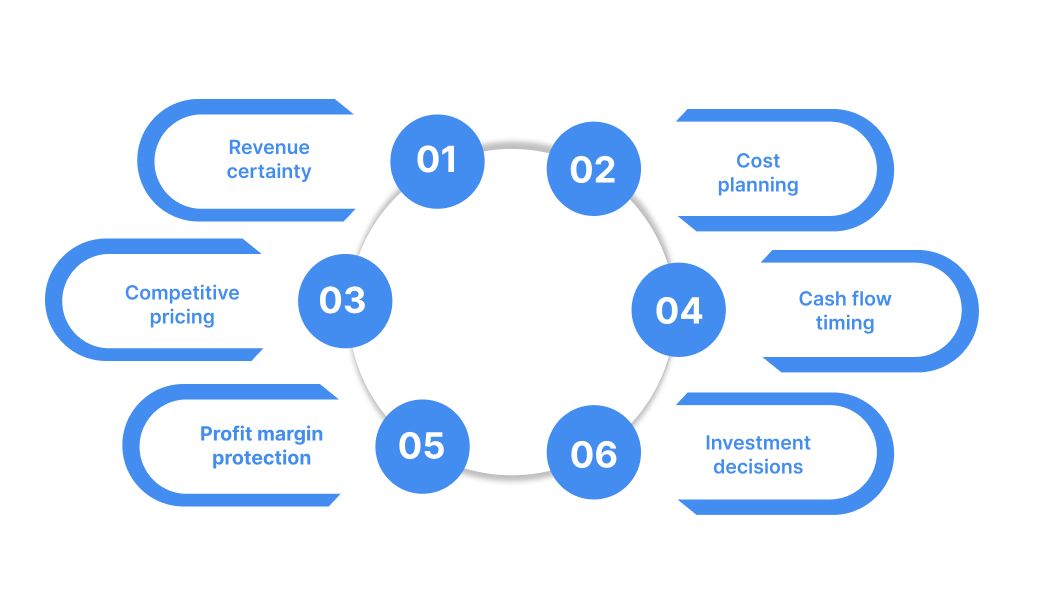
Here's how exchange rate changes affect your business:
- Revenue certainty: Foreign currency payments can vary a lot in rupee value between the invoice date and when you actually get paid.
- Cost planning: When paying overseas suppliers or contractors, rate changes make budgeting hard and can increase project costs suddenly.
- Competitive pricing: A stronger rupee makes your services more expensive for foreign buyers, which might reduce demand.
- Cash flow timing: The gap between invoicing and payment creates periods where bad rate changes can turn good deals into losses.
- Profit margin protection: Even small percentage changes in exchange rates can really affect your overall project profits and business health.
* Investment decisions: Currency ups and downs affect decisions about expanding into new markets or taking on international clients.
What are the main factors influencing exchange rate movements?
Currency values don't move randomly. They respond to specific economic, market, and global forces that create patterns you can spot over time. Here are the 17 key factors that drive exchange rate changes:
1. Inflation rates
Countries with consistently lower inflation rates see their currency values go up over time. When one country keeps stable prices while another has rising costs, the low-inflation currency becomes more attractive to investors and traders.
Inflation creates currency strength by keeping buying power. For instance, if India keeps 4% inflation while European countries have 6% inflation, Indian goods become cheaper for European buyers. This increases demand for rupees as Europeans need more Indian currency to buy goods and services.
The relationship works because inflation weakens a currency's real value. Investors prefer holding currencies that keep their buying power over time, creating steady demand for low-inflation currencies.
2. Interest rate differences
Central banks use interest rates to control economic growth and inflation. Higher interest rates attract foreign investment because investors can earn better returns on their deposits and bonds in that currency.
When the Federal Reserve raises rates while other central banks keep rates the same, US dollar investments become more attractive. Foreign investors move money to take advantage of higher returns, increasing demand for dollars and making the USD stronger against other currencies.
This works through carry trades, where investors borrow in low-interest-rate currencies and invest in high-interest-rate currencies. The interest rate difference drives currency flows and exchange rate changes.
3. Current account deficits
A country's current account measures the difference between what it exports and imports, including goods, services, and investment income. Large trade deficits create downward pressure on the currency because the country needs foreign currency to pay for extra imports.
India's current account deficit means there's constant demand for foreign currencies to pay for oil imports and other goods. When imports are more than exports, more rupees get sold to buy foreign currencies, putting downward pressure on the rupee's value.
Countries with current account surpluses see the opposite. Extra foreign currency from net exports creates demand for the local currency, supporting its value over time.
4. Government and public debt levels
High government debt makes investors worry about a country's ability to pay its bills. When investors worry about default risk, they want higher returns to make up for it, which can weaken the currency as investors look for safer options.
Debt-to-GDP ratios work as key signs of financial health. Countries keeping manageable debt levels and strong financial policies usually keep stronger currencies because investors trust the government's financial stability.
Rating agencies watch debt levels and can cause currency changes through upgrades or downgrades. A country's credit rating directly affects investor opinion and currency demand.
5. Government stability and economic performance
Unstable environments create currency ups and downs as investors prefer predictable conditions for their investments. Elections, policy changes, and regional tensions can cause quick currency changes as markets reassess country risk.
Policy announcements about foreign investment rules or trade agreements immediately affect exchange rates. For instance, new rules favoring foreign investment can strengthen a currency as international money flows increase.
Stable governments with consistent economic policies attract long-term investment, supporting currency strength. Frequent policy reversals or unstable leadership create uncertainty that usually weakens currency values.
6. Terms of trade
This measures the ratio of export prices to import prices. When a country's export prices rise compared to import prices, its terms of trade get better, usually strengthening the currency.
If global demand for Indian IT services increases while technology import costs stay the same, India's better terms of trade support a stronger rupee. The country earns more foreign currency for its exports while paying the same for imports.
Countries that depend on commodities see their currencies move with global commodity prices. When oil prices rise, oil-exporting countries often see currency gains due to better terms of trade.
7. Market guessing and sentiment
Currency traders and large financial companies affect exchange rates through their trading activities, especially in the short term. Market feelings about a country's economic future drive buying and selling decisions that can move currencies quickly.
News events and economic forecasts shape trader expectations and positioning. Even rumors or unconfirmed reports can trigger big currency changes as automated trading systems react to headline news.
Global risk appetite affects currency flows. During uncertain times, investors move money to safe currencies regardless of economic basics, creating temporary but big rate changes.
8. Economic indicators and GDP growth
Strong economic growth attracts foreign investment and increases demand for the local currency. Investors want exposure to growing economies where their investments can make better returns.
Key indicators like GDP growth, employment rates, and manufacturing output give signals about economic health and future currency performance. Good economic data usually strengthens currencies as investors become more hopeful about the country's future.
Regular economic releases create scheduled ups and downs in currency markets. Traders position themselves ahead of major announcements, and actual results versus expectations drive immediate rate changes.
9. Foreign exchange reserves
Countries with large foreign currency reserves can better defend their currency during market stress. These reserves give central banks tools to step in currency markets when needed.
Higher reserves signal financial strength to international investors, supporting currency stability and confidence. Central banks can sell foreign currencies and buy their own currency to prevent too much weakening during crisis periods.
Reserve adequacy ratios help investors assess a country's ability to handle external shocks. Countries with reserves covering several months of imports usually keep more stable currencies.
10. Balance of trade
The difference between exports and imports directly affects currency demand. Countries with trade surpluses have extra foreign currency flowing in, which supports their local currency value.
When Indian software exports are more than technology imports, the net inflow of foreign currency strengthens demand for rupees. Export-driven economies often see currency gains during periods of strong global demand for their products.
Monthly trade balance reports create regular currency ups and downs. Traders watch these figures closely as they show the basic supply and demand for currencies.
11. Monetary policy decisions
Central bank policies on money supply, interest rates, and currency intervention directly affect exchange rates. Hawkish policies fighting inflation usually strengthen currencies, while dovish policies supporting growth can weaken them.
Communication from central bank officials affects expectations and can move currencies even before actual policy changes happen. Markets study every word from central bankers for hints about future policy direction.
Money printing programs, where central banks create new money to buy bonds, usually weaken currencies by increasing money supply. The increased currency supply reduces its value compared to other currencies.
12. Global economic events and crises
International crises, natural disasters, or global economic downturns cause investors to run to safe currencies like the US dollar or Swiss franc, affecting exchange rates worldwide.
Flight-to-quality movements can strengthen certain currencies while weakening others, regardless of individual country basics. The US dollar often benefits during global uncertainty as investors look for the world's most liquid currency market.
Regional tensions create immediate currency ups and downs. Events affecting major economic regions or trade routes can trigger quick shifts in currency demand as investors reassess global risks.
13. Foreign direct investment flows
Large-scale foreign direct investment (FDI) creates steady demand for local currency. When multinational companies invest in new facilities or buy local businesses, they need local currency to complete deals.
FDI announcements can immediately strengthen currencies as markets expect increased demand. Countries actively attracting foreign investment through favorable policies often see currency benefits.
Investment flows work both ways. When domestic companies invest abroad or when foreign investors reduce their local holdings, it creates selling pressure on the currency.
14. Stock market performance
Strong stock market performance attracts foreign investment, creating demand for local currency. International investors need local currency to buy stocks, bonds, and other financial assets.
Market rallies often happen with currency strength as foreign money flows in to participate in rising markets. Portfolio investment flows can be more volatile than direct investment but still significantly affect exchange rates.
Stock market crashes can trigger quick currency weakness as foreign investors sell local assets and convert proceeds back to their home currencies.
15. Credit ratings and sovereign risk
International rating agencies assess countries' creditworthiness, and rating changes directly affect currency values. Upgrades attract investment and strengthen currencies, while downgrades have the opposite effect.
Sovereign risk assessments include factors like debt levels, economic growth, and governance quality. Countries with higher ratings usually keep stronger currencies due to lower perceived risk.
Rating watches and outlook changes create currency ups and downs even before actual rating actions. Markets react to signals about potential future rating changes.
16. Commodity prices
For commodity-dependent economies, global commodity prices significantly affect currency values. Oil, gold, agricultural products, and minerals affect different currencies based on each country's export profile.
Rising commodity prices usually strengthen the currencies of exporting countries while potentially weakening the currencies of importing nations. This relationship is particularly strong for countries where commodities represent a large portion of exports.
Currency connections with specific commodities can be very strong. The Canadian dollar often moves with oil prices, while the Australian dollar is affected by gold and iron ore prices.
17. Tourism and service exports
Tourism earnings and service exports create demand for local currency as foreign visitors and clients need local currency for transactions. Countries with strong tourism industries often see seasonal currency patterns.
Service sector performance affects currency values, especially for economies dependent on software exports, financial services, or other tradable services. Growth in service exports increases foreign currency inflows.
Seasonal tourism patterns also create predictable currency changes. For instance, countries with winter tourism might see currency strength during peak season as tourist spending increases foreign currency conversion.
How do exchange rate changes affect your business?
Exchange rate changes create both opportunities and risks for businesses working internationally. These effects go beyond simple currency conversion and affect basic business operations.
* Revenue effect: When you bill international clients in foreign currencies, rate changes directly affect your rupee receipts. A 5% currency change can really affect project profits and cash flow planning.
* Cost changes: If you pay overseas suppliers or contractors, currency changes affect your expenses. Budgeting becomes hard when rates change unpredictably between planning and payment dates.
Competitive positioning: Exchange rates affect your pricing competitiveness in international markets. A stronger rupee makes your services more expensive for foreign buyers, potentially affecting demand and market share.
Cash flow timing: The gap between invoicing and payment receipt creates exposure to rate changes. A project that looks profitable at invoice time might create losses if currencies move badly before payment comes.
Get international payments without delays using PayGlocal
Exchange rate changes are inevitable, but their effect on your business doesn't have to create constant uncertainty. International businesses need payment solutions that give clarity, control, and protection from currency ups and downs.
PayGlocal helps you manage exchange rate risks while making your global payment collection simpler and more predictable:
- Multi-currency accounts in USD, GBP, EUR, CAD: Collect payments in your clients' preferred currencies and convert on your schedule, reducing exposure to bad rate changes.
- Real-time payment tracking: Watch fund status from collection to settlement with instant notifications at every step of the payment process.
- Instant compliance documentation: Get FIRC certificates directly after settlement, keeping regulatory compliance without delays or extra paperwork.
- Zero setup fees with a pay-per-transaction model: Start collecting internationally with no upfront costs or monthly commitments.
- Global reach across 180+ countries: Accept payments from clients worldwide while settling in Indian rupees.
With multi-currency support, global payment methods, and complete tracking, PayGlocal gives you a fast and secure setup to collect your payments efficiently.
Final thoughts
Exchange rates fluctuate based on several factors, ranging from inflation and interest rates to commodity prices and market sentiment. While you can't control these global forces, knowing about them helps you see currency changes coming and make informed business decisions.
For businesses collecting payments internationally, exchange rate ups and downs create real financial risks that can affect profits and cash flow. The key is having a reliable payment system like PayGlocal that gives transparency and control over currency conversion timing.
Ready to remove exchange rate surprises from your international business? Get started with PayGlocal today.