
Every business registered under GST in India has a 15-digit GSTIN. The first two digits of it represent the GST state code. It helps you determine whether a sale is intra-state or inter-state, and decide which taxes apply.
According to recent data, the number of taxpayers in India has grown from 60 lakhs to around 1.2 crore, indicating more businesses are now dealing with GST compliance than ever before
In this guide, we cover everything you need to know about GST state codes. You'll find the full list of GST state codes, along with a complete guide to identify them. So, let’s get started.
A GST state code is a 2-digit number assigned to each state and union territory in India. This code appears as the first two digits of your 15-digit GSTIN (Goods and Services Tax Identification Number).
For example, if your GSTIN starts with 07, your business is registered in Delhi. If it starts with 27, you're registered in Maharashtra. These codes help the GST system identify which state has jurisdiction over your business for tax purposes.
The GST state code is not random. It's assigned based on your principal place of business during registration. Once assigned, it stays with your GSTIN and appears on every invoice, return, and compliance document you file.
For instance, a business registered in Karnataka will have a GSTIN starting with 29. If you're buying from or selling to this business, you can immediately identify its tax jurisdiction just by looking at the first two digits.
Here's the full list of GST state codes for all states and union territories in India.
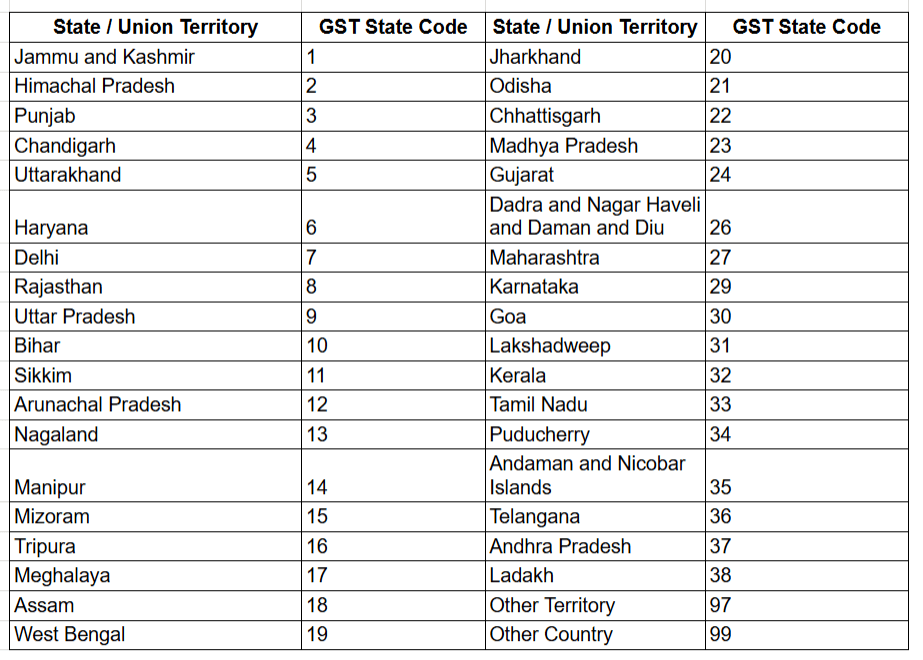
Source: GST Portal
You can use this list to quickly identify which state a GSTIN belongs to or verify vendor registrations. Keep it handy for invoice checks and GST return filing.
Your GSTIN is a 15-digit number that contains important information about your business. The GST state code forms the first two digits.
Here's how the GSTIN structure works:
For example, if your GSTIN is 29ABCDE1234F1Z5, the first two digits (29) tell you the business is registered in Karnataka. The next 10 digits are the PAN. The 13th digit (1) means this is the first registration in that state.
The state code is critical because it determines your tax obligations. If your state code matches your customer's state code, the transaction is intra-state, and you charge CGST (Central Goods and Services Tax) and SGST (State Goods and Services Tax). If the codes differ, it's inter-state, and you charge IGST (Integrated Goods and Services Tax).
For instance, if you're in Delhi (state code 07) and selling to a customer in Haryana (state code 06), you'll charge IGST because the state codes don't match.
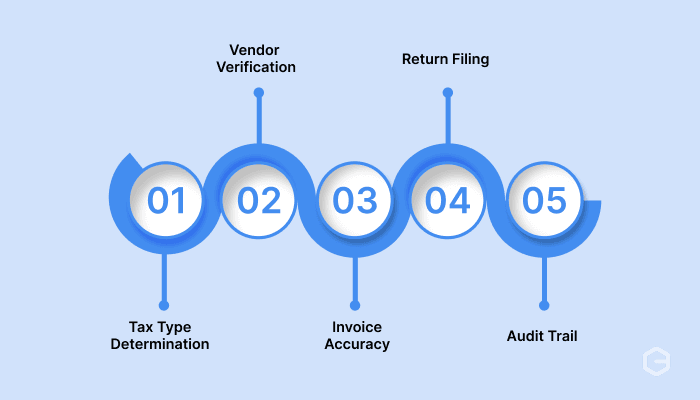
GST state codes might seem like just two digits, but they have a big impact on your business operations. Here's why they matter.
For example, if you're a business in Tamil Nadu (state code 33) buying from a supplier in Karnataka (state code 29), you know immediately it's an inter-state transaction. You'll claim input tax credit (ITC) on IGST, not CGST and SGST.
Identifying the state from a GSTIN is simple once you know what to look for. Just check the first two digits.
Here's a quick process:
Identifying GST state code becomes useful when you're verifying invoices or checking whether a transaction is intra-state or inter-state. For example, your business is in Maharashtra (state code 27). A supplier sends you an invoice with a GSTIN starting with 27. You know it's intra-state, so you should see CGST and SGST on the invoice, not IGST.
If the supplier's GSTIN starts with 09 (Uttar Pradesh), it's inter-state, and you should see IGST instead. Catching these errors early helps you avoid issues during return filing and ITC claims.
Using the wrong GST state code can lead to serious compliance issues. Since the code determines tax type and jurisdiction, errors can cause problems with returns, ITC claims, and even audits.
Here's what can go wrong:
For instance, if you're in Karnataka (29) but accidentally use a vendor GSTIN with an incorrect state code, your ITC claim for that transaction might get flagged during reconciliation.
The best way to avoid this is to always verify GSTINs before processing invoices. Use the GST portal's GSTIN verification tool to confirm state codes and business details.
GST state codes keep your domestic operations compliant. But if you're also dealing with international clients, compliance gets more complex. You need to track foreign exchange, generate the right documents, and ensure every payment is accounted for.
That's where PayGlocal helps. Whether you're an exporter managing invoices in multiple currencies or a service provider collecting from global clients, PayGlocal makes international payments simple while keeping your compliance clean.
Here's what you get:
PayGlocal gives you the infrastructure you need to accept payments globally, track transparently, and settle locally.
GST state codes help you identify tax jurisdictions, determine the right tax type, and maintain compliance across all your transactions. Whether you're verifying a vendor, filing returns, or creating invoices, knowing how to use these codes correctly keeps your business running smoothly.
For businesses managing both domestic GST compliance and international payments, having the right tools matters. Clean compliance and efficient payment collection help you scale without the hassle.
Ready to handle global payments effectively and scale your business? PayGlocal gives you the tools to collect globally, settle locally, and stay compliant every step of the way.
Get started with PayGlocal today and take the complexity out of international payments.
According to recent data, the number of taxpayers in India has grown from 60 lakhs to around 1.2 crore, indicating more businesses are now dealing with GST compliance than ever before
In this guide, we cover everything you need to know about GST state codes. You'll find the full list of GST state codes, along with a complete guide to identify them. So, let’s get started.
Key takeaways
- GST state codes are 2-digit numbers: Each state and union territory in India has a unique code that appears as the first two digits of every GSTIN.
- They help identify tax jurisdiction: The state code tells you where a business is registered, which determines whether you charge CGST and SGST or IGST.
- The 06 GST state code represents Haryana: Businesses registered in Haryana will have GSTINs starting with 06.
- They're critical for compliance: Using the correct state code ensures accurate tax filing, invoice generation, and avoiding penalties.
- Global payment solution: If you're handling international payments alongside domestic operations, PayGlocal helps you collect globally and settle locally with full compliance support.
What is a GST state code?
A GST state code is a 2-digit number assigned to each state and union territory in India. This code appears as the first two digits of your 15-digit GSTIN (Goods and Services Tax Identification Number).
For example, if your GSTIN starts with 07, your business is registered in Delhi. If it starts with 27, you're registered in Maharashtra. These codes help the GST system identify which state has jurisdiction over your business for tax purposes.
The GST state code is not random. It's assigned based on your principal place of business during registration. Once assigned, it stays with your GSTIN and appears on every invoice, return, and compliance document you file.
For instance, a business registered in Karnataka will have a GSTIN starting with 29. If you're buying from or selling to this business, you can immediately identify its tax jurisdiction just by looking at the first two digits.
What is the complete GST state code list for India?
Here's the full list of GST state codes for all states and union territories in India.
Source: GST Portal
You can use this list to quickly identify which state a GSTIN belongs to or verify vendor registrations. Keep it handy for invoice checks and GST return filing.
How does the GST state code work in your GSTIN?
Your GSTIN is a 15-digit number that contains important information about your business. The GST state code forms the first two digits.
Here's how the GSTIN structure works:
- First 2 digits: GST state code (e.g., 29 for Karnataka).
- Next 10 digits: Your business's PAN (Permanent Account Number).
- 13th digit: Number of registrations you have in that state (starts at 1).
- 14th digit: Default is Z.
- 15th digit: A checksum digit for validation.
For example, if your GSTIN is 29ABCDE1234F1Z5, the first two digits (29) tell you the business is registered in Karnataka. The next 10 digits are the PAN. The 13th digit (1) means this is the first registration in that state.
The state code is critical because it determines your tax obligations. If your state code matches your customer's state code, the transaction is intra-state, and you charge CGST (Central Goods and Services Tax) and SGST (State Goods and Services Tax). If the codes differ, it's inter-state, and you charge IGST (Integrated Goods and Services Tax).
For instance, if you're in Delhi (state code 07) and selling to a customer in Haryana (state code 06), you'll charge IGST because the state codes don't match.
Why do GST state codes matter for your business?
GST state codes might seem like just two digits, but they have a big impact on your business operations. Here's why they matter.
- Tax type determination: The state code helps you decide whether to apply CGST and SGST (for intra-state) or IGST (for inter-state transactions).
- Vendor verification: You can quickly verify if a vendor's GSTIN is genuine by checking if the state code matches their claimed location.
- Invoice accuracy: Using the correct state code ensures your invoices comply with GST rules and reduces the risk of return rejections.
- Return filing: Your state code determines which state GST authority you report to, affecting filing processes and jurisdiction.
- Audit trail: State codes help maintain a clear audit trail for all transactions, making it easier to track compliance and avoid penalties.
For example, if you're a business in Tamil Nadu (state code 33) buying from a supplier in Karnataka (state code 29), you know immediately it's an inter-state transaction. You'll claim input tax credit (ITC) on IGST, not CGST and SGST.
How to identify the state from a GSTIN
Identifying the state from a GSTIN is simple once you know what to look for. Just check the first two digits.
Here's a quick process:
- Take the 15-digit GSTIN.
- Look at the first two digits.
- Match those digits with the GST state code list.
- That's your state of registration.
Identifying GST state code becomes useful when you're verifying invoices or checking whether a transaction is intra-state or inter-state. For example, your business is in Maharashtra (state code 27). A supplier sends you an invoice with a GSTIN starting with 27. You know it's intra-state, so you should see CGST and SGST on the invoice, not IGST.
If the supplier's GSTIN starts with 09 (Uttar Pradesh), it's inter-state, and you should see IGST instead. Catching these errors early helps you avoid issues during return filing and ITC claims.
What happens if you use the wrong GST state code?
Using the wrong GST state code can lead to serious compliance issues. Since the code determines tax type and jurisdiction, errors can cause problems with returns, ITC claims, and even audits.
Here's what can go wrong:
- Incorrect tax application: If you charge CGST and SGST instead of IGST (or vice versa), your invoice becomes non-compliant.
- Return mismatches: Your filed returns won't match with your buyer's or supplier's returns, triggering notices from tax authorities.
- ITC claim rejections: If the state code doesn't match the transaction type, your input tax credit claims can get rejected.
- Penalties: Persistent errors or intentional misuse of state codes can result in penalties or scrutiny during audits.
For instance, if you're in Karnataka (29) but accidentally use a vendor GSTIN with an incorrect state code, your ITC claim for that transaction might get flagged during reconciliation.
The best way to avoid this is to always verify GSTINs before processing invoices. Use the GST portal's GSTIN verification tool to confirm state codes and business details.
Manage all your global payment processes from one platform
GST state codes keep your domestic operations compliant. But if you're also dealing with international clients, compliance gets more complex. You need to track foreign exchange, generate the right documents, and ensure every payment is accounted for.
That's where PayGlocal helps. Whether you're an exporter managing invoices in multiple currencies or a service provider collecting from global clients, PayGlocal makes international payments simple while keeping your compliance clean.
Here's what you get:
- Multi-currency accounts: Collect payments in USD, GBP, EUR, and CAD. Receive funds in 130+ global currencies from 180+ countries without opening foreign bank accounts.
- Transparent pricing: No hidden charges, no monthly fees. You pay only when you transact, with clear, upfront pricing for every currency.
- Global payment methods: Accept payments through cards, bank transfers, and 40+ local payment methods your international customers prefer.
- One platform management: Track every payment from initiation to settlement with real-time notifications and a unified dashboard for complete visibility.
- Sanction screening: Stay compliant with automated sanctions checks using zero-knowledge-proof technology that protects your data while verifying transactions.
PayGlocal gives you the infrastructure you need to accept payments globally, track transparently, and settle locally.
Final thoughts
GST state codes help you identify tax jurisdictions, determine the right tax type, and maintain compliance across all your transactions. Whether you're verifying a vendor, filing returns, or creating invoices, knowing how to use these codes correctly keeps your business running smoothly.
For businesses managing both domestic GST compliance and international payments, having the right tools matters. Clean compliance and efficient payment collection help you scale without the hassle.
Ready to handle global payments effectively and scale your business? PayGlocal gives you the tools to collect globally, settle locally, and stay compliant every step of the way.
Get started with PayGlocal today and take the complexity out of international payments.