

TL;DR
- Authorization rate matters more than processing fees in travel—every declined booking is often a lost customer, as most travellers don't attempt a second payment.
- Higher payment success comes from intelligent routing, including multi-acquirer infrastructure, issuer- and BIN-based routing, real-time failover, smart retries, and local acquiring for international cards.
- PayGlocal helps travel businesses maximize international payment success, delivering up to 90%+ authorization rates on international cards* for airlines, OTAs, and travel agents.
- *Authorization rates vary by business type, geography and transaction mix. The 96–97% peak was delivered for a marquee enterprise merchant; your rate will depend on your specific payment profile. Standard-gateway and optimised figures cited are indicative industry ranges.
Travel is one of the hardest places to earn a card approval — and one of the most expensive places to lose one. Bookings are high-value, often last-minute, frequently made on foreign-issued cards, and scrutinised hard by issuer risk engines. Below is what actually improves international checkout success, feature by feature, and why a payment platform built for cross-border travel — not domestic retail with international bolted on — moves the number that matters.
It is tempting to optimise the number you can see on an invoice — the processing fee. But in travel the bigger number is invisible: the bookings that silently fail at checkout.
A one- to two-point improvement in authorization doesn’t trim a cost; it recovers revenue you already earned demand for. On a high-value, high-volume travel book, that is materially larger than any realistic fee negotiation — and it compounds at exactly the wrong-to-lose moments: sale fares, festival peaks, long weekends, when a declined card means the traveller books on a competitor before they try again.
The asymmetry is stark: shaving fees improves margin on bookings you win; lifting authorization wins bookings you were losing outright. In travel, the second lever is almost always bigger.
None of these are the merchant’s fault, and none can be fixed by a cheaper fee. They are fixed by routing and authorization built for this profile.
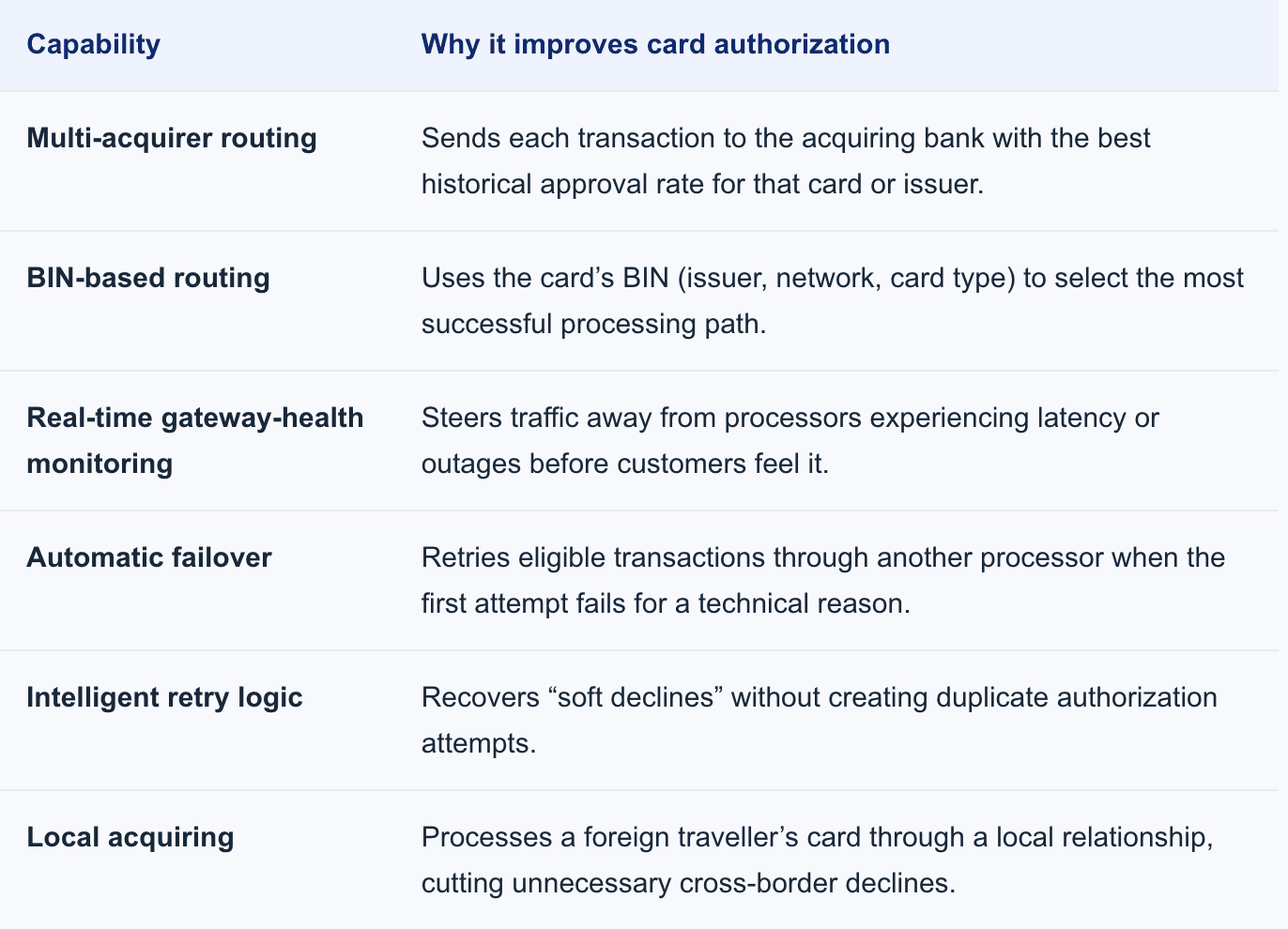
Industry guidance is consistent: intelligent routing raises approval by dynamically selecting the processor most likely to succeed while automatically handling outages and soft declines. Modern platforms layer machine learning on top, continuously updating decisions from recent authorization performance — with measurable gains over static routing.
Visa / Mastercard / RuPay-specific rules — each network behaves differently; rules should too.
Enterprise travel merchants rarely use a single rule; they combine several. As illustrative examples:
The specific mappings matter less than the principle: the routing layer should continuously learn from live authorization data, rather than relying on a fixed configuration that ages badly.
Track these separately by issuer, network and processor — an aggregate number hides the problem:
Watching international-vs-domestic approval separately is the single most useful habit for a travel business — it’s where the recoverable revenue hides.
PayGlocal specialises in exactly this zone. Where most gateways treat cross-border as an add-on to a domestic-first stack, we built for the international traveller from the start — and it shows in who runs on us.
The country’s biggest travel names process international payments on PayGlocal — airlines and OTAs including IndiGo, Air India and MakeMyTrip — because we deliver the success ratio, the infrastructure and the pricing that travel at scale demands. The idea is simple: when someone anywhere in the world pays an Indian travel business, the experience should feel as effortless as UPI feels at home. Making a global payment work like a local one is what PayGlocal is built to do. For inbound travel, that is the whole game — and it’s why we think of ourselves as part of the backbone of India’s travel economy.
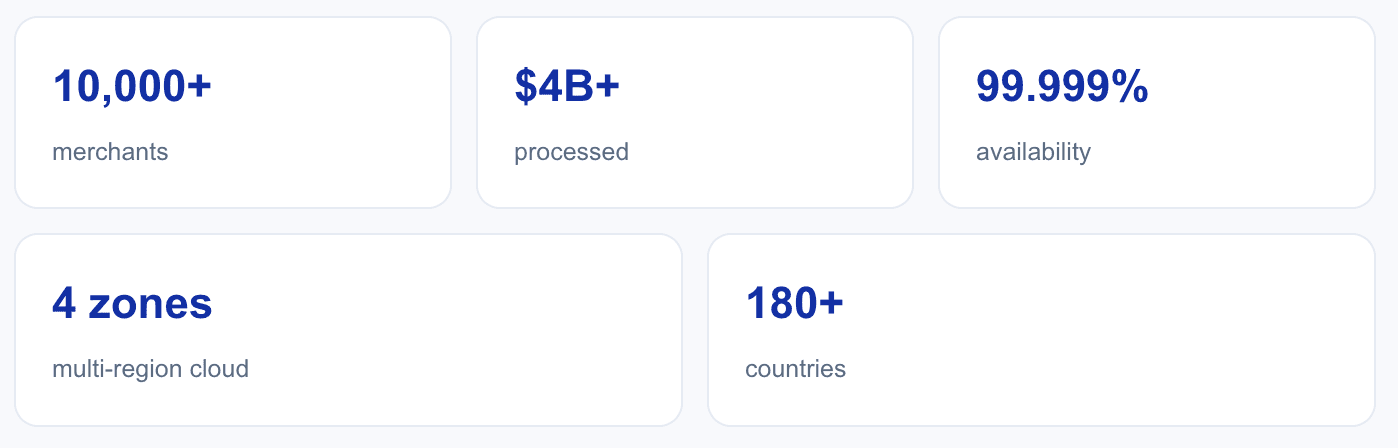
Travel in India isn’t only large airlines and OTAs. It’s also thousands of small travel agents — and they’re on PayGlocal too, across 18 cities. Their need is different from an enterprise’s: less about API depth, more about hand-holding and the right tools.
The same capability the biggest airlines rely on, packaged so a two-person agency can use it on the day they sign up.
This gives resilience during outages and higher approval across issuers and networks. PayGlocal provides it as one RBI-authorised, cross-border-first platform — routing, local acquiring and compliance, without assembling them yourself.
Quick Answers
- What improves checkout success most? Intelligent payment routing, plus local acquiring for foreign cards, network tokenization, 3DS2 optimisation and smart retries.
- Why authorization over fees? A 1–2% lift recovers whole bookings; a fee saving only trims margin on bookings you already won.
- What makes travel harder? High ticket values, last-minute urgency, international and debit cards, frequent issuer risk checks.
- What does local acquiring do? Processes a foreign card through a local relationship, cutting cross-border declines.
- Where does PayGlocal fit? An RBI-authorised cross-border aggregator (PA-CB-I&O) specialised in international travel checkout.
Why authorization rate matters more than fees for travel
It is tempting to optimise the number you can see on an invoice — the processing fee. But in travel the bigger number is invisible: the bookings that silently fail at checkout.
A one- to two-point improvement in authorization doesn’t trim a cost; it recovers revenue you already earned demand for. On a high-value, high-volume travel book, that is materially larger than any realistic fee negotiation — and it compounds at exactly the wrong-to-lose moments: sale fares, festival peaks, long weekends, when a declined card means the traveller books on a competitor before they try again.
The asymmetry is stark: shaving fees improves margin on bookings you win; lifting authorization wins bookings you were losing outright. In travel, the second lever is almost always bigger.
What makes travel payments harder to approve?
- High-value transactions — scrutinised harder than an average order.
- Last-minute bookings — urgent, high-value, often a new device or location: the pattern fraud models flag.
- International cards — inbound travellers pay on foreign-issued cards, which start from a lower baseline approval rate.
- A high share of debit cards — India’s mix is debit-heavy, with tighter issuer checks.
- Frequent issuer risk checks and step-up — more authentication challenges, each a place the booking can drop.
None of these are the merchant’s fault, and none can be fixed by a cheaper fee. They are fixed by routing and authorization built for this profile.
The routing capabilities that lift approval
Industry guidance is consistent: intelligent routing raises approval by dynamically selecting the processor most likely to succeed while automatically handling outages and soft declines. Modern platforms layer machine learning on top, continuously updating decisions from recent authorization performance — with measurable gains over static routing.
The features that matter most for travel bookings
- BIN-level and issuer-specific routing — optimise per issuer, not per country in aggregate.
Visa / Mastercard / RuPay-specific rules — each network behaves differently; rules should too.
- *Network tokenization** — trusted more by issuers and survives card re-issuance, protecting saved-card and repeat bookings.
- 3DS2 / authentication optimisation — let low-risk bookings pass with less friction; reserve step-up for risky ones.
- Automatic technical failover — recover systemic errors silently, before the booking is marked failed.
- Partial traffic allocation (A/B between acquirers) — test acquirer performance live and shift to the winner.
- Real-time authorization dashboards — approval by issuer, network and acquirer as it happens.
- Smart retries by decline reason — retry on why a payment failed, not blindly on the same path.
Routing strategies travel merchants commonly use
Enterprise travel merchants rarely use a single rule; they combine several. As illustrative examples:
- Route each issuer to the acquirer that approves it best.
- Send international cards to local acquiring wherever possible, to cut cross-border declines.
- Route premium cards to the acquirer with the highest historical approval for that segment.
- If gateway latency exceeds a threshold, route elsewhere.
- If processor availability drops, fail over automatically.
The specific mappings matter less than the principle: the routing layer should continuously learn from live authorization data, rather than relying on a fixed configuration that ages badly.
What to measure
Track these separately by issuer, network and processor — an aggregate number hides the problem:
- Authorization rate; soft-decline and hard-decline rate
- Gateway latency and processor uptime
- Booking conversion after payment
- Revenue recovered through retries
- Approval rate by acquiring bank
- International vs. domestic card approval
Watching international-vs-domestic approval separately is the single most useful habit for a travel business — it’s where the recoverable revenue hides.
How PayGlocal powers international travel checkout in India
PayGlocal specialises in exactly this zone. Where most gateways treat cross-border as an add-on to a domestic-first stack, we built for the international traveller from the start — and it shows in who runs on us.
The country’s biggest travel names process international payments on PayGlocal — airlines and OTAs including IndiGo, Air India and MakeMyTrip — because we deliver the success ratio, the infrastructure and the pricing that travel at scale demands. The idea is simple: when someone anywhere in the world pays an Indian travel business, the experience should feel as effortless as UPI feels at home. Making a global payment work like a local one is what PayGlocal is built to do. For inbound travel, that is the whole game — and it’s why we think of ourselves as part of the backbone of India’s travel economy.
- Built for cross-border, RBI-authorised — a PA-CB-I&O and domestic (PA-O) aggregator on India’s Digital Public Infrastructure, so higher approval never comes at the cost of compliance.
- Local acquiring for foreign cards — a traveller’s international card approved as if it were local.
- Routing tuned for international issuers — to the path most likely to approve for that issuer’s geography.
- Proven success rate — up to 90%+ authorization on international payments (96–97% peak for a marquee enterprise merchant).*
- Multi-currency acceptance across 30+ currencies.
- One platform for international and domestic — cards, links and settlement on a single authorised stack.
Not just the big names — tools for travel agents across India
Travel in India isn’t only large airlines and OTAs. It’s also thousands of small travel agents — and they’re on PayGlocal too, across 18 cities. Their need is different from an enterprise’s: less about API depth, more about hand-holding and the right tools.
- Guidance on disputes and chargebacks — travel is a high-dispute category; we help agents understand disputes and give them the tools to manage them properly.
- Payment Links — create and send in seconds — an agent generates a link from a mobile app or shares it over WhatsApp, and the traveller pays with no technical setup. Any phone becomes a checkout.
- Everything to accept international payments in one place — cards, links, multi-currency and settlement, so an agent never moves between platforms.
The same capability the biggest airlines rely on, packaged so a two-person agency can use it on the day they sign up.
A practical architecture for a mid-to-large OTA
- Integrate a payment orchestration layer, not a single gateway.
- Connect to at least two or three acquiring banks, with local acquiring for international cards.
- Enable BIN- and issuer-based routing.
- Use automatic failover only for retry-eligible technical failures — never blind retries.
- Continuously optimise routing using authorization-rate analytics, split by international vs. domestic.
This gives resilience during outages and higher approval across issuers and networks. PayGlocal provides it as one RBI-authorised, cross-border-first platform — routing, local acquiring and compliance, without assembling them yourself.