
In today’s global economy, smooth and reliable international payments are essential for businesses, freelancers, and exporters working across borders. International payment methods enable quick and secure transfer of funds, handle currency conversion, and ensure compliance with financial regulations.
These systems make it easier to connect with clients worldwide, helping businesses get paid faster and operate efficiently in multiple currencies, all through convenient, secure platforms.
India is emerging as a significant player in this shift. With $135.46 billion in record-breaking remittances in FY 2024–25 and UPI expanding globally, Indian businesses are moving fast. Now, with international business growing fast and customer expectations even faster, the pressure is on to make cross-border payments as seamless as local ones.
In this guide, we’ll break down how modern international payment systems work and how payment platforms are helping businesses keep up.
If you’ve ever paid a supplier in another country, received money from a global client, or sent funds to an overseas employee, you’ve made an international payment.
In simple terms, an international payment is a financial transaction where the payer and recipient are located in different countries. These payments are essential to global trade, e-commerce, remote work, and digital services.
Today, international payments occur in various forms, including bank transfers, card payments, mobile wallets, and digital platforms. As businesses become increasingly global, the demand for faster, safer, and more cost-effective international transactions has grown substantially.
International payment systems operate through a network of banks, financial institutions, and technology providers that facilitate cross-border transactions. The process involves several key steps that ensure secure and compliant money movement.
Here's how a typical international payment flows through the system:
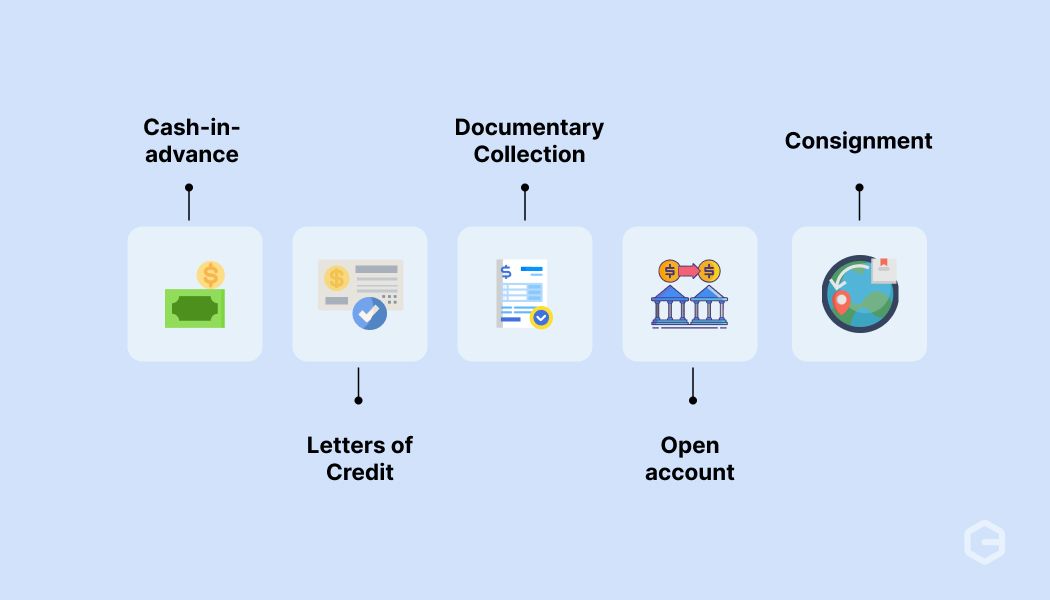
When your business interacts with customers, suppliers, or partners overseas, selecting the right international payment method can significantly impact cost, speed, compliance, and reliability.
Here are some most widely used international payment methods:
Under this method, the buyer pays the seller before goods or services are delivered. It’s the safest approach for exporters, but not ideal for buyers who may worry about product delivery or cash flow issues.
Common cash-in-advance options include:
The letter of credit method involves a buyer’s bank guaranteeing payment to the seller if all agreed-upon conditions are met. It’s highly secure for both parties and is often used in high-value or unfamiliar trade relationships.
This method reduces risk for both sides:
In this case, the seller ships goods and hands over shipping documents to their bank, which then passes them to the buyer’s bank. Payment is collected either immediately (Documents Against Payment) or on a future date (Documents Against Acceptance).
Less costly than LCs, but riskier since payment isn’t guaranteed.
Ideal for:
An Open Account is one of the most commonly used but riskiest international payment methods for exporters. In this setup, the seller ships the goods first and allows the buyer to make the payment later, typically within 30, 60, or 90 days after delivery or the invoice date. There’s no upfront payment or financial guarantee, only a promise that the buyer will pay on time.
Why it’s used:
Consignment is a unique international payment method where the exporter ships goods to a foreign distributor or agent, but retains ownership until those goods are sold to the final customer. Payment is made only after the sale happens, which means the seller bears the upfront cost and risk while the goods are held abroad.
This method is most effective when working with trusted partners in overseas markets and is often used by exporters looking to penetrate new markets quickly without setting up a local entity or warehouse.
The International payment method you choose directly impacts how well your business handles foreign exchange, regulatory demands, and customer satisfaction.
Here are the most important factors to consider when deciding how your business should send or accept international payments.
When handling global transactions, businesses face unique challenges that differ significantly from local payment operations.
International payments stand apart due to the following reasons:
The rise of global e-commerce, remote work, cross-border trade, and digital education has made international transactions a standard part of operations for many Indian businesses.
Here are some of the common ways businesses use international payment systems to send and receive money across borders.
For Indian businesses, especially those expanding across e-commerce, services, and exports, having the right payment system in place is essential.
Without a flexible international payment system, businesses risk losing conversions, incurring high transaction costs, and experiencing unnecessary operational delays.
Here are some of the biggest benefits of using an international payment system:
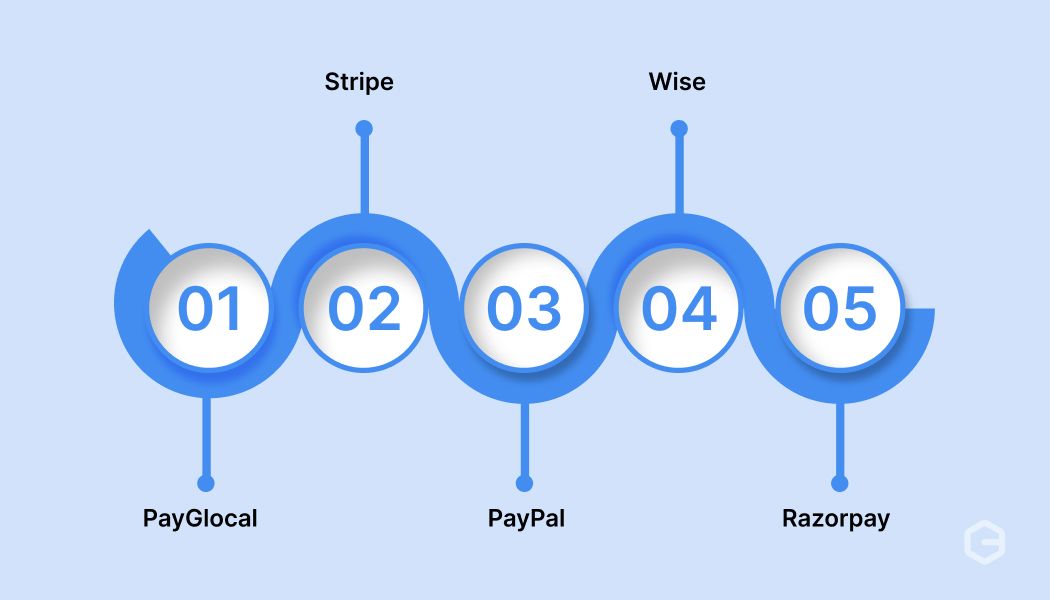
With digital commerce growing rapidly, it’s important to select a provider that aligns with your business size, geography, and growth plans.
Here are some of the most reliable payment gateways that support smooth, secure, and scalable international payments.
Built specifically for Indian businesses looking to expand globally, PayGlocal supports 33+ currencies and operates in 180+ countries. It stands out with features like dynamic currency conversion, recurring payment solutions, local payment method support, and advanced enterprise-level security.
Popular among tech startups and SaaS platforms, Stripe allows businesses to accept international payments in over 135 currencies. It offers strong API capabilities, supports local wallets, and provides extensive documentation for developers.
Widely recognized across global markets, PayPal allows businesses to accept payments from around the world. PayPal enables quick international transactions for freelancers, SMEs, and marketplaces. It's easy to integrate and familiar to customers worldwide, though fees and FX rates can be on the higher side.
Best known for transparent FX rates and low fees, Wise is ideal for freelancers, remote workers, and small companies receiving funds from abroad. It’s not a full payment gateway but offers international business accounts and easy invoicing in multiple currencies.
Razorpay offers international payment support for Indian businesses, with multicurrency pricing and global card acceptance. It integrates well with platforms like Shopify and WooCommerce. While effective, success rates for global cards may vary compared to more globally mature gateways.
Managing international payments doesn't have to be complex with length processes and payment settlement delays.
PayGlocal solves the specific challenges businesses face when collecting payments from global customers. Whether you're a freelancer invoicing US clients or an exporter shipping to Europe, you need transparent pricing, fast settlements, and automatic compliance documentation.
Here's how PayGlocal simplifies international payments:
PayGlocal scales with your business while maintaining the security and compliance standards required for global operations.
International payment systems have evolved to meet the demands of today's global economy, offering businesses unprecedented access to worldwide markets and customers. The right system transforms cross-border transactions from a complex operational challenge into a competitive advantage that drives growth.
Success in international markets depends on choosing a payment solution that aligns with your business model, customer preferences, and operational requirements. Modern digital platforms like Payglocal offer significant advantages over traditional banking in terms of speed, cost, and customer experience.
Ready to expand globally and start accepting payments from global customers? Get started with PayGlocal today.
These systems make it easier to connect with clients worldwide, helping businesses get paid faster and operate efficiently in multiple currencies, all through convenient, secure platforms.
India is emerging as a significant player in this shift. With $135.46 billion in record-breaking remittances in FY 2024–25 and UPI expanding globally, Indian businesses are moving fast. Now, with international business growing fast and customer expectations even faster, the pressure is on to make cross-border payments as seamless as local ones.
In this guide, we’ll break down how modern international payment systems work and how payment platforms are helping businesses keep up.
Key Takeaways:
- International Payments: International payments allow businesses to send and receive money across borders through methods like wire transfers, LCs, open accounts, and digital gateways.
- Right Payment System: Choosing the right international payment system depends on transaction size, customer location, compliance needs, and preferred currencies.
- Who Benefits the Most: Businesses such as e-commerce brands, exporters, freelancers, and SaaS companies benefit from secure and localised international payment options.
- International payments: PayGlocal stands out for Indian businesses by offering multi-currency support, 40+ global payment methods, and a secure all-in-one payment platform.
What are international payment systems?
If you’ve ever paid a supplier in another country, received money from a global client, or sent funds to an overseas employee, you’ve made an international payment.
In simple terms, an international payment is a financial transaction where the payer and recipient are located in different countries. These payments are essential to global trade, e-commerce, remote work, and digital services.
Today, international payments occur in various forms, including bank transfers, card payments, mobile wallets, and digital platforms. As businesses become increasingly global, the demand for faster, safer, and more cost-effective international transactions has grown substantially.
How do international payment systems work?
International payment systems operate through a network of banks, financial institutions, and technology providers that facilitate cross-border transactions. The process involves several key steps that ensure secure and compliant money movement.
Here's how a typical international payment flows through the system:
- Payment Initiation: The customer chooses their preferred payment method (card, bank transfer, digital wallet) and enters transaction details in their local currency.
- Currency Conversion: The system converts the payment amount using real-time exchange rates, often showing the exact amount the customer will pay before confirmation.
- Routing and Processing: Payment data routes through secure networks like SWIFT for traditional transfers or modern payment rails for digital transactions, with multiple verification checkpoints.
- Compliance Screening: Automated systems check transactions against different compliance requirements and regulations in both sender and recipient countries.
- Settlement and Notification: Funds settle in the recipient's account, typically with automatic generation of compliance documents like FIRC for Indian businesses.
What are the different international payment methods?
When your business interacts with customers, suppliers, or partners overseas, selecting the right international payment method can significantly impact cost, speed, compliance, and reliability.
Here are some most widely used international payment methods:
1. Cash-in-Advance
Under this method, the buyer pays the seller before goods or services are delivered. It’s the safest approach for exporters, but not ideal for buyers who may worry about product delivery or cash flow issues.
Common cash-in-advance options include:
- Wire Transfers (via SWIFT): Secure and direct, often used for large transactions, but can take 2–5 days and incur high intermediary fees.
- Credit/Debit Cards: Suitable for lower-value B2C or e-commerce transactions. Fast but prone to chargebacks and lower approval rates in cross-border contexts.
- Online Payment Platforms: Platforms like PayGlocal, PayPal, Stripe, and Wise offer user-friendly, localized checkout experiences ideal for freelancers, SMEs, and growing businesses. They support multiple currencies, simplify cross-border transactions, and help reduce decline rates.
2. Letter of Credit (LC)
The letter of credit method involves a buyer’s bank guaranteeing payment to the seller if all agreed-upon conditions are met. It’s highly secure for both parties and is often used in high-value or unfamiliar trade relationships.
This method reduces risk for both sides:
- The exporter gets assurance that they’ll be paid as long as they meet the contract terms.
- The importer only releases funds once they receive proof that the goods have been shipped as promised.
3. Documentary Collection (D/C)
In this case, the seller ships goods and hands over shipping documents to their bank, which then passes them to the buyer’s bank. Payment is collected either immediately (Documents Against Payment) or on a future date (Documents Against Acceptance).
Less costly than LCs, but riskier since payment isn’t guaranteed.
Ideal for:
- Moderate-risk transactions
- Partners with some trading history
- Buyers in countries with relatively stable legal enforcement
4. Open Account
An Open Account is one of the most commonly used but riskiest international payment methods for exporters. In this setup, the seller ships the goods first and allows the buyer to make the payment later, typically within 30, 60, or 90 days after delivery or the invoice date. There’s no upfront payment or financial guarantee, only a promise that the buyer will pay on time.
Why it’s used:
- To remain competitive in global markets
- For long-standing, trusted buyer relationships
- When the buyer's creditworthiness is verified or insured
5. Consignment
Consignment is a unique international payment method where the exporter ships goods to a foreign distributor or agent, but retains ownership until those goods are sold to the final customer. Payment is made only after the sale happens, which means the seller bears the upfront cost and risk while the goods are held abroad.
This method is most effective when working with trusted partners in overseas markets and is often used by exporters looking to penetrate new markets quickly without setting up a local entity or warehouse.
What should you consider before making an international payment?
The International payment method you choose directly impacts how well your business handles foreign exchange, regulatory demands, and customer satisfaction.
Here are the most important factors to consider when deciding how your business should send or accept international payments.
- Transaction Size and Frequency: Large B2B transactions may suit wire transfers or Letters of Credit. Smaller, frequent payments work better with digital wallets or online payment platforms. Choose a method that balances speed and cost based on your volume.
- Currency Support and Exchange Rates: Every payment method handles currency conversion differently. Some platforms offer real-time FX rates with low markup. Others may have hidden charges that affect your bottom line.
- Settlement Speed: Delayed payments can affect vendor relationships and cash flow. Digital platforms often settle in 1–2 days or even in real time. Consider your cash cycle needs when evaluating speed.
- Payment Preferences of Your Customers: Some regions prefer cards, others rely on mobile wallets, or bank transfers. Offering local payment methods increases trust and conversions.
- Regulatory Compliance: Cross-border payments must comply with KYC, AML, and data security laws across multiple jurisdictions. Non-compliance can lead to hefty fines or blocked funds.
What sets international payments apart from domestic transactions?
When handling global transactions, businesses face unique challenges that differ significantly from local payment operations.
International payments stand apart due to the following reasons:
- Currency Exchange: Involves converting one currency into another, often influenced by fluctuating exchange rates, which can affect the final amount received.
- Regulatory Compliance: Requires adherence to international financial laws, sanctions, and local banking regulations in both the sender’s and receiver’s countries.
- Processing Time: Cross-border payments generally take longer due to intermediary banks, verification protocols, and timezone differences.
- Transaction Costs: Additional fees like foreign exchange margins, SWIFT charges, and intermediary bank fees make international payments more expensive than domestic ones.
- Risk Factors: Exposure to currency volatility, fraud, and differing legal systems increases the complexity and risk of global transactions.
What are the common uses of international payment systems?
The rise of global e-commerce, remote work, cross-border trade, and digital education has made international transactions a standard part of operations for many Indian businesses.
Here are some of the common ways businesses use international payment systems to send and receive money across borders.
- Online Retailers and E-Commerce Stores: Direct-to-consumer (D2C) brands and e-commerce platforms often sell to customers in multiple countries. Offering localized checkout, currency conversion, and global card support helps improve conversions.
- Exporters and Importers: From manufacturers to IT exporters, businesses involved in global trade depend on cross-border payments to settle invoices, pay suppliers, and collect proceeds in foreign currencies. Speed and cost efficiency directly impact cash flow.
- Travel and Hospitality Businesses: Hotels, tour operators, travel agents, and destination managers often accept bookings and payments from global travellers. Accepting international cards and mobile wallets is essential for serving international guests efficiently.
- Freelancers and Global Service Providers: Independent consultants, software developers, digital marketers, and agencies that work with overseas clients require fast and low-cost methods for receiving international payments.
- Educational Institutions and EdTech Companies: Universities, coaching centres, and online course providers offering services to international students must process tuition and enrollment payments from abroad. Having secure and compliant payment systems increases credibility and access.
- Logistics and Supply Chain Firms: Businesses managing cross-border shipping or international supply chains must handle payments for freight, customs, and third-party services across different countries and currencies.
- Subscription and SaaS Businesses: Whether it's an Indian SaaS company serving global enterprises or a media streaming service with overseas subscribers, recurring international payments require reliable billing and auto-payment setups.
How do international payment systems help in business growth?
For Indian businesses, especially those expanding across e-commerce, services, and exports, having the right payment system in place is essential.
Without a flexible international payment system, businesses risk losing conversions, incurring high transaction costs, and experiencing unnecessary operational delays.
Here are some of the biggest benefits of using an international payment system:
- Reach More Customers Globally: Accepting payments from overseas enables you to expand into new regions and markets without the need for physical offices. This opens up access to millions of potential buyers, clients, and partners.
- Increase Revenue and Growth: By enabling smooth payments from international customers, businesses can tap into higher-value markets and consistently grow sales across various geographies. According to Statista, global revenue from e-commerce is projected to grow at a CAGR of 8.02% from 2025 to 2029, reaching $5.89 trillion by 2029.
- Gain an Edge Over Competitors: Offering local currencies, wallets, and frictionless payment experiences gives you a clear advantage over businesses that still rely on traditional banking systems.
- Build Brand Visibility and Trust: Serving international customers with localized checkout and transparent pricing helps build brand credibility and differentiate your business in a crowded market.
- Speed Up Cash Flow: Faster settlements from multiple geographies mean better working capital and fewer delays in reconciling transactions. Timely payments also support smoother supplier relationships and uninterrupted operations.
- Improve Operational Efficiency: With automation, currency conversion, and built-in compliance tools, your finance and operations teams spend less time managing manual tasks. It reduces errors, cuts down processing time, and allows your team to focus on scaling and strategy.
What are the top payment gateways to handle International transactions?
With digital commerce growing rapidly, it’s important to select a provider that aligns with your business size, geography, and growth plans.
Here are some of the most reliable payment gateways that support smooth, secure, and scalable international payments.
1. PayGlocal
Built specifically for Indian businesses looking to expand globally, PayGlocal supports 33+ currencies and operates in 180+ countries. It stands out with features like dynamic currency conversion, recurring payment solutions, local payment method support, and advanced enterprise-level security.
2. Stripe
Popular among tech startups and SaaS platforms, Stripe allows businesses to accept international payments in over 135 currencies. It offers strong API capabilities, supports local wallets, and provides extensive documentation for developers.
3. PayPal
Widely recognized across global markets, PayPal allows businesses to accept payments from around the world. PayPal enables quick international transactions for freelancers, SMEs, and marketplaces. It's easy to integrate and familiar to customers worldwide, though fees and FX rates can be on the higher side.
4. Wise
Best known for transparent FX rates and low fees, Wise is ideal for freelancers, remote workers, and small companies receiving funds from abroad. It’s not a full payment gateway but offers international business accounts and easy invoicing in multiple currencies.
5. Razorpay
Razorpay offers international payment support for Indian businesses, with multicurrency pricing and global card acceptance. It integrates well with platforms like Shopify and WooCommerce. While effective, success rates for global cards may vary compared to more globally mature gateways.
Accept international payments easily and scale your business
Managing international payments doesn't have to be complex with length processes and payment settlement delays.
PayGlocal solves the specific challenges businesses face when collecting payments from global customers. Whether you're a freelancer invoicing US clients or an exporter shipping to Europe, you need transparent pricing, fast settlements, and automatic compliance documentation.
Here's how PayGlocal simplifies international payments:
- Multi-Currency Accounts: Collect payments locally in USD, GBP, EUR, and CAD while accepting 33+ currencies from 180+ countries, reducing fees and improving customer experience.
- Global Payment Methods: Accept local payment preferences including cards, bank transfers, mobile wallets, and regional methods, increasing conversion rates across different markets.
- Instant Compliance Documentation: Automatic FIRC generation upon settlement eliminates manual paperwork and ensures regulatory compliance without additional effort or delays.
- No fixed monthly costs: There’s no setup costs, or monthly minimum fees. You pay only when you transact and scale costs with revenue growth.
- All-In-One Payment Management: Handle all payment acceptance, tracking, compliance, and settlement from a single dashboard, reducing operational complexity and training requirements.
PayGlocal scales with your business while maintaining the security and compliance standards required for global operations.
Final Thoughts
International payment systems have evolved to meet the demands of today's global economy, offering businesses unprecedented access to worldwide markets and customers. The right system transforms cross-border transactions from a complex operational challenge into a competitive advantage that drives growth.
Success in international markets depends on choosing a payment solution that aligns with your business model, customer preferences, and operational requirements. Modern digital platforms like Payglocal offer significant advantages over traditional banking in terms of speed, cost, and customer experience.
Ready to expand globally and start accepting payments from global customers? Get started with PayGlocal today.