
Did you know why businesses started to deliver their products promptly, even when their cargo wasn’t fully loaded? LTL (Less Than Truckload) Shipping method is an eco-friendly solution that offers shippers a perfect blend of cost savings, flexibility, and environmental consciousness. By optimizing routes and reducing the number of vehicles on the road, LTL shipping not only cuts fuel consumption but also streamlines the delivery process, ensuring goods arrive efficiently and sustainably.
This blog is a comprehensive guide on LTL delivery and explains its definition, various advantages, and potential drawbacks. It also highlights key factors influencing shipping rates and offers insights on optimizing your LTL shipping strategy for maximizing the efficiency of business operations.
Before diving into the intricacies of how businesses manage partial loads efficiently, let's delve into the fundamentals of LTL delivery and what makes it a smart shipping option:
LTL Shipping, or "Less Than Truckload," is a cost-effective shipping method where a single truck carries freight from multiple shippers, sharing space to lower costs. This model allows businesses to send smaller loads without the hefty price of booking an entire cargo truck. It allows various businesses to transport goods without the expense of a full truckload making LTL Delivery an ideal solution for shipments that don’t require a full trailer and can be consolidated with other orders.
For example, if you own a small electronics company, and need to ship 2,000 pounds of goods. Instead of paying for a full truckload that holds up to 45,000 pounds, you can opt for LTL delivery and share space with other businesses, paying only for the portion your goods occupy. According to a 2022 report by the American Trucking Association (ATA), LTL shipping accounts for approximately $759.23 billion to the country's total trucking revenue of $940.8 billion, accounting for 80.7% of the nation's freight bill.
This showcases how widespread LTL shipping usage is for businesses that want to minimize costs while maintaining shipping efficiency.
LTL shipping, or Less Than Truckload shipping, is defined by several key characteristics that make it a flexible and economical option for businesses with smaller loads.
One of the primary features of LTL shipping is the sharing of truck space among multiple shippers. This arrangement allows businesses to reduce their transportation costs significantly since they only pay for the portion of the truck their goods occupy. As a result, LTL becomes an ideal choice for shipments that only require part of the truckload.
LTL shipping accommodates a broad range of freight sizes, typically from 150 to 15,000 pounds. This versatility allows businesses of various scales to utilize LTL services, whether they are small e-commerce operations sending out individual packages or larger companies dispatching larger freight quantities.
LTL carriers often implement pallet loading and other protective measures to ensure that shipments arrive safely. By consolidating freight onto pallets and utilizing secure packaging, LTL shipping minimizes the risk of damage during transit, ensuring that goods remain in excellent condition upon delivery.
The cost-sharing model inherent in LTL shipping allows businesses to benefit from lower shipping rates compared to full truckload shipping. This pricing structure not only makes it affordable but also encourages more sustainable shipping practices by reducing the number of trucks needed on the road.
Many LTL carriers offer a variety of value-added services, such as liftgate delivery, inside delivery, and real-time tracking. These services enhance the overall shipping experience, providing businesses with greater flexibility and control over their logistics operations.
By consolidating shipments and sharing transportation resources, LTL shipping contributes to reduced fuel consumption and lower carbon emissions. This eco-friendly approach appeals to businesses looking to minimize their environmental impact while still achieving effective delivery solutions.
In a nutshell, the characteristics of LTL shipping position it as an attractive option for businesses seeking to balance cost, efficiency, and sustainability in their logistics strategies.
Also Read: Mastering Exports: A Complete Guide to Letters of Undertaking (LUT) for Indian Exporters
One of the reasons why LTL shipping is the most appealing one is it comes with a cost-sharing model, which allows shippers to save money by sharing truck space. Let’s break it down:
LTL delivery allows multiple businesses to share truck space, which significantly reduces shipping costs by splitting the expense. This cost-sharing model is especially beneficial for small to medium-sized businesses that don’t need a full truckload but still want to optimize their logistics budget.
LTL shipping often involves palletizing goods, which increases protection and minimizes the risk of damage during transit. Proper pallet loading ensures that shipments are handled more efficiently, keeping them secure and reducing the chances of loss or breakage.
LTL carriers often provide value-added services such as liftgate deliveries, inside deliveries, and real-time tracking. These extras enhance the overall shipping experience by catering to specific delivery needs and providing better visibility throughout the shipment process.
Also Read: Understanding the Export Data Processing and Monitoring System (EDPMS).
It is now clear from the advantages listed why businesses root for the LTL delivery method, now, let's identify the potential setbacks:
While LTL shipping offers cost advantages, it also comes with some drawbacks, such as size and weight limitations that may not accommodate oversized shipments. Additionally, extra charges for additional services can unexpectedly increase the overall shipping costs, making it essential for businesses to consider these factors:
LTL delivery is designed for shipments ranging between 150 and 15,000 pounds, making it unsuitable for oversized or excessively heavy cargo. For larger or bulkier freight, businesses may need to consider Full Truckload (FTL) or other specialized shipping options to accommodate their needs.
While LTL shipping is cost-effective, additional services such as liftgate delivery, expedited shipping, or special handling often come with extra fees. These charges can increase the overall shipping cost, so it's essential for businesses to assess their service needs carefully to avoid unexpected expenses.
The drawbacks of LTL shipping often include unpredictability and delays due to the nature of the shipping process, which involves multiple stops and routes. Since a single truck carries goods from various shippers, it may need to unload and reload at several locations before reaching its final destination. This increases the chances of delays, especially if there are scheduling conflicts or unforeseen issues like traffic, weather conditions, or handling errors at intermediate stops. Additionally, shipment pickup times depend on the businesses sharing the truck, meaning issues before pickup can cause delays or even missed shipments. As a result, LTL delivery times can be less predictable compared to dedicated shipping methods like Full Truckload (FTL).
Also Read: Unravelling the Significance of Bank Realization Certificate (BRC) for Indian Exporters.
Having covered the pros and cons, let’s dive into the factors that affect LTL delivery rates because understanding these can help you make the most informed decisions:
Curious about what affects the rates for LTL delivery? Several factors come into play when determining shipping costs:
The farther a shipment needs to travel, the higher the shipping cost will be for LTL delivery. Longer routes often require more fuel and handling, which contribute to the overall expense.
Freight class is determined by factors like weight, size, and density, with each class affecting the shipping rate. Heavier or bulkier shipments typically fall into higher classes, which results in higher costs for LTL services.
If a shipment needs special handling, such as refrigeration or extra care for fragile items, additional costs are often applied. These requirements can increase both the complexity and price of LTL delivery, so it's important to factor them into your budget.
Choosing expedited delivery speeds up the shipping process but usually comes with higher fees. When planning LTL shipments, businesses need to weigh the urgency of the delivery against the potential increase in costs.
Also Read: International Payments: The Challenges and Solutions of Cross border Payments.
Now that we’ve touched on the costs, let’s look at when LTL delivery is the ideal choice for your shipments, and how it can benefit your business operations:
It is important to know which method may be the best for your business, given the constraints and restrictions that may arise during freight transport. Here are some scenarios where LTL makes perfect sense proving that’s the right choice for a business:
For shipments weighing between 150 and 15,000 pounds, LTL delivery provides an efficient and cost-effective option. It allows businesses to move smaller loads without paying for a full truck, making it ideal for medium-sized cargo.
LTL delivery offers flexibility in scheduling, making it a great option for businesses that can accommodate varying delivery times. This allows shippers to plan around their needs while optimizing costs and efficiency.
For shipments that don’t need to arrive immediately, LTL delivery is perfect, as it consolidates freight to minimize trips and reduce environmental impact. It’s an excellent choice for businesses focused on eco-friendly and cost-effective logistics.
Since you’re considering LTL delivery, let’s compare it with other options like FTL and parcel shipping, to see where LTL stands in terms of efficiency and cost:
LTL delivery stacks up against other shipping methods pretty strongly. Below is a comparison that highlights key differences among various shipping methods:
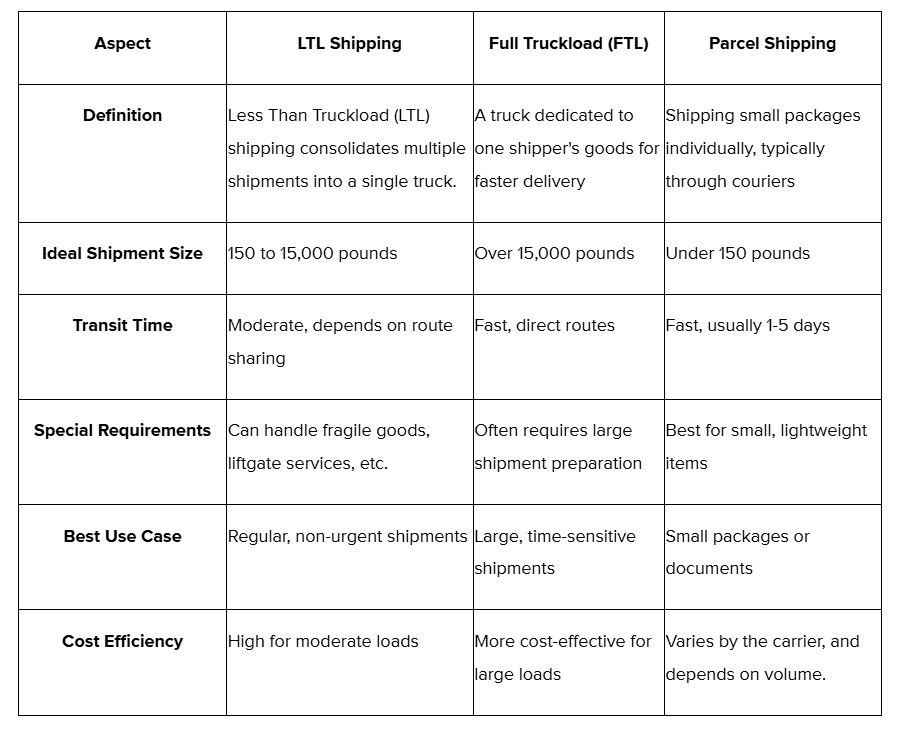
The table depicts a comparison between LTL, FTL, and Parcel shipping methods.
Now that you’re familiar with LTL delivery options, let’s walk through how to properly prepare your shipments to ensure smooth and efficient transportation:
To ensure that your LTL shipments are successful, proper preparation is key:
Ensuring precise measurements and accurate documentation for your LTL delivery helps avoid unexpected delays and additional fees. Clear, detailed paperwork allows carriers to process shipments efficiently, keeping your logistics smooth and cost-effective.
Using sturdy materials and clear labels is crucial for protecting your goods during transit and minimizing confusion. Well-packaged and properly labeled shipments reduce the chances of damage and ensure they reach their destination without any mishaps.
Palletizing your shipment not only streamlines handling for carriers but also significantly reduces the risk of damage. By using pallets or crates, you ensure safer transportation, making the LTL delivery process more efficient and secure.
As you’ve learned how to prepare your shipment, let’s explore how technology is transforming LTL delivery, making it more efficient and trackable in real-time:
Today’s advancements streamline operations and improve customer experience to improve the efficiency of LTL delivery. Here’s a breakdown of how various technical advancements help:
With advanced technology, shippers can now receive real-time updates on their LTL delivery status, ensuring they are informed of any potential delays or changes. This level of transparency allows businesses to better plan their logistics and maintain smooth operations.
Modern online portals give businesses the ability to compare various carriers and their rates, making it easier to choose the most cost-effective shipping option. These tools streamline the selection process, helping shippers find the best fit for their specific needs.
Technological innovations have enabled carriers to manage increasing shipping volumes by optimizing routes and improving scheduling efficiency. This ensures that even as demand grows, LTL delivery remains smooth, timely, and reliable.
Now that you have a complete understanding of LTL delivery, it’s time to wrap up by summarizing the key takeaways of why this service serves the best for your shipping strategy.
The future of LTL services is promising, driven by ongoing technological advancements. These innovations enhance efficiency and broaden service offerings for shippers. Understanding LTL shipping advantages helps optimize your logistics strategy and reduce costs.
However, it’s essential to note limitations like size and weight restrictions. Since the shipping rates are influenced by factors such as distance, freight class, and special handling needs, LTL shipping excels for flexible, non-time-sensitive deliveries. Overall, it provides an ideal balance of cost and convenience for businesses with their shipping strategies without having to compromise on reliability.
Want to optimize your LTL delivery process and reduce transaction and FX charges? Take your shipping experience to new heights with PayGlocal’s solutions! We offer multi-currency payment solutions exclusively for exporters. Experience like never before, dynamic checkouts with end-to-end tracking for both non-card and card payments, including recurring transactions. Our fraud-risk detection ensures your international online transactions are safe and secure. Visit PayGlocal to learn more!
This blog is a comprehensive guide on LTL delivery and explains its definition, various advantages, and potential drawbacks. It also highlights key factors influencing shipping rates and offers insights on optimizing your LTL shipping strategy for maximizing the efficiency of business operations.
Before diving into the intricacies of how businesses manage partial loads efficiently, let's delve into the fundamentals of LTL delivery and what makes it a smart shipping option:
What is LTL Shipping?
LTL Shipping, or "Less Than Truckload," is a cost-effective shipping method where a single truck carries freight from multiple shippers, sharing space to lower costs. This model allows businesses to send smaller loads without the hefty price of booking an entire cargo truck. It allows various businesses to transport goods without the expense of a full truckload making LTL Delivery an ideal solution for shipments that don’t require a full trailer and can be consolidated with other orders.
For example, if you own a small electronics company, and need to ship 2,000 pounds of goods. Instead of paying for a full truckload that holds up to 45,000 pounds, you can opt for LTL delivery and share space with other businesses, paying only for the portion your goods occupy. According to a 2022 report by the American Trucking Association (ATA), LTL shipping accounts for approximately $759.23 billion to the country's total trucking revenue of $940.8 billion, accounting for 80.7% of the nation's freight bill.
This showcases how widespread LTL shipping usage is for businesses that want to minimize costs while maintaining shipping efficiency.
Characteristics of LTL Shipping
LTL shipping, or Less Than Truckload shipping, is defined by several key characteristics that make it a flexible and economical option for businesses with smaller loads.
- Shared Transportation Space:
One of the primary features of LTL shipping is the sharing of truck space among multiple shippers. This arrangement allows businesses to reduce their transportation costs significantly since they only pay for the portion of the truck their goods occupy. As a result, LTL becomes an ideal choice for shipments that only require part of the truckload.
- Versatile Freight Size:
LTL shipping accommodates a broad range of freight sizes, typically from 150 to 15,000 pounds. This versatility allows businesses of various scales to utilize LTL services, whether they are small e-commerce operations sending out individual packages or larger companies dispatching larger freight quantities.
- Enhanced Freight Protection:
LTL carriers often implement pallet loading and other protective measures to ensure that shipments arrive safely. By consolidating freight onto pallets and utilizing secure packaging, LTL shipping minimizes the risk of damage during transit, ensuring that goods remain in excellent condition upon delivery.
- Cost-Effective Pricing Structure:
The cost-sharing model inherent in LTL shipping allows businesses to benefit from lower shipping rates compared to full truckload shipping. This pricing structure not only makes it affordable but also encourages more sustainable shipping practices by reducing the number of trucks needed on the road.
- Additional Service Options:
Many LTL carriers offer a variety of value-added services, such as liftgate delivery, inside delivery, and real-time tracking. These services enhance the overall shipping experience, providing businesses with greater flexibility and control over their logistics operations.
- Environmental Benefits:
By consolidating shipments and sharing transportation resources, LTL shipping contributes to reduced fuel consumption and lower carbon emissions. This eco-friendly approach appeals to businesses looking to minimize their environmental impact while still achieving effective delivery solutions.
In a nutshell, the characteristics of LTL shipping position it as an attractive option for businesses seeking to balance cost, efficiency, and sustainability in their logistics strategies.
Also Read: Mastering Exports: A Complete Guide to Letters of Undertaking (LUT) for Indian Exporters
Advantages of LTL Shipping
One of the reasons why LTL shipping is the most appealing one is it comes with a cost-sharing model, which allows shippers to save money by sharing truck space. Let’s break it down:
- Cost Sharing:
LTL delivery allows multiple businesses to share truck space, which significantly reduces shipping costs by splitting the expense. This cost-sharing model is especially beneficial for small to medium-sized businesses that don’t need a full truckload but still want to optimize their logistics budget.
- Pallet Loading:
LTL shipping often involves palletizing goods, which increases protection and minimizes the risk of damage during transit. Proper pallet loading ensures that shipments are handled more efficiently, keeping them secure and reducing the chances of loss or breakage.
- Additional Services:
LTL carriers often provide value-added services such as liftgate deliveries, inside deliveries, and real-time tracking. These extras enhance the overall shipping experience by catering to specific delivery needs and providing better visibility throughout the shipment process.
Also Read: Understanding the Export Data Processing and Monitoring System (EDPMS).
It is now clear from the advantages listed why businesses root for the LTL delivery method, now, let's identify the potential setbacks:
Drawbacks of LTL Shipping
While LTL shipping offers cost advantages, it also comes with some drawbacks, such as size and weight limitations that may not accommodate oversized shipments. Additionally, extra charges for additional services can unexpectedly increase the overall shipping costs, making it essential for businesses to consider these factors:
- Size and Weight Limitations:
LTL delivery is designed for shipments ranging between 150 and 15,000 pounds, making it unsuitable for oversized or excessively heavy cargo. For larger or bulkier freight, businesses may need to consider Full Truckload (FTL) or other specialized shipping options to accommodate their needs.
- Potential Additional Charges:
While LTL shipping is cost-effective, additional services such as liftgate delivery, expedited shipping, or special handling often come with extra fees. These charges can increase the overall shipping cost, so it's essential for businesses to assess their service needs carefully to avoid unexpected expenses.
- Delays and Unpredictabilities:
The drawbacks of LTL shipping often include unpredictability and delays due to the nature of the shipping process, which involves multiple stops and routes. Since a single truck carries goods from various shippers, it may need to unload and reload at several locations before reaching its final destination. This increases the chances of delays, especially if there are scheduling conflicts or unforeseen issues like traffic, weather conditions, or handling errors at intermediate stops. Additionally, shipment pickup times depend on the businesses sharing the truck, meaning issues before pickup can cause delays or even missed shipments. As a result, LTL delivery times can be less predictable compared to dedicated shipping methods like Full Truckload (FTL).
Also Read: Unravelling the Significance of Bank Realization Certificate (BRC) for Indian Exporters.
Having covered the pros and cons, let’s dive into the factors that affect LTL delivery rates because understanding these can help you make the most informed decisions:
Factors Influencing LTL Shipping Rates
Curious about what affects the rates for LTL delivery? Several factors come into play when determining shipping costs:
- Shipping Distance:
The farther a shipment needs to travel, the higher the shipping cost will be for LTL delivery. Longer routes often require more fuel and handling, which contribute to the overall expense.
- Freight Class:
Freight class is determined by factors like weight, size, and density, with each class affecting the shipping rate. Heavier or bulkier shipments typically fall into higher classes, which results in higher costs for LTL services.
- Special Handling Requirements:
If a shipment needs special handling, such as refrigeration or extra care for fragile items, additional costs are often applied. These requirements can increase both the complexity and price of LTL delivery, so it's important to factor them into your budget.
- Expedited Delivery:
Choosing expedited delivery speeds up the shipping process but usually comes with higher fees. When planning LTL shipments, businesses need to weigh the urgency of the delivery against the potential increase in costs.
Also Read: International Payments: The Challenges and Solutions of Cross border Payments.
Now that we’ve touched on the costs, let’s look at when LTL delivery is the ideal choice for your shipments, and how it can benefit your business operations:
When to Choose LTL Shipping?
It is important to know which method may be the best for your business, given the constraints and restrictions that may arise during freight transport. Here are some scenarios where LTL makes perfect sense proving that’s the right choice for a business:
- Ideal Shipment Size:
For shipments weighing between 150 and 15,000 pounds, LTL delivery provides an efficient and cost-effective option. It allows businesses to move smaller loads without paying for a full truck, making it ideal for medium-sized cargo.
- Flexibility in Delivery Scheduling:
LTL delivery offers flexibility in scheduling, making it a great option for businesses that can accommodate varying delivery times. This allows shippers to plan around their needs while optimizing costs and efficiency.
- Non-Time-Sensitive Deliveries:
For shipments that don’t need to arrive immediately, LTL delivery is perfect, as it consolidates freight to minimize trips and reduce environmental impact. It’s an excellent choice for businesses focused on eco-friendly and cost-effective logistics.
Since you’re considering LTL delivery, let’s compare it with other options like FTL and parcel shipping, to see where LTL stands in terms of efficiency and cost:
Comparison with Other Shipping Options
LTL delivery stacks up against other shipping methods pretty strongly. Below is a comparison that highlights key differences among various shipping methods:
The table depicts a comparison between LTL, FTL, and Parcel shipping methods.
Now that you’re familiar with LTL delivery options, let’s walk through how to properly prepare your shipments to ensure smooth and efficient transportation:
LTL Shipment Preparation
To ensure that your LTL shipments are successful, proper preparation is key:
- Accurate Dimensions and Documentation:
Ensuring precise measurements and accurate documentation for your LTL delivery helps avoid unexpected delays and additional fees. Clear, detailed paperwork allows carriers to process shipments efficiently, keeping your logistics smooth and cost-effective.
- Proper Packaging and Labeling:
Using sturdy materials and clear labels is crucial for protecting your goods during transit and minimizing confusion. Well-packaged and properly labeled shipments reduce the chances of damage and ensure they reach their destination without any mishaps.
- Use of Pallets or Crates:
Palletizing your shipment not only streamlines handling for carriers but also significantly reduces the risk of damage. By using pallets or crates, you ensure safer transportation, making the LTL delivery process more efficient and secure.
As you’ve learned how to prepare your shipment, let’s explore how technology is transforming LTL delivery, making it more efficient and trackable in real-time:
Role of Technology in LTL Shipping
Today’s advancements streamline operations and improve customer experience to improve the efficiency of LTL delivery. Here’s a breakdown of how various technical advancements help:
- On-Time Delivery Coordination:
With advanced technology, shippers can now receive real-time updates on their LTL delivery status, ensuring they are informed of any potential delays or changes. This level of transparency allows businesses to better plan their logistics and maintain smooth operations.
- Online Portals:
Modern online portals give businesses the ability to compare various carriers and their rates, making it easier to choose the most cost-effective shipping option. These tools streamline the selection process, helping shippers find the best fit for their specific needs.
- Handling Larger Volumes Efficiently:
Technological innovations have enabled carriers to manage increasing shipping volumes by optimizing routes and improving scheduling efficiency. This ensures that even as demand grows, LTL delivery remains smooth, timely, and reliable.
Now that you have a complete understanding of LTL delivery, it’s time to wrap up by summarizing the key takeaways of why this service serves the best for your shipping strategy.
Conclusion
The future of LTL services is promising, driven by ongoing technological advancements. These innovations enhance efficiency and broaden service offerings for shippers. Understanding LTL shipping advantages helps optimize your logistics strategy and reduce costs.
However, it’s essential to note limitations like size and weight restrictions. Since the shipping rates are influenced by factors such as distance, freight class, and special handling needs, LTL shipping excels for flexible, non-time-sensitive deliveries. Overall, it provides an ideal balance of cost and convenience for businesses with their shipping strategies without having to compromise on reliability.
Want to optimize your LTL delivery process and reduce transaction and FX charges? Take your shipping experience to new heights with PayGlocal’s solutions! We offer multi-currency payment solutions exclusively for exporters. Experience like never before, dynamic checkouts with end-to-end tracking for both non-card and card payments, including recurring transactions. Our fraud-risk detection ensures your international online transactions are safe and secure. Visit PayGlocal to learn more!