
What’s the secret behind every efficient business? Businesses are only as strong as their supply chain. A well-optimized supply chain management (SCM) strategy fosters the fortitude for successful business operations, driving everything from sourcing raw materials to delivering products on time. But what exactly is SCM, and how does it impact your business?
Understanding SCM business is more than just a technical necessity—it's a strategy that can transform your entire operation. In this guide, we will explore the core components of SCM business operations, revealing how they shape everything from efficiency to customer satisfaction.
Supply Chain Management (SCM) is an intricate craft that coordinates every step, from getting the raw materials to delivering the product to the customer, making sure everything flows smoothly and on time. The key players include suppliers, manufacturers, and customers, who help maintain everything in synchrony.
At its core, SCM keeps the gears turning, ensuring minimal delays, reduced costs, and consistent product availability. It’s like the nervous system of a business, channelling the flow of products, information, and money. When optimized, it cuts waste, sharpens inventory management, and empowers businesses with real-time data to make smarter, faster decisions.
Through seamless communication and precise planning, SCM brings all the moving parts together, keeping businesses efficient and customers happy. In short, SCM isn’t just a background process—it’s what makes everything click.
Now that we have a foundation in SCM, it’s essential to explore the core components that make this system function seamlessly. Here’s a breakdown:
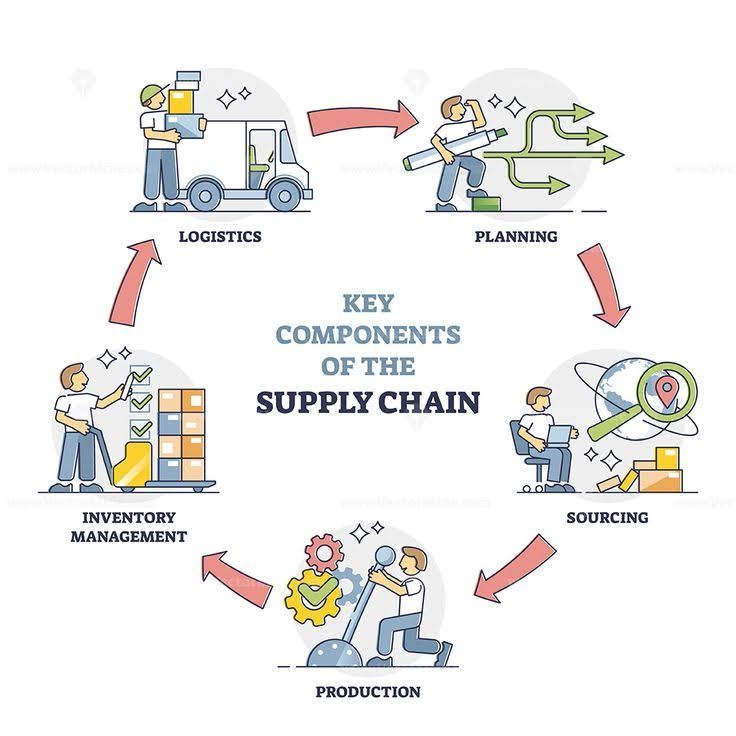
How do you plan for efficiency? Effective planning is at the core of managing the entire supply chain, ensuring that resources are efficiently allocated to meet demand. ERP (Enterprise Resource Planning) systems enable businesses to forecast demand, manage inventories, and optimize scheduling for production and distribution.
Example: Nike utilizes advanced ERP systems to track inventory levels across global markets. This system helps the company adjust production schedules to prevent overproduction, ensuring that stock levels are optimized to meet current demand.
The sourcing stage focuses on identifying and establishing relationships with reliable suppliers. Collaborating with vendors allows businesses to secure the best materials at competitive costs while ensuring on-time delivery and quality standards.
Example: Starbucks works closely with coffee farmers worldwide to ensure sustainable sourcing practices. By fostering long-term relationships, Starbucks secures high-quality coffee beans while supporting ethical farming practices.
Production is about transforming raw materials into finished goods. Effective scheduling aligns production with demand, ensuring timely manufacturing while adhering to industry standards. Businesses that maintain quality through regular audits can avoid production bottlenecks.
Example: Toyota uses the Just-in-Time (JIT) manufacturing system to ensure that only necessary materials are produced, reducing waste and optimizing resource use. This approach helps Toyota meet customer demand while maintaining lean inventory levels.
Why is inventory management crucial? Managing stock effectively helps prevent overstocking and shortages. Inventory management tools and real-time data tracking allow businesses to balance supply with demand, ensuring they have enough stock without excess that could result in waste.
Example: Zara, a fast-fashion retailer, uses a responsive supply chain that quickly reacts to demand. Zara produces smaller batches of inventory and restocks as needed, reducing waste while staying on top of trends.
Logistics handles the transportation, warehousing, and delivery of goods to ensure they reach customers at the right place and time. Efficient logistics depend on cost-effective routes, real-time tracking, and careful handling of goods.
Example: Walmart employs real-time tracking systems and RFID technology to manage inventory across its stores. It uses a well-optimized logistics network with distribution centers that allow it to restock stores quickly and keep costs low. Their sophisticated system ensures shelves are always stocked, which enhances customer satisfaction.
Returns management is a crucial part of the SCM process. Handling returns efficiently ensures customer satisfaction and allows businesses to recover value from defective products. A good returns system builds customer trust and enhances long-term loyalty.
Example: Zappos offers free returns for up to a year, allowing customers to return products easily. This customer-friendly returns policy builds trust and ensures that defective or unwanted items are managed effectively in their supply chain.
These examples demonstrate how top global companies apply the key components of SCM to streamline operations, reduce costs, and deliver better value to their customers. By implementing these strategies, businesses can maintain efficient supply chains and gain a competitive advantage.
Also Read: Understanding the Export Data Processing and Monitoring System (EDPMS).
Effective supply chain management ensures the smooth flow of goods, services, and information from suppliers to customers. Businesses can meet customer demands by optimizing processes, reducing costs, and improving efficiency while maintaining profitability. Implementing best practices in supply chain management can enhance overall performance, boost competitiveness, and drive long-term success.
Traditional supply chain methods often involve long planning cycles. However, real-time planning allows businesses to respond quickly to changing demand, reducing waste and improving efficiency.
Example: Walmart’s real-time data tracking system lets it adjust stock levels in response to customer purchases, improving product availability and reducing excess inventory.
Effective SCM is integrated with broader business strategies. By aligning SCM with financial objectives, businesses can ensure that operational decisions support profitability and long-term growth.
Example: Apple links its SCM strategies with financial objectives to optimize production costs while maintaining high margins on its products.
How well do you anticipate demand? Predicting consumer demand is essential for minimizing waste and improving customer satisfaction. Technologies like AI and data analytics help businesses improve demand forecasting and supply chain visibility.
Example: Amazon’s AI-powered forecasting system anticipates demand for millions of products, ensuring timely restocking and reducing shortages.
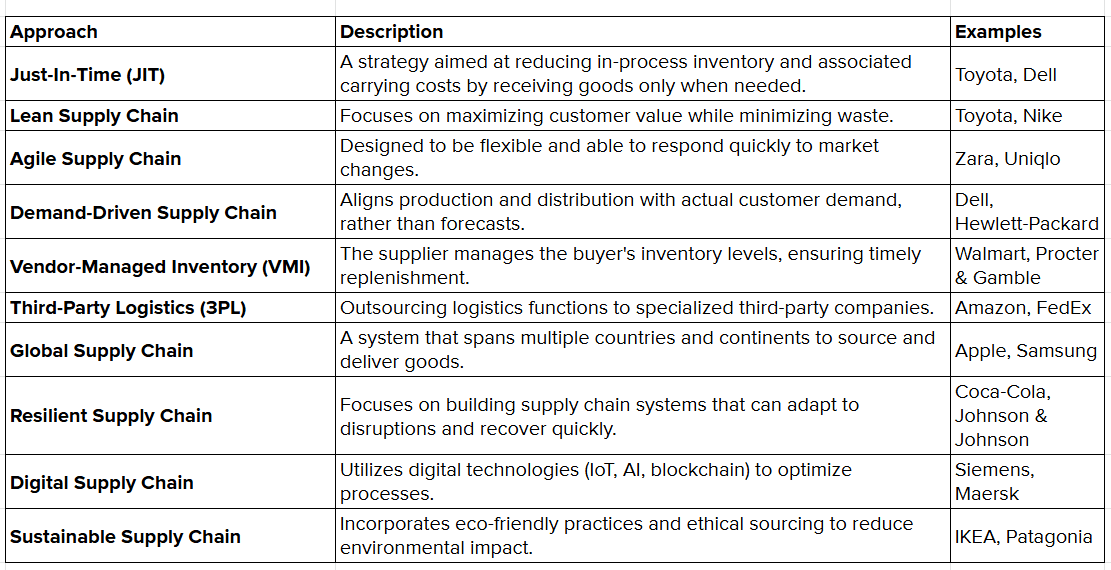
Highlighted below are different strategies businesses employ to optimize their supply chain performance, reduce costs, and improve responsiveness to market conditions:
Also Read: Mastering Exports: A Complete Guide to Letters of Undertaking (LUT) for Indian Exporters.
An upsurge of cutting-edge technologies has been transforming SCM operations lately. Digital technology optimizes, streamlines, and innovates the industry, driving greater efficiency, collaboration, and agility across the global supply chain.
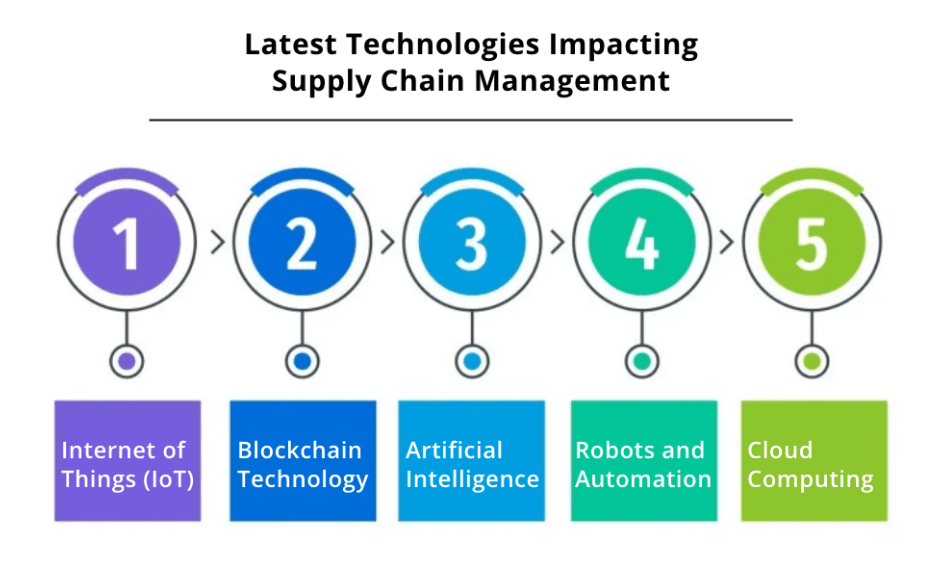
The image depicts a list of emerging technologies impacting today’s SCM.
Let’s take a deeper dive into how five key technologies—IoT, Blockchain, AI, Robotics, and Cloud Computing—are forging the future of supply chains.
Imagine a supply chain where every single item, vehicle, and piece of equipment can communicate in real-time. This is the magic of the Internet of Things (IoT). With the help of sensors, RFID tags, and GPS devices, IoT connects physical objects to the internet, feeding real-time data into a central hub. This allows businesses to track inventory, monitor shipments, and predict maintenance needs before they even become problems.
For instance, in smart warehouses, IoT-powered systems can optimize storage, improve inventory management, and enhance order fulfilment by analyzing data collected throughout the day. With IoT, businesses gain unprecedented visibility, helping them make smarter decisions and stay agile in a complex supply chain environment.
While IoT watches over your operations, blockchain technology ensures that every transaction is secure, transparent, and tamper-proof. Blockchain is that digital ledger that records every movement of goods, making sure that every step of a product’s journey—from raw materials to the end consumer—is logged and verified. This level of traceability prevents fraud, ensures product authenticity, and simplifies regulatory compliance.
For instance, food manufacturers can use blockchain to guarantee the origins of every ingredient, ensuring quality and safety for consumers. Blockchain's decentralized nature also means that no single party can manipulate the data, providing a trustworthy, incorruptible record of every transaction.
Picture a system that learns from past data, predicts future demand, and makes decisions faster and more accurately than any human could. This is AI doing its job. From automating routine tasks like procurement and inventory management to providing predictive analytics for demand forecasting, AI is revolutionizing supply chain efficiency.
By analyzing vast amounts of data, AI can identify patterns and anomalies that would otherwise go unnoticed. This is not just about speeding up processes—it’s about making better decisions. AI helps companies predict disruptions, optimize routes, and fine-tune pricing strategies based on real-time data.
When speed and precision are essential, robotics and automation are your best allies. Automated systems and self-driving vehicles are increasingly taking over repetitive, low-value tasks in warehouses, such as sorting, picking, and packing goods. Drones and robotic arms can work tirelessly, reducing human error, increasing order accuracy, and speeding up delivery times.
For instance, in transportation, autonomous trucks are on the rise, reducing fuel costs and optimizing delivery routes. These robots don’t just work—they learn and adapt, becoming increasingly efficient over time. By removing manual, labor-intensive processes, automation empowers businesses to focus on higher-value tasks while improving safety and reducing costs.
Finally, the power of cloud computing ties it all together. Imagine having all your supply chain data available at your fingertips, accessible from anywhere in the world. With cloud-based platforms, businesses can store and process vast amounts of data without the need for heavy, costly infrastructure. This shift to the cloud allows for real-time collaboration, easier scalability, and better disaster recovery.
Cloud systems enable businesses to access their supply chain data instantly, providing global reach and unmatched flexibility. Whether it's a sudden spike in demand or a disruption halfway across the world, cloud computing provides the speed and capacity needed to respond quickly.
Together, these technologies are the gears driving the future of supply chains, enabling businesses to thrive in a world that’s faster, more interconnected, and more complex than ever before. The future of supply chain management isn’t just about moving goods—it’s about moving faster, smarter, and more efficiently.
Also Read: Understanding Import-Export Codes (IEC) for Indian Importers and Exporters.
Even with the best practices and cutting-edge technologies, no supply chain is immune to risks. From global disruptions to supply shortages, managing these risks effectively is vital. Let’s examine how businesses identify, mitigate, and recover from potential risks in their supply chains:
Adopting agile strategies allows companies to respond quickly to disruptions such as supply shortages, demand fluctuations, or geopolitical risks. Flexibility in sourcing and production helps companies maintain operations during crises.
Lean supply chain management focuses on minimizing waste and maximizing value. By eliminating non-essential processes and optimizing resources, businesses can reduce costs while maintaining efficiency.
The use of real-time data enables companies to adapt supply chain models based on current conditions. Businesses that facilitate predictive analytics and real-time monitoring can anticipate issues and make informed decisions to optimize performance.
Also Read: [International Payments - The Challenges and Solutions of Cross border Payments.](#)
In a nutshell, SCM is the backbone of efficient production and delivery, connecting businesses, suppliers, and consumers. It's not just about operations—it's a tool for controlling costs, reducing risks, and ensuring customer satisfaction through timely, high-quality deliveries that support long-term success and adaptability.
The IoT monitors operations in real-time, blockchain secures every transaction, AI predicts future trends, robotics handles repetitive tasks, and cloud computing makes all of this accessible and scalable. The future of SCM lies in digital innovation–creating smarter, more resilient systems that drive growth and keep companies soaring through an ever-evolving market.
Managing a global supply chain comes with challenges, and payment processing shouldn’t be one of them. With PayGlocal’s multi-currency accounts and dynamic checkout options, your business can easily handle payments across 180+ countries and 130+ global currencies. Eliminate the hassle of currency conversions and provide your suppliers and partners with flexible, reliable payment options. Start simplifying your international transactions today with PayGlocal’s customized solutions. Visit PayGlocal today!
Understanding SCM business is more than just a technical necessity—it's a strategy that can transform your entire operation. In this guide, we will explore the core components of SCM business operations, revealing how they shape everything from efficiency to customer satisfaction.
What is Supply Chain Management for Businesses?
Supply Chain Management (SCM) is an intricate craft that coordinates every step, from getting the raw materials to delivering the product to the customer, making sure everything flows smoothly and on time. The key players include suppliers, manufacturers, and customers, who help maintain everything in synchrony.
At its core, SCM keeps the gears turning, ensuring minimal delays, reduced costs, and consistent product availability. It’s like the nervous system of a business, channelling the flow of products, information, and money. When optimized, it cuts waste, sharpens inventory management, and empowers businesses with real-time data to make smarter, faster decisions.
Through seamless communication and precise planning, SCM brings all the moving parts together, keeping businesses efficient and customers happy. In short, SCM isn’t just a background process—it’s what makes everything click.
Now that we have a foundation in SCM, it’s essential to explore the core components that make this system function seamlessly. Here’s a breakdown:
Key Components of Supply Chain Management
Planning
How do you plan for efficiency? Effective planning is at the core of managing the entire supply chain, ensuring that resources are efficiently allocated to meet demand. ERP (Enterprise Resource Planning) systems enable businesses to forecast demand, manage inventories, and optimize scheduling for production and distribution.
Example: Nike utilizes advanced ERP systems to track inventory levels across global markets. This system helps the company adjust production schedules to prevent overproduction, ensuring that stock levels are optimized to meet current demand.
Sourcing and Vendor Collaboration
The sourcing stage focuses on identifying and establishing relationships with reliable suppliers. Collaborating with vendors allows businesses to secure the best materials at competitive costs while ensuring on-time delivery and quality standards.
Example: Starbucks works closely with coffee farmers worldwide to ensure sustainable sourcing practices. By fostering long-term relationships, Starbucks secures high-quality coffee beans while supporting ethical farming practices.
Production Scheduling for Manufacturing
Production is about transforming raw materials into finished goods. Effective scheduling aligns production with demand, ensuring timely manufacturing while adhering to industry standards. Businesses that maintain quality through regular audits can avoid production bottlenecks.
Example: Toyota uses the Just-in-Time (JIT) manufacturing system to ensure that only necessary materials are produced, reducing waste and optimizing resource use. This approach helps Toyota meet customer demand while maintaining lean inventory levels.
Inventory Management
Why is inventory management crucial? Managing stock effectively helps prevent overstocking and shortages. Inventory management tools and real-time data tracking allow businesses to balance supply with demand, ensuring they have enough stock without excess that could result in waste.
Example: Zara, a fast-fashion retailer, uses a responsive supply chain that quickly reacts to demand. Zara produces smaller batches of inventory and restocks as needed, reducing waste while staying on top of trends.
Logistics and Efficient Delivery Systems
Logistics handles the transportation, warehousing, and delivery of goods to ensure they reach customers at the right place and time. Efficient logistics depend on cost-effective routes, real-time tracking, and careful handling of goods.
Example: Walmart employs real-time tracking systems and RFID technology to manage inventory across its stores. It uses a well-optimized logistics network with distribution centers that allow it to restock stores quickly and keep costs low. Their sophisticated system ensures shelves are always stocked, which enhances customer satisfaction.
Returns Management
Returns management is a crucial part of the SCM process. Handling returns efficiently ensures customer satisfaction and allows businesses to recover value from defective products. A good returns system builds customer trust and enhances long-term loyalty.
Example: Zappos offers free returns for up to a year, allowing customers to return products easily. This customer-friendly returns policy builds trust and ensures that defective or unwanted items are managed effectively in their supply chain.
These examples demonstrate how top global companies apply the key components of SCM to streamline operations, reduce costs, and deliver better value to their customers. By implementing these strategies, businesses can maintain efficient supply chains and gain a competitive advantage.
Also Read: Understanding the Export Data Processing and Monitoring System (EDPMS).
Best Practices in Supply Chain Management
Effective supply chain management ensures the smooth flow of goods, services, and information from suppliers to customers. Businesses can meet customer demands by optimizing processes, reducing costs, and improving efficiency while maintaining profitability. Implementing best practices in supply chain management can enhance overall performance, boost competitiveness, and drive long-term success.
Real-time Planning vs. Traditional Methods
Traditional supply chain methods often involve long planning cycles. However, real-time planning allows businesses to respond quickly to changing demand, reducing waste and improving efficiency.
Example: Walmart’s real-time data tracking system lets it adjust stock levels in response to customer purchases, improving product availability and reducing excess inventory.
Linking SCM with Enterprise Planning and Financial Objectives
Effective SCM is integrated with broader business strategies. By aligning SCM with financial objectives, businesses can ensure that operational decisions support profitability and long-term growth.
Example: Apple links its SCM strategies with financial objectives to optimize production costs while maintaining high margins on its products.
Anticipating Demand and Improving Visibility
How well do you anticipate demand? Predicting consumer demand is essential for minimizing waste and improving customer satisfaction. Technologies like AI and data analytics help businesses improve demand forecasting and supply chain visibility.
Example: Amazon’s AI-powered forecasting system anticipates demand for millions of products, ensuring timely restocking and reducing shortages.
Common Approaches To Supply Chain Management
Highlighted below are different strategies businesses employ to optimize their supply chain performance, reduce costs, and improve responsiveness to market conditions:
Also Read: Mastering Exports: A Complete Guide to Letters of Undertaking (LUT) for Indian Exporters.
Emerging Technologies in Supply Chain Management
An upsurge of cutting-edge technologies has been transforming SCM operations lately. Digital technology optimizes, streamlines, and innovates the industry, driving greater efficiency, collaboration, and agility across the global supply chain.
The image depicts a list of emerging technologies impacting today’s SCM.
Let’s take a deeper dive into how five key technologies—IoT, Blockchain, AI, Robotics, and Cloud Computing—are forging the future of supply chains.
Internet of Things (IoT)
Imagine a supply chain where every single item, vehicle, and piece of equipment can communicate in real-time. This is the magic of the Internet of Things (IoT). With the help of sensors, RFID tags, and GPS devices, IoT connects physical objects to the internet, feeding real-time data into a central hub. This allows businesses to track inventory, monitor shipments, and predict maintenance needs before they even become problems.
For instance, in smart warehouses, IoT-powered systems can optimize storage, improve inventory management, and enhance order fulfilment by analyzing data collected throughout the day. With IoT, businesses gain unprecedented visibility, helping them make smarter decisions and stay agile in a complex supply chain environment.
Blockchain Technology
While IoT watches over your operations, blockchain technology ensures that every transaction is secure, transparent, and tamper-proof. Blockchain is that digital ledger that records every movement of goods, making sure that every step of a product’s journey—from raw materials to the end consumer—is logged and verified. This level of traceability prevents fraud, ensures product authenticity, and simplifies regulatory compliance.
For instance, food manufacturers can use blockchain to guarantee the origins of every ingredient, ensuring quality and safety for consumers. Blockchain's decentralized nature also means that no single party can manipulate the data, providing a trustworthy, incorruptible record of every transaction.
Artificial Intelligence (AI)
Picture a system that learns from past data, predicts future demand, and makes decisions faster and more accurately than any human could. This is AI doing its job. From automating routine tasks like procurement and inventory management to providing predictive analytics for demand forecasting, AI is revolutionizing supply chain efficiency.
By analyzing vast amounts of data, AI can identify patterns and anomalies that would otherwise go unnoticed. This is not just about speeding up processes—it’s about making better decisions. AI helps companies predict disruptions, optimize routes, and fine-tune pricing strategies based on real-time data.
Robotics and Automation
When speed and precision are essential, robotics and automation are your best allies. Automated systems and self-driving vehicles are increasingly taking over repetitive, low-value tasks in warehouses, such as sorting, picking, and packing goods. Drones and robotic arms can work tirelessly, reducing human error, increasing order accuracy, and speeding up delivery times.
For instance, in transportation, autonomous trucks are on the rise, reducing fuel costs and optimizing delivery routes. These robots don’t just work—they learn and adapt, becoming increasingly efficient over time. By removing manual, labor-intensive processes, automation empowers businesses to focus on higher-value tasks while improving safety and reducing costs.
Cloud Computing
Finally, the power of cloud computing ties it all together. Imagine having all your supply chain data available at your fingertips, accessible from anywhere in the world. With cloud-based platforms, businesses can store and process vast amounts of data without the need for heavy, costly infrastructure. This shift to the cloud allows for real-time collaboration, easier scalability, and better disaster recovery.
Cloud systems enable businesses to access their supply chain data instantly, providing global reach and unmatched flexibility. Whether it's a sudden spike in demand or a disruption halfway across the world, cloud computing provides the speed and capacity needed to respond quickly.
Together, these technologies are the gears driving the future of supply chains, enabling businesses to thrive in a world that’s faster, more interconnected, and more complex than ever before. The future of supply chain management isn’t just about moving goods—it’s about moving faster, smarter, and more efficiently.
Also Read: Understanding Import-Export Codes (IEC) for Indian Importers and Exporters.
Risk Management and Improvement Strategies
Even with the best practices and cutting-edge technologies, no supply chain is immune to risks. From global disruptions to supply shortages, managing these risks effectively is vital. Let’s examine how businesses identify, mitigate, and recover from potential risks in their supply chains:
Agile Strategies for Resilience
Adopting agile strategies allows companies to respond quickly to disruptions such as supply shortages, demand fluctuations, or geopolitical risks. Flexibility in sourcing and production helps companies maintain operations during crises.
Lean Systems for Cost Reduction
Lean supply chain management focuses on minimizing waste and maximizing value. By eliminating non-essential processes and optimizing resources, businesses can reduce costs while maintaining efficiency.
Real-time Data for Optimizing Supply Chain Models
The use of real-time data enables companies to adapt supply chain models based on current conditions. Businesses that facilitate predictive analytics and real-time monitoring can anticipate issues and make informed decisions to optimize performance.
Also Read: [International Payments - The Challenges and Solutions of Cross border Payments.](#)
Conclusion
In a nutshell, SCM is the backbone of efficient production and delivery, connecting businesses, suppliers, and consumers. It's not just about operations—it's a tool for controlling costs, reducing risks, and ensuring customer satisfaction through timely, high-quality deliveries that support long-term success and adaptability.
The IoT monitors operations in real-time, blockchain secures every transaction, AI predicts future trends, robotics handles repetitive tasks, and cloud computing makes all of this accessible and scalable. The future of SCM lies in digital innovation–creating smarter, more resilient systems that drive growth and keep companies soaring through an ever-evolving market.
Managing a global supply chain comes with challenges, and payment processing shouldn’t be one of them. With PayGlocal’s multi-currency accounts and dynamic checkout options, your business can easily handle payments across 180+ countries and 130+ global currencies. Eliminate the hassle of currency conversions and provide your suppliers and partners with flexible, reliable payment options. Start simplifying your international transactions today with PayGlocal’s customized solutions. Visit PayGlocal today!