
Key Takeaways
- Security is non-negotiable: Whether you're a business or freelancer, secure payment apps protect financial integrity, not just offer convenience.
- Strong architecture is essential: Look for features like AES-256 encryption, code obfuscation, and penetration testing.
- Limit app permissions: The fewer permissions an app requests, the lower the risk of exploitation.
- Data handling matters: Encrypted storage and minimal use of persistent memory reduce the risk of data leaks.
- Authentication builds trust: Features like multi-factor authentication (MFA) and biometrics keep accounts and transactions secure.
If you use payment apps to get paid from international clients, this is your heads-up.
One wrong click. One missed notification. And you might lose all your hard-earned dollars.
You’ve probably seen those “₹50,000 lost to UPI scam” stories floating around. But here’s the thing: freelancers, small business owners, or anyone who’s actively making international transactions or even domestic ones, are a target.
The more global your work, the more attractive you are to fraudsters. And while others are quietly upgrading their payment security, are you still relying on luck? Here’s how to lock down your payment apps before it’s too late.
Why are secure payment apps essential today?
The convenience of payment apps is tempting, but it also comes with significant responsibility. Due to their growing popularity and often inconsistent security measures, mobile transactions are prime targets for cybercriminals.
Rising Threats: App scams and fraud are expected to cost over $5 billion annually by 2026. This projection highlights the urgent need for enhanced safeguards in mobile transactions.
Trust Dependency: User trust is contingent upon the perceived safety of apps handling sensitive financial data. A breach can immediately result in user abandonment and reputational harm.
Widespread Usage: From QR codes to peer-to-peer payments, unsecured apps increase exposure to malware and data leaks. As usage spreads, so does the potential attack surface.
Designing secure payment apps is a fundamental requirement in today’s threat-prone digital environment. Developers and payment providers must incorporate security from the first line of code. That’s why knowing the core vulnerabilities is a good starting point.
What are the common weaknesses in payment apps?
Not all vulnerabilities are visible on the surface. Many breaches start from a flawed app architecture or unchecked integrations.
Inadequate Encryption: Weak or outdated encryption protocols leave data exposed. Without proper encryption, sensitive transactions can be intercepted or manipulated.
Excessive Permissions: Apps requesting unnecessary access increase the attack surface. Overprivileged apps can be exploited for unauthorized data retrieval.
Unsafe Third-Party Libraries: Unscrutinized third-party code may introduce backdoors or insecure functions. Many apps use external SDKs without knowing their security posture.
Lack of Obfuscation: Exposed code makes reverse engineering easier for attackers. Unprotected codebases are more vulnerable to cloning and tampering.
Identifying vulnerabilities is only effective when followed by implementing well-defined protective strategies.
How can you implement strong security in a payment app?
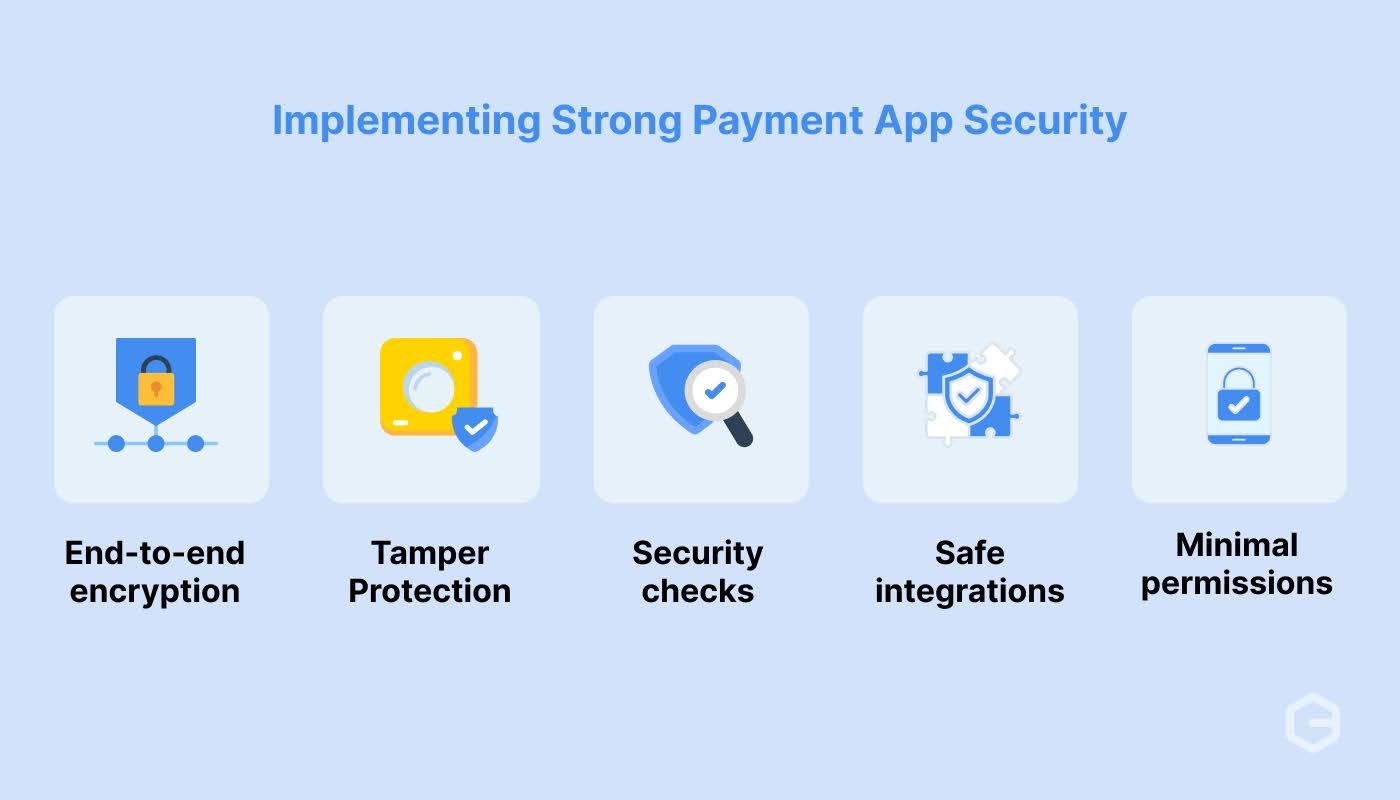
You don’t need to read code to know if a payment app takes your security seriously. Look for clear signs of built-in protection, because security isn’t a feature, it’s the foundation. Here’s what matters:
End-to-end encryption: Your data, whether it’s payment details or identity info, should be encrypted the moment you enter it. AES-256 is the gold standard.
Tamper-resistant tech: The app should be designed to block manipulation or unauthorized access, especially during fund transfers or verification steps.
Regular security checks: Top apps run frequent security audits and penetration tests to detect vulnerabilities before criminals do.
Safe integrations only: Secure apps don’t rely on shady third-party tools. They vet every system they connect with to protect your data.
Minimal permissions: If an app requests access to your contacts, camera, or GPS, and doesn’t require it to function, consider it a red flag.
The best apps don’t just promise security. They demonstrate this through their technology, transparency, and proven track record.
Do app permissions really matter for payment security?
One of the most overlooked aspects of app security is the level of access it grants itself. Overpermissive apps are liabilities.
Principle of Least Privilege: Only request permissions essential for core functionalities. Fewer permissions mean fewer potential exploit vectors.
Controlled Access: Limit who or what can access sensitive components. This applies to both users and background services.
User Consent Transparency: Explain why permissions are requested and how their data will be used. Transparency fosters informed consent and reduces backlash.
Risks of excessive access are real and immediate:
- Camera or Microphone Access: Can be misused for surveillance. Attackers may activate these features without user awareness.
- Location Data: Enables user tracking and targeted attacks. Geolocation info is often abused for social engineering.
- Contact Lists Can be mined for phishing or spam attempts, which can compromise the privacy of others in a user’s network.
Adequate security begins with minimal permissions and extends to controlled and encrypted data storage.
How can you store sensitive payment data securely?
Storage must be handled precisely to protect sensitive data from exposure, misuse, or theft. Insecure storage exposes sensitive information even when the app isn’t in use. These practices help in managing data securely:
- Secure Paths Only: Never store data in public folders accessible to other apps. Shared directories are prime targets for snooping.
- Encrypted Local Storage: Sensitive information should be stored using encryption mechanisms, which add a critical layer of protection.
- Avoid Persistent Storage for Sensitive Data: Store credit card info or passwords only in volatile memory. Temporary memory clears after the app closes, reducing risks.
How can you keep data safe during digital transactions?
Every time a user taps “Pay,” information moves from device to server, and that journey must be protected. Here’s how to keep data in transit safe:
TLS/SSL Protocols: Always use HTTPS with SSL/TLS to encrypt transmitted data. These protocols ensure data confidentiality and integrity.
Certificate Pinning: Hardcoding certificates prevents man-in-the-middle attacks and verifies that the app connects only to trusted servers.
Secure WebSockets: Ensure persistent connections use encryption and authentication. Real-time connections shouldn’t compromise security.
Even the smallest gap in encryption or authentication can expose sensitive information and damage customer trust.
That’s why choosing the right payment gateway matters. You need a platform built with security at its core, not as an afterthought.
PayGlocal was designed for this.
We understand the risks associated with global transactions—currency issues, compliance gaps, and fraudulent attempts. We built a cross-border payment platform that prioritizes security and reliability, without slowing you down. From bank-grade encryption to multi-layered fraud checks, we help businesses process international payments with confidence and control.
How does PayGlocal enhance business payment security?
International payments can feel risky, complicated, and downright frustrating. That’s why we built PayGlocal to solve the real problems with international payments that slow you down. Here’s how we help you stay in control:
Built-in global compliance: We follow PCI DSS standards and enforce strict KYC/AML checks to keep your payments safe and legal.
Fraud prevention: Continuous transaction monitoring helps detect and block suspicious activity before it affects your business.
Full transparency: Real-time reporting and audit trails give you complete visibility into every payment.
Regulatory peace of mind: Staying compliant means you avoid fines, delays, and disruptions when moving money across borders.
Trusted foundation: Compliance and security aren’t add-ons. They’re core to how PayGlocal helps you scale confidently and securely.
Security is at the heart of everything we do. No complicated steps, no hazzle, just a platform that works, protects, and performs for payment transactions.
Conclusion
A secure payment app isn’t built and forgotten. It requires active maintenance, consistent updates, and ongoing vigilance. Regular checks uncover and fix new vulnerabilities. Proactive reviews help maintain app integrity. Fix discovered flaws before they can be exploited. Prompt patching is key to breach prevention. Inform users on secure usage habits to extend protection. Educated users are your first line of defense.
Businesses that take security seriously build safer apps, trust, and long-term user loyalty. PayGlocal focuses on seamless and secure international transactions. ̉This platform partners with merchants to deliver cross-border payment solutions that prioritize protection without compromising convenience.
Are you looking to integrate a secure, global-ready payment experience into your business? Contact PayGlocal today and explore smart, encrypted, and frictionless solutions designed to scale with your needs.