
Key Takeaways
- E-commerce transaction refers to the online exchange of goods or services via internet-enabled devices. These transactions power the global e-commerce ecosystem by providing businesses with 24/7 accessibility, seamless payment integration, and international customer reach.
- E-commerce transactions involve multiple steps, from product discovery and cart management to secure checkout and final delivery, ensuring a smooth and convenient shopping experience for customers worldwide.
- Key benefits of e-commerce transactions include cost efficiency, global scalability, improved cash flow management, and enhanced customer satisfaction through real-time tracking, flexible payment options, and streamlined logistics.
- PayGlocal empowers Indian businesses to simplify cross-border e-commerce transactions, offering features such as dynamic, global payment methods, multi-currency accounts, and automated compliance, making international expansion faster, safer, and more efficient.
E-commerce has become an indispensable part of global retail, accounting for over 17% of total retail sales recorded in 2024. This digital transformation has reshaped how businesses operate and how consumers shop, making convenience, speed, and accessibility the new standards for shopping. From small artisans to global tech brands, everyone is now participating in a borderless marketplace powered by fast, secure, and automated transactions.
With global e-commerce sales projected to reach $8 trillion by 2027, the growth opportunities are vast, but so are the challenges. Businesses must manage diverse payment preferences, cross-border compliance, and evolving customer expectations.
In this blog, we’ll break down what an ecom transaction means, explore its core benefits, highlight must-have features, and examine the future of digital commerce so you can stay competitive in a fast-changing marketplace.
What is an Ecom transaction?
An ECOM (e-commerce) transaction means an online purchase or sale through internet-enabled devices, typically on e-commerce platforms or websites.
For example, a business selling handmade jewelry online receives an order from a customer based in the United States. The customer adds products to the cart, selects their preferred payment method, and completes the transaction. The payment is processed electronically, and the merchant ships the items to the customer.
For businesses engaging in cross-border e-commerce, such transactions involve multiple currency conversions, compliance with international regulations, and secure payment gateways. So, companies should adopt solutions to handle and simplify e-commerce transactions.
What benefits do ecom transactions offer?
E-commerce transactions offer immense benefits: customers can shop from anywhere and at any time, and access is available 24/7. There are many more key advantages over traditional retail transactions. Let’s take a look.
- Global market access: With e-commerce transactions, you can easily tap into international markets and reach customers worldwide. This expands your market opportunities, boosting your revenue potential. Retail e-commerce sales are expected to surpass $4.3 trillion in 2025, making it an ideal time for you to scale your business globally.
- Payment integration: E-commerce platforms facilitate the seamless integration of multiple payment methods, thereby reducing friction in transaction workflows. This enhances customer experience and improves operational efficiency without the need for complex, manual processes.
- Cost efficiency: E-commerce helps eliminate many traditional retail costs, such as overhead for physical stores and manual transaction processing. Thus, it provides you with better control over costs and enhances profitability.
- Security and compliance: Modern e-commerce transactions adhere to industry-standard security protocols, thereby reducing fraud and compliance risks and ensuring peace of mind when managing cross-border payments.
- Enhances cash flow management: Streamlining payment processes improves operational efficiency and liquidity. For example, using invoice financing or factoring, businesses can receive immediate funding against their receivables, reducing the time between delivery and payment.
- Increased efficiency: E-commerce transactions simplify customer service, resolve issues, and enhance delivery logistics. This leads to better customer satisfaction, loyalty, and growth opportunities.
E-commerce transactions are crucial for business success in the digital age. However, knowing how they work is just as essential for optimizing your operations and a smooth experience for you and your customers.
How do ECOM transactions work?
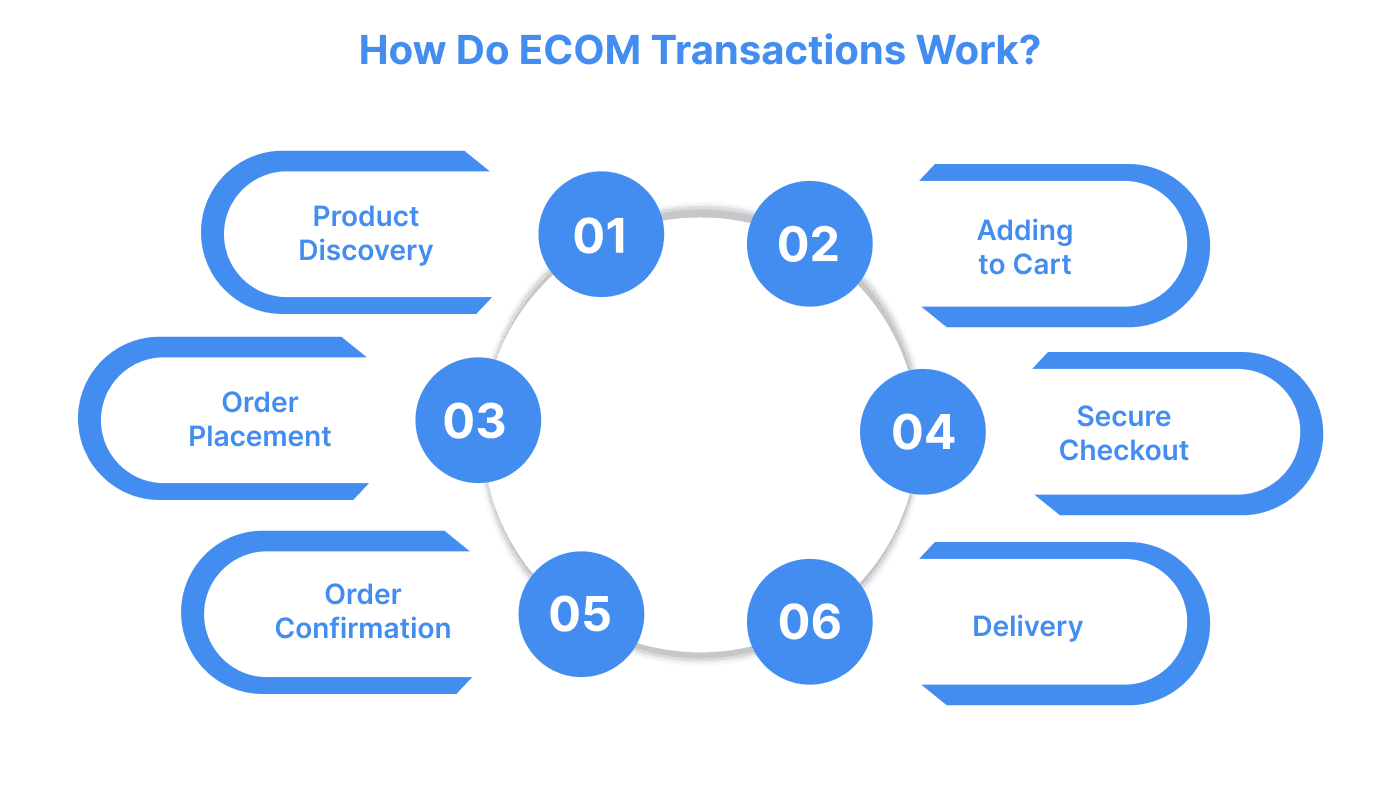
Several steps are involved in e-commerce transactions to ensure a seamless platform for customers, resulting in prompt product delivery. Let’s explore these steps in detail:
- Step 1: Product discovery
Your customers begin by exploring your online platform, whether a website or mobile app. They browse a range of products, using search filters and categories to narrow their options.
To enhance this experience, optimize product descriptions, use high-quality images, and display reviews. This will help your customers make informed decisions.
- Step 2: Adding to cart
Once customers find the items they want, they add them to their virtual shopping cart. They can adjust quantities, remove items, or continue shopping before moving to checkout. Ensuring a smooth experience here will help your customers seamlessly transition to the next step.
- Step 3: Order placement
At this stage, your customers confirm their selections and review the order. Offering promotional codes or discounts can encourage them to finalize the purchase. You must provide a clear breakdown of costs, including taxes and shipping, particularly for international orders where duties and customs may be applicable.
- Step 4: Secure checkout
The checkout process is crucial, particularly for businesses that handle cross-border transactions. Your customers will enter their billing and shipping information, as well as their preferred payment method.
Provide secure and reliable payment gateways to establish trust and safeguard sensitive data. Multi-currency support streamlines international transactions by converting payments into the customer's preferred currency.
- Step 5: Order confirmation
After the payment is processed, your customers will receive an order confirmation, including a receipt and tracking information.
- Step 6: Delivery
Once the payment is completed, the next step is delivering the product to the customer. Domestic transactions generally follow a straightforward delivery process, supported by established logistics systems.
However, for international transactions, additional complexities such as customs clearance, international shipping, and currency conversion are involved. A reliable cross-border payment solution can simplify these challenges and ensure timely delivery across borders.
Various tools and technologies work together to ensure smooth e-commerce transactions. Behind the scenes, data management, logistics, warehousing, supply chains, and payment processing all play crucial roles in ensuring the success of both domestic and international e-commerce.
What features make ecom transactions efficient?
Here are the key features of e-commerce transactions that every business should know, and how they can benefit your business:
- User-friendly design: A simple, clean, and easy-to-navigate website or app ensures customers have a seamless shopping experience. A well-designed interface encourages conversions and reduces bounce rates, helping to retain customers and boost sales.
- Mobile compatibility: As more consumers shop using mobile devices, having a mobile-optimized platform is essential. This ensures that customers can browse and complete purchases at any time and from anywhere, improving accessibility and expanding your market reach.
- Multiple payment options: Offering various payment methods, including credit cards, digital wallets, and online banking, ensures that customers can pay in their preferred way. This flexibility encourages more transactions and can be crucial in international markets, where preferred payment methods may vary.
- Order tracking: Providing customers with the ability to track their orders enhances transparency and fosters customer trust. It reduces customer anxiety, improves the post-purchase experience, and encourages loyalty, which is crucial for repeat business.
- Product reviews: Enabling customer reviews helps build trust and provides valuable feedback on products. It guides other potential buyers in making informed decisions, leading to higher conversion rates and better customer satisfaction.
Payglocal stands out with its seamless integration capabilities, offering over 40 payment methods across multiple platforms. This flexibility enables your business to cater to a global customer base, offering a seamless and secure payment experience tailored to various regions and preferences. By incorporating multiple payment options, including local and international methods, Payglocal enhances e-commerce transactions, simplifies processes, and drives conversions. Get Started Today!
As businesses utilize these features to enhance their operations, consumer behavior and technology continue to evolve, making it essential to stay ahead of trends and innovations to sustain growth.
What future trends will shape ecom transactions?
These trends are reshaping the Ecom landscape, providing businesses with opportunities to improve efficiency, security, and customer experience while driving growth.
- Rise of cryptocurrency and blockchain payments: Blockchain technology is poised to revolutionize e-commerce payments, with customers utilizing wallet IDs for transactions. The blockchain retail market is projected to hit $15.96 billion by 2032, enhancing transparency and speed.
- AI-powered fraud prevention: AI plays a crucial role in detecting fraudulent transactions, utilizing patterns such as transaction size and history to identify anomalies. By 2027, AI-powered fraud prevention is expected to save businesses $10 billion.
- Growth of BNPL (Buy Now, Pay Later) models: BNPL models enable customers to pay in installments, thereby boosting sales, particularly among younger shoppers.
- Voice commerce & one-platform payments: Voice commerce is growing, with shoppers using voice commands to make purchases. One platform payment, with minimal authentication, is expected to drive convenience and sales.
How does PayGlocal simplify e-commerce transactions for Indian businesses?
PayGlocal is a leading cross-border payment solution designed specifically for Indian businesses that want to tap into global markets without the complexity of traditional international payment systems.
As e-commerce continues to grow rapidly, managing international transactions, especially those involving multiple currencies, payment gateways, and compliance requirements, can become overwhelming quickly. This is where PayGlocal steps in. It offers a seamless, secure, and scalable platform that integrates effortlessly into existing e-commerce setups.
Whether you're a startup or a large enterprise, here’s how PayGlocal empowers your business:
- Dynamic checkout: Automatically adjusts checkout experience based on customer location, currency, and preferred language to improve conversions.
- Card payments: Supports international and domestic card transactions, enabling customers to pay via Visa, Mastercard, and other major credit cards with ease.
- Global payment methods: Accepts over 40 payment methods, including region-specific options like UPI, wallets, and bank transfers.
- Recurring payments: Enables subscription billing and automated recurring payments for SaaS platforms, digital products, and service-based models.
- Multi-currency account: Offers the ability to receive and hold payments in multiple currencies, reducing foreign exchange (FX) losses and providing better control over settlements.
- One platform: Consolidates payment acceptance, settlement, and reporting into a unified dashboard to simplify operations and reconciliation.
- Sanction screening: Automatically verifies transactions against global compliance lists to prevent fraud and meet regulatory standards.
By addressing the everyday challenges of cross-border ecom transactions, such as currency conversion, payment failures, and compliance, PayGlocal ensures your business remains focused on growth, not on troubleshooting. Whether you're selling to customers in the US, Europe, or Southeast Asia, sign up for free with PayGlocal today and make global selling feel as seamless as domestic transactions.
Conclusion
E-commerce has revolutionized the way businesses and consumers interact, offering unprecedented convenience, access, and opportunities for global expansion. For businesses, it opens doors to new markets, improves operational efficiency, and enhances customer experience. The long-term benefits, including increased global reach and simplified processes, position e-commerce as a critical driver of growth in the digital age.
For businesses seeking to simplify and optimize international payments, PayGlocal provides a comprehensive one-stop solution. With features like an unparalleled payment success rate, access to global payment methods, low-cost payment collections, and multi-currency accounts., Transform your cross-border payments today!