
You make a sale or buy a service, and somewhere behind it sits a small document doing a lot of quiet work: the invoice. It is how businesses keep track of who owes what, and when.
Invoicing is not a niche concern either. The global e-invoicing market is projected to reach $35.9 billion by 2028, a sign of how central it has become to commerce. Whether you run a business or freelance across several clients, understanding what an invoice means leads to smoother transactions, faster payments, and cleaner records.
This guide covers what an invoice is, how it differs from a bill and a receipt, what it should contain, and how to send one well.
Invoicing is not a niche concern either. The global e-invoicing market is projected to reach $35.9 billion by 2028, a sign of how central it has become to commerce. Whether you run a business or freelance across several clients, understanding what an invoice means leads to smoother transactions, faster payments, and cleaner records.
This guide covers what an invoice is, how it differs from a bill and a receipt, what it should contain, and how to send one well.
TL;DR
- An invoice is a formal payment request that records what was sold, how much is owed, and when payment is due.
- A good invoice includes buyer and seller details, a unique invoice number, dates, itemised charges, payment terms, and the total amount due.
- Clear, timely invoicing improves cash flow, reduces disputes, supports tax records, and makes it easier to track and collect payments.
What is the meaning of an invoice?
An invoice is a formal document a seller issues to a buyer to request payment for goods or services. It is an itemised record of the transaction: what was sold, how much is owed, and when payment is due. That makes it both a payment request and official evidence that a sale took place.
The difference from a receipt matters. A receipt confirms payment after the fact; an invoice is a proactive request for payment, usually with detailed terms. An invoice can cover a one-off sale or recurring billing, and by stating clearly what is owed and by when, it keeps financial management clean on both sides.
What is the difference between an invoice, a bill, and a receipt?
These three get used interchangeably, but they do different jobs. Knowing which is which keeps your records clear and your customer communication precise.
| Document | What it does | When it is issued | Typical setting |
|---|---|---|---|
| Invoice | Requests payment and records the transaction with itemised detail and terms | Before payment | B2B or delayed-payment agreements |
| Bill | States an amount owed, usually for immediate settlement | At the point of service | Consumer settings like restaurants and salons |
| Receipt | Acknowledges that payment has been made | After payment | Any completed transaction |
In short, invoices are mostly used in business-to-business settings or where payment is deferred, bills show up in everyday consumer settings, and receipts simply confirm that money has changed hands.
What is the purpose of an invoice?
An invoice does more than ask for money. It serves several functions at once.
- Acts as a payment request. It formally tells the buyer what is due, covering the goods or services provided and the payment terms, which sets expectations and heads off misunderstandings.
- Establishes legal proof of sale. It stands as documentation that a sale happened, which helps in disputes, returns, or tax audits by giving both parties a verifiable record.
- Supports bookkeeping. It gives a structured record of every sale, making it easier to track income, unpaid dues, and trends, and smoothing audits and reporting.
- Assists tax filing. Well-kept invoices support accurate reporting at tax time and help with GST or VAT compliance, which auditors often require.
- Defines payment terms. It sets when and how payment is expected, whether on receipt, within 15 days, or after a month, so both sides can plan cash flow.
A well-drafted invoice makes the request professionally and leaves no ambiguity about what happens next.
What should an invoice include?
A professional invoice carries a standard set of components that keep the transaction accurate and dispute-free:
- Invoice title and number: the word "Invoice" and a unique number for reference.
- Buyer's details: the customer's name and contact information.
- Seller's details: your business name, address, and contact information.
- Important dates: the issue date and the delivery or service date.
- Payment terms: due date, accepted payment modes, and any late-fee policy.
- Description and pricing: an itemised list of goods or services with per-unit costs.
- Total amount payable: the total after taxes, discounts, or additional charges.
Each element reduces the room for confusion and dispute.
What are the different types of invoices?
Invoices come in a few forms suited to different needs: a standard invoice for a straightforward sale, a proforma invoice issued before a sale as a cost estimate, a credit invoice to reduce an amount when goods are returned or a service is cancelled, a debit invoice to correct an undercharge, a recurring invoice for regular billing cycles, a timesheet invoice based on hours worked, and a mixed invoice that combines products and services.
For a fuller breakdown of each type and its elements, see PayGlocal's guide to common invoice types and elements.
What does an invoice look like?
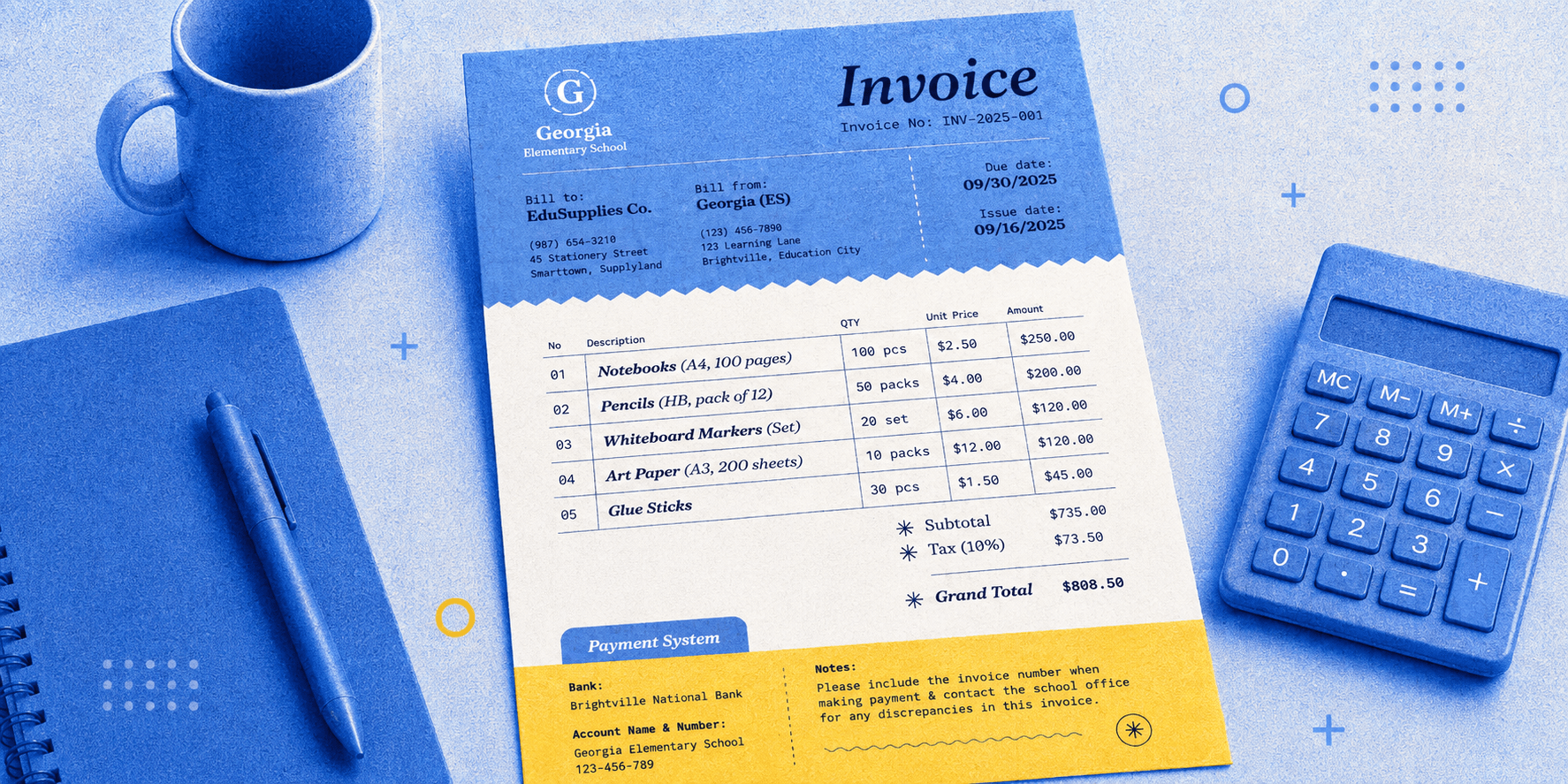
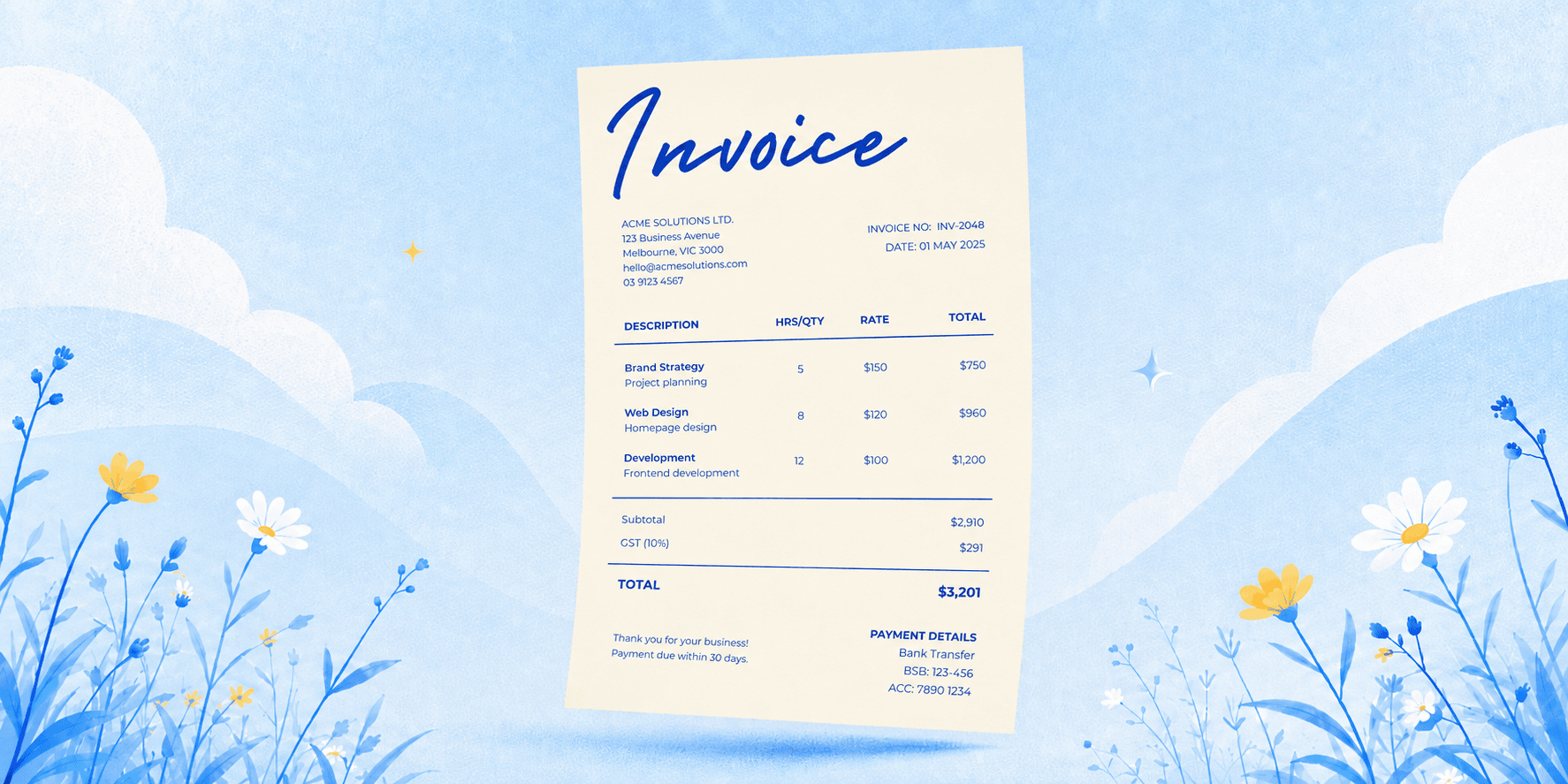
Seeing the layout helps you check that nothing is missing. Two common styles cover most needs.
1. Standard invoice template
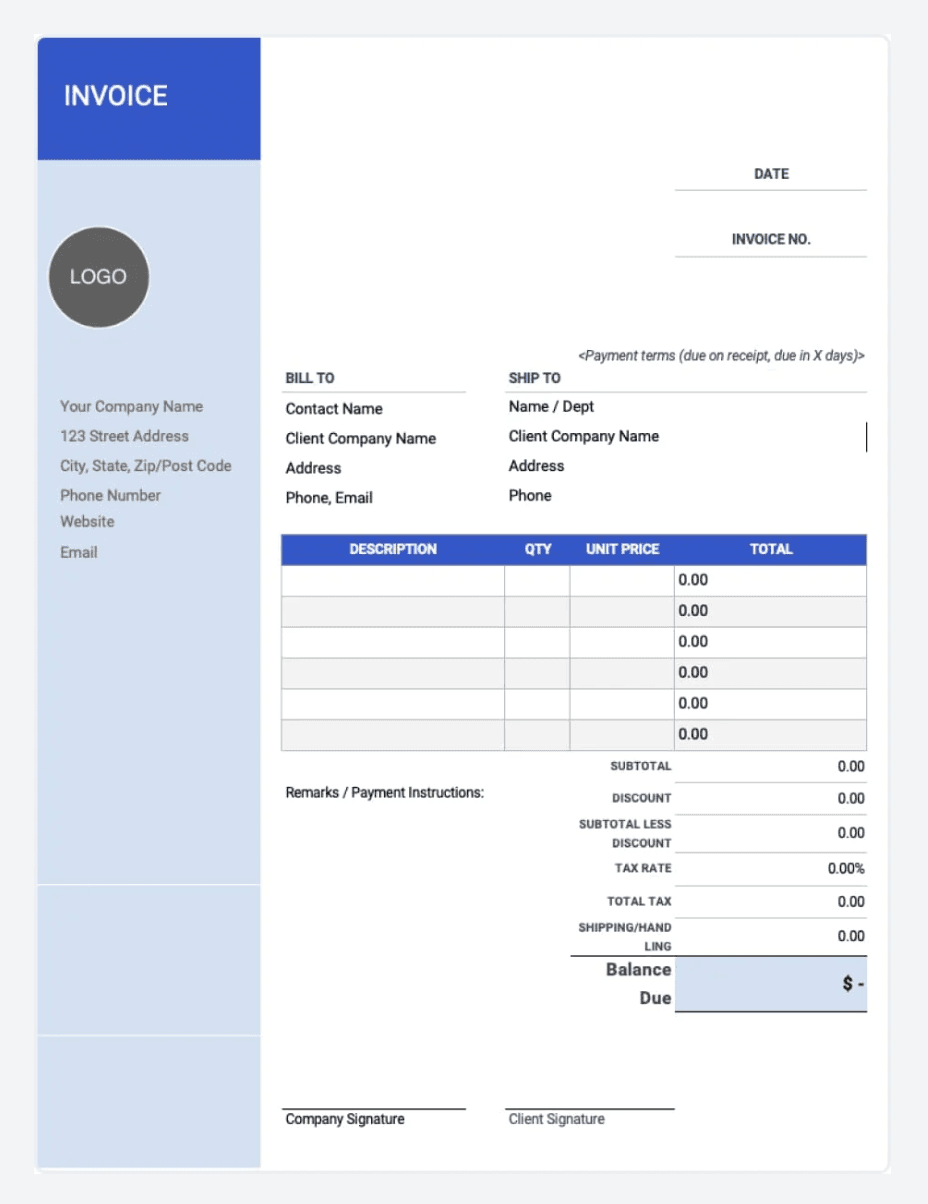
This layout includes the core elements:
- Seller and buyer information
- Invoice number and date
- An itemised list of products or services
- Total amount due and payment terms
2. Professional service invoice
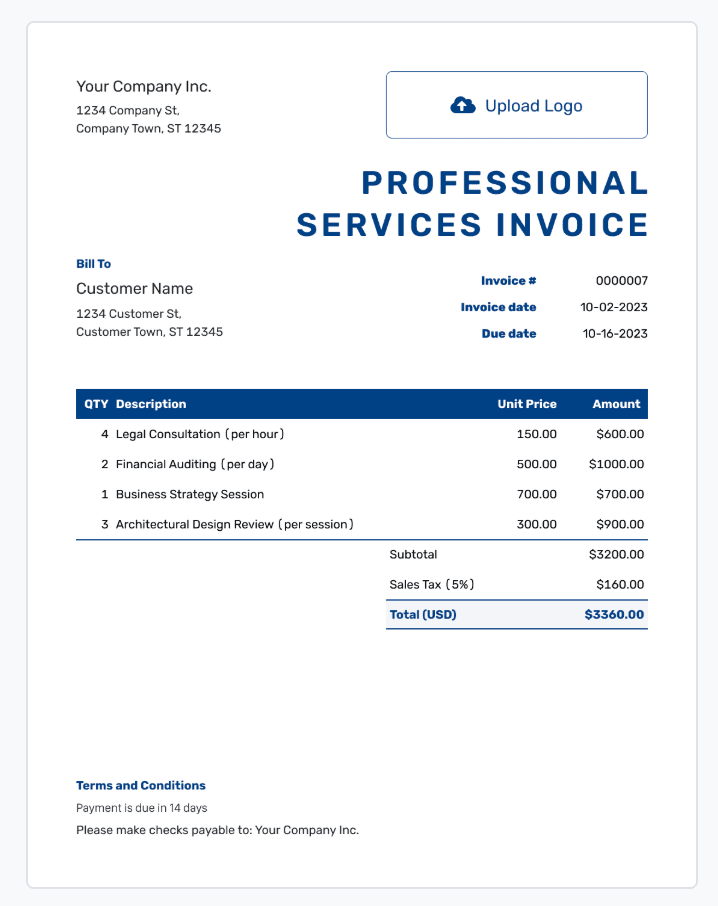
Built for service businesses, this layout features:
- A detailed description of services rendered
- Hourly rates and total hours worked
- A clear breakdown of charges
- Payment instructions and due date
You can create and customise either with free tools like Canva, Word, or Google Sheets.
How do you send an invoice?
Sending an invoice looks simple, but doing it cleanly protects both the payment and the relationship. Five steps cover it:
- Create the invoice. Confirm it has every essential element: invoice number, buyer and seller details, a description of goods or services, payment terms, and the due date.
- Choose the right method. Send it by email, physical mail, or an invoicing platform. Email is the most common and fastest, so the invoice lands quickly.
- Double-check the details. Review for mistakes or missing information, and confirm the payment terms, amounts, and dates are correct.
- Set a payment reminder. Once it is sent, set a follow-up so you keep tracking the payment and can nudge gently if needed.
- Follow up if necessary. If payment misses the due date, a polite reminder is worth sending. An automated reminder system makes this routine.
Accurate invoices sent through any reliable channel are what keep payments on time and relationships professional.
What are the best practices for invoicing?
A few habits reduce disputes and speed up payment:
- Use clear, professional language. Keep it simple and free of ambiguous terms.
- Include every necessary detail. Your business name, address, and contact details; the buyer's details; a unique invoice number; the service date; and payment terms.
- Set payment terms in advance. Define deadlines and any late fees clearly to avoid late payment.
- Send invoices promptly. Issue as soon as work is delivered; a delayed invoice means a delayed payment.
- Track and follow up on unpaid invoices. Review them regularly and chase promptly to keep cash flow steady.
- Make payment convenient. Offer several options, such as bank transfer, card, or a payment platform.
- Stay consistent. Use the same format across clients to streamline the process and cut errors.
- Keep records of every invoice. Good record-keeping speeds up financial tracking, tax filing, and dispute resolution.
Together these keep invoicing efficient, cash flow healthy, and client relationships intact.
Getting paid on your invoices, anywhere
An invoice looks basic, but its job runs deep: securing timely payment, protecting your legal position, and feeding the records that guide business decisions. Understanding what makes a good invoice genuinely helps with handling money, clients, and growth.
Where invoicing gets harder is across borders, when the buyer is in another country and another currency. PayGlocal is an RBI-authorised cross-border payments platform that helps Indian businesses collect on international invoices reliably, with multiple payment methods and a high payment success rate, so more of what you invoice actually reaches you.