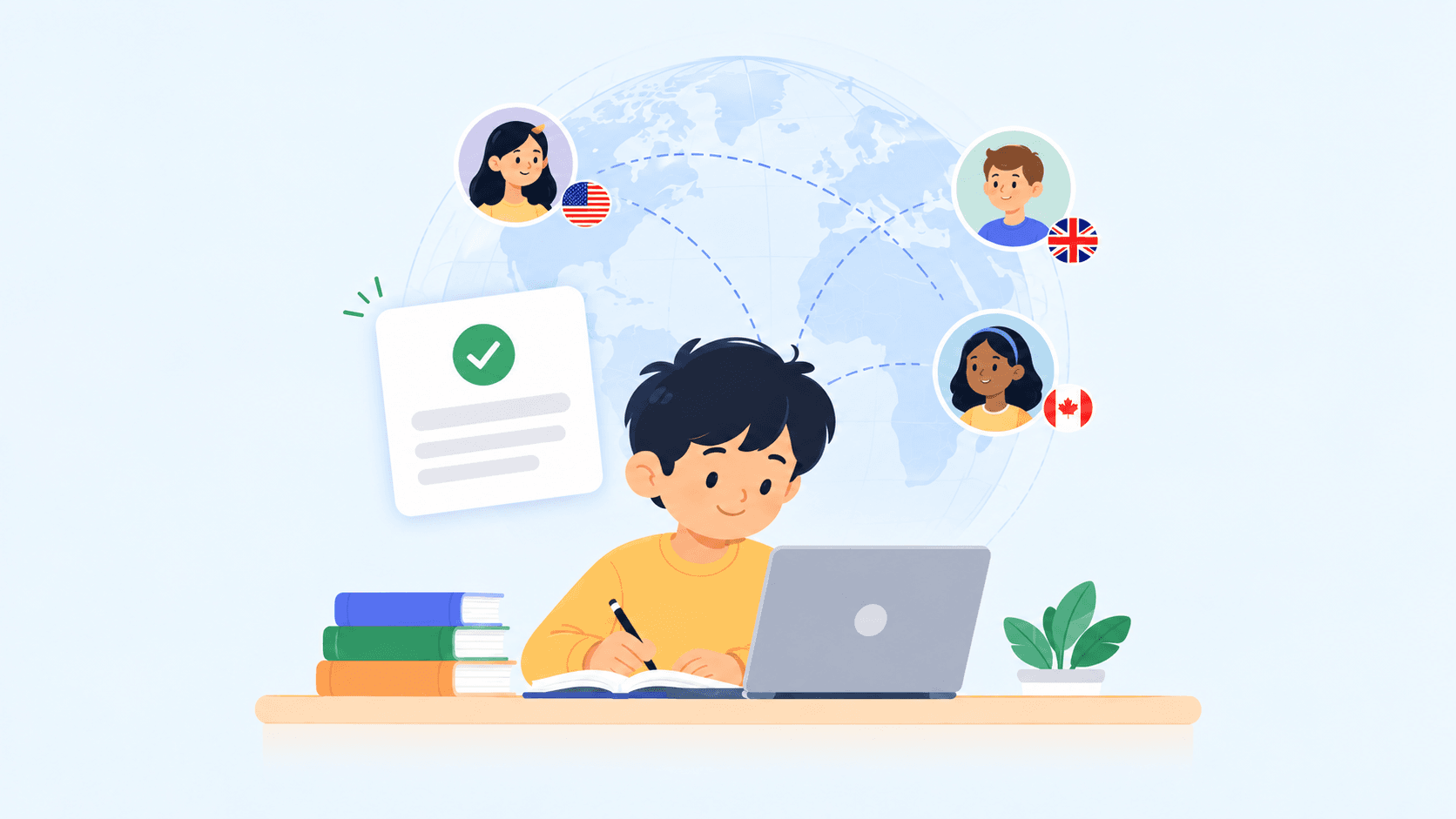

A global classroom needs a global way to get paid. For Codeyoung, international payments for edtech became increasingly important as its online learning platform grew beyond India and reached families across markets such as the US, Canada and the UK. As the business scaled, however, accepting an international payment was only part of the challenge. Making that payment successful, secure, faster to settle and easier for parents was equally important.
TL;DR
- Codeyoung improved its international payment success rate from 75% to 95% with PayGlocal.
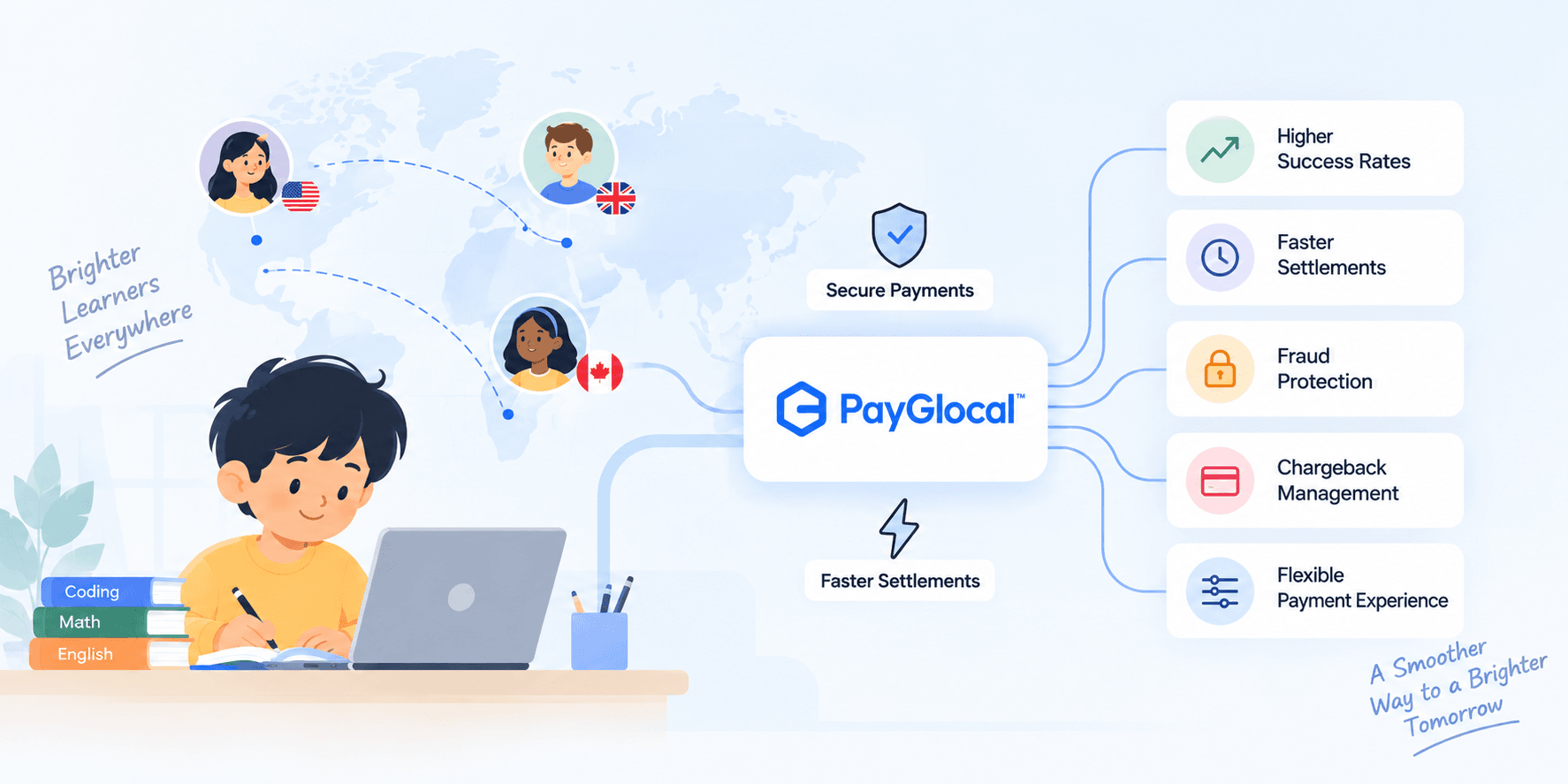
- The company experienced faster settlements, stronger fraud protection and better chargeback management.
- PayGlocal gave Codeyoung greater flexibility over the payment experience, helping support its growing global education business.
When education crossed borders, payments had to keep up
Codeyoung began with a simple ambition: make learning more engaging and accessible for children through live, interactive online education. Over time, that ambition grew into a global learning community with thousands of students and educators.
But international growth brings a different set of operational questions.
How do you make it easier for parents in different countries to pay? What happens when a genuine transaction fails? How quickly can the business access its funds? And as transaction volumes increase, how do you protect the business from fraud and manage chargebacks without adding friction to the customer experience?
For Codeyoung, these questions turned international payments from a back-office function into an important part of the customer experience.
The challenge was no longer simply having a payment gateway for edtech. It was finding a payments infrastructure that could support a growing global education business.
The problem wasn’t growth. It was payment friction.
As Codeyoung’s international payment volumes increased, payment success became an increasingly visible challenge.
The business was seeing an international payment success rate of around 75%. For an education platform serving families across borders, every unsuccessful transaction could mean another attempt, additional follow-up and potential friction at the point where a parent was ready to enrol their child.
This is where international payment processing becomes more than a technical requirement.
A failed payment can interrupt an otherwise successful customer journey. A delayed settlement can create operational pressure. A fraudulent transaction can create financial and reputational risk. A chargeback can require time and resources to resolve.
Codeyoung needed a way to address these challenges together.
From 75% to 95%: making more payments count
With PayGlocal, Codeyoung was able to improve its international payment success rate from approximately 75% to 95%.
That change represents more than a percentage-point improvement.
For a growing edtech business, a stronger payment success rate can mean fewer failed attempts, fewer interruptions during enrolment and a smoother experience for customers paying from overseas.
It also highlights an important role for a modern international payment gateway: helping businesses move from simply accepting transactions to creating a payment experience designed around conversion, reliability and scale.
For Codeyoung, the improvement meant that more genuine international customers could complete their payments successfully, without payment friction becoming a barrier to accessing education.
Faster settlements, fewer waiting days
Payment success was only one part of the challenge.
International transactions could take around seven working days to reach Codeyoung’s bank account. As volumes grew, waiting for settlement created another layer of operational complexity.
With PayGlocal, Codeyoung experienced significantly faster settlement, including instances where payments reached the business the following day.
For a growing business, faster access to funds can make everyday operations more predictable.
This is one of the practical advantages of a well-designed global payment solution. The value isn't limited to the moment a customer clicks “Pay.” It extends into what happens after the transaction, including settlement, reconciliation and the business’s ability to plan around its incoming funds.
For businesses managing cross-border payments, that post-payment experience can be just as important as the checkout itself.
// See the full success story here!
Scaling payments without scaling risk
More international transactions also mean more opportunities for fraudulent activity.
For Codeyoung, payment fraud prevention became an important part of building a payments setup that could support growth without compromising trust.
PayGlocal’s fraud protection helped identify and block fraudulent transactions while allowing genuine customers to continue through the payment journey.
That balance matters.
Overly aggressive fraud controls can create friction for legitimate customers. Too little protection can expose a business to unnecessary financial risk. Effective payment fraud prevention is therefore about finding the right balance between security and conversion.
The same principle applies to chargeback management.
As transaction volumes grow, businesses need processes that help them respond to disputes efficiently. PayGlocal’s chargeback management capabilities gave Codeyoung another layer of support as it expanded its international payment operations.
Together, fraud protection and chargeback management helped create a stronger foundation for sustainable global payments.
Making the payment experience work for parents
There is another side to payments that is easy to overlook: the person making the payment.
For Codeyoung, that person is often a parent enrolling their child in an online learning programme.
The payment journey therefore needs to be clear, flexible and easy to understand.
PayGlocal gave Codeyoung greater control over payment instructions and the ability to customise elements such as payment amounts and due dates. That flexibility helped the business create a payment experience that better matched the way it operated.
This is where an international payment gateway becomes part of the broader customer experience rather than simply a transaction layer.
The goal isn't only to process a payment. It is to make the process feel like a natural continuation of the customer journey.
What global growth should feel like
Codeyoung’s experience illustrates a larger reality for modern education businesses.
As digital education becomes increasingly borderless, international payments for edtech need to be built for more than geographical reach. They need to account for payment success, settlement speed, fraud, disputes and the customer experience at every stage.
A reliable global payment solution should help businesses answer questions such as:
- Can customers from different markets pay successfully?
- Can the business access its funds without unnecessary delays?
- Can fraudulent transactions be identified without disrupting genuine customers?
- Can disputes be managed efficiently?
- Can payment experiences be adapted to the needs of the business and its customers?
For Codeyoung, the answer became a payments infrastructure that could evolve alongside its global ambitions.
And that is ultimately what effective international payment processing should do: stay out of the way of growth, while quietly making that growth possible.
From a payment gateway to a growth enabler
Codeyoung wasn’t looking for payments simply because it needed to collect money from international customers.
It needed a partner that understood what global growth meant for an education business.
The move to PayGlocal helped Codeyoung improve its payment success rate, accelerate settlement, strengthen payment fraud prevention, simplify chargeback management and create greater flexibility around the payment experience.
For an edtech business, those aren't isolated improvements. Together, they form the infrastructure behind a smoother global customer journey.
Because when education can cross borders, payments shouldn't be the thing holding it back.