
Accounts receivable (AR) represents money owed to your business by customers. For businesses that rely on credit sales, AR is essential for maintaining cash flow.
However, if not managed well, it can lead to cash flow gaps, bad debts, and a strained financial position. Improper AR management affects your ability to pay vendors, fund growth, and cover operating expenses, impacting overall financial health.
Understanding AR’s effect on your financial statements is essential. AR directly influences your balance sheet, income statement, and cash flow statement. Let’s dive into how AR impacts financial statements and explore some effective strategies for AR management.
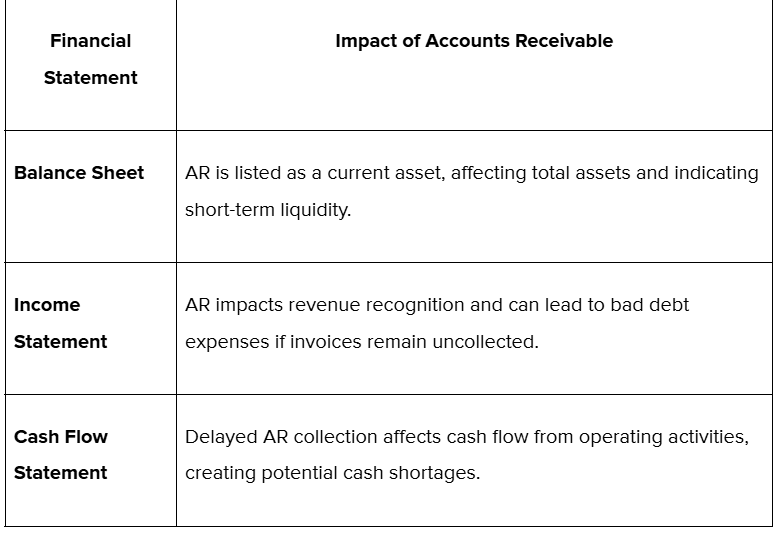
Accounts receivable affect three key financial statements. Here’s a breakdown of its impact on each one:
Also Read: How To Open A Multi Currency Account?
Accounts receivable appears as a current asset, showing expected short-term cash inflow. However, high AR doesn’t necessarily mean more liquidity. Unpaid invoices reflect potential cash, not actual cash. Regularly reviewing AR aging reports—detailing outstanding invoices by the due date—helps you assess and manage overdue payments.
Example:
If a business reports $150,000 in accounts receivable but $40,000 is overdue, only $110,000 represents reliable assets. Overdue invoices can distort your asset values, potentially affecting investor confidence.
Beyond the balance sheet, AR also influences how your income statement reflects profitability.
AR directly impacts revenue and net income. Revenue is recorded when earned, not when paid, so uncollected receivables inflate revenue figures and, in turn, net income. Over time, uncollected AR can turn into bad debt, leading to adjustments in net income.
Example:
Consider a company with $200,000 in annual revenue but $30,000 in bad debt. This amount reduces net income, affecting profitability metrics. Calculating bad debt expense regularly ensures your income statement reflects actual profitability.
While revenue and net income are critical, cash flow tells the real story of liquidity. Here’s how AR impacts the cash flow statement.
The cash flow statement tracks actual cash inflow and outflow, so delayed AR affects cash flow from operating activities. Slow collections mean less cash available for expenses or growth initiatives.
Example of Cash Flow Calculation with AR Turnover:
If your AR turnover is 6 times per year, it means you collect every two months on average. A higher turnover, say 10 times per year (monthly collections), improves cash availability. Tracking AR turnover helps in setting realistic collection goals and adjusting credit policies to improve cash flow.
Understanding the impact on financial statements is just the start. Managing AR effectively means solving some common challenges that can affect collections.
AR management comes with several challenges, especially if you deal with international clients. Let’s discuss some common obstacles:
Payment delays, especially from international clients, lead to cash flow gaps. Varying payment practices and currency restrictions can slow down collections. Setting clear payment terms in advance helps, but providing local currency options makes it easier for clients to pay on time.
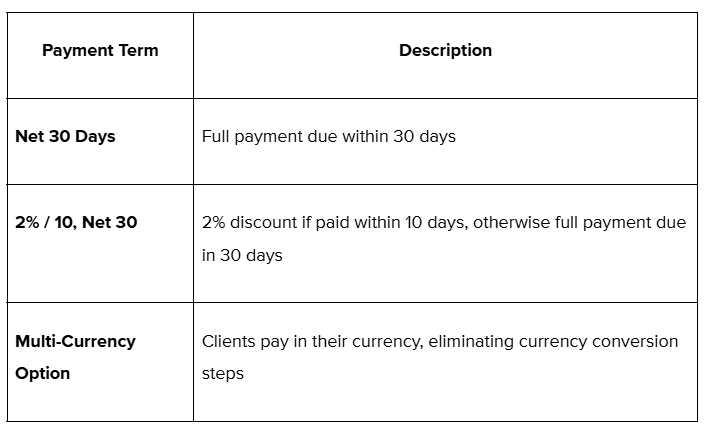
For businesses accepting payments in multiple currencies, fluctuating exchange rates impact the final amount received. Offering clients the ability to pay in their currency eliminates the need for conversion and reduces exposure to currency volatility. With tools like PayGlocal, you can receive payments in over 33 currencies, helping stabilize AR values.
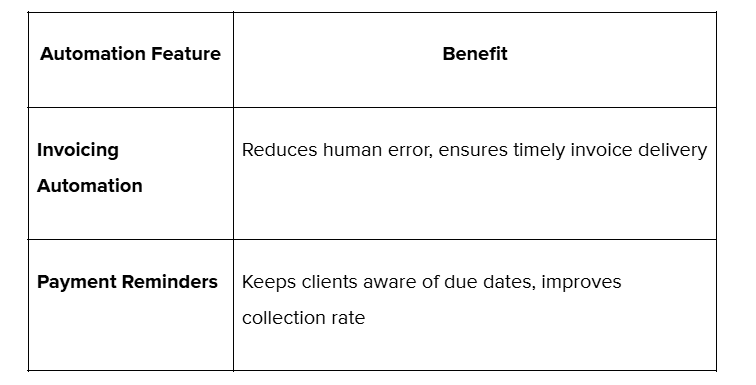
Managing AR manually can be time-consuming and costly. Automated invoicing and reminders reduce manual work, ensuring clients receive timely notifications. Automation also minimizes errors that lead to disputes, which can delay payments further.
With these challenges in mind, let’s look at proven strategies to keep your AR process efficient and improve collections.
Improving AR management requires a proactive approach. Here are some best practices to help you keep collections consistent and cash flow steady.
Automating the invoicing process saves time and reduces errors. Automated reminders ensure clients are consistently reminded of their payments without manual follow-up. Systems like PayGlocal provide integrated invoicing solutions, sending invoices and reminders in local currencies, which encourages prompt payment.
Example of Payment Terms:
Extending credit increases AR but carries risk. Assessing a client’s credit history before offering terms reduces the risk of overdue payments. For high-risk clients, consider upfront payments or tighter terms.
Best For:
Credit assessment is essential for clients with little payment history or those in high-risk industries. This step safeguards your cash flow and lowers bad debt expenses.
For businesses handling global clients, managing AR has unique challenges. Here’s how solutions like PayGlocal can make a difference in international AR management.
Managing AR with international clients can be complex, but solutions like PayGlocal simplify the process by offering features tailored for cross-border payments.
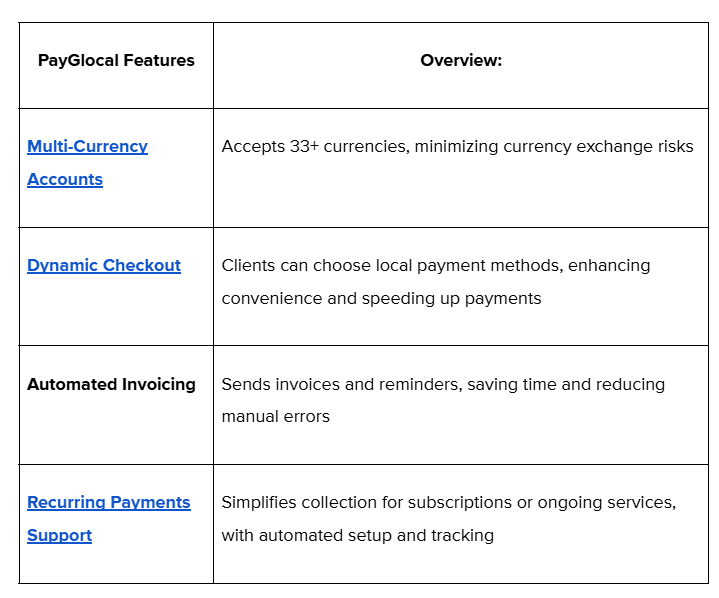
These features reduce payment friction, helping you collect receivables faster while improving the client payment experience. For instance, letting clients pay in their currency eliminates conversion delays, ensuring quicker collection and predictable cash flow.
AR turnover measures how quickly your business collects payments. A higher turnover ratio indicates efficient collections, improving cash flow and reducing risk.
AR Turnover Formula:
AR Turnover Ratio = Net Credit Sales / Average Accounts Receivable
Example Calculation:
If your annual credit sales total $500,000 and the average AR balance is $100,000, the AR turnover ratio would be:
500,000 / 100,000 = 5
This means you collect AR five times a year. To improve turnover, consider shortening payment terms or offering incentives for early payments. By improving turnover, you free up more cash, supporting operations and growth initiatives.
Now that you know how to track AR turnover, here are some tips to help improve it.
Improving AR turnover involves a mix of strategies to encourage timely payment and reduce overdue accounts.
Offering a small discount, like 1-2%, for early payments encourages clients to settle invoices sooner. While this reduces revenue slightly, it speeds up collections, improving cash flow.
Consistent follow-ups help ensure timely payments. Automated reminders and a well-defined follow-up process keep invoices on clients’ minds, reducing overdue accounts. Use automation tools to avoid manual effort.
Clients are more likely to pay on time when they can use familiar payment methods. With PayGlocal’s local payment support, clients can use payment methods they trust, which encourages quicker payment and reduces processing delays.
Effective accounts receivable management is crucial for a business’s financial health. Keeping AR turnover high ensures a steady cash flow, which supports daily operations and enables growth.
Clear payment terms, automated invoicing, and regular follow-ups are practical strategies to prevent overdue accounts and minimize bad debts.
For businesses with international clients, offering local currency options and flexible payment methods can simplify the payment process.
Using tools like PayGlocal’s multi-currency and dynamic checkout features can help you collect payments more reliably, reducing the time and cost involved in managing AR. Sign up with PayGlocal to get started!
However, if not managed well, it can lead to cash flow gaps, bad debts, and a strained financial position. Improper AR management affects your ability to pay vendors, fund growth, and cover operating expenses, impacting overall financial health.
Understanding AR’s effect on your financial statements is essential. AR directly influences your balance sheet, income statement, and cash flow statement. Let’s dive into how AR impacts financial statements and explore some effective strategies for AR management.
How Accounts Receivable Impacts Financial Statements?
Accounts receivable affect three key financial statements. Here’s a breakdown of its impact on each one:
Also Read: How To Open A Multi Currency Account?
1. Balance Sheet
Accounts receivable appears as a current asset, showing expected short-term cash inflow. However, high AR doesn’t necessarily mean more liquidity. Unpaid invoices reflect potential cash, not actual cash. Regularly reviewing AR aging reports—detailing outstanding invoices by the due date—helps you assess and manage overdue payments.
Example:
If a business reports $150,000 in accounts receivable but $40,000 is overdue, only $110,000 represents reliable assets. Overdue invoices can distort your asset values, potentially affecting investor confidence.
Beyond the balance sheet, AR also influences how your income statement reflects profitability.
2. Income Statement
AR directly impacts revenue and net income. Revenue is recorded when earned, not when paid, so uncollected receivables inflate revenue figures and, in turn, net income. Over time, uncollected AR can turn into bad debt, leading to adjustments in net income.
Example:
Consider a company with $200,000 in annual revenue but $30,000 in bad debt. This amount reduces net income, affecting profitability metrics. Calculating bad debt expense regularly ensures your income statement reflects actual profitability.
While revenue and net income are critical, cash flow tells the real story of liquidity. Here’s how AR impacts the cash flow statement.
3. Cash Flow Statement
The cash flow statement tracks actual cash inflow and outflow, so delayed AR affects cash flow from operating activities. Slow collections mean less cash available for expenses or growth initiatives.
Example of Cash Flow Calculation with AR Turnover:
If your AR turnover is 6 times per year, it means you collect every two months on average. A higher turnover, say 10 times per year (monthly collections), improves cash availability. Tracking AR turnover helps in setting realistic collection goals and adjusting credit policies to improve cash flow.
Understanding the impact on financial statements is just the start. Managing AR effectively means solving some common challenges that can affect collections.
Key Challenges In Accounts Receivable Management
AR management comes with several challenges, especially if you deal with international clients. Let’s discuss some common obstacles:
- Delayed Payments
Payment delays, especially from international clients, lead to cash flow gaps. Varying payment practices and currency restrictions can slow down collections. Setting clear payment terms in advance helps, but providing local currency options makes it easier for clients to pay on time.
- Currency Fluctuations
For businesses accepting payments in multiple currencies, fluctuating exchange rates impact the final amount received. Offering clients the ability to pay in their currency eliminates the need for conversion and reduces exposure to currency volatility. With tools like PayGlocal, you can receive payments in over 33 currencies, helping stabilize AR values.
- High Collection Costs
Managing AR manually can be time-consuming and costly. Automated invoicing and reminders reduce manual work, ensuring clients receive timely notifications. Automation also minimizes errors that lead to disputes, which can delay payments further.
With these challenges in mind, let’s look at proven strategies to keep your AR process efficient and improve collections.
Best Practices For Effective Accounts Receivable Management
Improving AR management requires a proactive approach. Here are some best practices to help you keep collections consistent and cash flow steady.
Automate Invoicing and Reminders
Automating the invoicing process saves time and reduces errors. Automated reminders ensure clients are consistently reminded of their payments without manual follow-up. Systems like PayGlocal provide integrated invoicing solutions, sending invoices and reminders in local currencies, which encourages prompt payment.
Set Clear Payment Terms
Establishing clear payment terms reduces confusion and speeds up payments. Terms should outline due dates, accepted payment methods, and any penalties for late payments. Offering a discount for early payments, such as 2% off if paid within 10 days, incentivizes faster payment.Example of Payment Terms:
Credit Assessment of Clients
Extending credit increases AR but carries risk. Assessing a client’s credit history before offering terms reduces the risk of overdue payments. For high-risk clients, consider upfront payments or tighter terms.
Best For:
Credit assessment is essential for clients with little payment history or those in high-risk industries. This step safeguards your cash flow and lowers bad debt expenses.
For businesses handling global clients, managing AR has unique challenges. Here’s how solutions like PayGlocal can make a difference in international AR management.
Using PayGlocal To Improve AR Management For Global Clients
Managing AR with international clients can be complex, but solutions like PayGlocal simplify the process by offering features tailored for cross-border payments.
These features reduce payment friction, helping you collect receivables faster while improving the client payment experience. For instance, letting clients pay in their currency eliminates conversion delays, ensuring quicker collection and predictable cash flow.
Calculating And Tracking Accounts Receivable Turnover
AR turnover measures how quickly your business collects payments. A higher turnover ratio indicates efficient collections, improving cash flow and reducing risk.
AR Turnover Formula:
AR Turnover Ratio = Net Credit Sales / Average Accounts Receivable
Example Calculation:
If your annual credit sales total $500,000 and the average AR balance is $100,000, the AR turnover ratio would be:
500,000 / 100,000 = 5
This means you collect AR five times a year. To improve turnover, consider shortening payment terms or offering incentives for early payments. By improving turnover, you free up more cash, supporting operations and growth initiatives.
Now that you know how to track AR turnover, here are some tips to help improve it.
Tips To Improve Accounts Receivable Turnover
Improving AR turnover involves a mix of strategies to encourage timely payment and reduce overdue accounts.
- Incentivize Early Payments
Offering a small discount, like 1-2%, for early payments encourages clients to settle invoices sooner. While this reduces revenue slightly, it speeds up collections, improving cash flow.
- Follow-Up Consistently
Consistent follow-ups help ensure timely payments. Automated reminders and a well-defined follow-up process keep invoices on clients’ minds, reducing overdue accounts. Use automation tools to avoid manual effort.
- Offer Flexible Payment Options
Clients are more likely to pay on time when they can use familiar payment methods. With PayGlocal’s local payment support, clients can use payment methods they trust, which encourages quicker payment and reduces processing delays.
Final Thoughts
Effective accounts receivable management is crucial for a business’s financial health. Keeping AR turnover high ensures a steady cash flow, which supports daily operations and enables growth.
Clear payment terms, automated invoicing, and regular follow-ups are practical strategies to prevent overdue accounts and minimize bad debts.
For businesses with international clients, offering local currency options and flexible payment methods can simplify the payment process.
Using tools like PayGlocal’s multi-currency and dynamic checkout features can help you collect payments more reliably, reducing the time and cost involved in managing AR. Sign up with PayGlocal to get started!