
According to recent data, India’s total exports grew to $824.9 billion in 2024-25, a 6.01% increase from its previous year's $778.1 billion. This growth indicates more Indian businesses are getting paid by international clients than ever before.
While handling these international payments, you might have heard about FIRC and wondered what it means for your business. So, what does it exactly mean, and how can you get it?
In this guide, we break down the full form of FIRC, including its importance, different types, the documents you need, and how you can get it easily. Let’s get started!
FIRC stands for Foreign Inward Remittance Certificate. This document serves as official proof that you've received a payment from a foreign source into your Indian bank account.
You can think of FIRC as a receipt that confirms foreign currency has entered India through legitimate channels. Banks issue this certificate to track and document international money flows into the country.
For example, if a US client pays you $5,000 for consulting services, your bank will generate an FIRC showing this transaction once the funds arrive in your account.
The certificate contains essential details like the sender's information, amount received, currency type, and purpose of the payment. This documentation helps authorities monitor international transactions and helps you prove the source of foreign funds when needed for tax filings or regulatory compliance.
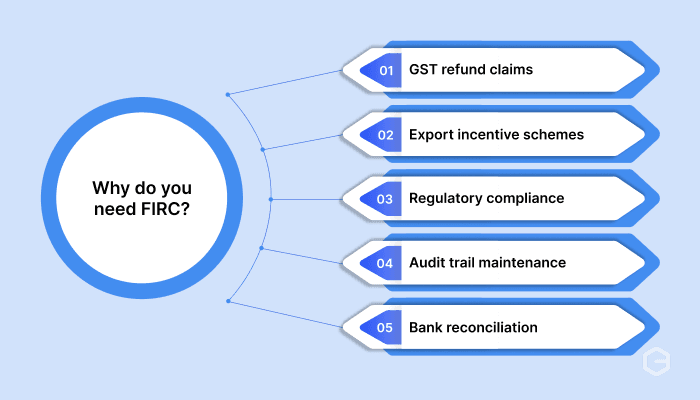
FIRC serves multiple critical functions for businesses and individuals receiving international payments. These key benefits show why this certificate matters for your operations:
Getting an FIRC involves several steps that vary depending on whether you choose the traditional paper route or the newer electronic version.
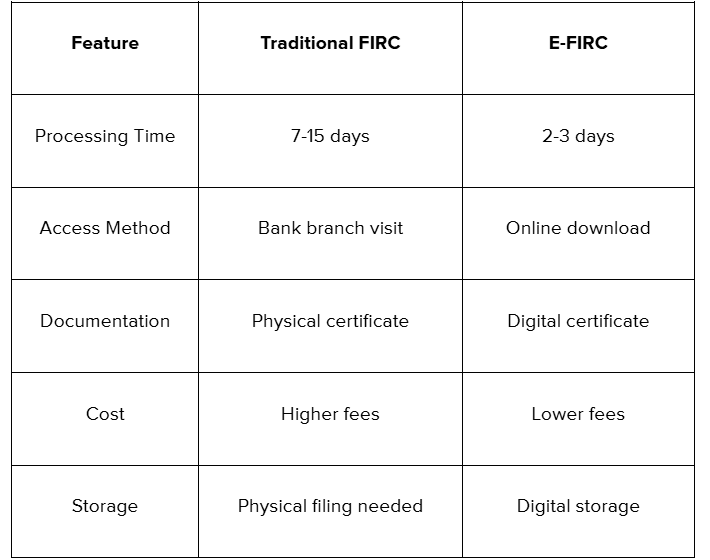
Both methods provide the same legal validity but differ in convenience and speed.
The conventional method requires you to visit your bank branch with the necessary documents. You'll submit a FIRC request form along with export invoices, shipping documents, and proof of the international transaction. The bank then verifies these documents, generates an Inward Remittance Message on the government's Export and Data Monitoring Systems, and issues the physical certificate.
The electronic version makes this procedure much simpler. Banks generate e-FIRC digitally and make it available for download through their online platforms. You can access these certificates without visiting branches, saving time and reducing paperwork.
For instance, if you're a software exporter who received payment from a German client, you can log into your bank's online portal and download the e-FIRC within a few days of the payment settlement.
How to get FIRC from your bank?
The application process requires proper documentation and following your bank's specific procedures. Most banks have similar requirements, though processing times can vary.
You can obtain FIRC through these simple steps:
1. Gather required documents: Collect export invoices, shipping documents, bank credit advice, and KYC documents before visiting the bank or applying online.
2. Submit application form: Fill out your bank's FIRC request form with accurate transaction details, including sender information and payment purpose.
3. Provide transaction proof: Show evidence of the international payment credit in your account through bank statements or credit advice.
4. Track application status: Monitor your application through online banking or by contacting your branch for updates on processing.
5. Download or collect certificate: Access your e-FIRC through online banking or collect the physical certificate from your branch once ready.
The documentation requirements depend on your transaction type and bank policies, but most institutions ask for similar core documents.
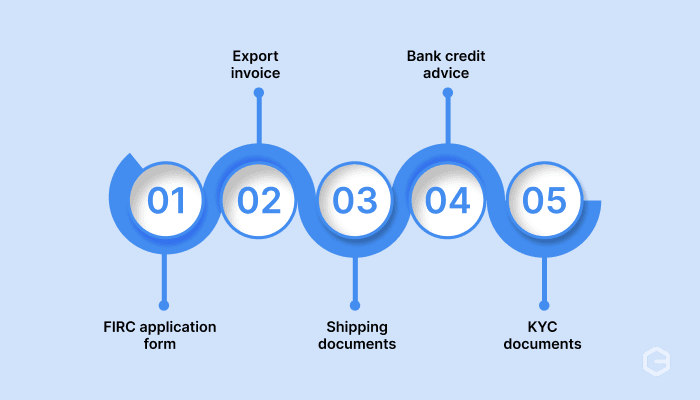
Standard documents required:
Managing FIRC applications through traditional banking channels often means long waiting periods, multiple branch visits, and delayed compliance documentation. This creates bottlenecks for businesses that need quick access to certificates for GST refunds or export incentives.
PayGlocal removes these hassles by providing instant FIRC generation as part of its complete international payment solution. You get the compliance documentation you need without the traditional banking delays.
Here are some of the different ways PayGlocal can help you:
Whether you're a freelancer receiving project payments or an enterprise managing complex export operations, PayGlocal helps you have both the payment infrastructure and compliance documentation needed to scale internationally.
FIRC (Foreign Inward Remittance Certificate) serves as essential proof for any business receiving international payments. While the certificate helps with GST refunds and regulatory compliance, obtaining it through traditional banking channels can create operational delays.
Modern businesses need solutions that combine reliable payment collection with instant compliance documentation. PayGlocal provides this integrated approach, with efficient global payments and easy access to FIRC documentation.
When you're scaling internationally, every day spent waiting for compliance documents or payment delays is a day you could be growing your business. The businesses that move fastest often have the best processes and technologies. Get started with PayGlocal today and collect international payments faster.
While handling these international payments, you might have heard about FIRC and wondered what it means for your business. So, what does it exactly mean, and how can you get it?
In this guide, we break down the full form of FIRC, including its importance, different types, the documents you need, and how you can get it easily. Let’s get started!
Key Takeaways:
- FIRC definition: FIRC stands for Foreign Inward Remittance Certificate, which is a proof of international payments received in India.
- Multiple uses: You need FIRC for GST refunds on exports, claiming export incentives, and regulatory compliance.
- Electronic option: E-FIRC (electronic version) can be downloaded online, making the process faster than traditional paper certificates.
- Payment solution: PayGlocal provides instant FIRC generation with international payment collection, removing banking delays.
What is the full form of FIRC?
FIRC stands for Foreign Inward Remittance Certificate. This document serves as official proof that you've received a payment from a foreign source into your Indian bank account.
You can think of FIRC as a receipt that confirms foreign currency has entered India through legitimate channels. Banks issue this certificate to track and document international money flows into the country.
For example, if a US client pays you $5,000 for consulting services, your bank will generate an FIRC showing this transaction once the funds arrive in your account.
The certificate contains essential details like the sender's information, amount received, currency type, and purpose of the payment. This documentation helps authorities monitor international transactions and helps you prove the source of foreign funds when needed for tax filings or regulatory compliance.
Why do you need FIRC?
FIRC serves multiple critical functions for businesses and individuals receiving international payments. These key benefits show why this certificate matters for your operations:
- GST refund claims: You need FIRC to claim Goods and Services Tax refunds on exported goods or services. Without this certificate, tax authorities cannot verify that you actually received payment from foreign buyers.
- Export incentive schemes: Government incentives for exporters require FIRC as proof of foreign exchange earnings. This documentation helps you access benefits designed to support export performance.
- Regulatory compliance: Customs authorities and the Directorate General of Foreign Trade use FIRC to track international transactions. This helps maintain transparency in cross-border commerce.
- Audit trail maintenance: FIRC provides a clear paper trail for international transactions, making it easier to handle tax audits or regulatory inspections.
- Bank reconciliation: The certificate helps match foreign payments with corresponding export invoices, creating accurate financial record-keeping.
How does the FIRC application process work?
Getting an FIRC involves several steps that vary depending on whether you choose the traditional paper route or the newer electronic version.
Both methods provide the same legal validity but differ in convenience and speed.
1. Traditional FIRC process:
The conventional method requires you to visit your bank branch with the necessary documents. You'll submit a FIRC request form along with export invoices, shipping documents, and proof of the international transaction. The bank then verifies these documents, generates an Inward Remittance Message on the government's Export and Data Monitoring Systems, and issues the physical certificate.
2. E-FIRC process:
The electronic version makes this procedure much simpler. Banks generate e-FIRC digitally and make it available for download through their online platforms. You can access these certificates without visiting branches, saving time and reducing paperwork.
For instance, if you're a software exporter who received payment from a German client, you can log into your bank's online portal and download the e-FIRC within a few days of the payment settlement.
How to get FIRC from your bank?
The application process requires proper documentation and following your bank's specific procedures. Most banks have similar requirements, though processing times can vary.
You can obtain FIRC through these simple steps:
1. Gather required documents: Collect export invoices, shipping documents, bank credit advice, and KYC documents before visiting the bank or applying online.
2. Submit application form: Fill out your bank's FIRC request form with accurate transaction details, including sender information and payment purpose.
3. Provide transaction proof: Show evidence of the international payment credit in your account through bank statements or credit advice.
4. Track application status: Monitor your application through online banking or by contacting your branch for updates on processing.
5. Download or collect certificate: Access your e-FIRC through online banking or collect the physical certificate from your branch once ready.
What documents do you need to obtain FIRC?
The documentation requirements depend on your transaction type and bank policies, but most institutions ask for similar core documents.
Standard documents required:
- FIRC application form: Bank-specific form requesting certificate issuance with complete transaction details.
- Export invoice: Commercial invoice showing goods or services sold to foreign buyers with proper GST details.
- Shipping documents: Bill of lading, airway bill, or courier receipt proving goods dispatch to the international destination.
- Bank credit advice: Statement showing foreign payment credit to your account with currency conversion details.
- KYC documents: Identity proof and address verification as per banking norms and regulatory requirements.
Get paid globally and get instant FIRC after settlement
Managing FIRC applications through traditional banking channels often means long waiting periods, multiple branch visits, and delayed compliance documentation. This creates bottlenecks for businesses that need quick access to certificates for GST refunds or export incentives.
PayGlocal removes these hassles by providing instant FIRC generation as part of its complete international payment solution. You get the compliance documentation you need without the traditional banking delays.
Here are some of the different ways PayGlocal can help you:
- Instant FIRC generation: Download certificates immediately after payment settlement, no waiting for bank processing times.
- Multi-currency accounts: Accept payments in 130+ global currencies from 180+ countries with automatic conversion to Indian Rupees.
- Global payment methods: Offer 40+ local payment options to customers worldwide, increasing conversion rates and customer satisfaction.
- Dynamic checkout options: Provide customized payment flows that adapt to customer preferences and local market requirements.
- Zero setup costs: Start collecting international payments without upfront fees, monthly charges, or hidden platform costs.
Whether you're a freelancer receiving project payments or an enterprise managing complex export operations, PayGlocal helps you have both the payment infrastructure and compliance documentation needed to scale internationally.
Final thoughts
FIRC (Foreign Inward Remittance Certificate) serves as essential proof for any business receiving international payments. While the certificate helps with GST refunds and regulatory compliance, obtaining it through traditional banking channels can create operational delays.
Modern businesses need solutions that combine reliable payment collection with instant compliance documentation. PayGlocal provides this integrated approach, with efficient global payments and easy access to FIRC documentation.
When you're scaling internationally, every day spent waiting for compliance documents or payment delays is a day you could be growing your business. The businesses that move fastest often have the best processes and technologies. Get started with PayGlocal today and collect international payments faster.