
Global payments in India have experienced rapid growth, with transaction volumes consistently reaching new heights each year. In fact, data shows that around 49% of the real-time global transactions occur in India.
For businesses selling globally, the right payment system can mean the difference between scaling internationally or losing customers due to payment friction.
In this guide, we walk you through everything you need to know about global payments, from how they work to selecting the perfect platform for your business needs.
Global pay refers to payment systems that enable businesses and individuals to send and receive money across international borders. These systems connect different countries' financial networks to process transactions in multiple currencies.
The concept has evolved significantly from traditional wire transfers that took days to complete. Modern global payment platforms now offer real-time processing, multiple payment methods, and automated compliance features.
For instance, a software company in India can now receive payments from US clients within hours instead of waiting weeks for bank transfers.
Today's global payment ecosystem includes various channels such as international card processing, digital wallets, bank transfers, and alternative payment methods specific to different regions. This variety helps businesses cater to diverse customer preferences while maintaining smooth transaction flows.
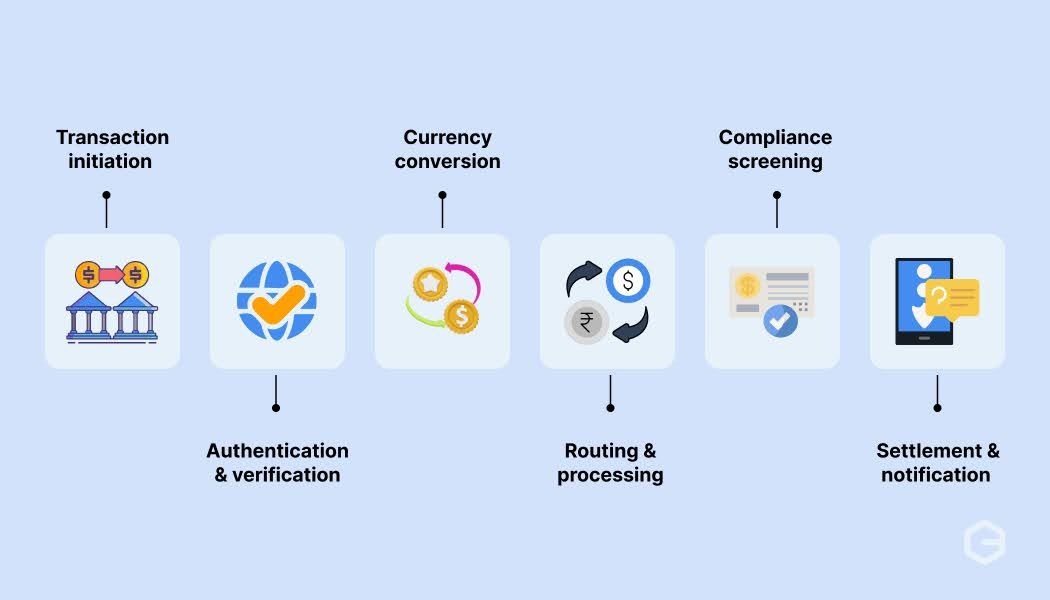
Global payments involve a complex network of financial institutions, payment processors, and regulatory systems working together to move money across borders safely and efficiently.
Here's how the process typically works:
The entire process generally completes within minutes for card payments or hours for bank transfers, depending on the payment method and countries involved.
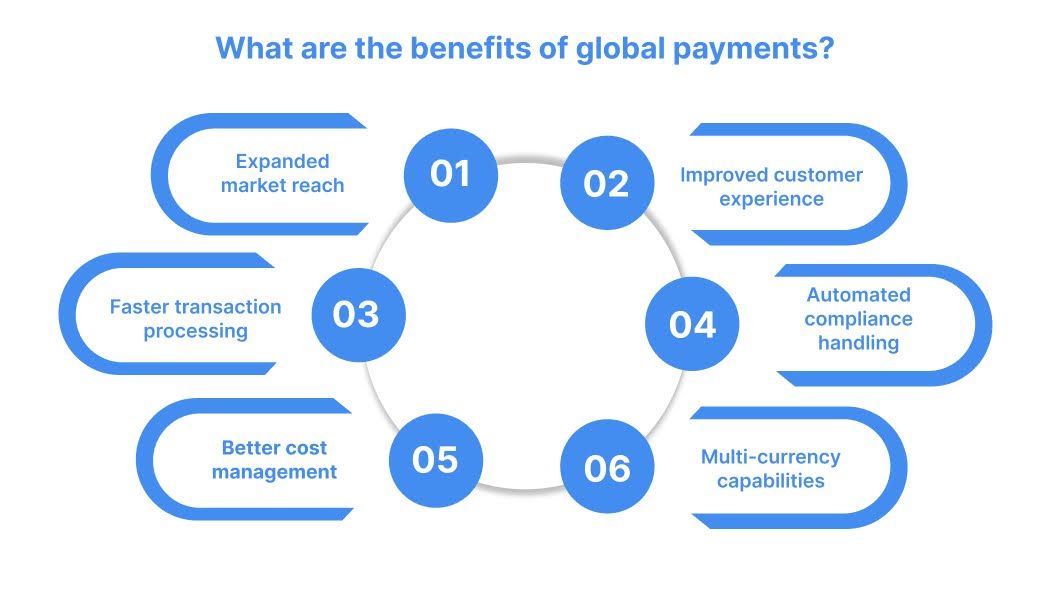
Global payment systems offer significant advantages that help businesses expand internationally while improving operational efficiency and customer satisfaction. Some of the top benefits of global payments include:
-
Despite their advantages, global payment systems also have some challenges that businesses must solve to operate successfully in international markets.
Selecting the right global payment platform requires evaluating multiple factors that directly impact your business operations, costs, and customer experience.
Consider these important criteria while choosing the right global payments platform:
The right platform should align with your business size, target markets, and growth plans while providing scalable solutions for future expansion.
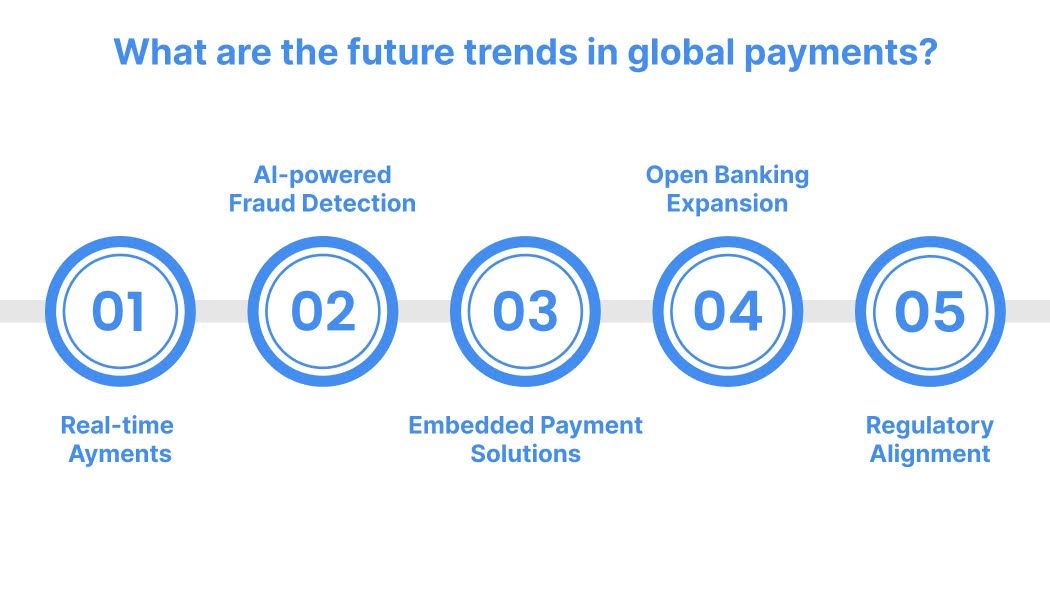
The global payments industry continues evolving rapidly, driven by technological advances, changing consumer preferences, and regulatory developments that shape how businesses process international transactions. Some of the top trends shaping the future include:
These trends indicate a future where global payments become faster, cheaper, and more accessible for businesses of all sizes.
Managing international payments shouldn't slow down your growth. Traditional banking systems often leave Indian businesses struggling with high fees, delayed settlements, and complex compliance requirements that hinder global expansion.
PayGlocal solves these challenges with a complete payment platform designed specifically for businesses selling internationally. Our solution simplifies global transactions while ensuring compliance and competitive pricing.
Here's how PayGlocal supports your global growth:
PayGlocal's platform helps Indian exporters, freelancers, and service providers scale globally while maintaining control over their payment operations and compliance requirements.
Global payments have become essential for businesses looking to expand internationally and serve customers worldwide. While challenges such as high fees, compliance complexity, and payment fragmentation exist, modern platforms offer effective solutions to solve these issues.
Choose a payment provider that aligns with your business needs, target markets, and growth plans to ensure smooth and efficient global transactions. Focus on platforms offering transparent pricing, complete currency support, easy integration, and strong security features.
Ready to expand your business globally? PayGlocal provides the tools and support you need to accept international payments seamlessly. Get started with a platform designed for growing businesses.
For businesses selling globally, the right payment system can mean the difference between scaling internationally or losing customers due to payment friction.
In this guide, we walk you through everything you need to know about global payments, from how they work to selecting the perfect platform for your business needs.
Key Takeaways:
- Global pay: Global payments are cross-border financial transactions that enable businesses to send and receive money internationally through various channels, including cards, bank transfers, and digital wallets.
- How the process works: Global payments involve multiple steps, including initiation, authentication, routing through payment networks, currency conversion, compliance checks, and final settlement in the recipient's account.
- Common challenges to expect: Businesses face issues like high transaction fees, currency conversion costs, regulatory compliance complexity, payment delays, and varying payment preferences across different markets.
- Modern payment solution: PayGlocal offers complete global payment solutions with multi-currency accounts, transparent pricing, automated compliance, and seamless integration designed specifically for Indian businesses scaling internationally.
What is global pay?
Global pay refers to payment systems that enable businesses and individuals to send and receive money across international borders. These systems connect different countries' financial networks to process transactions in multiple currencies.
The concept has evolved significantly from traditional wire transfers that took days to complete. Modern global payment platforms now offer real-time processing, multiple payment methods, and automated compliance features.
For instance, a software company in India can now receive payments from US clients within hours instead of waiting weeks for bank transfers.
Today's global payment ecosystem includes various channels such as international card processing, digital wallets, bank transfers, and alternative payment methods specific to different regions. This variety helps businesses cater to diverse customer preferences while maintaining smooth transaction flows.
How do global payments work?
Global payments involve a complex network of financial institutions, payment processors, and regulatory systems working together to move money across borders safely and efficiently.
Here's how the process typically works:
- Transaction initiation: The customer enters their payment details on your checkout page or invoice system, triggering a payment request in their preferred method and currency.
- Authentication and verification: Payment processors verify customer identity, check card validity, and run fraud detection algorithms to ensure the legitimacy and security of transactions.
- Currency conversion: If needed, the system converts the payment amount from the customer's currency to your business currency using real-time exchange rates with applicable fees.
- Routing and processing: Payment networks route the transaction through appropriate banking channels, clearing houses, and correspondent banks based on the payment method selected.
- Compliance screening: Systems automatically check transactions against international sanctions lists and regulatory compliance rules for both countries involved.
- Settlement and notification: Funds are transferred to your business account, and both parties receive confirmation notifications with transaction details and reference numbers for record-keeping purposes.
The entire process generally completes within minutes for card payments or hours for bank transfers, depending on the payment method and countries involved.
What are the benefits of global payments?
Global payment systems offer significant advantages that help businesses expand internationally while improving operational efficiency and customer satisfaction. Some of the top benefits of global payments include:
- Expanded market reach: Access customers worldwide without geographical payment limitations, allowing you to tap into new markets and grow your customer base beyond domestic boundaries.
- Improved customer experience: Offer familiar payment methods and local currencies to international customers, reducing cart abandonment and increasing conversion rates through comfortable checkout experiences.
- Faster transaction processing: With instant payment solutions, you can now receive payments within hours or days instead of weeks with traditional banking methods. Data shows that instant payments will be up to [20% of global transactions by 2028,](https://www.businesswire.com/news/home/20250305938222/en/Global-Payments------- Market-Report-2025-Digital-Payments-Growth-Continues-to-Accelerate-with-Market-Set-to-Exceed-USD-3-Trillion-by-2028---ResearchAndMarkets.com) growing from 15% in 2023.
-
- Automated compliance handling: Modern platforms automatically generate required documentation like - ------- FIRC (Foreign Inward Remittance Certificate) and handle regulatory requirements, reducing manual paperwork and ensuring adherence to international trade laws.
- Better cost management: Transparent pricing structures help you understand exact transaction costs upfront, enabling better financial planning compared to hidden fees in traditional banking systems.
- Multi-currency capabilities: Accept and manage payments in various currencies without maintaining multiple bank accounts, simplifying your financial operations while serving global customers effectively.
What are the challenges of global payments?
Despite their advantages, global payment systems also have some challenges that businesses must solve to operate successfully in international markets.
- High transaction fees: Multiple intermediary banks and currency conversion charges can significantly increase costs, especially for smaller transaction amounts, affecting your profit margins on international sales.
- Regulatory compliance complexity: Different countries have varying regulations, documentation requirements, and reporting standards that businesses must follow to avoid penalties and maintain legal operations.
- Currency fluctuation risks: Exchange rate variations between transaction initiation and settlement can impact received amounts, creating unpredictable revenue flows that complicate financial planning and pricing strategies.
- Payment method fragmentation: Different regions prefer different payment methods, requiring businesses to integrate multiple systems and manage various customer preferences to maximize conversion rates globally.
- Delayed settlement times: Some payment methods and banking networks still require several days for fund transfers, creating cash flow challenges and customer satisfaction issues in time-sensitive business scenarios.
- Security and fraud concerns: Cross-border transactions face higher fraud risks due to varying security standards across countries, requiring robust protection measures that can complicate the payment process.
What to look for in a global pay platform?
Selecting the right global payment platform requires evaluating multiple factors that directly impact your business operations, costs, and customer experience.
Consider these important criteria while choosing the right global payments platform:
- Transparent pricing structure: Look for platforms with clear fee schedules, no hidden charges, and competitive rates for your transaction volumes to ensure predictable costs and better profit margins.
- Multiple currency support: Choose providers offering payment acceptance in currencies relevant to your target markets, along with competitive exchange rates and flexible settlement options for different regions.
- Integration simplicity: Platforms should offer easy-to-implement APIs, plugins for popular e-commerce platforms, and minimal technical requirements to reduce development time and implementation costs for your business.
- Security and compliance features: Ensure the platform provides end-to-end encryption, fraud detection, automated compliance reporting, and adherence to international security standards to protect your business and customers.
- Settlement speed options: Look for providers offering flexible settlement timeframes, from same-day to weekly options, allowing you to choose based on your cash flow needs and operational requirements.
- Customer support quality: Evaluate the platform's support responsiveness, availability in your time zone, and technical expertise to ensure smooth operations and quick issue resolution when problems arise.
The right platform should align with your business size, target markets, and growth plans while providing scalable solutions for future expansion.
What are the future trends in global payments?
The global payments industry continues evolving rapidly, driven by technological advances, changing consumer preferences, and regulatory developments that shape how businesses process international transactions. Some of the top trends shaping the future include:
- Real-time payments: Instant settlement systems are becoming standard across more countries, enabling businesses to receive funds immediately and improve cash flow management for better operational efficiency.
- AI-powered fraud detection: Machine learning algorithms provide better security by analyzing transaction patterns in real-time, reducing false positives while catching sophisticated fraud attempts more effectively.
- Embedded payment solutions: Payment capabilities are being integrated directly into business software and platforms, creating seamless experiences where customers can pay without leaving familiar environments or applications.
- Open banking expansion: API-driven banking services allow direct bank-to-bank transfers globally, reducing intermediary costs and providing more payment options while maintaining high security standards for international transactions.
- Regulatory alignment: International standards are becoming more aligned, simplifying compliance requirements and reducing complexity for businesses operating across multiple countries and jurisdictions.
These trends indicate a future where global payments become faster, cheaper, and more accessible for businesses of all sizes.
Scale globally with a payment solution made for growth
Managing international payments shouldn't slow down your growth. Traditional banking systems often leave Indian businesses struggling with high fees, delayed settlements, and complex compliance requirements that hinder global expansion.
PayGlocal solves these challenges with a complete payment platform designed specifically for businesses selling internationally. Our solution simplifies global transactions while ensuring compliance and competitive pricing.
Here's how PayGlocal supports your global growth:
- Multi-currency accounts: Accept payments in 33+ currencies with local accounts in USD, GBP, EUR, and CAD, reducing transaction costs and improving customer experience with familiar payment options.
- Dynamic checkout: Offer seamless payment experiences with customizable checkout flows that support global cards and local payment methods, increasing conversion rates across different markets.
- Global payment methods: Access 40+ local payment methods worldwide, helping you cater to regional preferences and capture customers who don't use international cards in their purchasing decisions.
- Automated compliance: Receive FIRC automatically in your inbox after settlement, track payments end-to-end, and stay compliant with Indian regulations without manual paperwork or bank visits.
- Transparent pricing: Pay only when you transact with no setup fees, platform charges, or documentation costs, making international expansion affordable for businesses of all sizes.
PayGlocal's platform helps Indian exporters, freelancers, and service providers scale globally while maintaining control over their payment operations and compliance requirements.
Final thoughts
Global payments have become essential for businesses looking to expand internationally and serve customers worldwide. While challenges such as high fees, compliance complexity, and payment fragmentation exist, modern platforms offer effective solutions to solve these issues.
Choose a payment provider that aligns with your business needs, target markets, and growth plans to ensure smooth and efficient global transactions. Focus on platforms offering transparent pricing, complete currency support, easy integration, and strong security features.
Ready to expand your business globally? PayGlocal provides the tools and support you need to accept international payments seamlessly. Get started with a platform designed for growing businesses.