
India doesn't operate on a traditional VAT system anymore. The Goods and Services Tax (GST) has replaced most indirect taxes, including state VAT systems.
Data shows that in 2024-25, GST collections crossed ₹22.08 lakh crore, up by about 9.4% from the previous year. This increase indicates that more businesses are now part of the GST system and doing their tax reporting regularly. For exports, the rules are even more specific, with most international sales qualifying as zero-rated supplies under GST.
In this guide, we cover everything you need to know about India's tax structure for international business, how to handle client questions about VAT, and the right way to bill foreign customers while staying compliant.
GST replacement: India replaced VAT with GST in 2017, with standard rates of 0%, 5%, 18%, and 28% for domestic supplies.
India doesn't have a traditional VAT rate anymore. Since July 1, 2017, the Goods and Services Tax (GST) replaced the earlier VAT system that individual states used to operate.
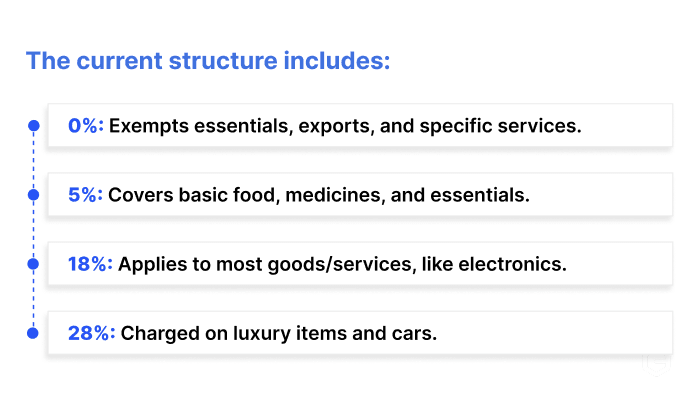
The GST system operates with several rate slabs. The current structure includes:
The most relevant rates are 0% for exports and 18% for any domestic supplies or services. The 18% rate often applies to business services like marketing or technology services purchased domestically.
For exporters and international service providers, the most important rate is 0% because exports from India are classified as zero-rated supplies under GST. This means you typically don't charge any tax on international sales, and you can claim input tax credits on expenses used for export business.
Knowing how GST applies to your international business operations helps you price correctly and stay compliant. The system treats exports differently from domestic sales to support India's global competitiveness.
When you export goods or services from India, these qualify as zero-rated supplies under GST rules. Zero-rated means you charge 0% GST on your export invoice, but you can still claim input tax credits for GST paid on inputs and services used in your export business.
To qualify for zero-rated status, your export must meet specific conditions, such as:
For instance, if you're providing digital marketing services to a Canadian client, you qualify for zero-rating when the client pays in Canadian dollars, the service is consumed in Canada, and you deliver the work from your Indian office. You charge 0% GST and can claim input credits on any domestic services or goods used.
Your international clients asking about VAT rates are referring to their own country's tax systems, not India's obligations. This creates confusion but also opportunities to provide clarity and build trust.
Here's how major countries compare with India's system:
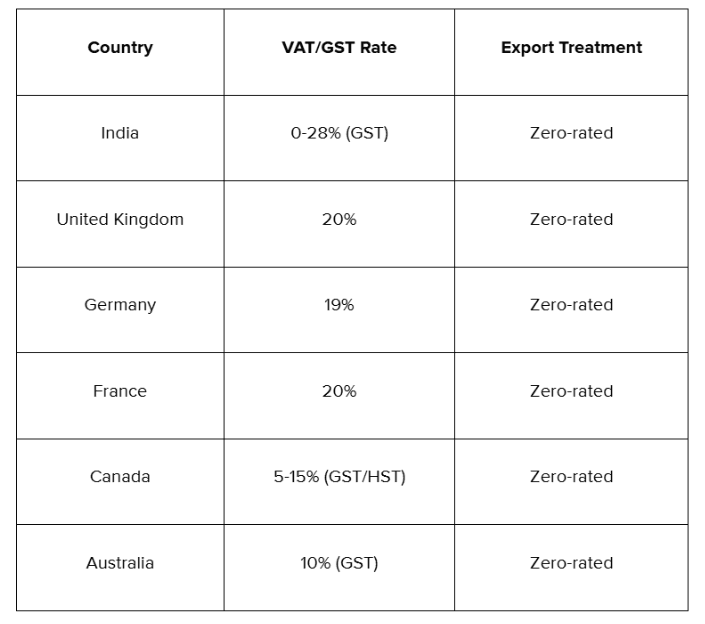
Most countries operate VAT systems with standard rates between 15-25%. When clients ask about your "VAT rate," they want to know how much tax will be added to their invoice.
The key insight is that VAT in most countries applies to imports, while exports are typically zero-rated. When you export from India to a VAT country, you charge 0% under India's GST system, and the client's country may apply its VAT/import duties on receipt.
For example, if you're providing software services to a UK client, you charge 0% GST as an export from India. The UK client might need to account for reverse charge VAT at 20% on their end, but that's their tax obligation, not yours. This system prevents double taxation while ensuring each country collects tax on consumption within its borders.
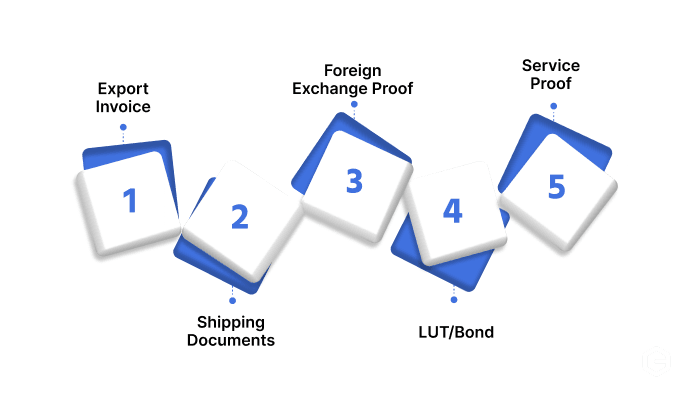
Proper documentation is crucial for claiming zero-rated benefits and avoiding compliance issues. Missing or incorrect paperwork can disqualify your exports from zero-rating, leaving you liable for GST without input credit benefits.
Here are the key documents you need:
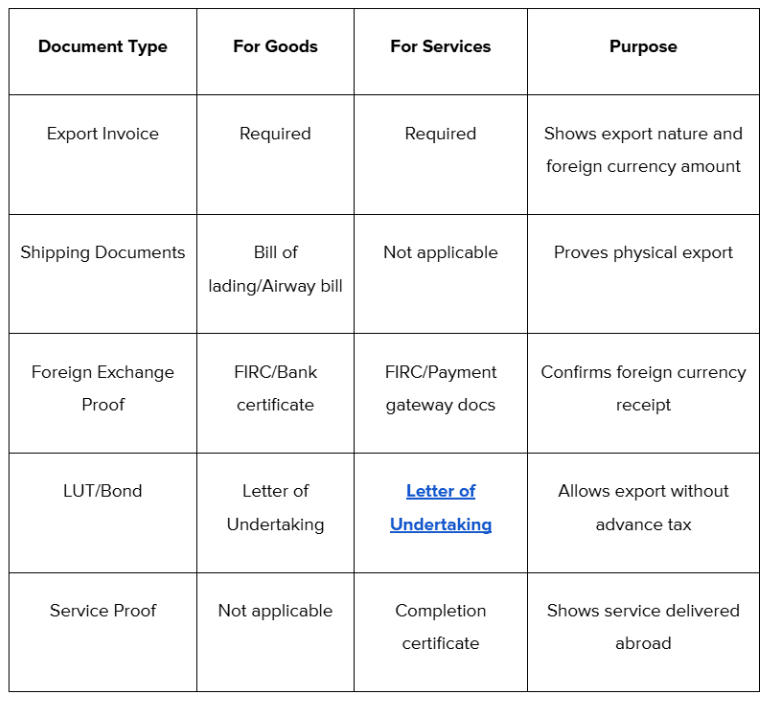
For services, additional documentation can include proof of service delivery outside India, such as completion certificates or client acknowledgments. The key is establishing that the service was consumed outside India.
Banks play a crucial role by providing Foreign Inward Remittance Certificates (FIRC) when payments arrive. Modern payment platforms can automate much of this documentation, reducing compliance burden while ensuring all requirements are met.
Managing tax compliance while collecting international payments can be complex, especially when dealing with multiple currencies, documentation requirements, and varying client expectations across different countries.
PayGlocal helps Indian exporters and service providers handle international payments while maintaining compliance automatically. Instead of handling multiple payment methods, currency conversions, and compliance documentation, you get an integrated solution that handles everything.
Here's how PayGlocal supports your international business:
Whether you're a freelancer billing clients on global platforms or an enterprise managing recurring international invoices, PayGlocal simplifies the payment and compliance process while helping you maintain the foreign currency payment requirements for GST zero-rating.
India's tax system has evolved significantly since GST replaced VAT in 2017. For international business, the key insight is that exports are zero-rated, meaning you typically don't charge tax to foreign clients while retaining the ability to claim input credits.
When international clients ask about VAT rates, explain that exports from India are zero-rated under GST, but their country may apply its own VAT or import duties.
The fastest-growing Indian exporters have already moved to automated payment solutions like PayGlocal to stay ahead. Don't let manual processes slow down your international growth.
Get started with PayGlocal today and make your international payment processes faster and efficient.
Data shows that in 2024-25, GST collections crossed ₹22.08 lakh crore, up by about 9.4% from the previous year. This increase indicates that more businesses are now part of the GST system and doing their tax reporting regularly. For exports, the rules are even more specific, with most international sales qualifying as zero-rated supplies under GST.
In this guide, we cover everything you need to know about India's tax structure for international business, how to handle client questions about VAT, and the right way to bill foreign customers while staying compliant.
Key Takeaways:
GST replacement: India replaced VAT with GST in 2017, with standard rates of 0%, 5%, 18%, and 28% for domestic supplies.
- Zero-rated exports: Exports from India are typically zero-rated under GST, meaning no tax is charged, and input credits are available.
- Qualification requirements: Zero-rated export status requires meeting specific conditions, like foreign currency payment and proper documentation.
- Payment solutions: Payment partners like PayGlocal can simplify compliance by handling foreign currency collection and documentation.
- Documentation importance: Proper invoicing and documentation are crucial for claiming zero-rated benefits and avoiding compliance issues.
What is India's current VAT rate?
India doesn't have a traditional VAT rate anymore. Since July 1, 2017, the Goods and Services Tax (GST) replaced the earlier VAT system that individual states used to operate.
The GST system operates with several rate slabs. The current structure includes:
- 0% percent rate: Essential goods, exports, and certain services are completely exempt from GST.
- 5% percent rate: Necessity items like basic food products, medicines, and essential services.
- 18% percent rate: Standard rate covering most goods and services, including electronics, telecommunications, and professional services.
- 28% percent rate: Luxury goods, automobiles, and certain regulated products.
The most relevant rates are 0% for exports and 18% for any domestic supplies or services. The 18% rate often applies to business services like marketing or technology services purchased domestically.
For exporters and international service providers, the most important rate is 0% because exports from India are classified as zero-rated supplies under GST. This means you typically don't charge any tax on international sales, and you can claim input tax credits on expenses used for export business.
How does GST work for international businesses?
Knowing how GST applies to your international business operations helps you price correctly and stay compliant. The system treats exports differently from domestic sales to support India's global competitiveness.
When you export goods or services from India, these qualify as zero-rated supplies under GST rules. Zero-rated means you charge 0% GST on your export invoice, but you can still claim input tax credits for GST paid on inputs and services used in your export business.
To qualify for zero-rated status, your export must meet specific conditions, such as:
- Supplier location: The supplier must be located in India.
- Recipient location: The recipient must be outside India.
- Service consumption: The place of supply must be outside India.
- Payment method: Payment must be received in convertible foreign currency.
- Entity relationship: Transactions shouldn't be between branches of the same entity.
For instance, if you're providing digital marketing services to a Canadian client, you qualify for zero-rating when the client pays in Canadian dollars, the service is consumed in Canada, and you deliver the work from your Indian office. You charge 0% GST and can claim input credits on any domestic services or goods used.
How do other countries' VAT systems compare to India's GST?
Your international clients asking about VAT rates are referring to their own country's tax systems, not India's obligations. This creates confusion but also opportunities to provide clarity and build trust.
Here's how major countries compare with India's system:
Most countries operate VAT systems with standard rates between 15-25%. When clients ask about your "VAT rate," they want to know how much tax will be added to their invoice.
The key insight is that VAT in most countries applies to imports, while exports are typically zero-rated. When you export from India to a VAT country, you charge 0% under India's GST system, and the client's country may apply its VAT/import duties on receipt.
For example, if you're providing software services to a UK client, you charge 0% GST as an export from India. The UK client might need to account for reverse charge VAT at 20% on their end, but that's their tax obligation, not yours. This system prevents double taxation while ensuring each country collects tax on consumption within its borders.
What documentation do you need for zero-rated exports?
Proper documentation is crucial for claiming zero-rated benefits and avoiding compliance issues. Missing or incorrect paperwork can disqualify your exports from zero-rating, leaving you liable for GST without input credit benefits.
Here are the key documents you need:
For services, additional documentation can include proof of service delivery outside India, such as completion certificates or client acknowledgments. The key is establishing that the service was consumed outside India.
Banks play a crucial role by providing Foreign Inward Remittance Certificates (FIRC) when payments arrive. Modern payment platforms can automate much of this documentation, reducing compliance burden while ensuring all requirements are met.
Get paid globally and manage everything from one platform
Managing tax compliance while collecting international payments can be complex, especially when dealing with multiple currencies, documentation requirements, and varying client expectations across different countries.
PayGlocal helps Indian exporters and service providers handle international payments while maintaining compliance automatically. Instead of handling multiple payment methods, currency conversions, and compliance documentation, you get an integrated solution that handles everything.
Here's how PayGlocal supports your international business:
- Multi-currency payment collection: Accept payments in USD, EUR, GBP, CAD, and 33+ other currencies from 180+ countries.
- Automatic compliance documentation: Get FIRCs and other required documents generated automatically when payments settle.
- Transparent pricing: No hidden fees, monthly charges, or setup costs - pay only when you transact.
- Real-time tracking: Monitor payment status and compliance documentation from a unified dashboard.
- One platform management: Handle all payment types, currencies, and compliance from a single dashboard without switching between multiple tools.
Whether you're a freelancer billing clients on global platforms or an enterprise managing recurring international invoices, PayGlocal simplifies the payment and compliance process while helping you maintain the foreign currency payment requirements for GST zero-rating.
Final thoughts
India's tax system has evolved significantly since GST replaced VAT in 2017. For international business, the key insight is that exports are zero-rated, meaning you typically don't charge tax to foreign clients while retaining the ability to claim input credits.
When international clients ask about VAT rates, explain that exports from India are zero-rated under GST, but their country may apply its own VAT or import duties.
The fastest-growing Indian exporters have already moved to automated payment solutions like PayGlocal to stay ahead. Don't let manual processes slow down your international growth.
Get started with PayGlocal today and make your international payment processes faster and efficient.