
India accounts for around 49% of all the global real-time payment transactions. By 2030, India will become the world’s 3rd largest economy, with an estimated GDP of $7.3 trillion. Every sector, from services to exports, is experiencing rapid growth and increased international transactions.
With this growth comes the need for proper payment categorization and compliance. When you're receiving money from Employee Stock Option Plan (ESOP) share sales, using the correct classification becomes critical for smooth transactions.
The P0021 purpose code specifically handles receipts from ESOP share sales, ensuring your payments get categorized correctly and processed without regulatory issues. In this guide, we cover everything you need to know about P0021 purpose code, when to use it, and how to avoid common mistakes that can cost your business.
P0021 purpose code is a specific classification used for inward remittances when you receive payments from the sale of shares acquired through Employee Stock Option Plans. This code ensures that these particular transactions get properly categorized and reported for financial compliance.
When an employee sells shares they obtained through their company's ESOP, the funds they receive must be classified under P0021. This classification helps track and manage these transactions.
For example, if you work for a tech startup and decide to sell 1,000 shares you acquired through your ESOP at $50 per share, the $50,000 payment you receive would be processed using P0021 purpose code. This ensures the transaction gets properly documented and reported.
Using the correct purpose code prevents compliance violations and ensures your payments get processed smoothly without delays or additional scrutiny from banking authorities.
The P0021 code specifically addresses several key requirements:
P0021 purpose code applies to specific situations when you receive payments from selling shares that came from your employer's stock option plans. Here's when the P0021 purpose code applies and when it doesn't:
Let’s take a detailed look at each scenario in which the purpose code P0021 applies, along with its examples.
This covers the most common situation where employees sell shares they received through their company's Employee Stock Option Plan. These are shares you got as part of your job benefits and later decided to sell.
For example, if your tech company granted you 500 stock options at $20 per share in 2022, you exercised them in 2024 when the stock was worth $80, and now you're selling them for $100 per share, the $50,000 you receive requires P0021 purpose code.
When you convert your stock options into actual shares (called exercising) and then sell those shares, you need P0021 for the sale money. First, you pay to convert your options into real shares, then you sell those shares for cash.
For example, your company gives you options to buy 1,000 shares at $15 each. Later, when shares are worth $60, you pay $15,000 to convert your options into 1,000 real shares. Then you sell these shares for $60,000. This $60,000 sale uses P0021 purpose code.
Any time you sell company shares that were originally given to you as employee compensation, P0021 applies. This includes shares from various employee benefit programs, not just traditional stock options.
For example, if your startup gave you 200 shares as a signing bonus worth $10,000, and you later sell them for $25,000 after the company grows, that $25,000 payment needs P0021 classification.
When your employer or company buys back shares you acquired through employee programs (also known as share repurchase programs), these transactions also require P0021. Companies sometimes repurchase employee-held shares during acquisitions or restructuring.
For instance, if your company gets acquired and offers to buy back your ESOP shares at $150 per share when you originally got them at $30, the buyback payment uses P0021 purpose code.
Even when you sell only some of your ESOP shares rather than your entire holding, P0021 still applies to those partial sale proceeds. Each sale transaction needs proper classification regardless of the amount.
For example, if you own 800 ESOP shares and decide to sell 300 of them to cover a major expense, the payment you receive for those 300 shares requires P0021 classification.
Proper documentation ensures smooth processing and compliance for P0021 transactions.
Essential documents typically include:
Several common errors can cause delays and compliance issues when using P0021 purpose code. Frequent mistakes include:
Managing international payments from multiple sources gets complex fast, especially when you're dealing with different currencies, compliance requirements, and tracking multiple transactions. You need a solution that handles all payment types while keeping everything organized in one place.
PayGlocal makes international payment collection simple and efficient:
Whether you're collecting ESOP proceeds, client payments, or marketplace settlements, PayGlocal keeps everything organized and compliant while reducing your administrative workload.
P0021 purpose code plays a crucial role in properly categorizing ESOP share sale receipts and ensuring compliance with banking regulations. Using the correct code prevents delays, penalties, and compliance issues that can complicate your financial transactions.
Managing international payments effectively requires more than just knowing the right purpose codes. You also need systems that can handle multiple currencies, provide proper documentation, and keep everything organized. PayGlocal solves these challenges by providing a complete payment solution that works across borders and currencies.
Don't let complex payment processes slow down your business growth. Get started with PayGlocal today for seamless international payment collection with fast processing speed.
With this growth comes the need for proper payment categorization and compliance. When you're receiving money from Employee Stock Option Plan (ESOP) share sales, using the correct classification becomes critical for smooth transactions.
The P0021 purpose code specifically handles receipts from ESOP share sales, ensuring your payments get categorized correctly and processed without regulatory issues. In this guide, we cover everything you need to know about P0021 purpose code, when to use it, and how to avoid common mistakes that can cost your business.
Key Takeaways:
- P0021 purpose code classification: Used specifically for receipts from Employee Stock Option Plan share sales to ensure proper transaction categorization.
- Compliance requirement: Mandatory for all inward remittances related to ESOP share sales to avoid regulatory issues and penalties.
- Documentation benefits: Proper code usage speeds up payment processing and generates required compliance documents automatically.
- PayGlocal advantage: PayGlocal provides instant compliance documentation and automated purpose code selection for hassle-free international payments.
What is the P0021 purpose code?
P0021 purpose code is a specific classification used for inward remittances when you receive payments from the sale of shares acquired through Employee Stock Option Plans. This code ensures that these particular transactions get properly categorized and reported for financial compliance.
When an employee sells shares they obtained through their company's ESOP, the funds they receive must be classified under P0021. This classification helps track and manage these transactions.
For example, if you work for a tech startup and decide to sell 1,000 shares you acquired through your ESOP at $50 per share, the $50,000 payment you receive would be processed using P0021 purpose code. This ensures the transaction gets properly documented and reported.
Why is the P0021 purpose code important for inward remittances?
Using the correct purpose code prevents compliance violations and ensures your payments get processed smoothly without delays or additional scrutiny from banking authorities.
The P0021 code specifically addresses several key requirements:
- Regulatory compliance: Ensures adherence to banking regulations for financial transactions.
- Proper categorization: Distinguishes ESOP share sales from regular investment transactions.
- Documentation accuracy: Generates appropriate compliance documents for tax and regulatory purposes.
- Processing efficiency: Reduces payment delays and manual intervention requirements.
- Audit trail maintenance: Creates clear records for financial reporting and compliance audits.
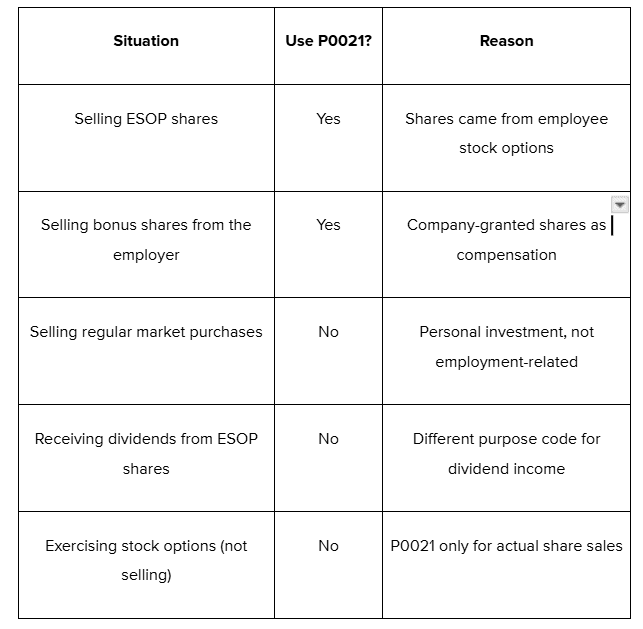
When should you use the P0021 purpose code?
P0021 purpose code applies to specific situations when you receive payments from selling shares that came from your employer's stock option plans. Here's when the P0021 purpose code applies and when it doesn't:
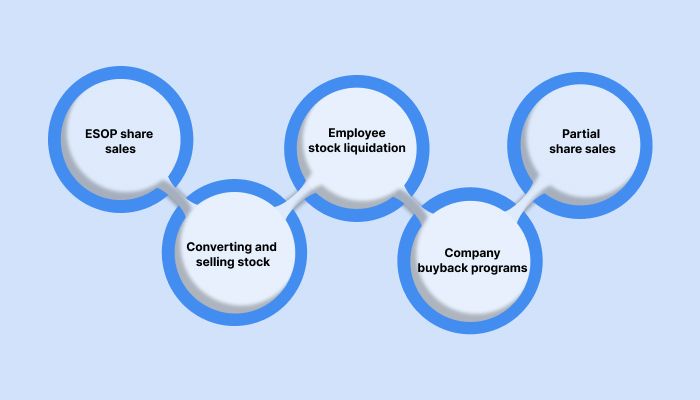
Let’s take a detailed look at each scenario in which the purpose code P0021 applies, along with its examples.
1. ESOP share sales
This covers the most common situation where employees sell shares they received through their company's Employee Stock Option Plan. These are shares you got as part of your job benefits and later decided to sell.
For example, if your tech company granted you 500 stock options at $20 per share in 2022, you exercised them in 2024 when the stock was worth $80, and now you're selling them for $100 per share, the $50,000 you receive requires P0021 purpose code.
2. Converting and selling stock options
When you convert your stock options into actual shares (called exercising) and then sell those shares, you need P0021 for the sale money. First, you pay to convert your options into real shares, then you sell those shares for cash.
For example, your company gives you options to buy 1,000 shares at $15 each. Later, when shares are worth $60, you pay $15,000 to convert your options into 1,000 real shares. Then you sell these shares for $60,000. This $60,000 sale uses P0021 purpose code.
3. Employee stock liquidation
Any time you sell company shares that were originally given to you as employee compensation, P0021 applies. This includes shares from various employee benefit programs, not just traditional stock options.
For example, if your startup gave you 200 shares as a signing bonus worth $10,000, and you later sell them for $25,000 after the company grows, that $25,000 payment needs P0021 classification.
4. Company buyback programs
When your employer or company buys back shares you acquired through employee programs (also known as share repurchase programs), these transactions also require P0021. Companies sometimes repurchase employee-held shares during acquisitions or restructuring.
For instance, if your company gets acquired and offers to buy back your ESOP shares at $150 per share when you originally got them at $30, the buyback payment uses P0021 purpose code.
5. Partial share sales
Even when you sell only some of your ESOP shares rather than your entire holding, P0021 still applies to those partial sale proceeds. Each sale transaction needs proper classification regardless of the amount.
For example, if you own 800 ESOP shares and decide to sell 300 of them to cover a major expense, the payment you receive for those 300 shares requires P0021 classification.
What documents do you need for P0021 transactions?
Proper documentation ensures smooth processing and compliance for P0021 transactions.
Essential documents typically include:
- ESOP agreement: Original employee stock option plan documentation showing share allocation.
- Exercise confirmation: Documentation proving when and how the stock options were exercised.
- Sale confirmation: Broker or company confirmation of share sale with transaction details.
- Tax documentation: Relevant tax forms and withholding certificates if applicable.
- Bank transaction details: Complete remittance information including sender and recipient details.
- Purpose declaration: Clear statement indicating the payment relates to ESOP share sales.
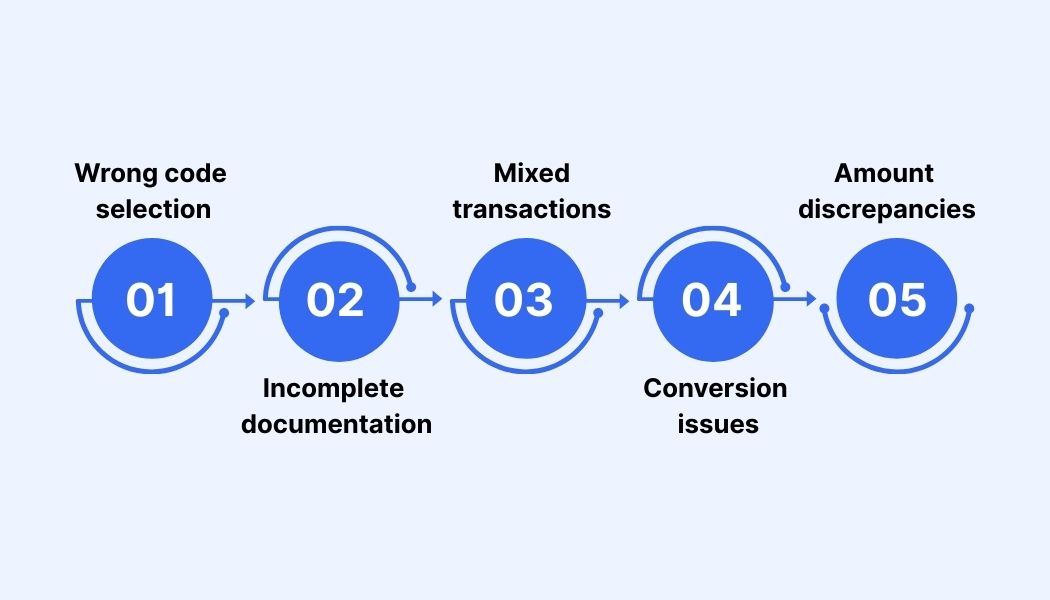
What are common mistakes with the P0021 purpose code?
Several common errors can cause delays and compliance issues when using P0021 purpose code. Frequent mistakes include:
- Wrong code selection: Using other general investment codes instead of P0021 for ESOP transactions.
- Incomplete documentation: Missing ESOP agreements or exercise confirmations.
- Timing errors: Using P0021 for option exercises rather than actual share sales.
- Mixed transactions: Combining ESOP sales with other investment activities under one code.
- Currency conversion issues: Failing to properly document foreign exchange aspects.
- Amount discrepancies: Mismatches between declared amounts and actual sale proceeds.
Get paid globally and manage everything from one platform
Managing international payments from multiple sources gets complex fast, especially when you're dealing with different currencies, compliance requirements, and tracking multiple transactions. You need a solution that handles all payment types while keeping everything organized in one place.
PayGlocal makes international payment collection simple and efficient:
- Multi-currency accounts: Accept payments in 130+ global currencies from 180+ countries with transparent rates.
- Global payment methods: Support 40+ payment options including cards, bank transfers, and local methods.
- One platform management: Handle all payment types, tracking, and documentation from a single dashboard.
- Instant documentation: Generate required documentation like FIRC automatically upon settlement and stay compliant.
- Zero setup costs: Pay only when you transact, with no monthly fees or hidden charges.
Whether you're collecting ESOP proceeds, client payments, or marketplace settlements, PayGlocal keeps everything organized and compliant while reducing your administrative workload.
Final thoughts
P0021 purpose code plays a crucial role in properly categorizing ESOP share sale receipts and ensuring compliance with banking regulations. Using the correct code prevents delays, penalties, and compliance issues that can complicate your financial transactions.
Managing international payments effectively requires more than just knowing the right purpose codes. You also need systems that can handle multiple currencies, provide proper documentation, and keep everything organized. PayGlocal solves these challenges by providing a complete payment solution that works across borders and currencies.
Don't let complex payment processes slow down your business growth. Get started with PayGlocal today for seamless international payment collection with fast processing speed.