
Meera runs a handloom label in Karur. A buyer in Germany reaches checkout, wants to pay by bank transfer, and sees only a card form.
The product is right. The buyer is ready. The missing payment method loses the sale.
The product is right. The buyer is ready. The missing payment method loses the sale.
TL;DR
- Exporters should choose payment methods based on buyer market, transaction size, business model, cost, and settlement needs.
- Cards and wallets offer broad online reach, while SEPA and ACH are regional bank-payment rails and wires are often used for larger invoices.
- UPI is important for Indian buyers but is not a general-purpose international collection rail.
- Offering more methods does not automatically improve Payment Success Rate; the methods need to match your actual buyers.
What is a payment method?
A simple way to think about it
Buyer location → preferred payment method → payment processing → approval/transfer → settlement → reconciliation and export documentation
Which payment methods should Indian exporters know?
| Payment method | Where it fits best | Cost profile | Typical export use case |
|---|---|---|---|
| Credit/debit cards | Global online checkout | Percentage-based merchant pricing | D2C, SaaS, subscriptions |
| Digital wallets | Mobile and online checkout | Usually tied to underlying payment/provider pricing | Faster consumer checkout |
| Bank transfers | Market-specific account-to-account payments | Often lower than card acceptance | B2B invoices |
| UPI | Primarily India | Usually low-cost for eligible domestic flows | Indian buyers |
| SEPA | Euro payments across SEPA markets | Bank/provider dependent | European B2B and invoice payments |
| ACH | US bank accounts | Bank/provider dependent | US B2B and recurring collections |
| Wire transfers | Domestic or cross-border bank payments | Can include fixed and intermediary fees | Large international invoices |
| BNPL | Selected consumer markets | Generally higher merchant cost | High-ticket D2C purchases |
How do the main payment methods work?
Credit and debit cards
The customer enters card details or uses a saved credential. The transaction goes through authentication, issuer approval, and settlement.
Cross-border card performance can depend on the issuer, 3DS authentication, acquiring route, and fraud controls.
Digital wallets
Wallets such as Apple Pay and Google Pay can let customers use securely provisioned card credentials without manually entering card details.
They can reduce checkout friction, particularly on mobile, but may still rely on the underlying card or account.
Bank transfers
Bank transfers move funds through account-to-account payment systems.
The rail varies by market: NEFT and RTGS in India, ACH in the US, and SEPA in Europe. Bank transfers are often useful for invoices and larger B2B payments.
UPI
UPI enables real-time bank-to-bank payments in India.
For exporters, UPI is mainly relevant to Indian customers and specific supported cross-border UPI use cases.
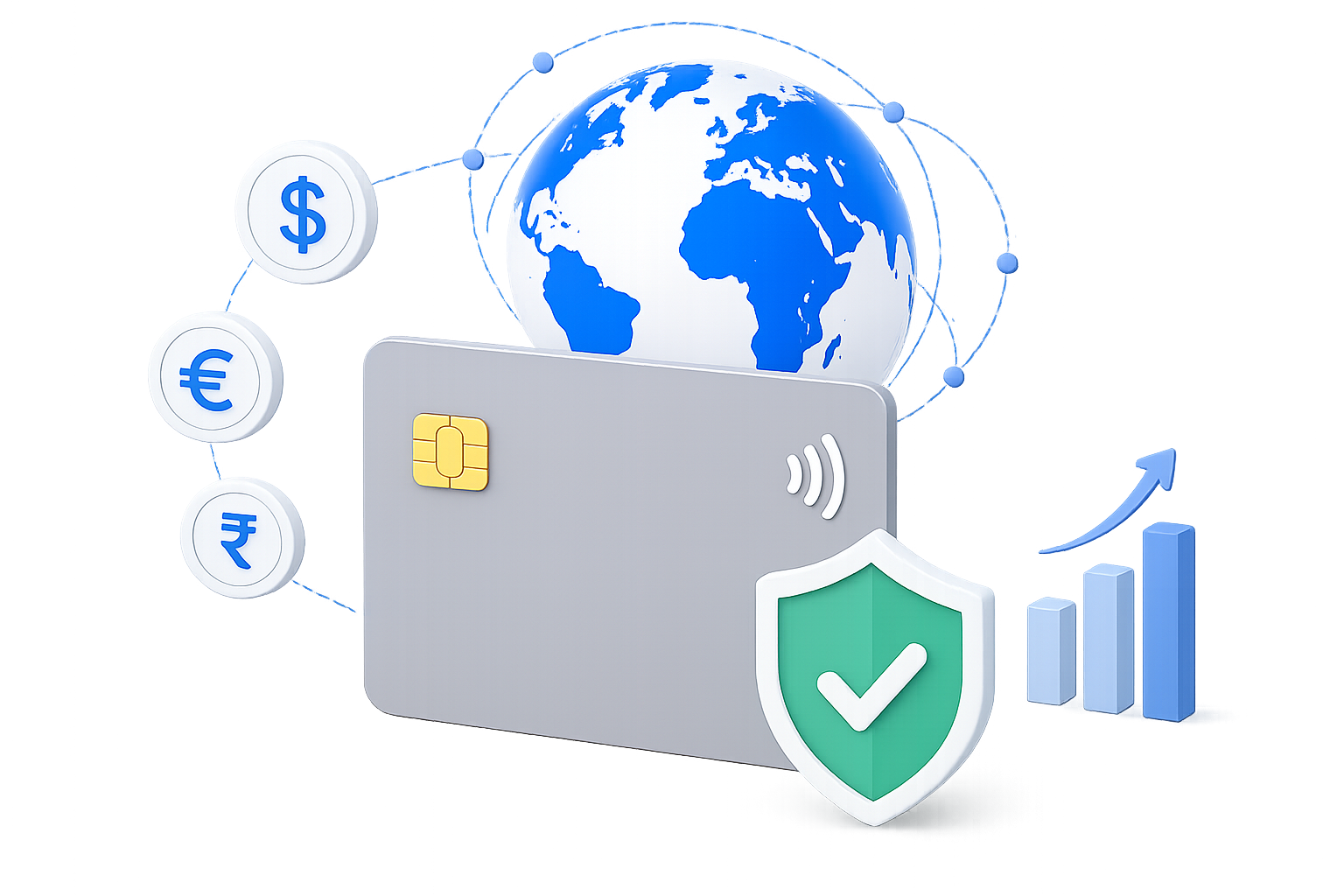
SEPA
SEPA standardises eligible euro credit transfers and direct debits across 41 countries and territories.
A provider with EUR local collection capability can let European clients pay through SEPA rather than a traditional international wire.
ACH
ACH is a US account-to-account payment network used for credits, debits, and B2B payments.
Same Day ACH can move eligible payments within hours on the same business day. Local USD collection details can make ACH useful for US invoice payments.
Wire transfers
International wires are commonly used for high-value bank payments.
SWIFT may carry payment instructions, while banks handle settlement. Fees, FX, and intermediary deductions vary by route.
Buy Now Pay Later
BNPL lets eligible consumers split a purchase into instalments.
It is most relevant to selected high-ticket consumer categories and should be added only where the conversion benefit justifies the cost.
Which payment method fits which buyer?
| If your priority is | Start by evaluating |
|---|---|
| Broad online reach | International cards |
| Faster mobile checkout | Apple Pay and Google Pay |
| European invoice collections | SEPA-enabled EUR collection |
| US bank collections | ACH-enabled USD collection |
| Large international invoices | Bank transfer or wire |
| Indian customers | UPI |
| High-ticket consumer checkout | BNPL where relevant |
| Subscription billing | Recurring cards or suitable account-to-account debit |
Does offering more payment methods improve Payment Success Rate?
It can help, but more methods do not automatically mean more successful payments.
Payment Success Rate also depends on issuer and acquirer performance, routing, authentication, fraud rules, checkout design, retries, and buyer market.
Track failures → identify missing buyer preferences → add the relevant method → measure performance → keep or remove based on results
How do you choose the right payment methods?
- Start with buyer geography: Map where customers are and how they normally pay.
- Match method to transaction size: Small consumer purchases and large B2B invoices may need different rails.
- Consider recurring vs one-time payments: Subscriptions need repeatable payment credentials or debit mandates.
- Compare total cost: Include FX, intermediary deductions, refunds, disputes, and reconciliation.
- Check documentation: Understand payment references, settlement records, FIRA, and other applicable export records.
How PayGlocal helps Indian exporters collect globally
PayGlocal combines card checkout and bank-rail collections for Indian businesses, including:
- Visa, Mastercard, and American Express
- Apple Pay and Google Pay
- 100+ local and alternate payment methods
- payment links and hosted payment pages
- recurring international card payments
- intelligent routing and international payment optimisation
- Multi-Currency Accounts for invoice and bank-transfer collections
Multi-Currency Accounts support collection in 130+ global currencies from 180+ countries, with local receiving details in currencies including USD, GBP, EUR, CAD, and AUD. Funds are converted and settled to the merchant's Indian bank account, with tracking and automated inward-remittance documentation for supported collections.