
India is home to one of the world's largest pools of remote contractors and freelancers. Developers build software for startups in the United States, designers create brands for companies in the United Kingdom, writers and marketers support agencies across Germany and the Nordics, and consultants advise clients in Australia, Singapore and the UAE.
No matter what service you provide, the challenge is usually the same. Winning the client is often easier than getting paid.
A transfer that should take a day can take much longer. A "small" fee often hides a much bigger cost in the exchange rate. And when it's time to file GST or prepare export documentation, many freelancers discover they need paperwork they never knew existed.
Receiving international payments isn't just about moving money. It's about understanding how that money travels from your client's bank account to yours, how much of it you actually receive, and whether your documentation is in order when tax season arrives.
This is the problem modern cross-border payment platforms, including PayGlocal, were built to solve. Instead of relying solely on traditional international wire transfers, they provide local collection accounts, transparent pricing, digital onboarding and automated compliance documents that simplify receiving payments from overseas.
No matter what service you provide, the challenge is usually the same. Winning the client is often easier than getting paid.
A transfer that should take a day can take much longer. A "small" fee often hides a much bigger cost in the exchange rate. And when it's time to file GST or prepare export documentation, many freelancers discover they need paperwork they never knew existed.
Receiving international payments isn't just about moving money. It's about understanding how that money travels from your client's bank account to yours, how much of it you actually receive, and whether your documentation is in order when tax season arrives.
This is the problem modern cross-border payment platforms, including PayGlocal, were built to solve. Instead of relying solely on traditional international wire transfers, they provide local collection accounts, transparent pricing, digital onboarding and automated compliance documents that simplify receiving payments from overseas.
TL;DR
- What does it typically cost to receive a payment from abroad? With PayGlocal, a $5,000 invoice costs a flat $18, with no FX markup, no setup fee and no annual maintenance fee.
- How do international clients pay you? Through local collection accounts, a global multi-currency account, or freelancer marketplaces like Upwork and Fiverr.
- Do you need an eFIRA for GST and export documentation? An eFIRA serves as proof of foreign inward remittance and is commonly used for export records and GST-related documentation.
- How quickly does money reach your Indian bank account? Eligible payments are typically settled to your Indian bank account within 24 hours.
- How long does onboarding take? Most eligible freelancers complete onboarding in under two hours.
This guide explains:
This guide is written for Indian freelancers, independent consultants and solo professionals who invoice overseas clients and want a simpler, more transparent way to receive international payments.
Whether you're just sending your first invoice or already working with clients across multiple countries, it covers the payment methods, pricing and compliance considerations that matter when serving international customers.
This guide is especially relevant for:
Whether you invoice once every quarter or every week, the objective is usually the same:
Keep more of what you earn while staying compliant.
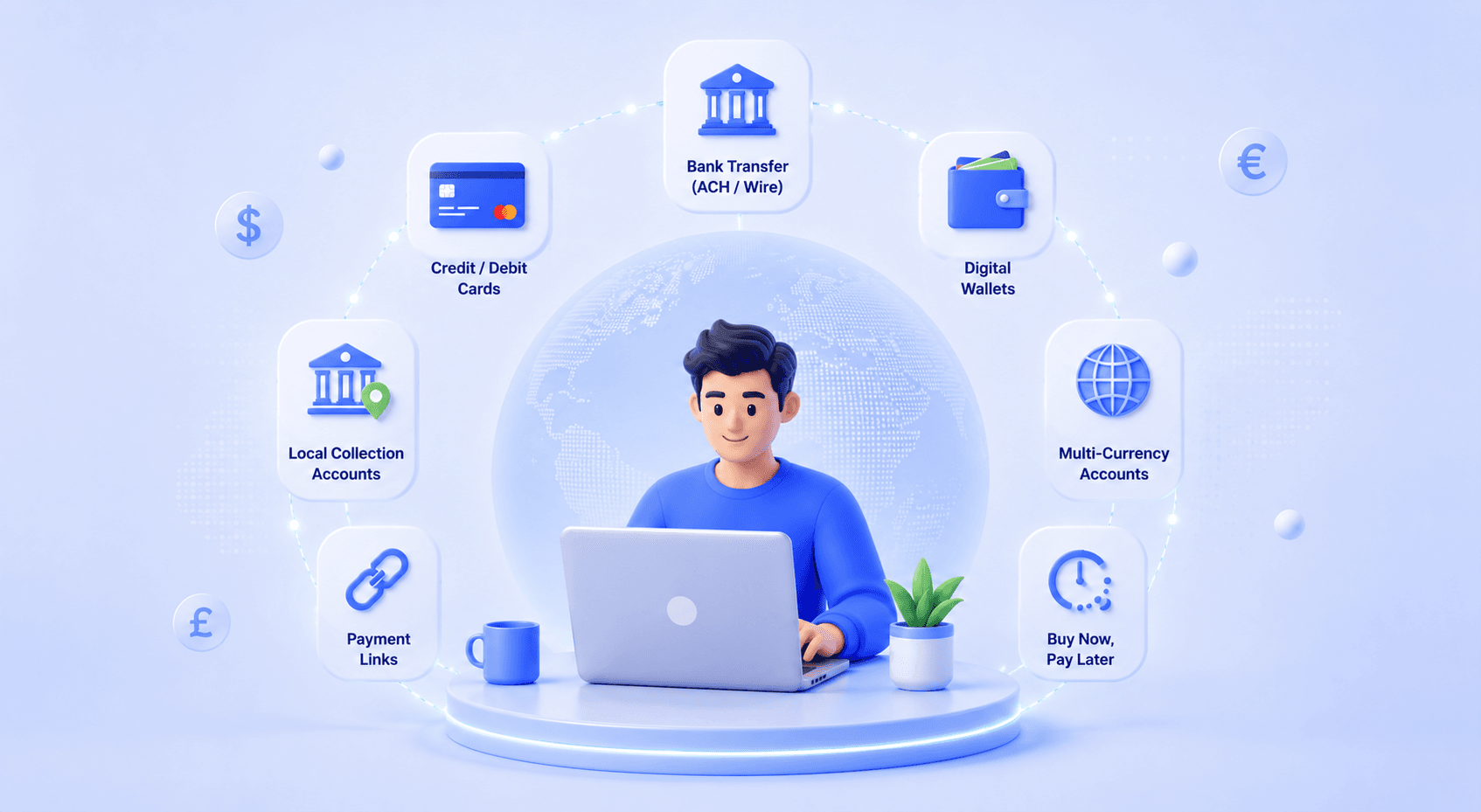
Most freelancers receive international payments in one of two ways.
Modern cross-border payment platforms provide local collection accounts in selected currencies, together with global receiving details for additional currencies.
Instead of asking your client to send an international SWIFT wire, you're given bank details in your client's country—for example, a US routing number or a UK sort code. Your client pays you like any other domestic supplier using their local banking system.
Once the payment is received, it's converted into INR and settled into your Indian bank account. You don't need to open or maintain a foreign bank account yourself.
This approach is often simpler for clients because they can pay through familiar domestic payment rails such as ACH, SEPA or Faster Payments.
Platforms like Upwork, Fiverr, Freelancer, Toptal and Contra collect payments from clients on your behalf before allowing you to withdraw your earnings to a supported payout account.
Many freelancers use both approaches:
Both can ultimately be settled into the same Indian bank account.
Most payment issues aren't caused by clients.
They're caused by small decisions that seem insignificant at first but become expensive over time.
A platform advertising a "low fee" may still cost considerably more if it applies a large FX markup.
Looking at the final INR settlement provides a more accurate comparison between providers.
Some providers still require you to request an eFIRA manually after every payment.
If you receive payments regularly, this creates unnecessary administrative work.
Choosing a platform that automatically generates eFIRAs can save significant time when preparing export documentation.
An invoice should clearly include:
International wire transfers can involve intermediary banks, additional deductions and longer processing times.
Where local collection accounts are available, they often provide a simpler payment experience for both you and your client.
Every foreign inward remittance is classified using an RBI purpose code. Using the correct code helps maintain accurate export records and regulatory reporting.
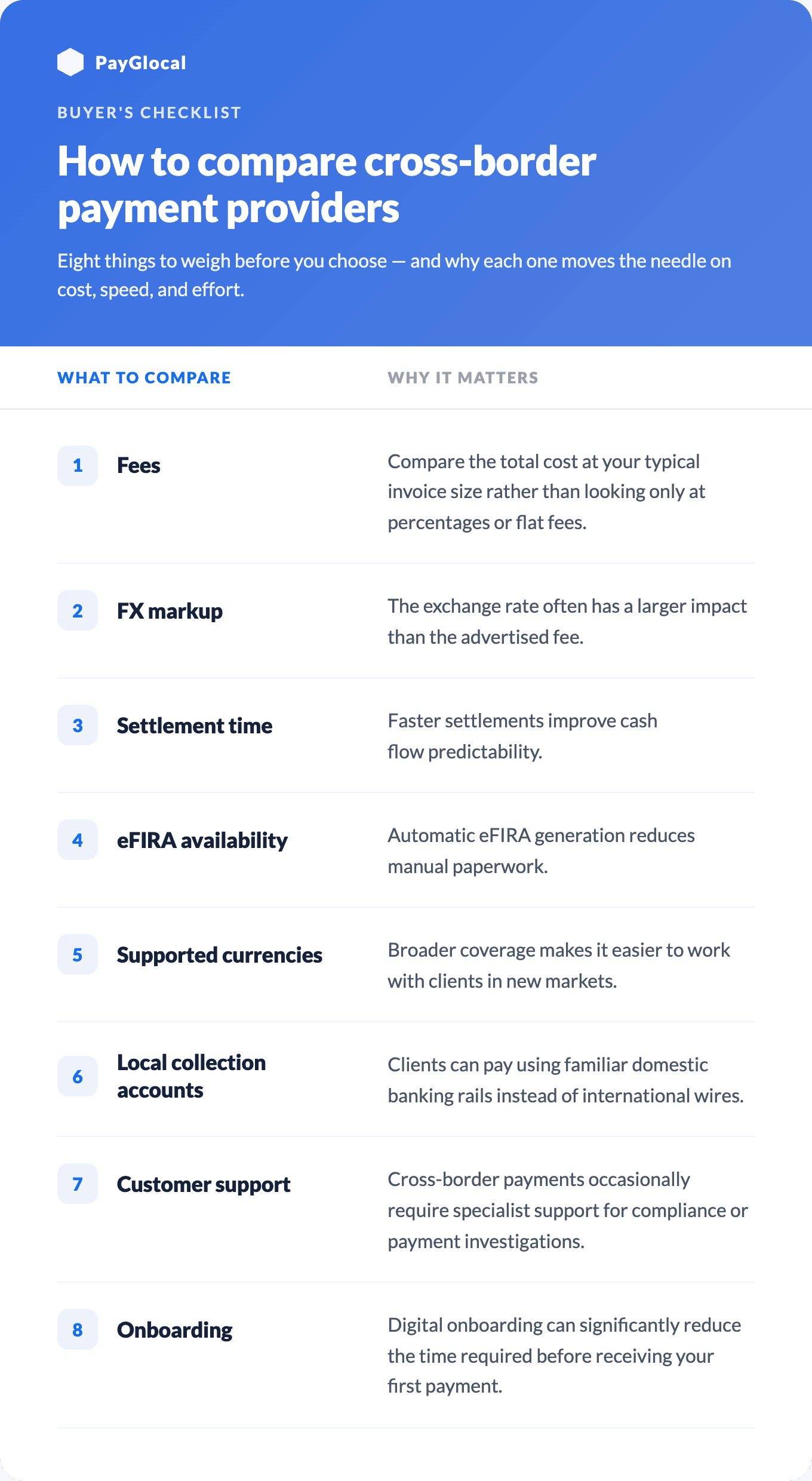
Instead of comparing headline pricing alone, evaluate every provider using the same checklist.
Different providers charge in different ways.
Some charge a percentage of every transaction. Others advertise a low fee but recover their margin through the exchange rate. The only meaningful comparison is the total amount that reaches your Indian bank account after all charges and currency conversion.
PayGlocal follows a transparent pricing model:
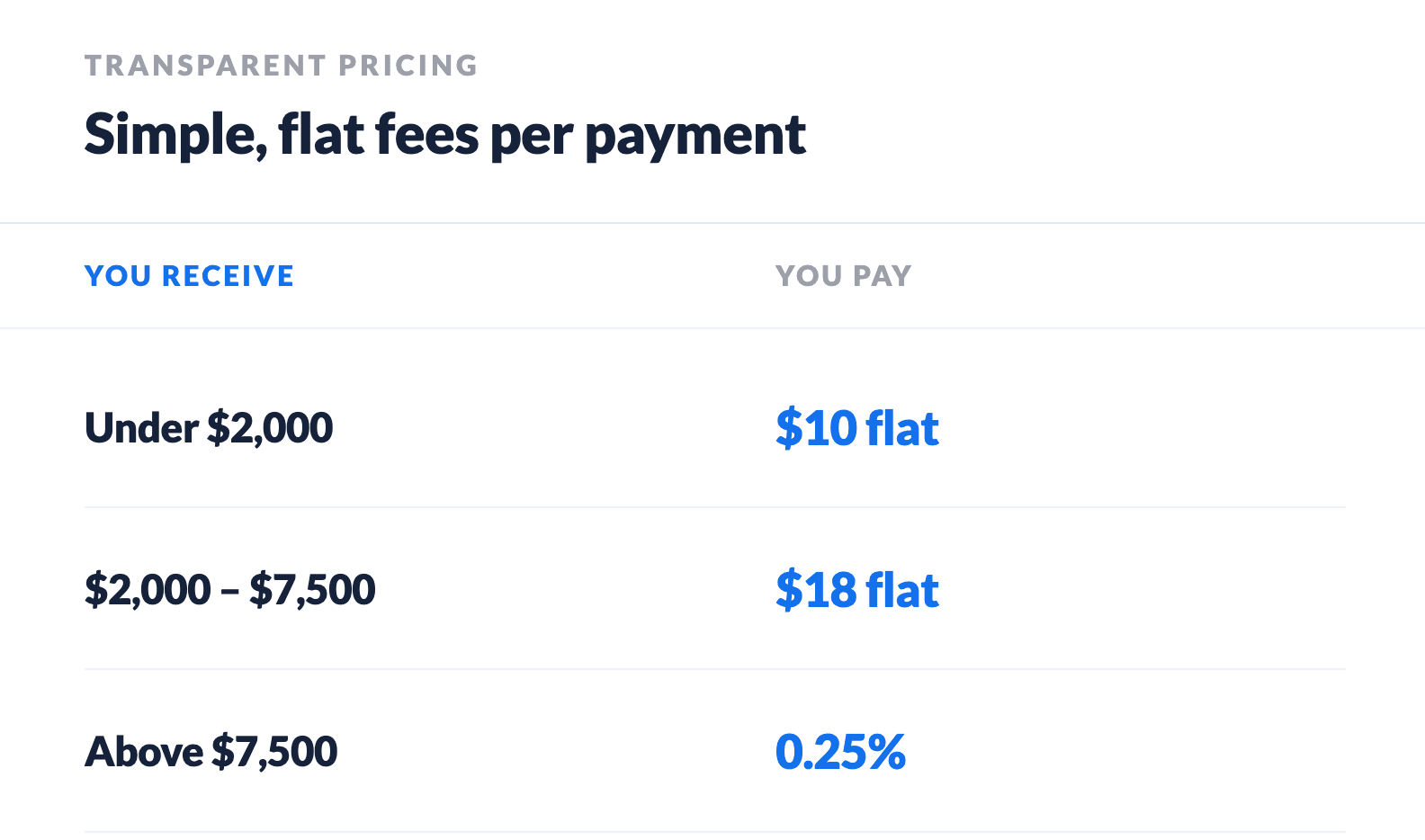
Included with every payment:
A freelance software developer in Bengaluru invoices a client in California for $5,000.
The client pays into the freelancer's USD local collection account using a domestic ACH transfer.
PayGlocal converts the funds at the applicable live exchange rate and settles the INR equivalent into the freelancer's Indian bank account. An eFIRA is generated automatically following settlement.
Total fee: $18
Because the fee is flat rather than percentage-based, it becomes a smaller proportion of the invoice as payment values increase.
Common mistake: A 2–3% fee may appear reasonable until you calculate the actual amount. On a $5,000 invoice, that's $100–150 before considering any exchange-rate markup.
PayGlocal provides dedicated local collection accounts in:
These cover many of the destinations Indian freelancers work with most frequently, including the United States, the United Kingdom, Canada, Australia and countries across the Eurozone.
Clients can pay through familiar domestic payment systems such as:
Beyond local collection accounts, PayGlocal's Global Account supports collections in 32 currencies, allowing you to invoice clients across North America, Europe, the Middle East and Asia.
This includes currencies such as:
Marketplace earnings from platforms such as Upwork, Fiverr, Freelancer.com, Toptal and Contra can also be settled into your PayGlocal account before being transferred to your Indian bank account.
Pro tip: Invoice clients in the currency they naturally operate in whenever possible. It reduces friction for their finance team and often results in faster payment.
An international invoice looks very similar to a domestic invoice but should also include the payment information your overseas client needs.
A typical invoice should contain:
When combined with the appropriate RBI purpose code and eFIRA, these documents help keep your export records organised.
A UX designer in Mumbai invoices a London-based startup for £3,000 with 15-day payment terms.
The invoice includes PayGlocal's GBP collection account details.
The client pays using the UK's Faster Payments network, just as they would when paying any domestic supplier.
After settlement, the INR equivalent reaches the designer's Indian bank account, and an eFIRA is generated automatically.
No overseas bank account is required.
Receiving international payments isn't just about collecting money.
It's equally important to maintain the documentation required for export records and regulatory compliance.
Three concepts matter most:
Every foreign inward remittance is classified using an RBI purpose code describing the nature of the transaction.
Selecting the appropriate purpose code helps maintain accurate export records and regulatory reporting.
An Electronic Foreign Inward Remittance Advice (eFIRA) serves as evidence that your payment was received from outside India.
It is commonly used to support:
Choosing a platform that generates eFIRAs automatically can significantly reduce manual paperwork.
Export of services may qualify as a zero-rated supply under GST when the prescribed conditions are met.
If you're registered under GST and export services without paying IGST, you'll generally furnish a Letter of Undertaking (LUT).
Because GST obligations vary depending on your business structure, turnover and the nature of your services, it's always advisable to consult your chartered accountant regarding your specific requirements.
India has built one of the world's most advanced Digital Public Infrastructure (DPI) ecosystems, with platforms such as Aadhaar, UPI, DigiLocker and Account Aggregator transforming how individuals and businesses verify identities, share financial information and move money domestically.
While international payments still depend on global banking networks and cross-border regulations, this digital foundation has made it easier for fintech companies to build faster and more seamless experiences for Indian businesses and freelancers.
For example, digital onboarding, electronic KYC processes, paperless verification and automated compliance workflows allow many cross-border payment platforms to onboard eligible users significantly faster than traditional banking processes.
Combined with local collection infrastructure, global banking partnerships and modern payment technology, these innovations help reduce operational friction and improve the overall experience of receiving international payments.
For freelancers, this means less paperwork, faster onboarding and a more streamlined way to receive payments from overseas clients.
Every freelancer starts somewhere.
You might be sending your first international invoice this month.
Six months from now, you may be working with clients in three different countries. A year later, you might register a company, hire your first employee or start building a small agency. Eventually, you could launch your own SaaS product, digital business or consulting practice.
Your payment infrastructure should grow alongside your business—not force you to migrate every time your needs change.
A platform that supports local collection accounts, multiple currencies and compliant international collections allows you to keep using the same payment setup as your business evolves, whether you're working with one overseas client or managing payments from several countries.
Receiving international payments as a freelancer isn't just about finding the lowest fee.
The right payment setup should help you:
PayGlocal brings these together through transparent pricing, local collection accounts, a global receiving account, automated eFIRAs and digital onboarding designed for Indian freelancers and independent professionals.*Pricing shown is indicative as of July 2026. Actual charges, supported payment methods and settlement timelines may vary depending on currency, payment route and applicable compliance requirements.
- How freelancers in India receive international payments
- What it typically costs?
- The common mistakes to avoid
- What to compare before choosing a payment platform?
- How invoicing, GST and eFIRA work
- How PayGlocal approaches international collections
Who is this guide for?
This guide is written for Indian freelancers, independent consultants and solo professionals who invoice overseas clients and want a simpler, more transparent way to receive international payments.
Whether you're just sending your first invoice or already working with clients across multiple countries, it covers the payment methods, pricing and compliance considerations that matter when serving international customers.
This guide is especially relevant for:
- Software developers and engineers
- UI/UX and product designers
- Copywriters and technical writers
- SEO consultants and product marketers
- AI consultants and automation specialists
- Data analysts and technical consultants
- Independent product managers
- Video editors and animators
- Business and finance consultants
- Recruiters
- Architects
- No-code developers
- Digital creators selling services or courses
- Boutique agencies serving international clients
Whether you invoice once every quarter or every week, the objective is usually the same:
Keep more of what you earn while staying compliant.
How do freelancers in India receive international payments?
Most freelancers receive international payments in one of two ways.
1. Local collection accounts
Modern cross-border payment platforms provide local collection accounts in selected currencies, together with global receiving details for additional currencies.
Instead of asking your client to send an international SWIFT wire, you're given bank details in your client's country—for example, a US routing number or a UK sort code. Your client pays you like any other domestic supplier using their local banking system.
Once the payment is received, it's converted into INR and settled into your Indian bank account. You don't need to open or maintain a foreign bank account yourself.
This approach is often simpler for clients because they can pay through familiar domestic payment rails such as ACH, SEPA or Faster Payments.
2. Freelancer marketplaces
Platforms like Upwork, Fiverr, Freelancer, Toptal and Contra collect payments from clients on your behalf before allowing you to withdraw your earnings to a supported payout account.
Many freelancers use both approaches:
- Direct clients pay through local collection accounts
- Marketplace earnings arrive through marketplace payout flows
Both can ultimately be settled into the same Indian bank account.
Common mistakes freelancers make when receiving international payments
Most payment issues aren't caused by clients.
They're caused by small decisions that seem insignificant at first but become expensive over time.
Comparing only the fee, not the exchange rate
A platform advertising a "low fee" may still cost considerably more if it applies a large FX markup.
Looking at the final INR settlement provides a more accurate comparison between providers.
Choosing a provider without automatic eFIRA
Some providers still require you to request an eFIRA manually after every payment.
If you receive payments regularly, this creates unnecessary administrative work.
Choosing a platform that automatically generates eFIRAs can save significant time when preparing export documentation.
Sending invoices without complete payment instructions
An invoice should clearly include:
- Invoice number
- Invoice date
- Currency
- Payment due date
- Payment instructions
- Service description
- Missing information often leads to avoidable payment delays.
Using international wires when local collection accounts are available
International wire transfers can involve intermediary banks, additional deductions and longer processing times.
Where local collection accounts are available, they often provide a simpler payment experience for both you and your client.
Ignoring RBI purpose codes
Every foreign inward remittance is classified using an RBI purpose code. Using the correct code helps maintain accurate export records and regulatory reporting.
None of these mistakes are catastrophic individually. Together, however, they can increase costs, delay payments and create unnecessary compliance work.
What should you compare before choosing a payment platform?
Instead of comparing headline pricing alone, evaluate every provider using the same checklist.
Good to know: Two platforms can charge the same fee but produce very different INR settlements because of their exchange rates. Always compare both the fee and the FX rate before deciding.
How much does it cost to receive international payments in India?
Different providers charge in different ways.
Some charge a percentage of every transaction. Others advertise a low fee but recover their margin through the exchange rate. The only meaningful comparison is the total amount that reaches your Indian bank account after all charges and currency conversion.
PayGlocal follows a transparent pricing model:
Included with every payment:
- No FX markup
- Live exchange rates
- No setup fee
- No annual maintenance fee
- Free automatic eFIRA on every settlement
Example
A freelance software developer in Bengaluru invoices a client in California for $5,000.
The client pays into the freelancer's USD local collection account using a domestic ACH transfer.
PayGlocal converts the funds at the applicable live exchange rate and settles the INR equivalent into the freelancer's Indian bank account. An eFIRA is generated automatically following settlement.
Total fee: $18
Because the fee is flat rather than percentage-based, it becomes a smaller proportion of the invoice as payment values increase.
Common mistake: A 2–3% fee may appear reasonable until you calculate the actual amount. On a $5,000 invoice, that's $100–150 before considering any exchange-rate markup.
Which currencies and countries can you receive payments from?
PayGlocal provides dedicated local collection accounts in:
- USD
- GBP
- EUR
- CAD
- AUD
These cover many of the destinations Indian freelancers work with most frequently, including the United States, the United Kingdom, Canada, Australia and countries across the Eurozone.
Clients can pay through familiar domestic payment systems such as:
- ACH (United States)
- SEPA (Europe)
- Faster Payments (United Kingdom)
- Osko and NPP (Australia)
Beyond local collection accounts, PayGlocal's Global Account supports collections in 32 currencies, allowing you to invoice clients across North America, Europe, the Middle East and Asia.
This includes currencies such as:
- AED
- SGD
- JPY
- CHF
- HKD
- SAR
- NOK
- SEK
- DKK
- HUF
Marketplace earnings from platforms such as Upwork, Fiverr, Freelancer.com, Toptal and Contra can also be settled into your PayGlocal account before being transferred to your Indian bank account.
Pro tip: Invoice clients in the currency they naturally operate in whenever possible. It reduces friction for their finance team and often results in faster payment.
How to invoice an international client?
An international invoice looks very similar to a domestic invoice but should also include the payment information your overseas client needs.
A typical invoice should contain:
- Your name or business name
- Client details
- Invoice number
- Invoice date
- Description of services
- Invoice currency
- Invoice amount
- Payment due date
- Payment instructions
- GST information (where applicable)
When combined with the appropriate RBI purpose code and eFIRA, these documents help keep your export records organised.
Example
A UX designer in Mumbai invoices a London-based startup for £3,000 with 15-day payment terms.
The invoice includes PayGlocal's GBP collection account details.
The client pays using the UK's Faster Payments network, just as they would when paying any domestic supplier.
After settlement, the INR equivalent reaches the designer's Indian bank account, and an eFIRA is generated automatically.
No overseas bank account is required.
What compliance do freelancers need for eFIRA and GST?
Receiving international payments isn't just about collecting money.
It's equally important to maintain the documentation required for export records and regulatory compliance.
Three concepts matter most:
1. RBI purpose codes
Every foreign inward remittance is classified using an RBI purpose code describing the nature of the transaction.
Selecting the appropriate purpose code helps maintain accurate export records and regulatory reporting.
2. eFIRA
An Electronic Foreign Inward Remittance Advice (eFIRA) serves as evidence that your payment was received from outside India.
It is commonly used to support:
- Export documentation
- GST-related records
- Financial record keeping
Choosing a platform that generates eFIRAs automatically can significantly reduce manual paperwork.
3. GST and LUT
Export of services may qualify as a zero-rated supply under GST when the prescribed conditions are met.
If you're registered under GST and export services without paying IGST, you'll generally furnish a Letter of Undertaking (LUT).
Because GST obligations vary depending on your business structure, turnover and the nature of your services, it's always advisable to consult your chartered accountant regarding your specific requirements.
How is India's Digital Public Infrastructure changing international payments?
India has built one of the world's most advanced Digital Public Infrastructure (DPI) ecosystems, with platforms such as Aadhaar, UPI, DigiLocker and Account Aggregator transforming how individuals and businesses verify identities, share financial information and move money domestically.
While international payments still depend on global banking networks and cross-border regulations, this digital foundation has made it easier for fintech companies to build faster and more seamless experiences for Indian businesses and freelancers.
For example, digital onboarding, electronic KYC processes, paperless verification and automated compliance workflows allow many cross-border payment platforms to onboard eligible users significantly faster than traditional banking processes.
Combined with local collection infrastructure, global banking partnerships and modern payment technology, these innovations help reduce operational friction and improve the overall experience of receiving international payments.
For freelancers, this means less paperwork, faster onboarding and a more streamlined way to receive payments from overseas clients.
Will my payment setup still work as my business grows?
Every freelancer starts somewhere.
You might be sending your first international invoice this month.
Six months from now, you may be working with clients in three different countries. A year later, you might register a company, hire your first employee or start building a small agency. Eventually, you could launch your own SaaS product, digital business or consulting practice.
Your payment infrastructure should grow alongside your business—not force you to migrate every time your needs change.
A platform that supports local collection accounts, multiple currencies and compliant international collections allows you to keep using the same payment setup as your business evolves, whether you're working with one overseas client or managing payments from several countries.
The bottom line
Receiving international payments as a freelancer isn't just about finding the lowest fee.
The right payment setup should help you:
- Understand the true cost of receiving money by comparing both fees and exchange rates.
- Receive payments through local collection accounts whenever possible to simplify the experience for overseas clients.
- Automatically receive eFIRA documentation to reduce manual compliance work.
- Keep payment records organised with the appropriate RBI purpose codes.
- Choose a platform that scales with your business as your client base grows internationally.
PayGlocal brings these together through transparent pricing, local collection accounts, a global receiving account, automated eFIRAs and digital onboarding designed for Indian freelancers and independent professionals.