
India remained the world's largest recipient of remittances in FY25, with private transfer inflows reaching about USD 135.4 billion.
But "receiving money from abroad" can mean very different things.
A parent receiving support from a child overseas, a freelancer billing a US client, and an exporter collecting against an invoice should not automatically use the same payment route. The purpose of the money determines the right method, documentation and tax treatment.
But "receiving money from abroad" can mean very different things.
A parent receiving support from a child overseas, a freelancer billing a US client, and an exporter collecting against an invoice should not automatically use the same payment route. The purpose of the money determines the right method, documentation and tax treatment.
TL;DR
- Start by identifying whether the receipt is a personal remittance, freelance/service income, export payment or marketplace payout.
- Personal remittance schemes such as RBI's MTSS are for eligible personal transfers, not trade or business payments.
- Business and freelance receipts should use compliant commercial collection routes with the correct invoice and purpose details.
- For international business collections, compare FX, fees, settlement time, reconciliation and FIRA, not just the headline transfer fee.
First question: why are you receiving the money?
| What you are receiving | Typical route to consider |
|---|---|
| Family support / personal remittance | Bank remittance or authorised personal-remittance service |
| Freelance or consulting income | Bank transfer, local collection account or compliant payment platform |
| Export payment | AD-bank route or RBI-authorised cross-border collection platform |
| Marketplace payout | Marketplace-linked bank or multi-currency collection account |
If it is a personal remittance
RBI's Money Transfer Service Scheme (MTSS) is specifically designed for inward personal remittances such as family maintenance. It is not permitted for trade-related remittances, investments or property purchases.
Under the current MTSS framework:
- an individual remittance is capped at USD 2,500
- one beneficiary can receive up to 30 MTSS remittances in a calendar year
- cash payout is limited; larger amounts must be credited through permitted non-cash methods
If it is freelance or service income
A client payment for work is business/professional income, not a personal gift.
The recipient should normally have:
- invoice or contract
- beneficiary bank/account details
- correct purpose of remittance
- records of the amount and currency received
- foreign-inward-remittance documentation where applicable
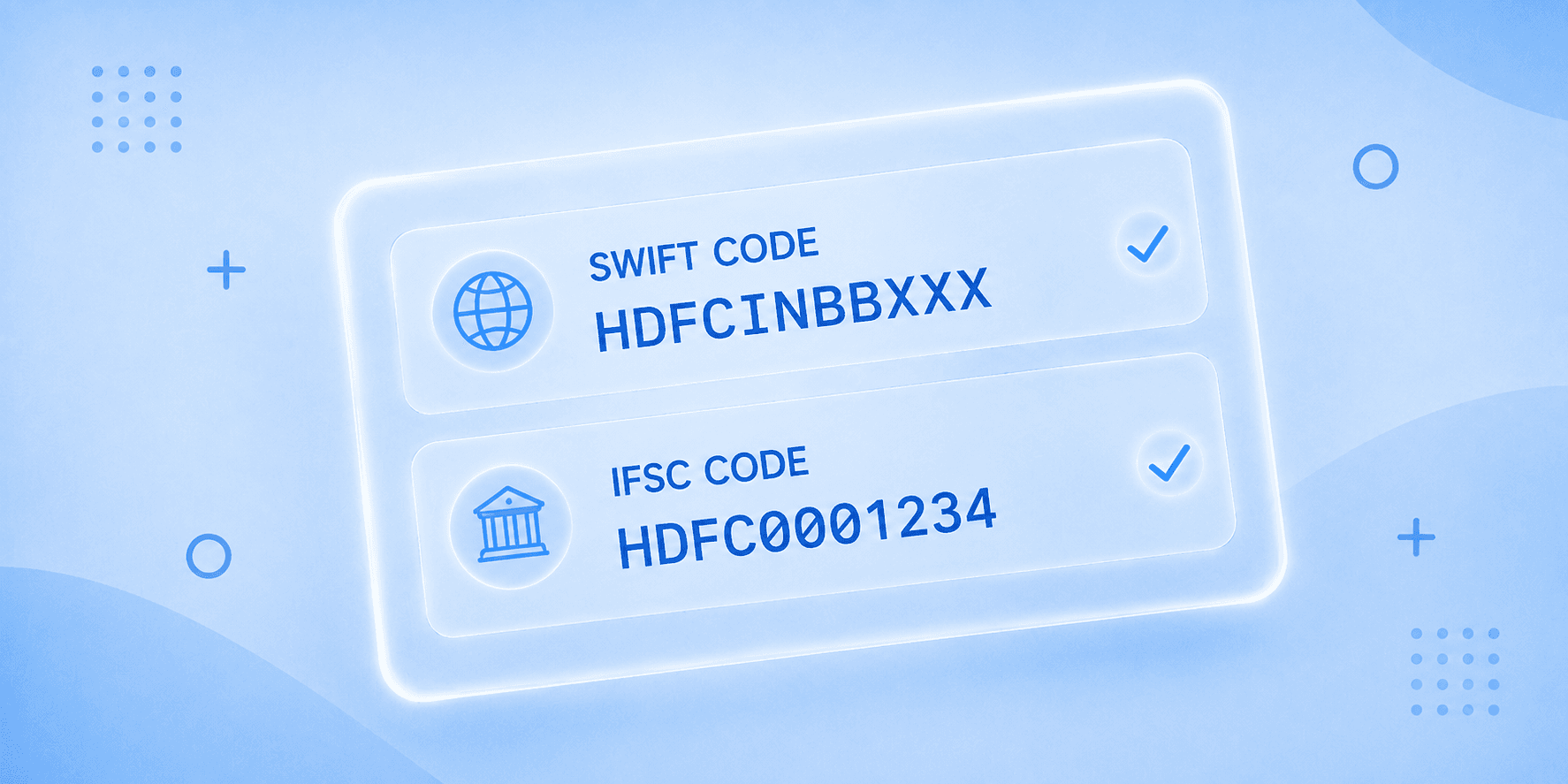
For a conventional bank wire, the sender will usually need the beneficiary's name, Indian bank account number, bank details and SWIFT/BIC code. India does not generally use an IBAN for the beneficiary's Indian account.
If it is an export payment
Goods and service exporters have additional FEMA and export-documentation requirements, and the payment must be linked to the underlying export transaction.
For frequent collections, local receiving details can let an overseas customer pay through domestic rails instead of an international SWIFT wire.
PayGlocal's Multi-Currency Accounts currently support local collections across 130+ global currencies from 180+ countries, with INR settlement into the merchant's Indian bank account within 24 hours and automated FIRA.
For applicable goods-export workflows, PayGlocal also supports EDPMS closure and eBRC processes.
If the money comes from a marketplace
For marketplace payouts, compare:
- whether the platform supports direct withdrawal to India
- payout currency
- FX markup
- withdrawal fee
- settlement timing
- remittance documentation
- whether the payout can be reconciled to the underlying work or sale
PayGlocal currently supports connections with platforms such as Upwork, Fiverr and Amazon Global Selling through its Multi-Currency Account product.
How long does it take to receive money from abroad?
There is no universal "1–5 business day" rule; timing depends on the route.
SWIFT bank transfer: The SWIFT message itself can reach the beneficiary bank quickly, but correspondent processing, FX, compliance and final account credit can extend the end-to-end journey.
Personal remittance service: Some eligible personal transfers can be available quickly, depending on the service and payout method.
Local business collection: Product-specific timelines apply. PayGlocal currently states that MCA collections settle to INR within 24 hours.
What costs should you compare?
Compare more than the transfer fee:
- sender fee
- intermediary-bank deductions
- receiving fee
- FX markup
- withdrawal/platform fee
- final INR credited
What documents do you actually need?
For commercial receipts, expect documents such as:
- invoice or contract
- PAN/business details
- beneficiary bank information
- purpose code or transaction purpose
- export/remittance documentation as applicable
FIRA and FIRC are not interchangeable with a SWIFT receipt. A SWIFT message traces the banking instruction; foreign-inward-remittance documentation evidences the nature and receipt of foreign funds for compliance purposes.
Is money received from abroad taxable in India?
The answer depends on why you received it, not where the sender lives.
Freelance or business income: Generally forms part of taxable professional or business income, subject to the applicable tax rules.
Gift from a specified relative: Generally exempt under the gift provisions.
Gift from a non-relative: Monetary gifts can become taxable when the applicable aggregate threshold is exceeded, subject to statutory exemptions.
Under the current gift framework, the commonly relevant threshold is ₹50,000 in aggregate, not ₹50,000 per individual transfer.
Which route should a business choose?
For businesses and freelancers, compare four outcomes:
Final INR received: include FX and deductions.
Settlement: compare when funds become usable, not only network speed.
Documentation: invoice matching and FIRA matter for export workflows.
Reconciliation: transaction-level tracking becomes more valuable as collections grow.