
A customer pays ₹10,000 at your store using a card. The full ₹10,000 appears on the bill, but the amount you finally settle can be lower after payment-processing charges.
That difference is where swipe machine charges come in.
For merchants, the cost can include Merchant Discount Rate (MDR), POS-terminal rental or service fees, taxes on payment charges, and other provider-specific costs.
That difference is where swipe machine charges come in.
For merchants, the cost can include Merchant Discount Rate (MDR), POS-terminal rental or service fees, taxes on payment charges, and other provider-specific costs.
TL;DR
- Swipe machine charges usually refer to the merchant costs of accepting card payments through a POS terminal.
- MDR is typically charged as a percentage of the transaction, but there is no single 1%–3% rate that applies to every card transaction in India.
- RBI caps MDR for eligible non-RuPay debit-card transactions; credit-card pricing is generally provider-specific.
- Compare the full cost of acceptance: MDR, terminal rental, settlement terms, taxes, refunds/chargebacks, and international-card pricing.
What are swipe machine charges?
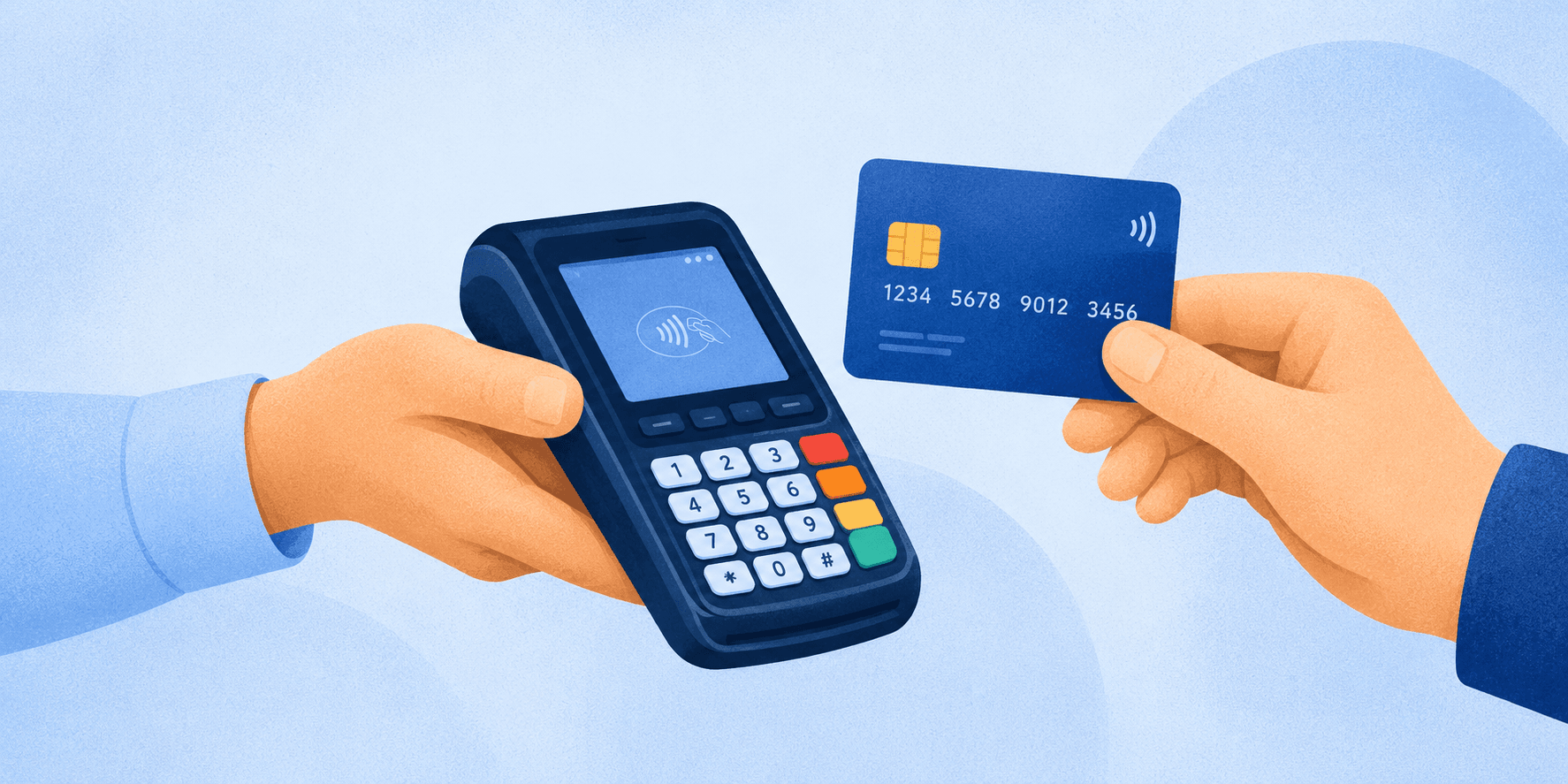
Swipe machine charges are the costs a merchant pays for accepting card payments through a physical Point of Sale (POS) terminal.
The main transaction-linked charge is usually the Merchant Discount Rate (MDR).
For example, if a provider charges 1.5% MDR on a ₹10,000 transaction:
₹10,000 × 1.5% = ₹150 MDR
The actual settlement depends on the provider's pricing, applicable GST on payment-service charges, and any other agreed fees. MDR can cover costs across the acquiring side, card network, processing infrastructure, and interchange.
How much are swipe machine charges in India?
The answer depends heavily on the card and provider.
| Payment type | Current pricing position |
|---|---|
| Non-RuPay debit card at physical POS – small merchant | RBI cap: up to 0.40%, capped at ₹200 per transaction |
| Non-RuPay debit card at physical POS – other merchant | RBI cap: up to 0.90%, capped at ₹1,000 per transaction |
| RuPay debit card | Historically zero MDR under the prescribed-mode framework; 2026 changes enable possible future threshold-based charges |
| Credit card | No universal RBI MDR cap; pricing depends on acquiring/provider agreement |
| UPI | No charge to users; the Government says the vast majority of merchant transactions will remain free, with any future MDR limited to specified transactions |
RBI defines small merchants here as those with turnover up to ₹20 lakh in the previous financial year. So a blanket “1%–3%” swipe-fee range is too broad.
MDR is not your only POS-machine cost
A merchant may also pay:
Other costs can include terminal rental or service fees, installation/onboarding charges, GST on payment-service fees, refund/chargeback fees, and different pricing for international cards.
Instead of comparing only MDR, compare the effective cost per settled transaction.
How do swipe machine charges work?
A simplified card-payment flow is:
Customer taps/inserts/swipes card → POS sends payment → acquirer/processor → card network → issuing bank → approval or decline
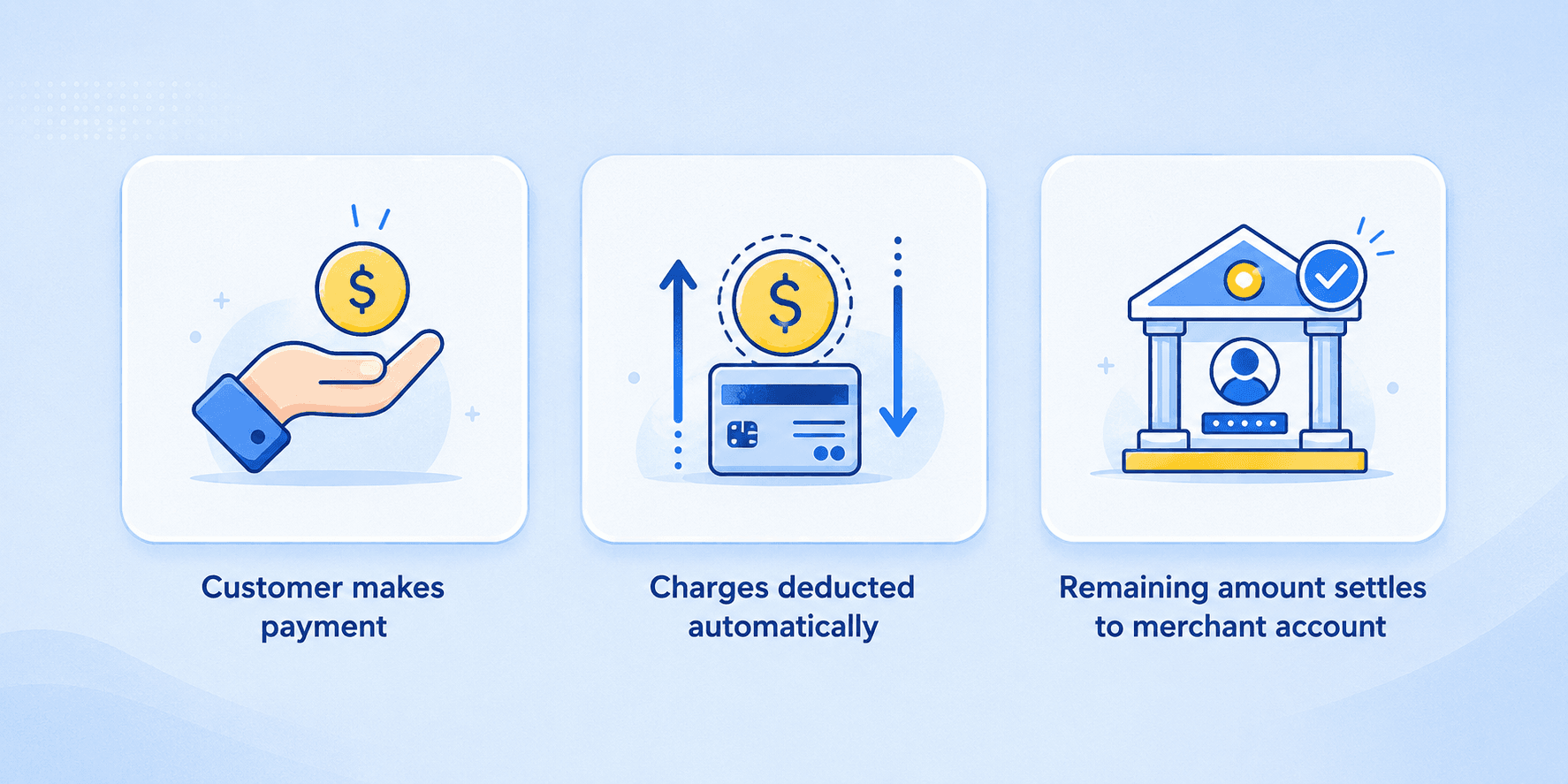
After capture, clearing and settlement follow. The provider settles funds according to the agreed cycle after deducting or separately billing applicable charges. Settlement is not universally “1–3 business days”.
What determines your card MDR?
Your MDR can vary with card type, merchant category, transaction volume, domestic vs international card, pricing model, and POS hardware plan.
How can businesses reduce swipe machine charges?
Compare total cost, not just MDR
Check the transaction rate, terminal rental, setup charges, GST, refund/chargeback fees, settlement timing, and international-card rate.
Negotiate with real volume data
If transaction volumes have increased, ask the acquiring bank or provider to reassess your commercial terms.
Match payment methods to customer preference
Other domestic methods can have different merchant economics. As of August 2026, UPI remains free for users, and the Government says any future MDR would be limited and threshold-based rather than blanket.
Review terminal utilisation and settlement quality
Consolidate underused devices where possible, and track failed payments, deductions, and reconciliation quality alongside price.
Swipe machine charges vs online payment gateway fees
A POS machine handles in-person card acceptance.
An online payment gateway handles cards and other payment methods through a website or app.
| POS terminal | Online gateway |
|---|---|
| In-store payments | Website/app payments |
| Physical terminal | Hosted/embedded/API checkout |
| Terminal rental may apply | Usually no physical-device rental |
| Domestic card pricing may dominate | Domestic and international pricing can differ significantly |
What if your customers are international?
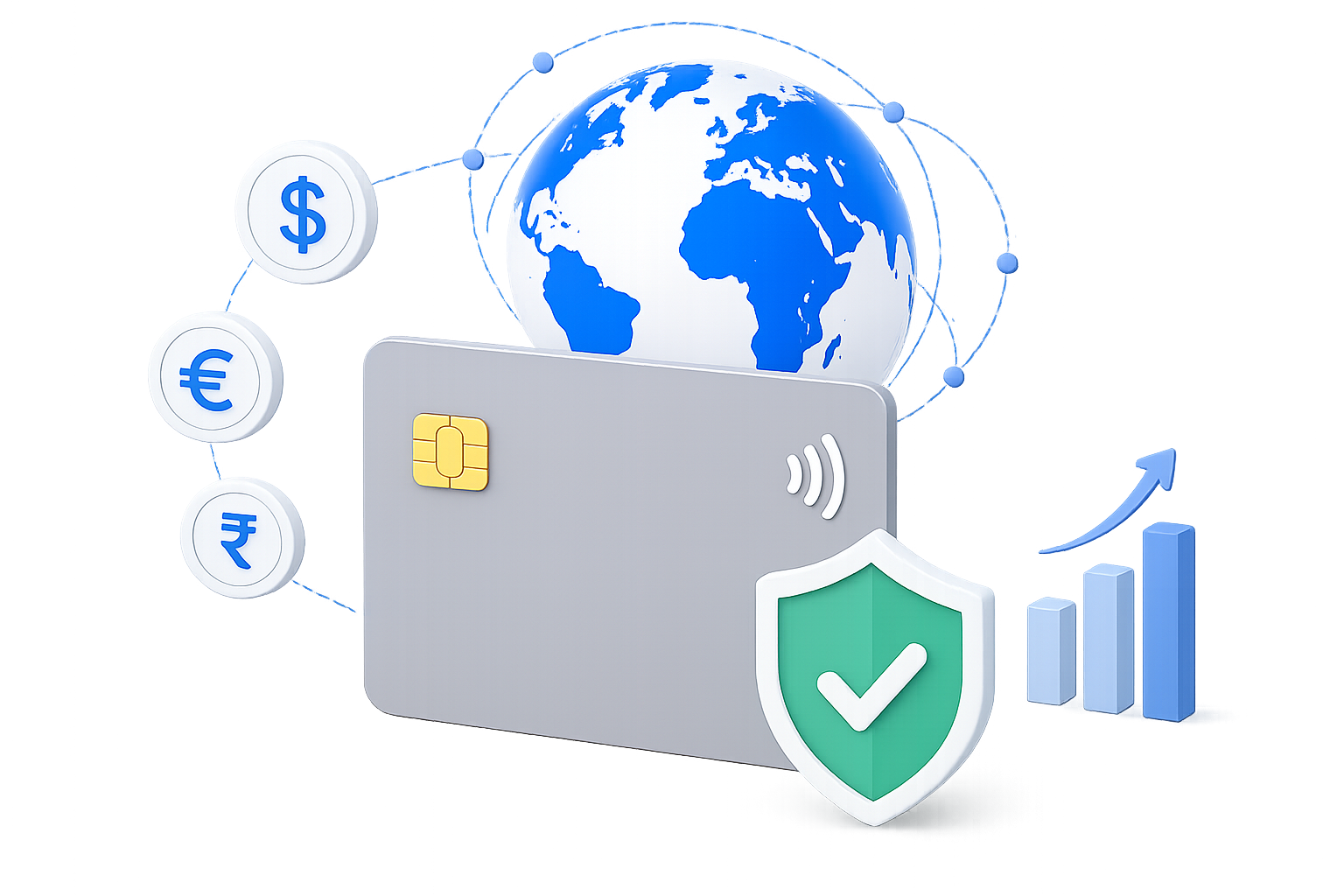
If you are selling online to overseas customers, choosing a low-cost domestic POS plan does not solve your international card-acceptance problem.
You also need to consider foreign-card approval rates, cross-border MDR, FX, 3DS, fraud screening, settlement, and reconciliation.
PayGlocal's current standard pricing for international cards is 2.75%, with no setup fee or fixed platform fee, while custom and volume pricing are also available.
Its international payment gateway supports global cards, Apple Pay, Google Pay, local payment methods, intelligent routing, and INR settlement for Indian businesses.