
HSN codes categorize goods in international trade, making it easier to follow tax and customs rules. Using the correct codes is crucial for exporters to avoid penalties and stay compliant.
In the fiscal year 2024-2025, India's merchandise exports reached $682.59 billion, a 7.2% year-on-year increase from $636.69 billion during the same period in the previous year.
In this blog, we will explore the structure, significance, and application of HSN codes, which will help your business navigate international trade seamlessly in terms of compliance and operation.
The Harmonized System of Nomenclature (HSN) is an internationally accepted system developed by the World Customs Organization (WCO) in 1988 to classify goods in global trade.
It is used to categorize products for taxation, customs, and trade purposes so that the same product is identified consistently across borders. The HSN code system is structured so that the first six digits of the code are the same worldwide, creating a standard that simplifies international trade by making it easier to manage duties, taxes, and compliance requirements.
The purpose of the six-digit HSN code is to classify over 5,000 products in a structured and logical way. It is recognized worldwide and helps in uniform product classification.
In short, the purpose of HSN codes is to eliminate the need to upload a detailed description of the goods, further saving time. On the other hand, understanding the structure of the HSN code contributes to efficient global trade practices in both domestic and international markets.
The HSN code structure is hierarchical and designed to ensure that products are classified accurately and systematically for trade purposes.
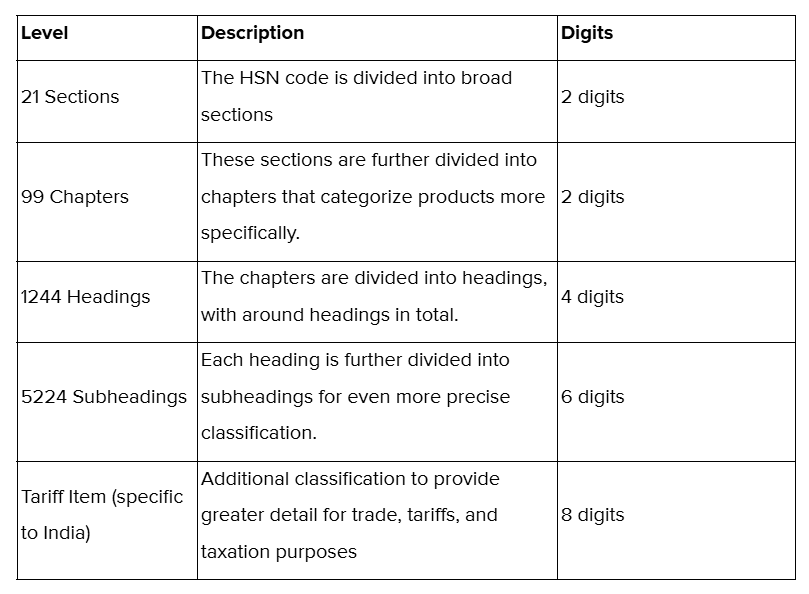
India originally used 6-digit HSN codes for Customs and Central Excise duties. However, two more digits were added to improve accuracy, creating an 8-digit HSN code. This system is now used to classify most goods in India, aiding in calculating Goods and Services Tax (GST).
For example, as illustrated in the image below, the HSN code for sarees changes depending on the material used. Each material type is classified at both the chapter and tariff item levels.
Silk sarees are classified under Chapter 50, whereas cotton sarees are placed under Chapter 52.
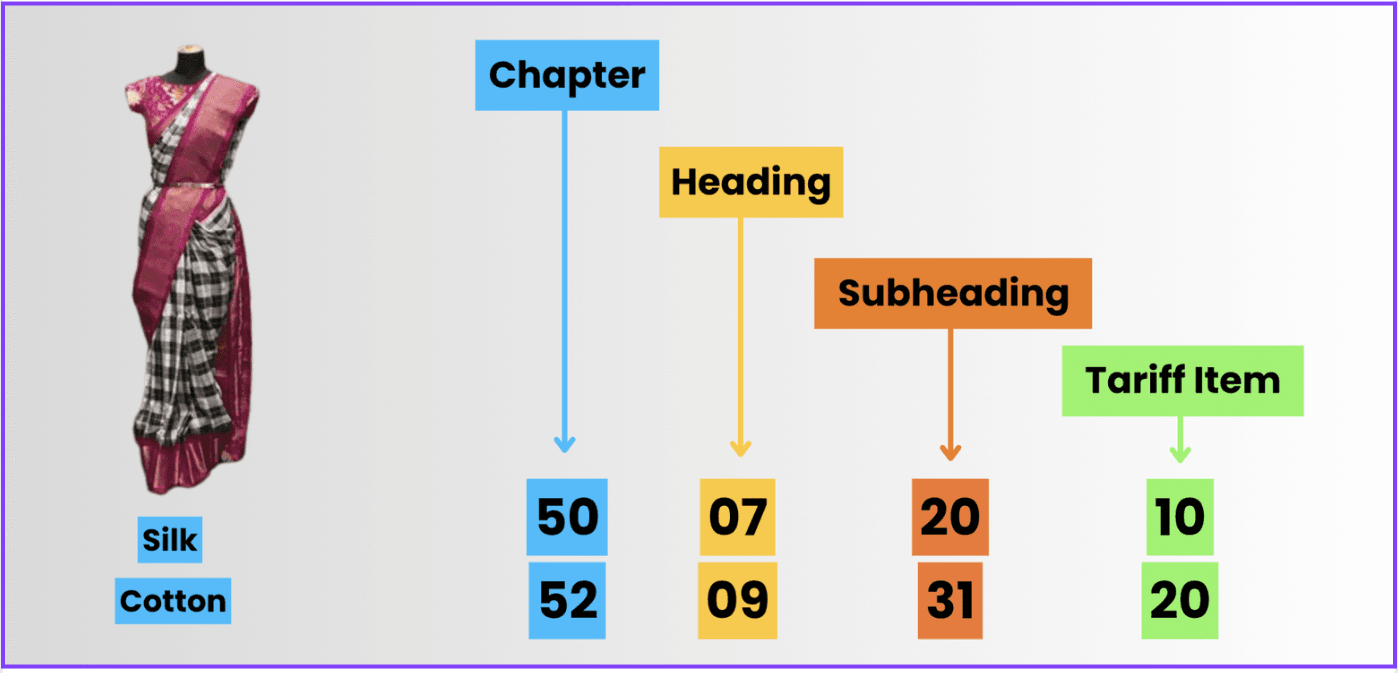
Image source: IndiaFilings
The HSN system benefits more than just customs agents. It also plays a key role in simplifying GST (Goods and Services Tax, which is levied on the supply of goods and services in India), making GST more organized and internationally recognized.
The role of HSN in GST is to ensure uniformity in the classification of goods and ease the taxation process.
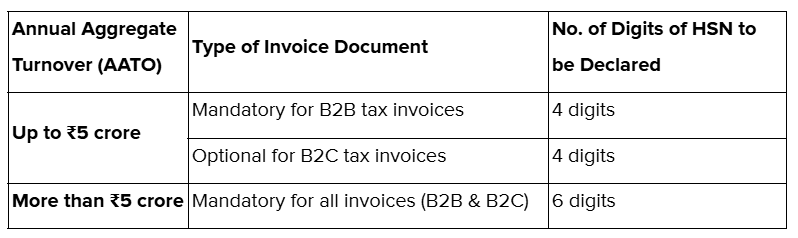
In India, businesses are required to declare the HSN codes based on their turnover. The rules are as follows, with effect from 1st April 2021.
Businesses don’t have to provide detailed descriptions for each product under GST using HSN codes. Here are some important points to consider in their role.
For Domestic Trade sold within India, businesses must follow the domestic HSN requirements. The number of digits in the HSN code depends on the business's turnover (as mentioned above).
However, a more detailed HSN code is required for exports and imports. The 6-digit HSN code is commonly used for international transactions. In India, exporters must mention the 8-digit HSN code for better precision and to comply with customs regulations. At the same time, importers use the same level of detail for the incoming goods.
Implementing HSN codes in India streamlines the taxation and classification of goods under GST. This system has been widely adopted worldwide and the advantages it brings to international trade.
HSN is globally recognized, with over 200 countries adopting it. This widespread use can be attributed to its key benefits.
Around 98% of global trade is classified using HSN, reinforcing its position as the leading international classification system. HSN codes are assigned to each commodity in every country and are generally consistent, though some countries may have slight variations based on the product's nature.
The HSN code is used for classifying goods, and the Services Accounting Code (SAC) is used for classifying services under GST. The introduction of the SAC system aims to provide a standardized approach to service classification for tax purposes.
Having said that, let’s take a look at what makes it different from the HSN code.
The SAC code follows a similar structure to the HSN code, using a set of numbers assigned to different services. There are many other differences that you must know to ensure proper accounting for both goods and services within the GST framework.
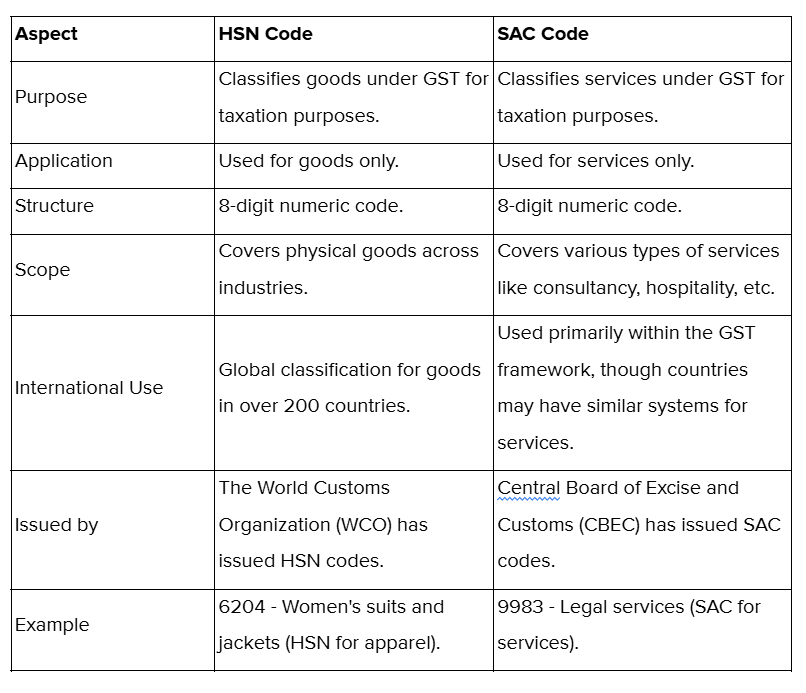
Understanding the differences can help businesses involved in the export and import of goods and services optimise tax processes, reduce compliance risks, and improve efficiency when dealing with both domestic and international transactions.
To ensure smooth business operations, it is crucial to correctly use HSN codes, as errors can lead to penalties, incorrect tax filings, and issues with claiming input tax credit. Here's how you can avoid such mistakes:
* Ensure Correct Digit Codes Based on Turnover: To comply with GST invoicing requirements, always use the correct HSN code depending on your turnover and business category.
PayGlocal ensures that businesses stay compliant with GST regulations and avoid errors related to HSN code usage. Here’s how:
By integrating PayGlocal’s all-in-one solution for international payment needs, businesses can streamline payment processes, maintain accurate HSN code classifications, and uphold GST compliance, avoiding potential mistakes and non-compliance issues.
The HSN Code is crucial for international trade and GST compliance, ensuring accurate classification and tax rates for goods. Proper adherence to HSN requirements is essential to avoid penalties and ensure smooth operations. Similarly, the SAC code is key for classifying services under GST and maintaining consistent taxation.
For businesses involved in global trade, PayGlocal offers seamless payment processing, compliance support, and secure transactions with its Samruddhi X screening protocol, making it the ideal partner for international business needs. Get Started Today!
In the fiscal year 2024-2025, India's merchandise exports reached $682.59 billion, a 7.2% year-on-year increase from $636.69 billion during the same period in the previous year.
In this blog, we will explore the structure, significance, and application of HSN codes, which will help your business navigate international trade seamlessly in terms of compliance and operation.
What is HSN Code?
The Harmonized System of Nomenclature (HSN) is an internationally accepted system developed by the World Customs Organization (WCO) in 1988 to classify goods in global trade.
It is used to categorize products for taxation, customs, and trade purposes so that the same product is identified consistently across borders. The HSN code system is structured so that the first six digits of the code are the same worldwide, creating a standard that simplifies international trade by making it easier to manage duties, taxes, and compliance requirements.
What is the Purpose of the HSN Code in Global Trade?
The purpose of the six-digit HSN code is to classify over 5,000 products in a structured and logical way. It is recognized worldwide and helps in uniform product classification.
- Determining Correct Tax Rates: This helps businesses, especially those in export and import, identify the applicable tax rate for products.
- Tracking Goods Across Borders: Monitor the quantity of goods traded internationally.
- Facilitating International Trade: Provides a common framework for identifying products across countries, easing customs processes.
- Basis for Customs Tariffs: The foundation for calculating customs duties and tariffs on imported goods.
- Trade Statistics: Aids governments and organizations in tracking international trade data.
- Code Variations: Some countries slightly modify HSN codes based on the nature of the goods they trade.
In short, the purpose of HSN codes is to eliminate the need to upload a detailed description of the goods, further saving time. On the other hand, understanding the structure of the HSN code contributes to efficient global trade practices in both domestic and international markets.
What is the Structure of the HSN Code?
The HSN code structure is hierarchical and designed to ensure that products are classified accurately and systematically for trade purposes.
India originally used 6-digit HSN codes for Customs and Central Excise duties. However, two more digits were added to improve accuracy, creating an 8-digit HSN code. This system is now used to classify most goods in India, aiding in calculating Goods and Services Tax (GST).
For example, as illustrated in the image below, the HSN code for sarees changes depending on the material used. Each material type is classified at both the chapter and tariff item levels.
Silk sarees are classified under Chapter 50, whereas cotton sarees are placed under Chapter 52.
Image source: IndiaFilings
The HSN system benefits more than just customs agents. It also plays a key role in simplifying GST (Goods and Services Tax, which is levied on the supply of goods and services in India), making GST more organized and internationally recognized.
Implementation of HSN Code in India
The role of HSN in GST is to ensure uniformity in the classification of goods and ease the taxation process.
HSN Code Declaration Rules
In India, businesses are required to declare the HSN codes based on their turnover. The rules are as follows, with effect from 1st April 2021.
The Role of HSN Codes in GST Registration and Compliance
Businesses don’t have to provide detailed descriptions for each product under GST using HSN codes. Here are some important points to consider in their role.
- HSN codes classify goods under GST to determine the correct tax rate.
- HSN codes simplify GST filing by helping businesses identify the appropriate tax rate.
- HSN codes ensure consistency and transparency in GST, making it internationally compatible.
- HSN codes are mandatory for compliance, invoicing, and accurate GST returns.
Different Digit Requirements for Domestic and International Trade Transactions
For Domestic Trade sold within India, businesses must follow the domestic HSN requirements. The number of digits in the HSN code depends on the business's turnover (as mentioned above).
However, a more detailed HSN code is required for exports and imports. The 6-digit HSN code is commonly used for international transactions. In India, exporters must mention the 8-digit HSN code for better precision and to comply with customs regulations. At the same time, importers use the same level of detail for the incoming goods.
Implementing HSN codes in India streamlines the taxation and classification of goods under GST. This system has been widely adopted worldwide and the advantages it brings to international trade.
Global Adoption of HSN Code
HSN is globally recognized, with over 200 countries adopting it. This widespread use can be attributed to its key benefits.
Around 98% of global trade is classified using HSN, reinforcing its position as the leading international classification system. HSN codes are assigned to each commodity in every country and are generally consistent, though some countries may have slight variations based on the product's nature.
The HSN code is used for classifying goods, and the Services Accounting Code (SAC) is used for classifying services under GST. The introduction of the SAC system aims to provide a standardized approach to service classification for tax purposes.
Having said that, let’s take a look at what makes it different from the HSN code.
Differences between HSN and SAC Codes
The SAC code follows a similar structure to the HSN code, using a set of numbers assigned to different services. There are many other differences that you must know to ensure proper accounting for both goods and services within the GST framework.
Understanding the differences can help businesses involved in the export and import of goods and services optimise tax processes, reduce compliance risks, and improve efficiency when dealing with both domestic and international transactions.
Avoiding Mistakes and Non-compliance with HSN Code
To ensure smooth business operations, it is crucial to correctly use HSN codes, as errors can lead to penalties, incorrect tax filings, and issues with claiming input tax credit. Here's how you can avoid such mistakes:
* Ensure Correct Digit Codes Based on Turnover: To comply with GST invoicing requirements, always use the correct HSN code depending on your turnover and business category.
- Penalties for Incorrect Usage and Impact on Input Tax Credit: Using incorrect HSN codes could lead to fines and delays in claiming input tax credits, impacting your overall cash flow and business operations.
How PayGlocal Facilitates Compliance?
PayGlocal ensures that businesses stay compliant with GST regulations and avoid errors related to HSN code usage. Here’s how:
- Multi-Currency Account Management: PayGlocal's multi-currency accounts help businesses manage and process international transactions in compliance with global standards.
- Compliance Documentation: The platform automatically generates and delivers Foreign Inward Remittance Certificates (FIRC) upon settlement, simplifying the documentation process and ensuring that businesses have the necessary records for compliance.
- Advanced Fraud and Risk Management: PayGlocal employs a zero-trust security framework and advanced fraud detection systems to protect transactions, remain compliant with regulatory standards, and mitigate potential risks, including those associated with incorrect HSN code usage.
By integrating PayGlocal’s all-in-one solution for international payment needs, businesses can streamline payment processes, maintain accurate HSN code classifications, and uphold GST compliance, avoiding potential mistakes and non-compliance issues.
Conclusion
The HSN Code is crucial for international trade and GST compliance, ensuring accurate classification and tax rates for goods. Proper adherence to HSN requirements is essential to avoid penalties and ensure smooth operations. Similarly, the SAC code is key for classifying services under GST and maintaining consistent taxation.
For businesses involved in global trade, PayGlocal offers seamless payment processing, compliance support, and secure transactions with its Samruddhi X screening protocol, making it the ideal partner for international business needs. Get Started Today!