
TL;DR
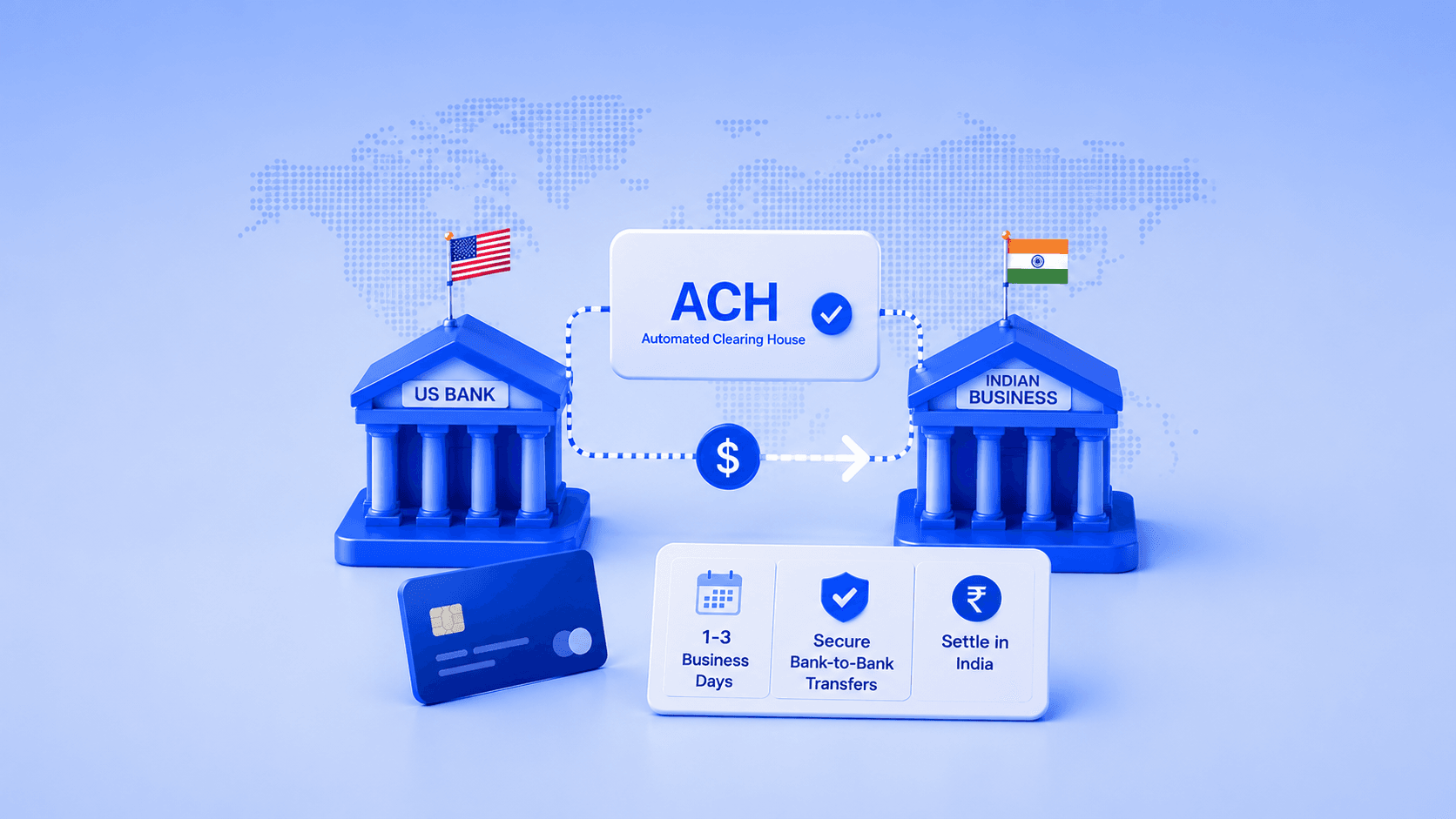
- ACH (Automated Clearing House) is the US bank-to-bank rail your American customers already use for payroll, bills, and vendor payments. If you sell to US buyers, letting them pay by ACH means fewer failed checkouts than card-only collection.
- ACH comes in two forms: ACH credit (the payer pushes money to you) and ACH debit (you pull an authorised amount from the payer). Standard ACH settles in one to three business days; Same-Day ACH is faster but may cost more.
- An Indian exporter or freelancer cannot plug into the US ACH network directly. PayGlocal gives you a multi-currency account with local US bank details, so your customer pays by ACH into a US account and you receive the money settled to your Indian bank, with a FIRA issued automatically.
Kavya runs a small IT services firm in Pune. Her biggest client is a US company that pays a five-figure invoice every month. For a year that client insisted on paying by card, and roughly one payment in three failed at checkout, so Priya spent days each month chasing a payment she had already earned. The fix was not a better card flow. It was letting the client pay the way US businesses actually pay each other: ACH.
If your customers are in the United States, understanding ACH is the difference between getting paid on time and living inside your follow-up folder.
This guide explains what ACH is, how it moves money, the difference between ACH credit and ACH debit, how it compares to a wire, and how an Indian business can accept ACH payments without a US entity.
ACH (Automated Clearing House) payments are electronic bank-to-bank transfers processed through the ACH network in the United States. The network is governed by Nacha (the National Automated Clearing House Association), and it moves money between US bank accounts without paper cheques or the cost of a wire.
For a US business, ACH is the everyday rail: payroll deposits, vendor payments, recurring subscriptions, utility bills, tax refunds, and business-to-business (B2B) invoices all run on it. That matters to you as an Indian seller for one reason: your US customers are comfortable paying this way, so offering ACH removes friction they already expect to avoid.
The catch is that ACH is a domestic US system. An Indian business account cannot receive an ACH transfer on its own. You need US bank details for your customer to pay into, which is exactly what a multi-currency account provides (more on that below).
An ACH payment moves through several banks that hand the transaction along in turn. Here is the flow, end to end.
The whole cycle is electronic and batched, which is what keeps ACH cheap and reliable for regular, non-urgent payments.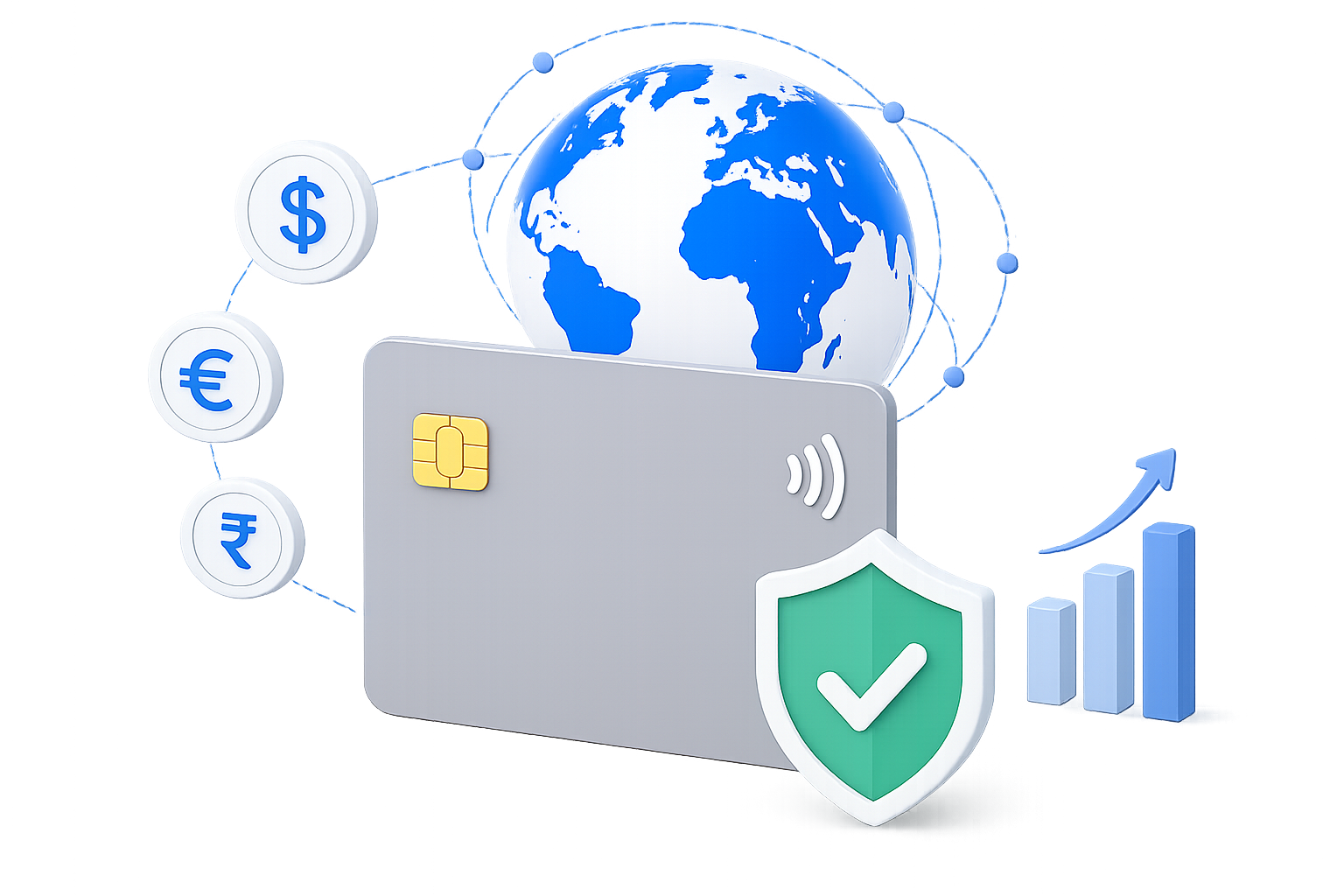
Both types run on the same network. The difference is who starts the money moving.
ACH credit pushes money to a recipient. The payer initiates it, so it suits invoice payments, payroll, and supplier settlements. When your US client approves your invoice and their bank sends the funds to you, that is an ACH credit.
ACH debit pulls money from a payer's account after they have authorised it. It suits recurring charges: subscriptions, memberships, retainers, and instalment billing. When a US customer signs up for your SaaS product on a monthly plan and the fee is collected automatically, that is an ACH debit.
For most Indian exporters and service businesses, invoice collection means ACH credit, while a subscription or retainer model leans on ACH debit.
Standard ACH payments usually settle within one to three business days, which is fine for most invoices and recurring billing. For faster movement, Same-Day ACH clears eligible payments on the same business day, though it can carry an additional fee depending on the provider.
The right choice depends on urgency and cost. Routine monthly invoices rarely need same-day speed; a time-sensitive payment might justify it. Either way, ACH settlement time is separate from how quickly the money then reaches your Indian bank account, which depends on your collection provider.
Both move money between bank accounts, but they solve different problems.
ACH is cheaper and built for recurring, high-volume, non-urgent payments. Wire transfers are built for speed and high value, and they usually cost more per transaction. A wire lands quickly; an ACH costs a fraction as much.
For a steady stream of US client invoices, ACH is usually the better default, and you can keep wire as the option for large or urgent payments.
Every payment method you offer a US customer is a chance for the payment to succeed or fail. International card payments carry real friction: foreign-card declines, authentication steps, and issuer rules that distrust cross-border merchants. ACH sidesteps much of that because it is the domestic rail your customer's bank trusts by default.
Offering the payment method your buyer prefers is one of the most direct ways to lift your Payment Success Rate (PSR), the share of attempted payments that actually go through. Fewer declines means fewer awkward follow-ups and faster cash in the bank.
You cannot connect an Indian current account to the US ACH network directly. What you can do is collect through a multi-currency account that gives you local US bank details.
PayGlocal, a cross-border payment aggregator authorised by the Reserve Bank of India, lets Indian businesses collect ACH payments by providing multi-currency accounts with local US bank transfer details. Your customer pays by ACH into a US account as if paying any domestic vendor, and the money is settled to your Indian bank account. Alongside ACH support, you get:
The result is the experience Priya's client wanted all along: pay the familiar US way, while she receives clean INR settlement and her export paperwork in one place.
If your customers are in the United States, understanding ACH is the difference between getting paid on time and living inside your follow-up folder.
This guide explains what ACH is, how it moves money, the difference between ACH credit and ACH debit, how it compares to a wire, and how an Indian business can accept ACH payments without a US entity.
What are ACH payments?
ACH (Automated Clearing House) payments are electronic bank-to-bank transfers processed through the ACH network in the United States. The network is governed by Nacha (the National Automated Clearing House Association), and it moves money between US bank accounts without paper cheques or the cost of a wire.
For a US business, ACH is the everyday rail: payroll deposits, vendor payments, recurring subscriptions, utility bills, tax refunds, and business-to-business (B2B) invoices all run on it. That matters to you as an Indian seller for one reason: your US customers are comfortable paying this way, so offering ACH removes friction they already expect to avoid.
The catch is that ACH is a domestic US system. An Indian business account cannot receive an ACH transfer on its own. You need US bank details for your customer to pay into, which is exactly what a multi-currency account provides (more on that below).
How do ACH payments work?
An ACH payment moves through several banks that hand the transaction along in turn. Here is the flow, end to end.
- Step 1: The payment is initiated. The payer authorises an ACH payment through their bank or a payment provider. For an invoice, this is your US client approving the transfer.
- Step 2: The request is submitted. The payer's bank, called the Originating Depository Financial Institution (ODFI), submits the instruction to the ACH network in a batch.
- Step 3: The payment is processed. The ACH network validates the details and routes the transaction to the recipient's bank, the Receiving Depository Financial Institution (RDFI).
- Step 4: The funds are transferred. The receiving bank credits or debits the relevant account, and the transaction completes.
The whole cycle is electronic and batched, which is what keeps ACH cheap and reliable for regular, non-urgent payments.
ACH credit vs ACH debit
Both types run on the same network. The difference is who starts the money moving.
ACH credit pushes money to a recipient. The payer initiates it, so it suits invoice payments, payroll, and supplier settlements. When your US client approves your invoice and their bank sends the funds to you, that is an ACH credit.
ACH debit pulls money from a payer's account after they have authorised it. It suits recurring charges: subscriptions, memberships, retainers, and instalment billing. When a US customer signs up for your SaaS product on a monthly plan and the fee is collected automatically, that is an ACH debit.
For most Indian exporters and service businesses, invoice collection means ACH credit, while a subscription or retainer model leans on ACH debit.
How long do ACH payments take?
Standard ACH payments usually settle within one to three business days, which is fine for most invoices and recurring billing. For faster movement, Same-Day ACH clears eligible payments on the same business day, though it can carry an additional fee depending on the provider.
The right choice depends on urgency and cost. Routine monthly invoices rarely need same-day speed; a time-sensitive payment might justify it. Either way, ACH settlement time is separate from how quickly the money then reaches your Indian bank account, which depends on your collection provider.
ACH vs wire transfer: which should you accept?
Both move money between bank accounts, but they solve different problems.
ACH is cheaper and built for recurring, high-volume, non-urgent payments. Wire transfers are built for speed and high value, and they usually cost more per transaction. A wire lands quickly; an ACH costs a fraction as much.
| ACH | Wire transfer | |
|---|---|---|
| Best for | Recurring, routine invoices | Urgent, high-value payments |
| Speed | 1 to 3 business days (or same-day) | Typically same day |
| Cost | Low | Higher |
| Typical use | Subscriptions, payroll, B2B invoices | Large one-off transfers |
For a steady stream of US client invoices, ACH is usually the better default, and you can keep wire as the option for large or urgent payments.
Why ACH matters for your payment success rate
Every payment method you offer a US customer is a chance for the payment to succeed or fail. International card payments carry real friction: foreign-card declines, authentication steps, and issuer rules that distrust cross-border merchants. ACH sidesteps much of that because it is the domestic rail your customer's bank trusts by default.
Offering the payment method your buyer prefers is one of the most direct ways to lift your Payment Success Rate (PSR), the share of attempted payments that actually go through. Fewer declines means fewer awkward follow-ups and faster cash in the bank.
How to accept ACH payments from US customers in India
You cannot connect an Indian current account to the US ACH network directly. What you can do is collect through a multi-currency account that gives you local US bank details.
PayGlocal, a cross-border payment aggregator authorised by the Reserve Bank of India, lets Indian businesses collect ACH payments by providing multi-currency accounts with local US bank transfer details. Your customer pays by ACH into a US account as if paying any domestic vendor, and the money is settled to your Indian bank account. Alongside ACH support, you get:
- Multi-currency accounts for collecting in USD and other currencies.
- Local payment methods across your customers' markets, not just cards.
- Faster, cleaner cross-border collection with a higher payment success rate.
- A FIRA (Foreign Inward Remittance Advice) issued automatically after settlement, which is your proof of an inward foreign payment for compliance.
- One platform to manage international collections, reporting, and reconciliation.
The result is the experience Priya's client wanted all along: pay the familiar US way, while she receives clean INR settlement and her export paperwork in one place.