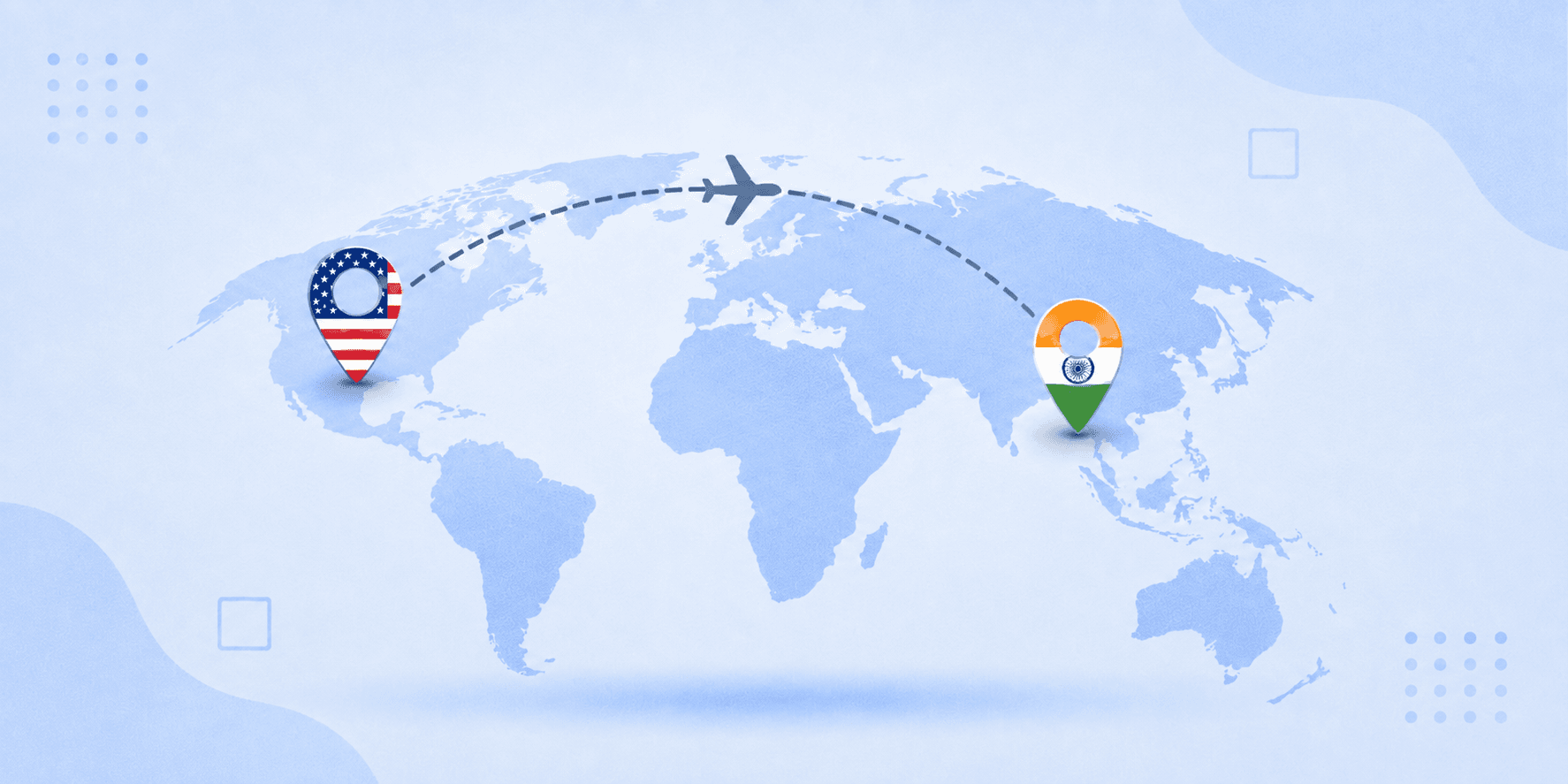
How do you export food from India to the USA?
Exporting food from India to the USA follows a clear sequence: obtain an Import Export Code (IEC) from the DGFT, register with the US FDA (USFDA) through a US-based agent, and ensure FSSAI compliance for food quality and labeling.
From there you incorporate your business and open a current account for international payments, select products and buyers, prepare the required documents (IEC, FDA approval, health certificate, certificate of origin, RCMC), and meet US packaging and labeling standards before shipping. Each step below covers the detail.
Why is the US a strong market for Indian food?
Indian food is among the most sought-after cuisines in the US, where demand for diverse, high-quality products keeps rising. A multicultural population and growing health awareness have made Indian spices, rice, and packaged foods popular across the country, which supports steady demand and strengthens trade ties between the two nations.
Despite strict rules on perishables, seeds, and herbs,
India is a leading food exporter to Western markets. In 2022, India's food exports reached USD 9,598 million, with the US among its top food importers. Demand spans basmati rice, fresh produce and tropical fruits, groundnuts, homestyle snacks, milled goods, and clarified butter, giving Indian exporters a broad base to build on.
What are the key regulatory requirements?
To enter the US market, Indian food exporters must clear three main requirements. The first is an Import Export Code; the second is USFDA registration; the third is FSSAI compliance on the India side.
- Import Export Code (IEC). A 10-digit identifier issued by India's Directorate General of Foreign Trade (DGFT), mandatory for any business exporting from India. Without it, you cannot trade internationally, so it is the first step.
- USFDA registration. The US Food and Drug Administration regulates food imports, and registration is mandatory. It confirms your products meet US safety and health standards, which US importers rely on to verify your goods are fit for the market.
- FSSAI compliance. The Food Safety and Standards Authority of India enforces labeling and quality guidelines. Note that US rules restrict many agricultural products (fresh fruits, vegetables, and pulses that may carry pests) and ban animal products; allowed items include packaged dry spices, tea, nuts, and snacks that meet US safety standards.
How do you obtain an Import Export Code (IEC)?
Under India's Foreign Trade Policy, exporters must hold an IEC to trade internationally. This 10-digit code from the DGFT is your business's unique identifier in global commerce, and the application is straightforward:
- Visit the DGFT portal and fill in the application form.
- Verify your identity via OTP sent to your registered mobile and email.
- Upload the required documents (PAN, ID proof, address proof).
- Pay the prescribed fee.
- On verification, the IEC is typically issued within 7 to 10 working days.
How does USFDA registration work?
Indian exporters must appoint a USFDA-registered US agent to handle registration. The agent acts as your liaison with the FDA. There are three stages:
- Appoint a US agent. The agent handles communication with the FDA. If, say, an exporter of packaged snacks hits an issue during inspection, the agent can address concerns or get clarifications quickly.
- Submit the registration application. With the agent appointed, complete the FDA registration on their portal, providing product types and facility details. An organic-spice exporter, for example, would describe processing methods accurately to meet health regulations.
- Issuance and renewal. On success, the FDA issues a unique registration number needed for shipping to the US. It must be renewed every two years; a frozen-meals exporter who lets it lapse could see shipments halted.
What are the steps to start your export business?
Beyond licenses, starting an export business takes planning and market research.
- Company incorporation. Register your business so you can operate legitimately and stay compliant with local law. Open a current account dedicated to international transactions to simplify currency conversion and smooth payments from overseas buyers. A startup exporting herbal teas, for instance, can manage incoming funds efficiently and reinvest quickly in inventory.
- Market and product selection. Focus on high-demand items such as basmati rice or spices that suit the growing interest in ethnic cuisines. Health-focused products like dried fruits and gluten-free snacks are gaining traction, so researching trends improves your odds of profitability.
- Finding buyers. Use B2B platforms like Alibaba or Global Sources to reach wholesalers and retailers, and trade fairs such as the Fancy Food Show in New York to network directly. Marketplaces like Amazon Global Selling extend your reach to US consumers online.
As a real example, Amul used B2B platforms like Alibaba to connect with international wholesalers, showcased at the Fancy Food Show in New York to reach key buyers, and leveraged Amazon Global Selling to tap growing US demand for Indian dairy. The lesson is the value of combining offline and online channels to find buyers and scale.
Your gateway to seamless payments!
Accept 120+ global currencies | 33+ payment methods | Instant FIRA
Get started →
What documents and licenses do you need?
Proper documentation keeps your shipments compliant with both Indian and US rules. The table below covers the essentials.
| Document / License | Purpose | Obtained from |
|---|
| Import Export Code (IEC) | Unique identifier for your business in international trade | Directorate General of Foreign Trade (DGFT) |
| FDA approval | Ensures food products meet US safety and labeling standards; a US-based agent may be required | US Food and Drug Administration (FDA) |
| Export Health Certificate (EHC) | Verifies products comply with health and safety regulations for export | Food Safety and Standards Authority of India (FSSAI) |
| Certificate of Origin | Confirms the product's origin, required for tariffs and trade compliance | Local Chamber of Commerce |
| Insurance Certificate | Proof of insurance for goods in transit, covering risks like damage or loss | Insurance provider |
| Registration-cum-Membership Certificate (RCMC) | Grants access to government incentives and export support; valid for five years | Export Promotion Council (EPC) |
Beyond these, secure an export order or purchase order from the buyer, since it sets out the product details, pricing, and shipping terms.
How should you handle packaging and labeling?
US rules, largely set by the FDA, require food packaging to meet specific standards for safety and integrity. Two areas matter most.
Packaging. Products must be packaged to prevent contamination and spoilage. For packaged snacks like spices or dehydrated fruit, vacuum-sealed bags or airtight containers extend shelf life and protect quality in transit.
Labeling. Labels must carry specific information to comply with US regulations:
| Element | Requirement | Example |
|---|
| Product name | State the product name clearly for recognisability and trust | "Organic Turmeric Powder" stated explicitly |
| Ingredients list | List all ingredients in descending order by weight | Mango pulp: "Ingredients: 100% Pure Mango Pulp" |
| Manufacturer details | Include the name and address of the manufacturing facility | "Packaged by: XYZ Foods, Mumbai, India" |
| Expiration dates | Provide a clear expiration or best-before date | "Best Before 12/2025" |
For applicable products, include a Nutrition Facts panel. It matters most for packaged snacks, where consumers look at calories and nutrition. For roasted chickpeas, a panel might read:
| Nutrient | Amount | % Daily Value |
|---|
| Serving size | 1 oz (28g) | |
| Calories | 120 | |
| Total fat | 4g | 6% |
| Sodium | 5mg | 0% |
| Total carbohydrates | 18g | 6% |
| Dietary fiber | 6g | 21% |
| Sugars | 0g | |
| Protein | 6g | |
On language, English is primary in the US, but including translations (for example, Spanish for ingredients and labels) can widen your audience and help you connect with diverse communities.
What are the logistics best practices?
Efficient logistics get your products there safely and on time. Four practices make the difference:
- Reliable shipping services. Work with reputable freight forwarders who specialise in food and understand the demands of shipping perishables.
- Third-party logistics (3PL). If you are new to exporting, a 3PL can handle warehousing, inventory, and shipping, and give you access to multiple US warehouses for faster, cheaper delivery.
- Temperature control. For perishables like dairy or frozen foods, use refrigerated or climate-controlled shipping to protect product integrity in transit.
- Tracking and insurance. Choose partners offering real-time tracking so you can catch issues early, and take cargo insurance so a damaged or lost shipment can be recovered through a claim.
Attention to packaging keeps you compliant and builds consumer trust, while solid logistics preserve quality and strengthen buyer relationships.
Getting paid by your US buyers
Clearing regulations and shipping cleanly is most of the battle. The last piece is getting paid reliably, in the right currency, without losing margin to fees. As an RBI-authorised cross-border payments platform, PayGlocal helps Indian exporters collect from US buyers with a high payment success rate and automatic FIRA on eligible inward payments, so more of what you invoice actually reaches you.