
Payment reconciliation is crucial for businesses to maintain accurate financial records and ensure smooth operations. Without efficient payment reconciliation, enterprises face challenges such as missing funds and time-consuming manual processes.
For example, in restaurants where cash bundles are collected, funds can go missing, requiring extensive efforts to track down the lost money. Additionally, manual reconciliation can be labor-intensive and slow, as businesses often rely on outdated methods like counting cash manually, which can take hours and incur additional costs.
In this blog, we’ll explore the various types of payment reconciliation, how they work, their benefits, and how automating the process can save time, reduce errors, and improve overall efficiency.
Payment reconciliation focuses on matching customer payments with the corresponding invoices or bills issued by the business. It ensures that the amounts paid are correctly accounted for and that the company's financial records are accurate for each transaction. This process helps businesses track client payments and verify that no discrepancies, such as underpayments or overpayments, have occurred.
For example, a company sells products for ₹50,000 and issues an invoice. When the customer makes the payment, the company checks if the payment matches the invoice. If the amounts match, the payment is reconciled; any discrepancies, such as overpayments or underpayments, are flagged for correction.
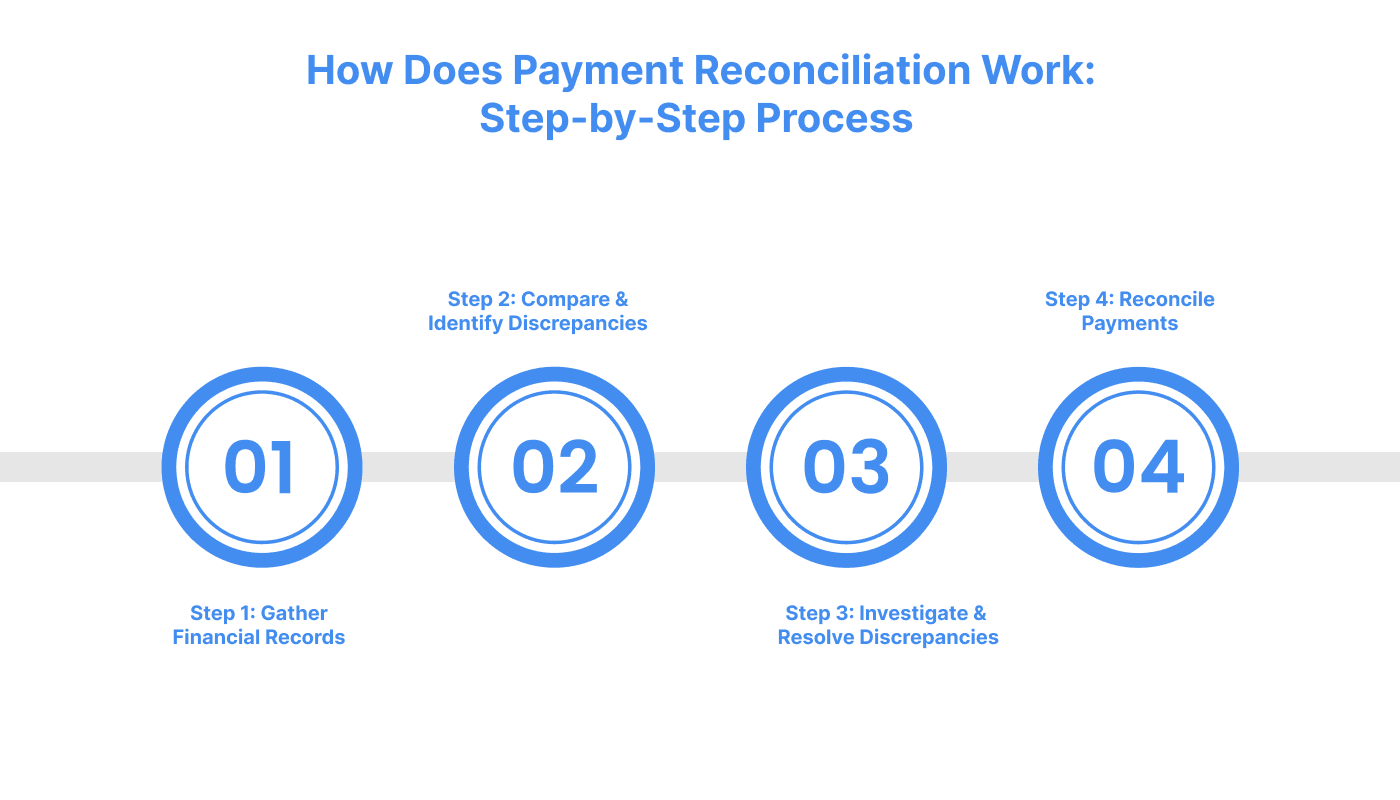
Payment reconciliation involves two key steps: internal reconciliation and external reconciliation. Conducting this process regularly is best to ensure your internal and external records align. Here’s a simplified breakdown:
Start by collecting your external records (e.g., bank and credit card statements, supplier records) and internal records (e.g., accounting software entries, receipts, invoices). In the next step, compare these to identify any discrepancies.
Review internal and external records, checking details like dates, amounts, and descriptions. Look for missing transactions, duplicate entries, or incorrect amounts that could indicate issues.
Identify why discrepancies exist, whether from human error, fraud, or bank mistakes (like in fees/interest). Correct internal errors by updating your accounting records, amounts, or adding missing transactions. For external discrepancies, contact your bank for clarification and resolution.
Ensure all transactions are accounted for and matched in internal and external records. Document the reconciliation process thoroughly for future reference and to maintain transparency with auditors.
This process ensures your financial records are accurate and aligned, reducing the risk of errors and improving financial control.
Also Read: Understanding Nostro and Vostro accounts
Each type of payment reconciliation ensures the accuracy and integrity of financial records. The specific reconciliation method you choose will depend on factors such as the nature of your business and the types of transactions you handle.
Bank reconciliation involves comparing the amounts recorded in your company’s internal accounts with the transactions in your bank statements. This process helps identify discrepancies like unrecorded deposits, bank charges, or errors in transaction recording.
Credit card reconciliation ensures that all payments made through credit cards match the accounting records. This process helps businesses track and manage credit card transactions, preventing unauthorized or duplicate charges. It also records expenses accurately and helps keep track of credit card debt and payment deadlines.
This process helps businesses ensure customer payments match the invoices sent out. Businesses can easily identify discrepancies such as missed or overpaid amounts by comparing customer payments with the original invoices. This reconciliation process directly impacts cash flow management, helps companies collect the correct amounts, and avoids payment delays.
Accounts payable reconciliation focuses on ensuring that the payments made to vendors are correctly reflected in your financial records and match the invoices provided by the vendors. It helps maintain financial integrity, avoid duplicate payments, and ensure all bills are paid on time.
Payroll reconciliation ensures that the wages, bonuses, and deductions reported in the payroll register match employee payments. This includes verifying that salary payments, tax deductions, and other benefits are correctly recorded. It also helps businesses stay compliant with tax laws and labor regulations, reducing the risk of penalties.
General ledger reconciliation is a comprehensive process that involves comparing the entries in your general ledger with supporting documents such as invoices, receipts, and bank statements. This ensures that all financial transactions are accurately recorded in your company’s books, providing a complete and accurate picture of the financial state.
A digital wallet reconciliation enables organizations to reconcile the financial transactions made using virtual credit cards, Apple Pay, Google Wallet, and other digital wallets, with documents.
By 2027, digital wallet transactions will increase to over $25 trillion, comprising nearly half of all global sales. With such significant volumes, businesses must ensure accurate reconciliation of digital wallet transactions to maintain integrity and compliance.
For businesses dealing with cross-border transactions, PayGlocal offers a solution that simplifies payment reconciliation by providing support for over 33 currencies. By automating transaction matching with identifiers like (GID & MUID), PayGlocal allows businesses to reconcile international payments easily.
Payment reconciliation is essential for any business as it helps detect fraud and correct errors in financial records. Here are some key benefits of regular payment reconciliation.
Identify Errors and Discrepancies: Regular reconciliation helps ensure that your financial records are accurate, identifying issues early before they impact your decision-making or financial reporting.
Prevent Fraud: Payment reconciliation helps spot unauthorized transactions, acting as an early warning system for fraud. It also strengthens internal controls, deterring employees from committing fraud when they know all transactions are reviewed.
Ensure Accurate Financial Reporting: Proper reconciliation ensures the accuracy of your financial statements, supports better decision-making, and gives stakeholders and investors confidence in your business's financial position.
Comply with Indian Legal and Regulatory Requirements: In India, businesses must comply with the Income Tax Act, GST Act, and the Companies Act 2013 for accurate financial reporting. Payment reconciliation ensures adherence to these laws, helping businesses avoid penalties for non-compliance.
Faster Financial Closing: Businesses can close their books faster by reconciling payments promptly. With automation, reconciliation becomes an ongoing process, reducing delays and allowing quicker financial reporting.
Adaptability to Digital Payments: As digital payments, including mobile services, digital wallets, and cryptocurrencies, become more common, businesses need adaptable reconciliation processes to manage the added complexities and fees associated with these payment methods.
Scalability: Automated payment reconciliation makes it easier for businesses to scale. As transaction volumes grow, the reconciliation process remains efficient, supporting the business's expansion without added complexity.
Regular and with automated reconciliation, businesses can fulfill their GST filing obligations and effectively manage tax compliance.
A recent survey revealed that 84% of companies still rely on manual processes and spreadsheets for payment reconciliation, presenting significant challenges.
1. Human Error: The biggest risk in manual reconciliation is human error. A study found that 69% of U.S. businesses reported rising operational costs as payment processing volumes increase, emphasizing how mistakes in manual processes can lead to costly financial discrepancies.
2. Operational Inefficiencies: Manual reconciliation heavily depends on human labor, increasing inefficiencies. Payment remittance is slow, and AP teams often spend significant time addressing supplier inquiries. These delays disrupt cash flow, hinder daily operations, and divert attention from strategic growth.
3. Compliance Risks: With ever-changing regulations, manual reconciliation makes it harder to maintain compliance. Financial institutions face intense scrutiny, and mistakes can result in penalties or damage their reputation. Nearly 55% of companies in cross-border trade face challenges reconciling transactions due to varying regulations.
4. Fraud Vulnerability: Manual processes lack the speed and precision to detect fraud or errors quickly. According to the ACFE, organizations lose an estimated 7% of their annual revenue to fraud, highlighting the importance of robust fraud detection mechanisms.
To address the challenges of manual reconciliation, businesses like exporters that involve cross-border transactions are turning to automation to improve accuracy, speed, and overall efficiency in their payment processes.
Businesses must adopt best practices to minimize errors, and maintain financial integrity. By following these guidelines, you can streamline your reconciliation process, reduce manual work. Here are some key best practices to consider for effective payment reconciliation:
1. Define a Clear Process: Establish clear steps for reconciliation, such as assigning responsibilities, setting frequency, and deciding on tools. Document it thoroughly to ensure consistency and organization throughout.
2. Automate as Much as Possible: Use software tools for automated reconciliation to streamline data entry, matching, and discrepancy detection, reducing manual effort and freeing time for more strategic decisions.
3. Standardize Data Formats: Ensure consistency in data formats (e.g., dates, currency) and transaction categories. This avoids complications and simplifies the matching process.
4. Segregate Duties: Distribute tasks like processing, reconciliation, and approval to different team members. This reduces errors and fraud risks while promoting accountability.
5. Conduct Regular Reviews: Reconcile payments frequently, ideally daily or weekly, to catch discrepancies early and prevent them from becoming larger issues.
6. Maintain Clear and Accurate Records: Keep well-organized, detailed records of transactions, invoices, and reconciliation reports for easier matching and audits.
7. Invest in Employee Training: Ensure your team is well-trained on the reconciliation process, including spotting and resolving discrepancies, to improve efficiency and reduce errors.
PayGlocal provides a suite of services designed to streamline and automate the payment reconciliation process:
A payment solution platform like PayGlocal can eliminate the manual reconciliation process, allowing businesses to focus on automation.
Payment reconciliation is crucial for maintaining financial integrity and ensuring operational efficiency. By automating this process, companies can save valuable time and resources and improve the accuracy of their financial records, reducing errors and discrepancies. Automation enables businesses to stay on top of payments, enhance cash flow management, and ensure compliance, leading to better decision-making and smoother operations.
PayGlocal provides a comprehensive global payment processing and reconciliation solution, simplifying cross-border payments and reconciliation. Automate your payment processes today.
For example, in restaurants where cash bundles are collected, funds can go missing, requiring extensive efforts to track down the lost money. Additionally, manual reconciliation can be labor-intensive and slow, as businesses often rely on outdated methods like counting cash manually, which can take hours and incur additional costs.
In this blog, we’ll explore the various types of payment reconciliation, how they work, their benefits, and how automating the process can save time, reduce errors, and improve overall efficiency.
What is Payment Reconciliation?
Payment reconciliation focuses on matching customer payments with the corresponding invoices or bills issued by the business. It ensures that the amounts paid are correctly accounted for and that the company's financial records are accurate for each transaction. This process helps businesses track client payments and verify that no discrepancies, such as underpayments or overpayments, have occurred.
For example, a company sells products for ₹50,000 and issues an invoice. When the customer makes the payment, the company checks if the payment matches the invoice. If the amounts match, the payment is reconciled; any discrepancies, such as overpayments or underpayments, are flagged for correction.
How Does Payment Reconciliation Work: Step-by-Step Process
Payment reconciliation involves two key steps: internal reconciliation and external reconciliation. Conducting this process regularly is best to ensure your internal and external records align. Here’s a simplified breakdown:
Step 1: Gather Financial Records
Start by collecting your external records (e.g., bank and credit card statements, supplier records) and internal records (e.g., accounting software entries, receipts, invoices). In the next step, compare these to identify any discrepancies.
Step 2: Compare and Identify Discrepancies
Review internal and external records, checking details like dates, amounts, and descriptions. Look for missing transactions, duplicate entries, or incorrect amounts that could indicate issues.
Step 3: Investigate and Resolve Discrepancies
Identify why discrepancies exist, whether from human error, fraud, or bank mistakes (like in fees/interest). Correct internal errors by updating your accounting records, amounts, or adding missing transactions. For external discrepancies, contact your bank for clarification and resolution.
Step 4: Reconcile Payments
Ensure all transactions are accounted for and matched in internal and external records. Document the reconciliation process thoroughly for future reference and to maintain transparency with auditors.
This process ensures your financial records are accurate and aligned, reducing the risk of errors and improving financial control.
Also Read: Understanding Nostro and Vostro accounts
Types of Payment Reconciliation
Each type of payment reconciliation ensures the accuracy and integrity of financial records. The specific reconciliation method you choose will depend on factors such as the nature of your business and the types of transactions you handle.
1. Bank Reconciliation
Bank reconciliation involves comparing the amounts recorded in your company’s internal accounts with the transactions in your bank statements. This process helps identify discrepancies like unrecorded deposits, bank charges, or errors in transaction recording.
2. Credit Card Reconciliation
Credit card reconciliation ensures that all payments made through credit cards match the accounting records. This process helps businesses track and manage credit card transactions, preventing unauthorized or duplicate charges. It also records expenses accurately and helps keep track of credit card debt and payment deadlines.
3. Accounts Receivable Reconciliation
This process helps businesses ensure customer payments match the invoices sent out. Businesses can easily identify discrepancies such as missed or overpaid amounts by comparing customer payments with the original invoices. This reconciliation process directly impacts cash flow management, helps companies collect the correct amounts, and avoids payment delays.
4. Accounts Payable Reconciliation
Accounts payable reconciliation focuses on ensuring that the payments made to vendors are correctly reflected in your financial records and match the invoices provided by the vendors. It helps maintain financial integrity, avoid duplicate payments, and ensure all bills are paid on time.
5. Payroll Reconciliation
Payroll reconciliation ensures that the wages, bonuses, and deductions reported in the payroll register match employee payments. This includes verifying that salary payments, tax deductions, and other benefits are correctly recorded. It also helps businesses stay compliant with tax laws and labor regulations, reducing the risk of penalties.
6. General Ledger Reconciliation
General ledger reconciliation is a comprehensive process that involves comparing the entries in your general ledger with supporting documents such as invoices, receipts, and bank statements. This ensures that all financial transactions are accurately recorded in your company’s books, providing a complete and accurate picture of the financial state.
7. Digital wallet Reconciliation
A digital wallet reconciliation enables organizations to reconcile the financial transactions made using virtual credit cards, Apple Pay, Google Wallet, and other digital wallets, with documents.
By 2027, digital wallet transactions will increase to over $25 trillion, comprising nearly half of all global sales. With such significant volumes, businesses must ensure accurate reconciliation of digital wallet transactions to maintain integrity and compliance.
For businesses dealing with cross-border transactions, PayGlocal offers a solution that simplifies payment reconciliation by providing support for over 33 currencies. By automating transaction matching with identifiers like (GID & MUID), PayGlocal allows businesses to reconcile international payments easily.
What are the Benefits of Payment Reconciliation for Your Business?
Payment reconciliation is essential for any business as it helps detect fraud and correct errors in financial records. Here are some key benefits of regular payment reconciliation.
Identify Errors and Discrepancies: Regular reconciliation helps ensure that your financial records are accurate, identifying issues early before they impact your decision-making or financial reporting.
Prevent Fraud: Payment reconciliation helps spot unauthorized transactions, acting as an early warning system for fraud. It also strengthens internal controls, deterring employees from committing fraud when they know all transactions are reviewed.
Ensure Accurate Financial Reporting: Proper reconciliation ensures the accuracy of your financial statements, supports better decision-making, and gives stakeholders and investors confidence in your business's financial position.
Comply with Indian Legal and Regulatory Requirements: In India, businesses must comply with the Income Tax Act, GST Act, and the Companies Act 2013 for accurate financial reporting. Payment reconciliation ensures adherence to these laws, helping businesses avoid penalties for non-compliance.
Faster Financial Closing: Businesses can close their books faster by reconciling payments promptly. With automation, reconciliation becomes an ongoing process, reducing delays and allowing quicker financial reporting.
Adaptability to Digital Payments: As digital payments, including mobile services, digital wallets, and cryptocurrencies, become more common, businesses need adaptable reconciliation processes to manage the added complexities and fees associated with these payment methods.
Scalability: Automated payment reconciliation makes it easier for businesses to scale. As transaction volumes grow, the reconciliation process remains efficient, supporting the business's expansion without added complexity.
Regular and with automated reconciliation, businesses can fulfill their GST filing obligations and effectively manage tax compliance.
What are the Challenges Faced by Businesses in Payment Reconciliation?
A recent survey revealed that 84% of companies still rely on manual processes and spreadsheets for payment reconciliation, presenting significant challenges.
1. Human Error: The biggest risk in manual reconciliation is human error. A study found that 69% of U.S. businesses reported rising operational costs as payment processing volumes increase, emphasizing how mistakes in manual processes can lead to costly financial discrepancies.
2. Operational Inefficiencies: Manual reconciliation heavily depends on human labor, increasing inefficiencies. Payment remittance is slow, and AP teams often spend significant time addressing supplier inquiries. These delays disrupt cash flow, hinder daily operations, and divert attention from strategic growth.
3. Compliance Risks: With ever-changing regulations, manual reconciliation makes it harder to maintain compliance. Financial institutions face intense scrutiny, and mistakes can result in penalties or damage their reputation. Nearly 55% of companies in cross-border trade face challenges reconciling transactions due to varying regulations.
4. Fraud Vulnerability: Manual processes lack the speed and precision to detect fraud or errors quickly. According to the ACFE, organizations lose an estimated 7% of their annual revenue to fraud, highlighting the importance of robust fraud detection mechanisms.
To address the challenges of manual reconciliation, businesses like exporters that involve cross-border transactions are turning to automation to improve accuracy, speed, and overall efficiency in their payment processes.
Best Practices for Payment Reconciliation
Businesses must adopt best practices to minimize errors, and maintain financial integrity. By following these guidelines, you can streamline your reconciliation process, reduce manual work. Here are some key best practices to consider for effective payment reconciliation:
1. Define a Clear Process: Establish clear steps for reconciliation, such as assigning responsibilities, setting frequency, and deciding on tools. Document it thoroughly to ensure consistency and organization throughout.
2. Automate as Much as Possible: Use software tools for automated reconciliation to streamline data entry, matching, and discrepancy detection, reducing manual effort and freeing time for more strategic decisions.
3. Standardize Data Formats: Ensure consistency in data formats (e.g., dates, currency) and transaction categories. This avoids complications and simplifies the matching process.
4. Segregate Duties: Distribute tasks like processing, reconciliation, and approval to different team members. This reduces errors and fraud risks while promoting accountability.
5. Conduct Regular Reviews: Reconcile payments frequently, ideally daily or weekly, to catch discrepancies early and prevent them from becoming larger issues.
6. Maintain Clear and Accurate Records: Keep well-organized, detailed records of transactions, invoices, and reconciliation reports for easier matching and audits.
7. Invest in Employee Training: Ensure your team is well-trained on the reconciliation process, including spotting and resolving discrepancies, to improve efficiency and reduce errors.
PayGlocal’s Payment Reconciliation
PayGlocal provides a suite of services designed to streamline and automate the payment reconciliation process:
- Transaction Reconciliation: PayGlocal's platform includes tools for transaction reconciliation, allowing businesses to match payments received with corresponding invoices efficiently.
- Multi-Currency Support: The platform supports transactions in 33+ currencies, enabling businesses to easily reconcile payments from international clients.
- Integration with Payment Gateways: PayGlocal integrates with 40+ global payment methods and multiple payment gateways, providing businesses with a unified view of their transactions for accurate reconciliation.
- Real-Time Reporting: The platform offers real-time transaction data, aiding businesses in timely and accurate reconciliation processes.
A payment solution platform like PayGlocal can eliminate the manual reconciliation process, allowing businesses to focus on automation.
Conclusion
Payment reconciliation is crucial for maintaining financial integrity and ensuring operational efficiency. By automating this process, companies can save valuable time and resources and improve the accuracy of their financial records, reducing errors and discrepancies. Automation enables businesses to stay on top of payments, enhance cash flow management, and ensure compliance, leading to better decision-making and smoother operations.
PayGlocal provides a comprehensive global payment processing and reconciliation solution, simplifying cross-border payments and reconciliation. Automate your payment processes today.