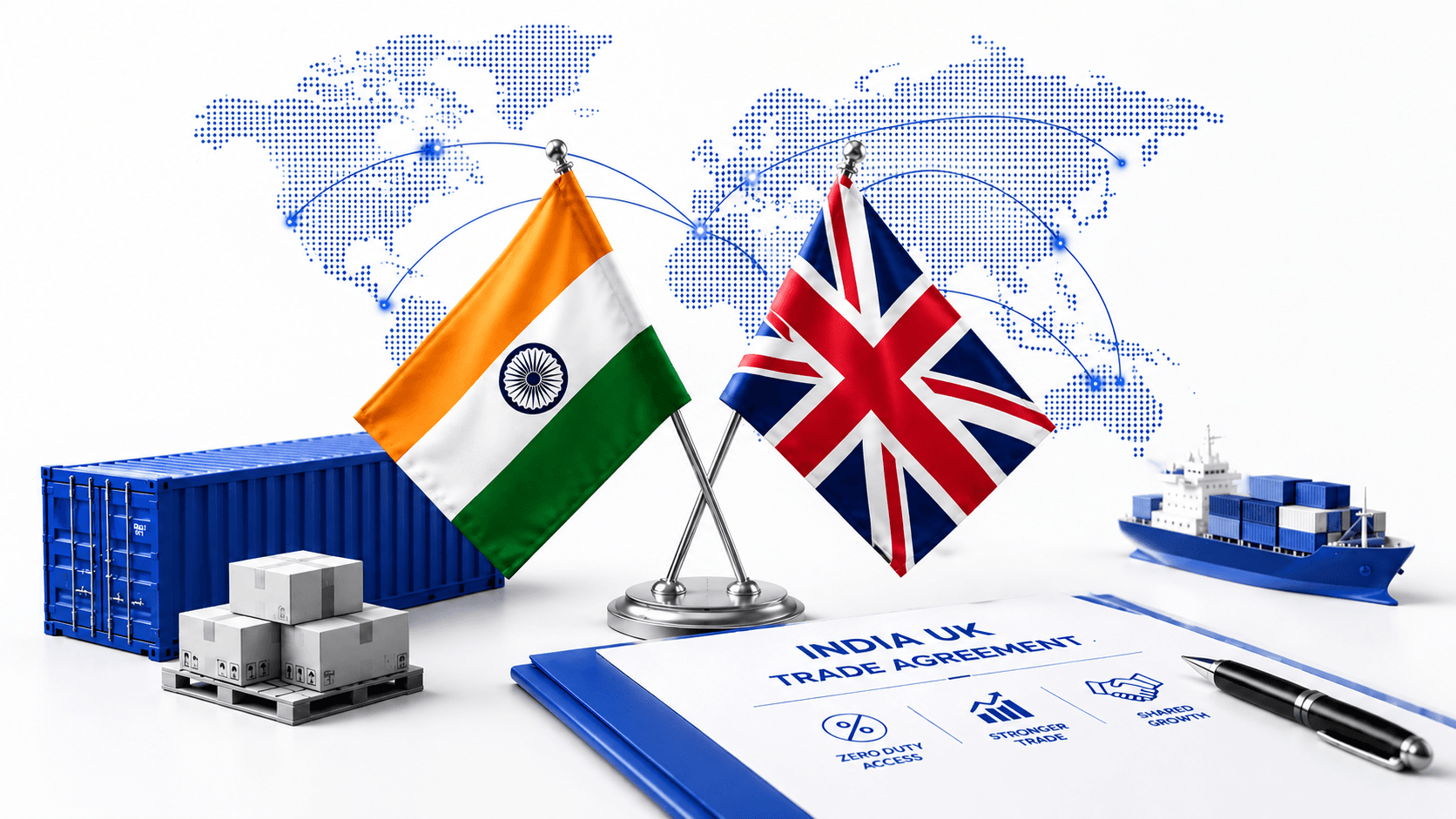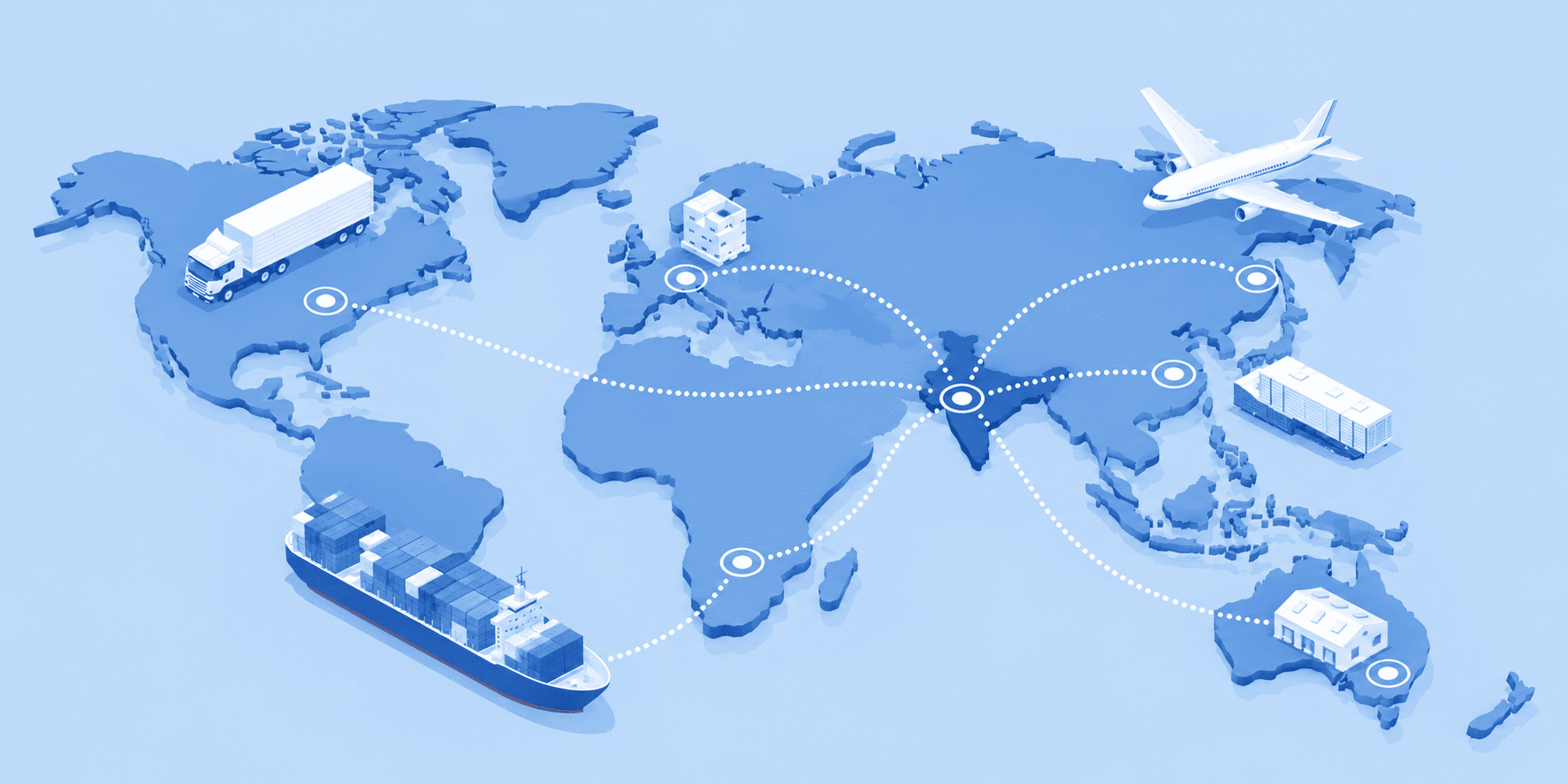

India exports everything from smartphones and medicines to machinery, rice, jewellery, chemicals, and refined petroleum.
And the opportunity is still growing. India recorded its highest-ever total exports in FY 2025–26, while merchandise exports continued to expand into major markets across the US, UAE, Europe, and Asia.
For a new exporter, the question is not simply, “What does India export?”
It is: which product categories already have global demand, and where could your business realistically compete?
This guide looks at 10 major products exported from India and what to check before choosing an export opportunity.
And the opportunity is still growing. India recorded its highest-ever total exports in FY 2025–26, while merchandise exports continued to expand into major markets across the US, UAE, Europe, and Asia.
For a new exporter, the question is not simply, “What does India export?”
It is: which product categories already have global demand, and where could your business realistically compete?
This guide looks at 10 major products exported from India and what to check before choosing an export opportunity.
TL;DR
- India’s major export categories include engineering goods, petroleum products, electronics, pharmaceuticals, chemicals, gems and jewellery, textiles, rice, marine products, and plastics.
- The exact ranking changes with commodity prices and monthly trade, so treat this as a list of major current export categories rather than a fixed league table.
- The US, UAE, China, Netherlands, and UK are among India’s major merchandise export destinations.
- Before choosing a product to export, check demand, HS code, DGFT policy, certification, logistics, margins, and how you will collect international payments.
What are the top products exported from India?
India’s export mix has become much broader than traditional categories such as tea and textiles. Manufacturing, electronics, engineering, pharmaceuticals, and processed products now play a major role.
Here are 10 categories worth knowing.
1. Engineering goods
Engineering goods are one of India’s biggest export engines, covering machinery, industrial equipment, auto components, electrical equipment, metals, and other manufactured products.
Demand comes from developed and emerging markets that rely on India for cost-competitive manufacturing and industrial supply.
2. Petroleum products
India imports crude oil but has significant refining capacity, allowing it to export products such as diesel, petrol, aviation fuel, and other refined petroleum products.
Export values can move sharply with global oil prices, so this category can change position from one period to another.
3. Electronic goods
Electronics has become one of the fastest-growing parts of India’s merchandise export story.
The category includes smartphones, telecom equipment, electronic components, and other devices. Recent trade data continues to show electronics among the strongest contributors to export growth.
4. Drugs and pharmaceuticals
India is a major global supplier of generic medicines, formulations, vaccines, APIs, and other pharmaceutical products.
Pharmaceutical exports can offer strong international demand, but they also come with strict product registration, quality, documentation, and destination-country regulatory requirements.
5. Gems and jewellery
India has a large gems and jewellery ecosystem, particularly in diamond cutting and polishing, gold jewellery, gemstones, and manufactured jewellery.
The US, UAE, Hong Kong, and other international luxury markets have historically been important destinations for the sector.
6. Organic and inorganic chemicals
Indian chemical exporters supply products used across pharmaceuticals, agriculture, manufacturing, textiles, plastics, and industrial production.
The opportunity is broad, but product classification, safety requirements, and destination-country regulations can be especially important.
7. Textiles and apparel
India remains a major exporter of ready-made garments, cotton textiles, man-made textiles, carpets, handicrafts, silk, and other textile products.
The US remains a particularly important market, alongside the UK, UAE, Germany, and other European destinations.

8. Rice
India is a major global rice supplier, exporting varieties including basmati and non-basmati rice.
For agricultural exports, businesses need to pay close attention to current DGFT export policy, quality standards, packaging, phytosanitary requirements, and destination-specific rules because restrictions can change.
9. Marine products
Seafood is another major export category, with frozen shrimp accounting for a large share of India’s marine export earnings.
The US and China are important markets, while cold-chain management, traceability, food-safety compliance, and logistics are critical to successful exporting.
10. Plastic and linoleum products
India exports plastic raw materials, packaging products, sheets, films, household products, and other manufactured plastic goods.
The opportunity varies significantly by product because sustainability standards, packaging regulations, and import rules differ across markets.
Which countries are major buyers of Indian exports?
India trades with more than 200 markets.
Among its major current merchandise export destinations are:
- United States
- United Arab Emirates
- China
- Netherlands
- United Kingdom
The right destination for your business, however, depends more on your specific product than the overall country ranking.
A textile exporter and a chemical exporter may have completely different best markets.
How do you choose the right product to export from India?
A product can have a large export market and still be a poor fit for your business.
Before committing, check:
Demand
Look at which countries are importing your exact product and whether demand is growing or shrinking.
HS code and export policy
Identify the correct HS/ITC-HS code and check whether the product is freely exportable, restricted, prohibited, or subject to conditions.
Compliance
Food, pharmaceuticals, chemicals, electronics, and agricultural products can require destination-specific certifications or registrations.
Logistics
Ask how expensive, fragile, perishable, bulky, or difficult the product is to ship.
Margin
Calculate the landed economics after packaging, freight, duties, payment costs, FX conversion, returns, and other charges.
Payment terms
A profitable export order can still hurt cash flow if the buyer takes 60 or 90 days to pay.
Agree upfront on the payment method, currency, due date, and documentation required.
How can Indian exporters collect international payments?
Winning an international buyer is only half the job. You still need a reliable way to collect and reconcile the payment.
PayGlocal’s Multi-Currency Accounts help Indian businesses collect funds locally in supported currencies such as USD, GBP, EUR, CAD, AUD, and others, as well as collect globally across 33 currencies from 180+ countries.
Exporters can also track inward-remittance status, settle into INR, and access FIRA documentation from the dashboard.
That can make the payment side of exporting easier to manage as your buyer base grows across markets.