
According to recent data, India is the 7th largest country in services export, accounting for 4.3% of the global services export market share. This growth has led to a large number of international transactions happening daily, and each one requires proper classification for effective processing and compliance.
Purpose codes are mandatory identifiers that classify the reason for your international transaction.
Without the right code, your transfer can face delays, rejections, or compliance issues.
In this guide, you’ll get a complete guide on purpose codes, from what they are to choosing the right one for your specific transaction type, along with examples. Let’s get started!
Mandatory identification: Purpose codes are required alphanumeric identifiers for all international money transfers.
Transaction-specific codes: Different codes exist for inward and outward remittances, each serving specific transaction types.
Faster processing: Proper code selection ensures quicker processing and regulatory compliance for your business.
Global payment: PayGlocal simplifies international payments with automatic compliance features for seamless cross-border transactions.
A purpose code is a standardized alphanumeric identifier that specifies the exact reason for an international money transfer. These codes help regulatory authorities track and monitor cross-border financial flows for economic planning and compliance purposes.
Every international transfer, whether you're receiving payment for freelance services or sending money for business expenses, requires a specific purpose code.
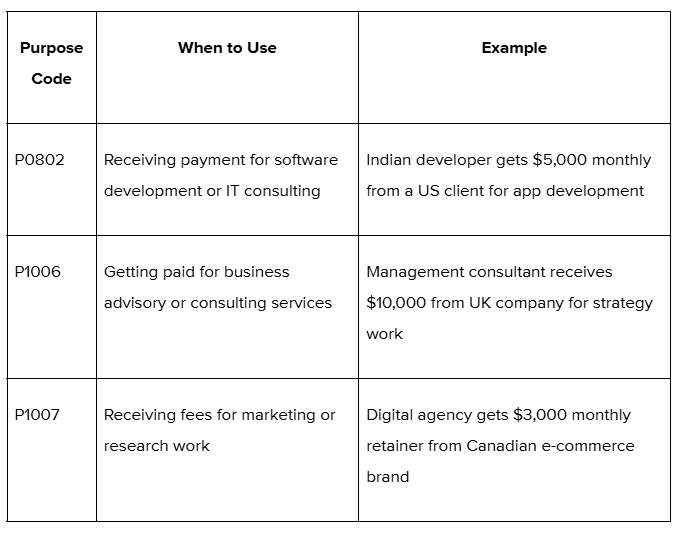
For example, if you're a software consultant receiving payment from a US client, you'd use code P0802 for software implementation services. If you're paying for business travel abroad, you'd use S0301.
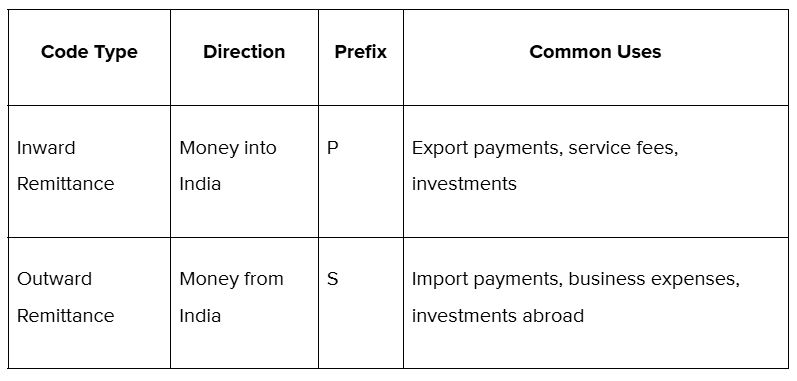
Purpose codes follow a systematic structure. Inward remittance codes (money coming into India) start with "P" followed by four digits, while outward remittance codes (money leaving India) start with "S" followed by four digits. This system makes it easier to categorize and track different types of transactions.
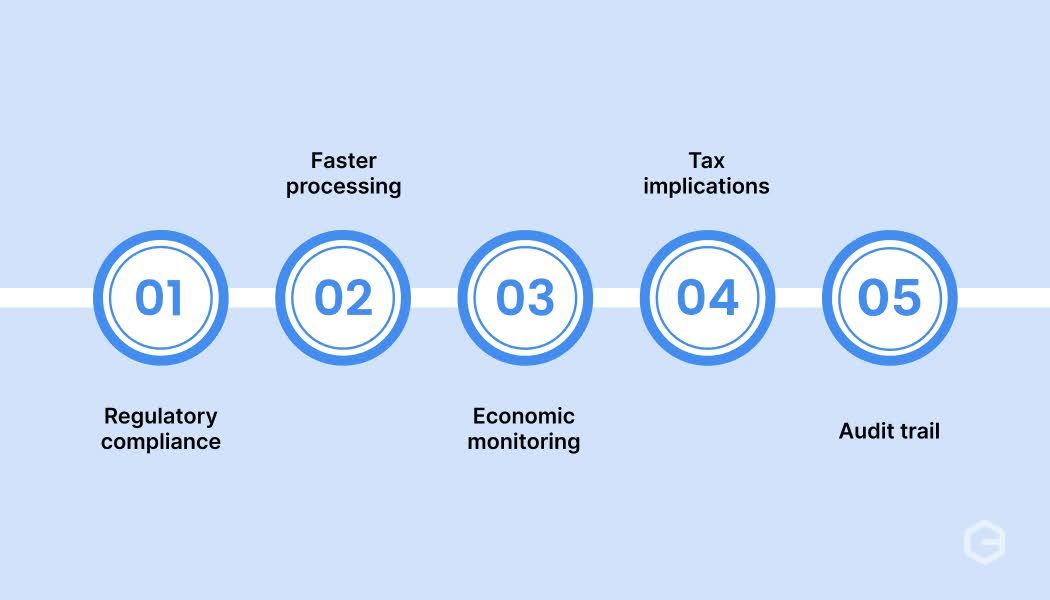
Purpose codes serve several critical functions that directly impact your business operations and compliance status.
Purpose codes are divided into two primary categories based on the direction of money flow. Here's how the main purpose code categories work:
Let's look at the key categories for each type in detail, along with examples:
These codes apply when you receive money from abroad. The most commonly used categories include capital account transactions, export-related receipts, and service exports.
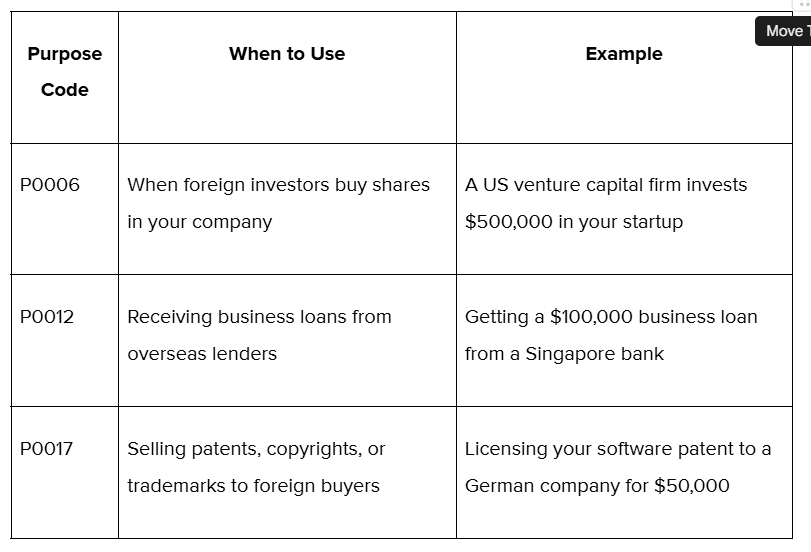
Capital account codes handle investment flows and major financial transactions between countries.
Export codes cover payments for goods shipped from India to other countries.
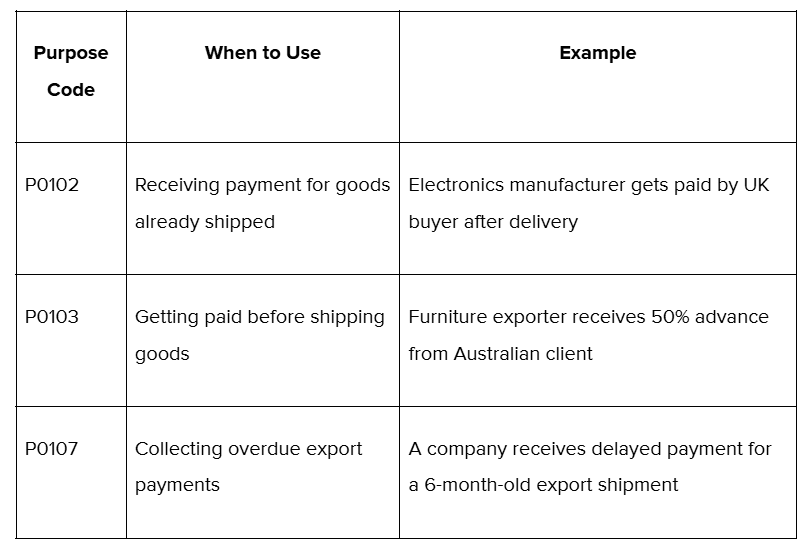
Service codes handle payments for various professional and business services provided to foreign clients.
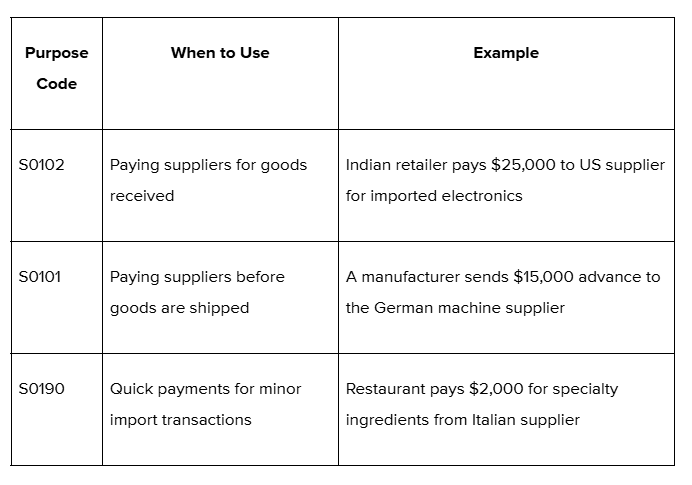
These codes apply when you send money abroad. Major categories include import payments, business expenses, and foreign investments.
Import codes handle payments for goods and services purchased from foreign suppliers.
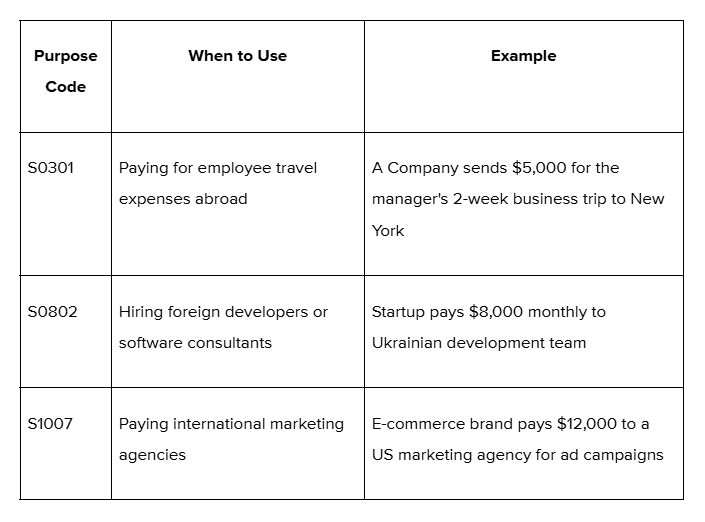
Business expense codes cover various operational costs incurred outside India.
Selecting the correct purpose code requires identifying your transaction's specific nature and matching it to the appropriate category.
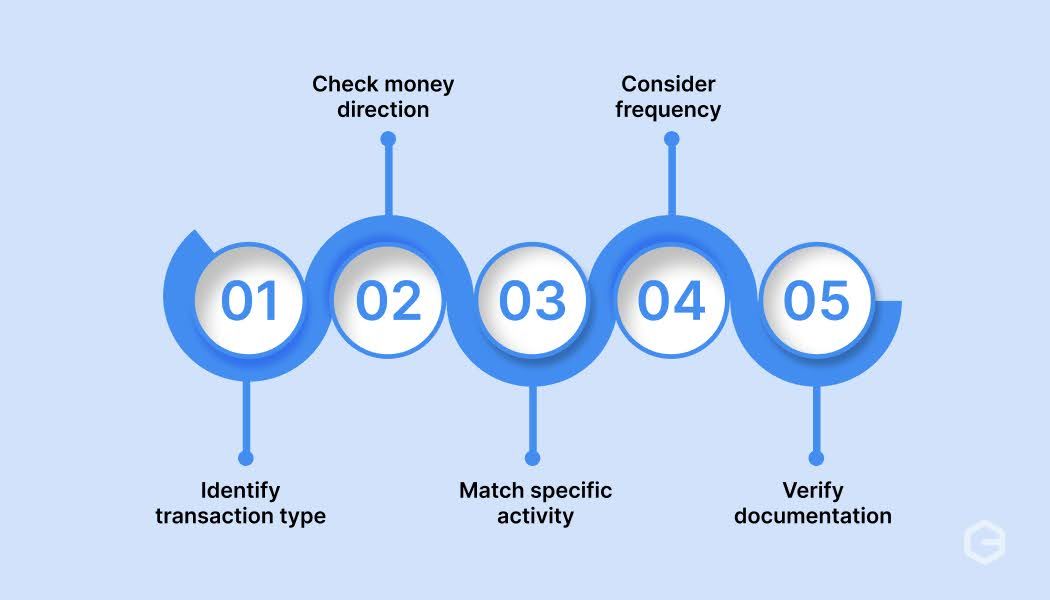
Identify transaction type: Start by clearly defining what the payment covers - goods, services, investments, or personal transfers.
Check money direction: Determine if money is coming into India (P codes) or going out (S codes) to narrow your options.
Match specific activity: Look for the code that most closely matches your business activity or transaction purpose.
Consider frequency: Some codes work for regular business activities, while others handle one-time transactions.
Verify documentation: Different codes require different supporting documents, so ensure you can provide the necessary paperwork.
For example, if you're a travel agency receiving commission from an international hotel booking platform, you'd use P1002 for trade-related services commission. But if you're paying a foreign marketing agency for advertising services, you'd use S1007.
Managing international payments involves more than just purpose codes. You need a platform that handles compliance, currency conversion, and global payment methods seamlessly.
PayGlocal provides a complete all-in-one solution for businesses accepting payments from customers worldwide, removing the complexity from global transactions. Here’s how PayGlocal can help you:
Multi-currency accounts: Collect payments in USD, GBP, EUR, and CAD with local account details for each currency.
Global payment methods: Accept payments through 40+ international payment methods your customers prefer.
Instant FIRC documentation: Receive FIRC (Foreign Inward Remittance Certificate) after each settlement for maintaining proper records.
One platform management: Handle all international payments, settlements, and compliance from a single dashboard.
Zero setup costs: Start accepting international payments immediately without upfront fees or lengthy approval processes.
Whether you're scaling a startup or managing regular export transactions, PayGlocal ensures your international payments move smoothly with competitive rates and transparent processing.
Purpose codes are required for all international transactions. Choosing the right code for your transaction type ensures faster processing and regulatory compliance.
While traditional payment processes work for occasional transfers, businesses handling regular international payments benefit from platforms like PayGlocal that offer multi-currency accounts and faster processing.
Don’t let slow payment platforms limit your business growth. Switch to modern payment solutions like PayGlocal for faster and effective international transactions. Get started with PayGlocal today.
Purpose codes are mandatory identifiers that classify the reason for your international transaction.
Without the right code, your transfer can face delays, rejections, or compliance issues.
In this guide, you’ll get a complete guide on purpose codes, from what they are to choosing the right one for your specific transaction type, along with examples. Let’s get started!
Key Takeaways:
Mandatory identification: Purpose codes are required alphanumeric identifiers for all international money transfers.
Transaction-specific codes: Different codes exist for inward and outward remittances, each serving specific transaction types.
Faster processing: Proper code selection ensures quicker processing and regulatory compliance for your business.
Global payment: PayGlocal simplifies international payments with automatic compliance features for seamless cross-border transactions.
What is a purpose code?
A purpose code is a standardized alphanumeric identifier that specifies the exact reason for an international money transfer. These codes help regulatory authorities track and monitor cross-border financial flows for economic planning and compliance purposes.
Every international transfer, whether you're receiving payment for freelance services or sending money for business expenses, requires a specific purpose code.
For example, if you're a software consultant receiving payment from a US client, you'd use code P0802 for software implementation services. If you're paying for business travel abroad, you'd use S0301.
Purpose codes follow a systematic structure. Inward remittance codes (money coming into India) start with "P" followed by four digits, while outward remittance codes (money leaving India) start with "S" followed by four digits. This system makes it easier to categorize and track different types of transactions.
Why are purpose codes important for international transactions?
Purpose codes serve several critical functions that directly impact your business operations and compliance status.
- Regulatory compliance: Purpose codes ensure your transactions meet regulatory requirements and demonstrate a legitimate business purpose.
- Faster processing: Banks process transactions with accurate purpose codes more quickly because they can immediately identify the transaction's nature.
- Economic monitoring: These codes help authorities track foreign exchange flows for Balance of Payments statistics and economic planning decisions.
- Tax implications: Purpose codes determine tax treatment for your international transactions, with some export earnings qualifying for specific tax benefits.
- Audit trail: Proper coding creates a clear audit trail for international transactions, making compliance management and regulatory responses easier.
What are the main types of purpose codes?
Purpose codes are divided into two primary categories based on the direction of money flow. Here's how the main purpose code categories work:
Let's look at the key categories for each type in detail, along with examples:
Inward remittance purpose codes (P codes)
These codes apply when you receive money from abroad. The most commonly used categories include capital account transactions, export-related receipts, and service exports.
Capital account transactions (P0001-P0018)
Capital account codes handle investment flows and major financial transactions between countries.
Export-related receipts (P0101-P0107)
Export codes cover payments for goods shipped from India to other countries.
Service exports (P0201-P1502)
Service codes handle payments for various professional and business services provided to foreign clients.
Outward remittance purpose codes (S codes)
These codes apply when you send money abroad. Major categories include import payments, business expenses, and foreign investments.
Import payments (S0101-S0190)
Import codes handle payments for goods and services purchased from foreign suppliers.
Business expenses abroad (S0301-S1504)
Business expense codes cover various operational costs incurred outside India.
How do you choose the right purpose code?
Selecting the correct purpose code requires identifying your transaction's specific nature and matching it to the appropriate category.
Identify transaction type: Start by clearly defining what the payment covers - goods, services, investments, or personal transfers.
Check money direction: Determine if money is coming into India (P codes) or going out (S codes) to narrow your options.
Match specific activity: Look for the code that most closely matches your business activity or transaction purpose.
Consider frequency: Some codes work for regular business activities, while others handle one-time transactions.
Verify documentation: Different codes require different supporting documents, so ensure you can provide the necessary paperwork.
For example, if you're a travel agency receiving commission from an international hotel booking platform, you'd use P1002 for trade-related services commission. But if you're paying a foreign marketing agency for advertising services, you'd use S1007.
Receive international payments faster with zero setup costs
Managing international payments involves more than just purpose codes. You need a platform that handles compliance, currency conversion, and global payment methods seamlessly.
PayGlocal provides a complete all-in-one solution for businesses accepting payments from customers worldwide, removing the complexity from global transactions. Here’s how PayGlocal can help you:
Multi-currency accounts: Collect payments in USD, GBP, EUR, and CAD with local account details for each currency.
Global payment methods: Accept payments through 40+ international payment methods your customers prefer.
Instant FIRC documentation: Receive FIRC (Foreign Inward Remittance Certificate) after each settlement for maintaining proper records.
One platform management: Handle all international payments, settlements, and compliance from a single dashboard.
Zero setup costs: Start accepting international payments immediately without upfront fees or lengthy approval processes.
Whether you're scaling a startup or managing regular export transactions, PayGlocal ensures your international payments move smoothly with competitive rates and transparent processing.
Final thoughts
Purpose codes are required for all international transactions. Choosing the right code for your transaction type ensures faster processing and regulatory compliance.
While traditional payment processes work for occasional transfers, businesses handling regular international payments benefit from platforms like PayGlocal that offer multi-currency accounts and faster processing.
Don’t let slow payment platforms limit your business growth. Switch to modern payment solutions like PayGlocal for faster and effective international transactions. Get started with PayGlocal today.