
TL;DR
- Most cross-border card declines come from three fixable causes: 3DS authentication friction, issuer distrust of foreign merchants, and a context-blind checkout.
- The fix is a combination, not one setting: intelligent routing at the engine level, smart 3DS2, and a localised checkout the buyer trusts.
- Get all three right and the success rate moves materially. PayGlocal has taken merchants from roughly 75% to 95% PSR.
When the order lands but the payment does not
Diya runs bookings for a mid-sized travel brand. Customers in the US and the UK fill their carts, pick their flights and hotels, reach the payment page, and then a chunk of them simply drop. No fraud, no bad cards, just declines she never gets a clear reason for. Every failed authorisation is a booking she earned and lost at the last step.
That gap, between a customer who wanted to pay and a payment that actually went through, is the Payment Success Rate (PSR): the share of attempted payments that succeed.
On cross-border card traffic it is often far lower than merchants expect, and most of the loss is recoverable. PayGlocal has taken merchants from roughly 75% to 95% on this metric, and the levers that do it are not exotic.
This is where the money leaks, and it is fixable.
See how PayGlocal lifts approval rates
What actually makes an international card payment fail?
Three causes account for most cross-border declines.
Authentication friction (the 3DS step)
3DS2 is the card authentication check (Three-Domain Secure, the step where the bank verifies the cardholder). Done badly, it adds a screen that confuses foreign buyers or times out, and the transaction dies there. Done well, it runs quietly and approves. The difference is not whether you use 3DS2, which on most cross-border card traffic you must, but how cleanly it is implemented: an inline challenge that matches the buyer's language and device behaves very differently from a clunky redirect that looks like a security warning.
Issuer distrust of foreign merchants.
A card issuer in New York sees a charge routed through an unfamiliar Indian acquirer and treats it as risky. The card is fine and the customer is real, but the transaction gets refused on caution alone. Issuers score every authorisation request in milliseconds, weighing the acquirer, the merchant category, the amount and the cardholder's pattern. When the acquiring path is one the issuer rarely sees approve cleanly, the request tips towards a decline. This is the single most misunderstood source of cross-border loss, because from the merchant's side it looks like a bad card, when it is really a bad route.
A context-blind checkout.
If the page shows the wrong currency, an unfamiliar payment method, or an interface that ignores where the buyer is, people abandon. This is not a decline by the bank; it is the checkout losing the sale before the bank ever sees it. A US buyer shown a total in rupees, with no card wallet they recognise and no local method, quietly reads the page as risky and leaves.
Each of these is addressable, and fixing them is what lifts the success rate.
The three fixes that move the success rate
Here is the short version, before the detail:
- Route intelligently. Send each transaction down the path most likely to be approved, instead of one fixed route for everything.
- Authenticate smartly. Apply 3DS2 where it is needed and get out of the way where it is not.
- Localise the checkout. Show the buyer their currency, their methods, their context.
The first two are engine-level. The third is what the customer sees. You need all three, because a well-routed transaction still fails if the checkout scared the buyer off first, and a beautiful checkout cannot save a transaction sent down a route the issuer distrusts. The mistake most merchants make is treating these as three separate projects owned by three separate teams. They are one system, and they only pay off together.
Why dynamic routing matters most for cross-border
Payment orchestration is the layer that decides how each transaction is processed. Dynamic routing (also called intelligent routing) is the part that picks, per transaction, the acquiring path most likely to get an approval, based on the card, the issuer, the geography and past performance.
On domestic payments this matters a little. On cross-border it matters a lot, because the "distance" between an issuer and an acquirer is where approvals are won or lost. A card that an issuer would refuse on one path will often approve on another that the issuer recognises and trusts. Static, single-route setups cannot do this. They send every transaction the same way and absorb every avoidable decline.
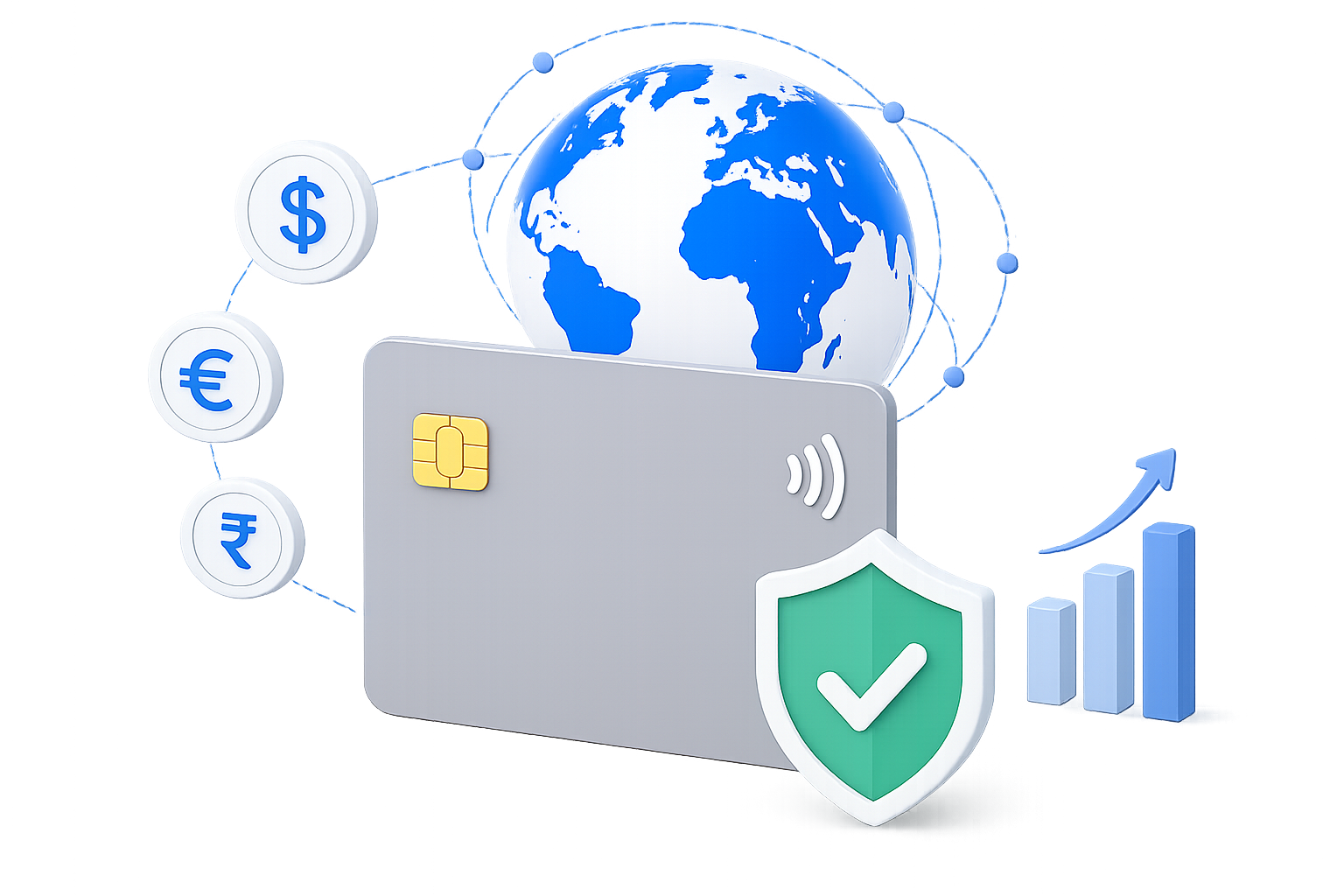
- Routed through an acquirer the issuer barely sees, the first is declined.
- Routed through a path the issuer recognises and has approved before, the second clears.
Nothing about the card, the customer or the amount changed. Only the route did. Multiply that across thousands of transactions a month and the difference between static and dynamic routing is a large, recurring number on your revenue line.
Layer network tokenisation on top (replacing the raw card number with a secure token) and you lift both security and approval odds, because tokenised transactions are read as lower-risk by many issuers.
The catch worth naming: routing is not magic. It works when the orchestration layer has real acquiring relationships and live performance data to route against. A thin setup with one downstream acquirer has nothing to route to. This is where infrastructure depth, not a feature checkbox, decides the outcome.
How a context-aware checkout recovers lost approvals
Even a perfectly routed transaction fails if the buyer bails at the page. A localised checkout closes that gap:
- Dynamic Currency Conversion (DCC): let the payer see and pay in their own currency, so the amount reads as familiar rather than foreign and risky.
- Local and alternative payment methods: a UK buyer expects the methods a UK buyer uses; a US buyer expects theirs. Offering the right ones, including one-tap options like Apple Pay, removes a common reason for drop-off.
- A clean, fast authentication flow: 3DS2 handled inline, not as a jarring redirect that reads like a warning sign.
None of this changes the product or the price. It changes whether a willing buyer completes, and on cross-border traffic that swing is large. The buyers you lose here are the most frustrating kind, because they had already decided to pay. They picked the product, reached the payment page, and then met a checkout that did not speak their context. Recovering them costs you nothing in acquisition; it only takes a checkout built for the market the buyer is actually in.
What this looks like for a travel business
Travel is one of the sharpest cases, because baskets are large, buyers are global, and a single failed authorisation is a whole trip lost, not a small-ticket item.
High-volume Indian travel brands like ixigo and MakeMyTrip operate exactly this profile: international card traffic, real money per transaction, and no tolerance for avoidable declines.
The stakes compound in travel because timing is unforgiving. A traveller comparing fares who hits a decline does not usually retry; they move to the next site while the fare is still live, and the sale is gone for good. A large basket also means each avoidable decline is worth many times a typical e-commerce order, so even a few points of PSR improvement show up quickly.
For a travel merchant, the combined effect of intelligent routing, smart 3DS2 and a localised checkout is straightforward: more of the bookings customers already chose to make actually get paid for. That is the whole game. You are not chasing new demand; you are keeping the demand you already won from leaking out at checkout.
How to know if your success rate has room to grow
A few honest questions:
- Do you know your international card success rate as a single number? If not, that is the first gap.
- Do your declines come with clear reasons, or do transactions just vanish?
- Is every transaction routed the same way, regardless of card or issuer?
- Does your checkout show buyers their own currency and payment methods?
If you are routing statically, cannot see decline reasons, or run one generic checkout for every market, the headroom is usually significant. The 75%-to-95% kind of move comes from setups that had all three gaps at once.
The Take-away
International card declines are mostly not a card problem or a demand problem. They are an infrastructure problem: static routing, blunt authentication and a context-blind checkout, each quietly costing you paid orders. Fix the routing, handle 3DS2 intelligently, and localise the checkout, and the success rate moves. For businesses with real cross-border volume, that is one of the highest-return changes available.