IBAN Validator
Indian bank accounts don't use IBANs. Here's what to send instead, and how to validate an overseas one before you pay it.
Get in TouchValidate an IBAN
Paste an IBAN below to check its structure and check digits.
What the validator looks at
- The first 2 characters are the country code, and must be letters.
- The next 2 are check digits, and must be numbers.
- The rest is the BBAN, which holds the bank code, branch code, and account number, and varies by country.
This validator checks an IBAN's structure and check digits only. It cannot confirm that the account exists, that it is open, or that it belongs to the person you intend to pay. Confirm beneficiary details with the account holder or their bank before sending funds.
Skip the hidden fees. See what your earnings are worth.
PayGlocal keeps pricing transparent, so you always know what you’ll receive.
Do Indian bank accounts have an IBAN?
No. India does not participate in the IBAN system, so no Indian bank account has an IBAN. If a European client asks you for one, there isn't one to give them. What they need instead is your bank's SWIFT/BIC code, your account number, and usually your IFSC code, bank name, and branch address.
These three get mixed up all the time, but each does a completely different job.
If your client's payment form has a mandatory IBAN field and you're in India, the form is built for a European corridor. The sender's bank needs to route it as an international wire using SWIFT plus your account number instead.
Need to check a SWIFT/BIC code? Use the SWIFT/BIC finderWhat it identifies
One specific bank account, internationally
Where it's used
Europe, the UK, the Middle East, and around 90 other countries. Not India
What it identifies
The bank or branch, not the account
Where it's used
Worldwide, including India
What it identifies
An Indian bank branch
Where it's used
Domestic transfers within India only
How an IBAN is built
An IBAN is 15 to 34 characters long and is built from three parts that together identify one specific bank account.
An IBAN has 15 to 34 characters
DE
Country code
The 2-letter ISO country code that says which country the account sits in, for example DE, FR, GB.
89
Check digits
Two digits calculated with the MOD-97-10 algorithm. They exist to catch typos before a payment leaves.
3704 0044 0532 0130 00
BBAN
The basic bank account number, combining the bank identifier, branch code, and account number. The format varies by country.
Each country registers its own IBAN format with SWIFT, which ISO appointed as the registration authority for the standard. The full list is published in the ISO 13616 IBAN Registry.
When do you need an IBAN?
You need an IBAN whenever money moves to or from an account in an IBAN country. For an Indian business, that almost always means you are the one paying.
- 01
Paying an overseas supplier, freelancer, or contractor in Europe or the Middle East
- 02
SEPA transfers across the EU, EEA, and other SEPA member states
- 03
Vendor settlements, salary transfers, and business payouts into European accounts
- 04
Marketplace and platform payouts to sellers in IBAN countries
- 05
Receiving money from overseas, where the sender's bank asks for an IBAN and you need to tell them India doesn't have one
Paying an overseas supplier from India
If you're validating an IBAN, you're usually about to send money out of India, and that runs on a different set of rules from collecting. An outward payment needs three things beyond a correct IBAN.
A matching purpose code
A purpose code that matches what you're actually paying for.
Documentation that clears
Documentation your authorised dealer bank will accept.
A rate you see upfront
A rate you can see before you commit, rather than after settlement.
PayGlocal is authorised by the Reserve Bank of India as a Payment Aggregator - Cross Border - Inward & Outward (PA-CB-I&O), which covers both directions of cross-border flow.
Frequently asked questions.
No. India is not part of the IBAN system, so Indian bank accounts do not have IBANs. International payments into India are routed using the bank's SWIFT/BIC code together with your account number, and usually your IFSC code and branch details as well.
An IBAN identifies one specific account internationally. A SWIFT/BIC code identifies the bank or branch, not the account, and is used worldwide including India. An IFSC code identifies an Indian bank branch and is only used for transfers inside India.
Tell them your account is in India, which does not issue IBANs. Send your bank’s SWIFT/BIC code, your full account number, your IFSC code, and your bank’s name and branch address. That is everything their bank needs to route an international wire.
Validation checks structure and check digits, not existence. An IBAN can be perfectly formatted and still point to a closed account, the wrong beneficiary, or a bank that cannot receive that currency. A payment can also be held for sanctions screening or a missing purpose code.
Between 15 and 34, depending on the country. Each country registers its own fixed length with SWIFT, so a German IBAN is always 22 characters and a UK one is always 22. If yours has an unexpected length for its country code, something has been mistyped.
No. An IBAN contains a private account number, so there is no public directory to search. You have to get it from the account holder or their bank. Any tool claiming to find an IBAN from a name is only calculating a format, not retrieving a real account.
More tools
Currency Converter
Convert between 35+ currencies at real-time mid-market rates.
Open tool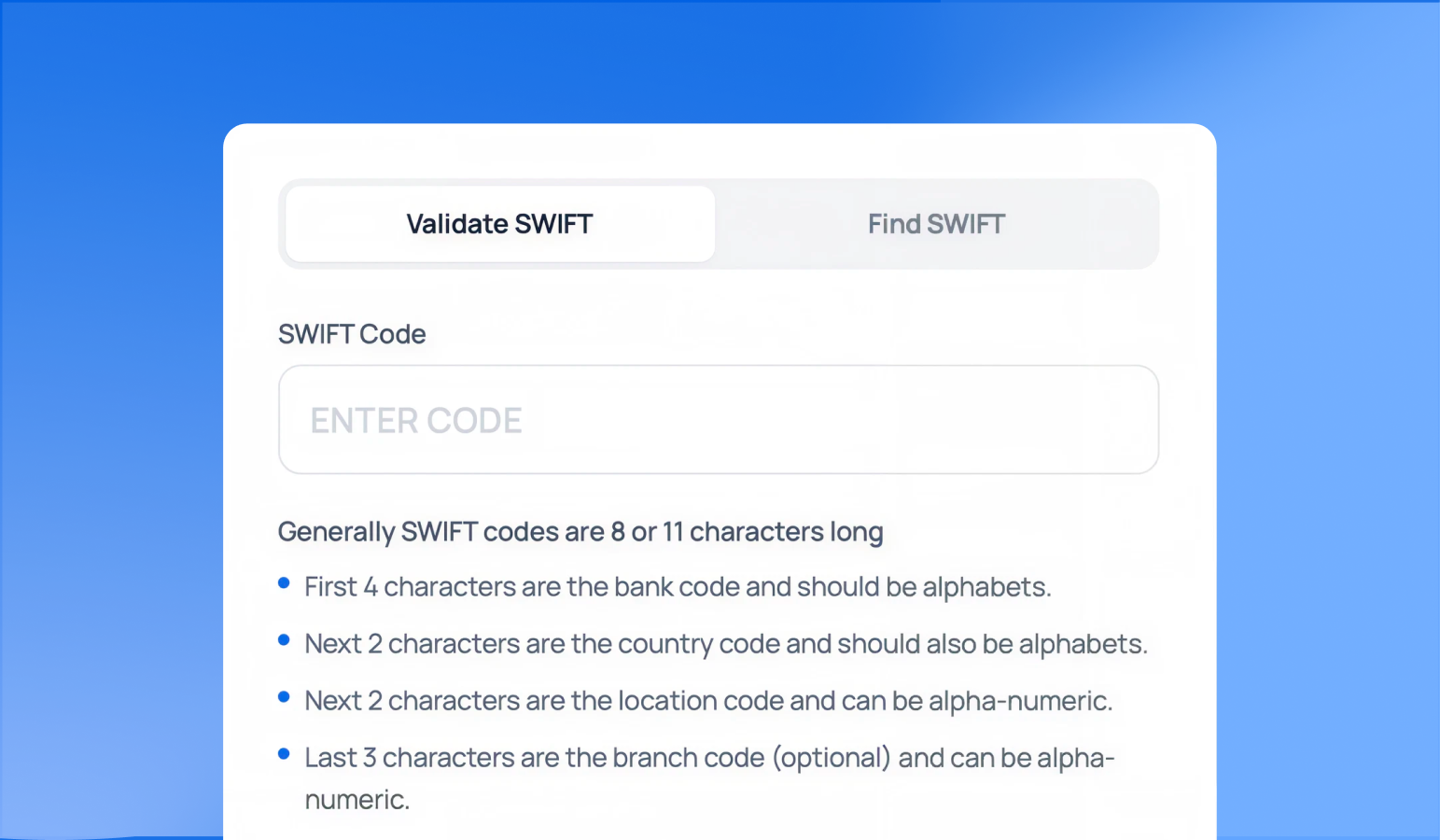
SWIFT/BIC Code Finder
Validate a SWIFT/BIC code or find one by bank, country, and city.
Open tool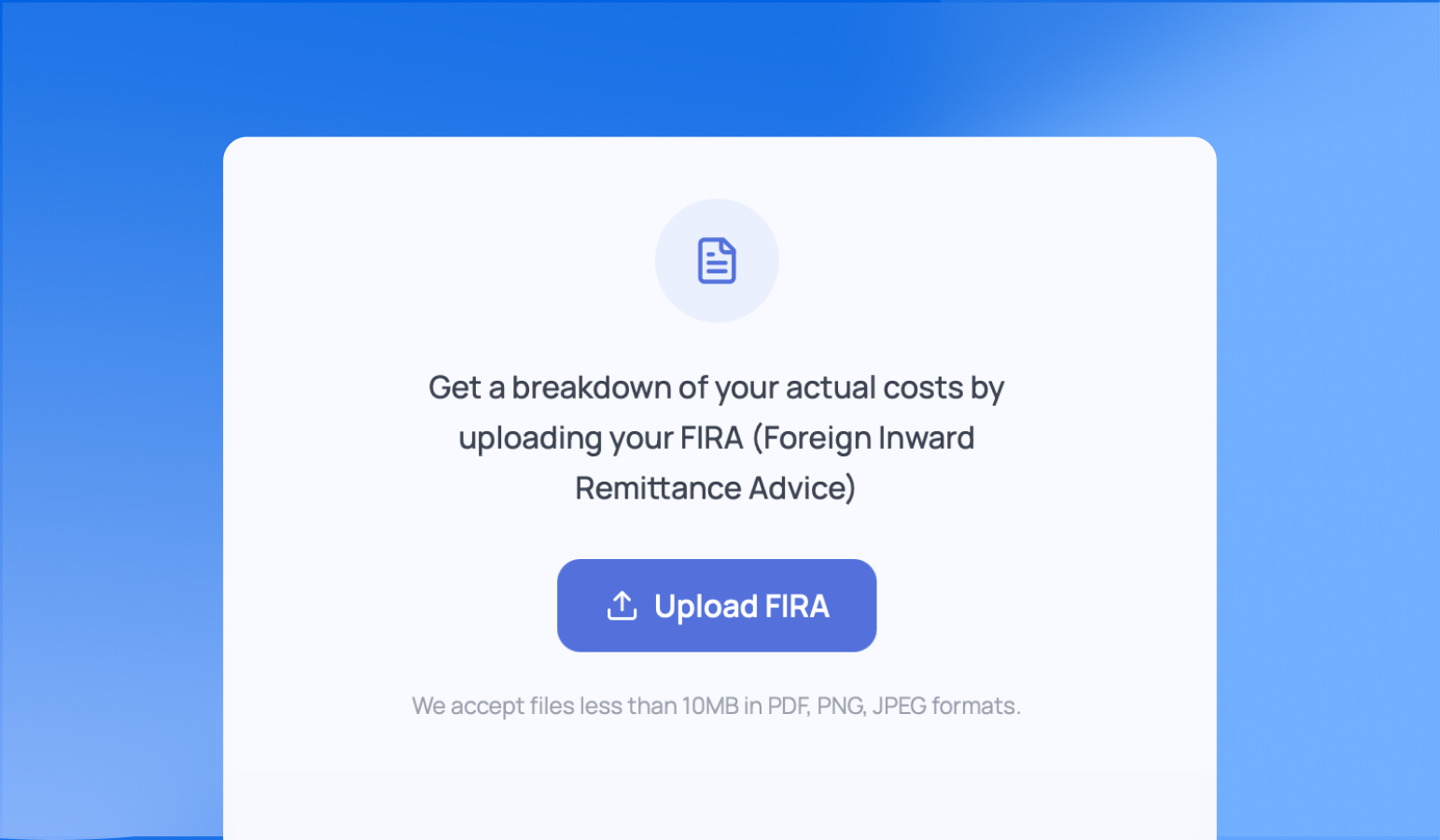
FIRA Analyzer
Upload your FIRA to see the real cost and effective FX markup.
Open toolSkip the hidden fees. See what your earnings are worth.
PayGlocal keeps pricing transparent, so you always know what you’ll receive.