SWIFT/BIC Code Finder
Find or validate a SWIFT/BIC code before money moves. If you're an Indian business waiting on an international payment, this is the code your client's bank needs.
Get in TouchSWIFT codes are 8 or 11 characters. Paste one to check it, or switch to Find to search by bank, country, and city.
This tool checks a SWIFT/BIC code's structure and looks it up against a reference directory. It cannot confirm that the code is correct for a specific account, that the account is open, or that it belongs to the person you intend to pay. Confirm beneficiary details with the account holder or their bank before sending funds.
Skip the hidden fees. See what your earnings are worth.
PayGlocal keeps pricing transparent, so you always know what you’ll receive.
What is a SWIFT/BIC code?
A SWIFT code, also written as a BIC, is the identifier banks use to route international payments to the right institution. SWIFT stands for the Society for Worldwide Interbank Financial Telecommunication, and ISO appointed it as the registration authority for the ISO 9362 BIC standard.
The code identifies the bank, not the account. It comes in two lengths.
An 8-character code points at the bank's primary office. An 11-character code points at a specific branch.
What SWIFT code do I give an international client?
Send your client four things: your bank's SWIFT/BIC code, your full account number, your bank's name and branch address, and your IFSC code. Not all senders' systems ask for the IFSC, but Indian banks use it to route the payment internally once it arrives, so include it either way.
Two things trip people up.
Your branch's SWIFT code may not exist
Many Indian banks route all international payments through a single designated branch, so the code you need is that branch's, not the one nearest you. Your bank's international banking or trade finance desk will confirm which code applies to your account.
Your bank may have more than one code
Large banks hold separate BICs for different functions or currencies. Using the wrong one can send your payment on a detour before it reaches you.
What a SWIFT code cannot guarantee
A valid SWIFT code and a correct SWIFT code are not the same thing. The validator above checks that a code is properly formed and matches a real institution. It cannot tell you:
- Whether that code is the right one for your specific account
- Whether the receiving bank can accept the currency being sent
- Whether the beneficiary name and account number match what the bank holds
- Whether the payment will need an intermediary bank to get there
A payment sent to a valid but incorrect code doesn't usually bounce back cleanly. It sits somewhere in the chain while banks trace it, which is where the delay and the deductions come from.
How the money moves
Where the money actually goes
A SWIFT message is an instruction, not the money. The funds travel separately, through a chain of banks that hold accounts with each other. If your client's bank has no direct relationship with your Indian bank, the payment routes through one or more correspondent banks (also called intermediary banks) that do, and each bank in that chain can take a fee.
That matters for two reasons.
You often don't know what was deducted until it lands
On the standard shared-charges instruction, the sender covers their own bank's fee and the beneficiary absorbs whatever the correspondent and receiving banks take out along the way. Those deductions aren't quoted upfront to either side.
Every hop adds time
A wire that clears in one hop can settle in a day. One that routes through two correspondents plus a compliance check can take considerably longer, with no visibility for either party while it's in transit.
This is the gap a cross-border payment aggregator closes: a single account to collect into, a rate you see before the payment lands, and a FIRA issued on settlement so you have the documentation your bank and auditor need.
PayGlocal is authorised by the Reserve Bank of India as a Payment Aggregator - Cross Border - Inward & Outward (PA-CB-I&O), which covers both directions of cross-border flow.
Frequently asked questions.
Yes. They're two names for the same thing. BIC stands for Business Identifier Code and is the formal name under the ISO 9362 standard. SWIFT code is the everyday term, because SWIFT is the organisation that administers the standard and runs the messaging network.
Large banks register separate codes for different branches, business lines, or currencies. An 8-character code points at the primary office, while an 11-character code points at a specific branch. Ask your bank's international banking desk which code applies to your account.
Your bank's SWIFT/BIC code, your full account number, your bank's name and branch address, and your IFSC code. US banks route the payment as an international wire using the SWIFT code, then your Indian bank uses the account number and IFSC to credit the right account.
Because the sending bank had no direct relationship with your bank, so the payment routed through a correspondent bank in between. That bank may be holding it for compliance checks, missing beneficiary details, or an incomplete purpose code. Ask the sender for the SWIFT reference number (MT103) and trace it from their end.
A SWIFT code identifies a bank internationally and is used for cross-border transfers. An IFSC code identifies an Indian bank branch and is used for domestic transfers within India. An international payment into India typically needs both: the SWIFT code to arrive, the IFSC to be credited.
No. Validation confirms the code is correctly formed and belongs to a real institution. It cannot confirm the code is right for your specific account, that the beneficiary details match, or that the receiving bank accepts that currency. Confirm the full details with your bank before sharing them.
More tools
Currency Converter
Convert between 35+ currencies at real-time mid-market rates.
Open tool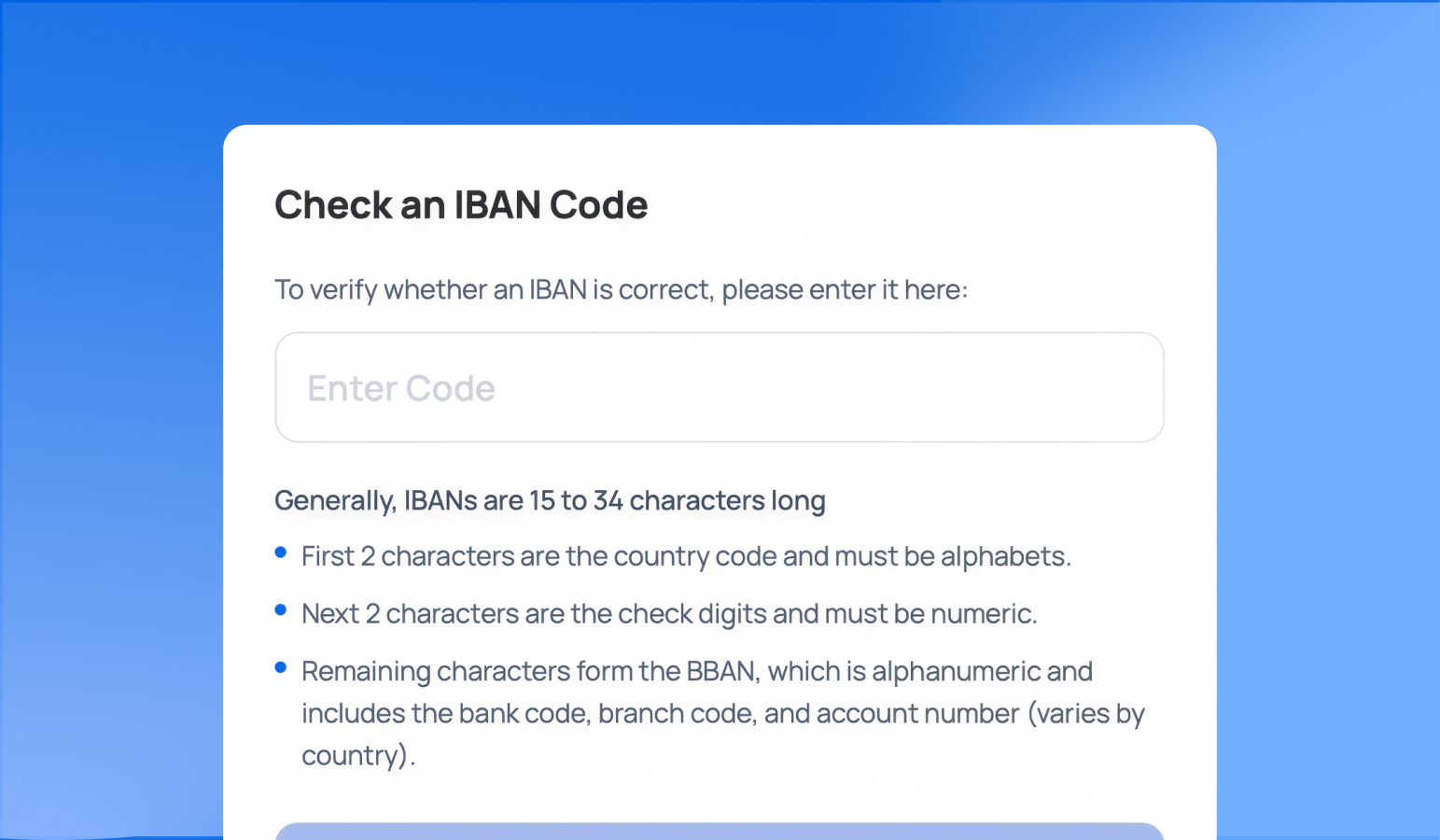
IBAN Validator
Validate any IBAN and see the country, bank code, and account details.
Open tool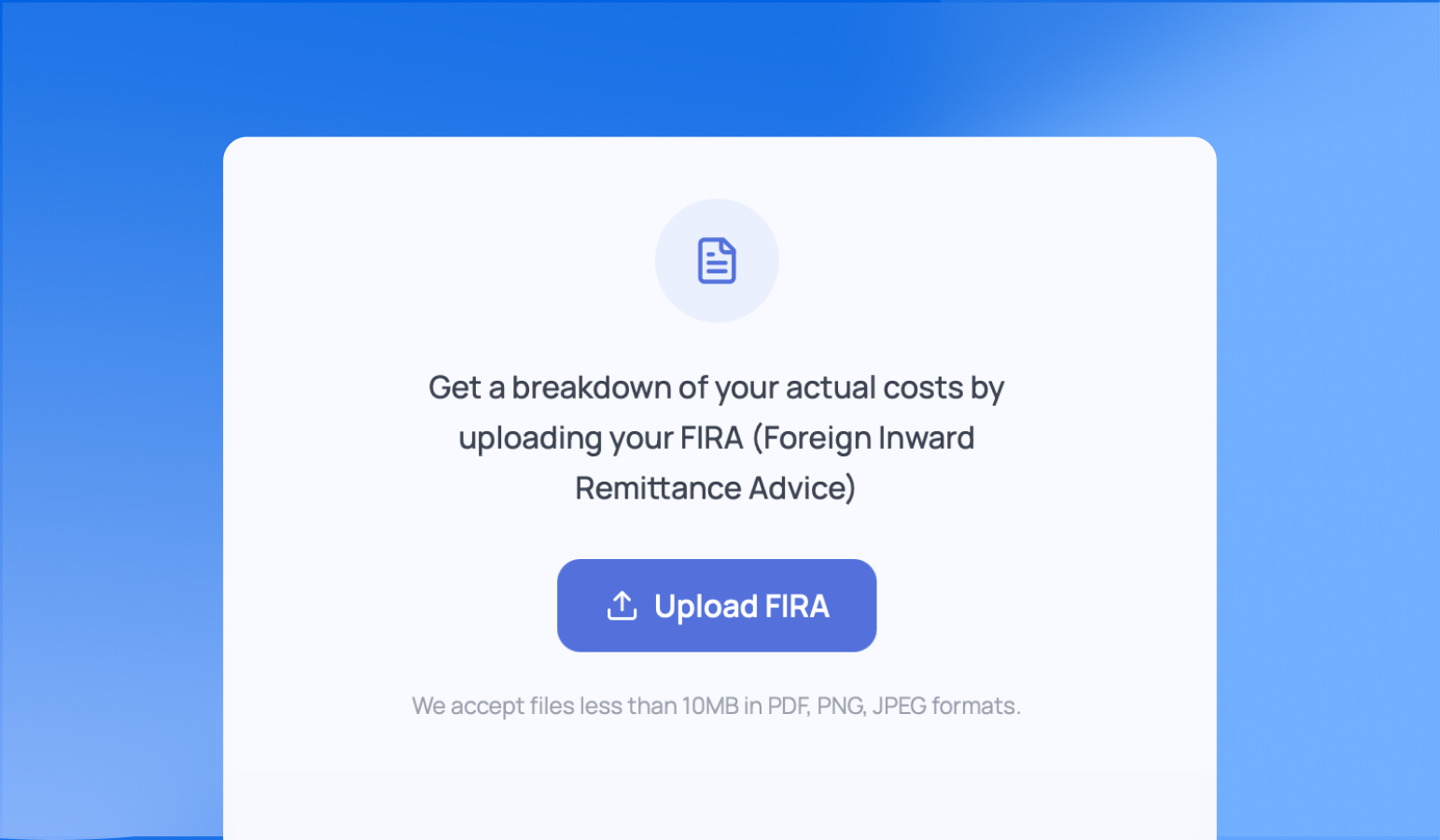
FIRA Analyzer
Upload your FIRA to see the real cost and effective FX markup.
Open toolSkip the hidden fees. See what your earnings are worth.
PayGlocal keeps pricing transparent, so you always know what you’ll receive.