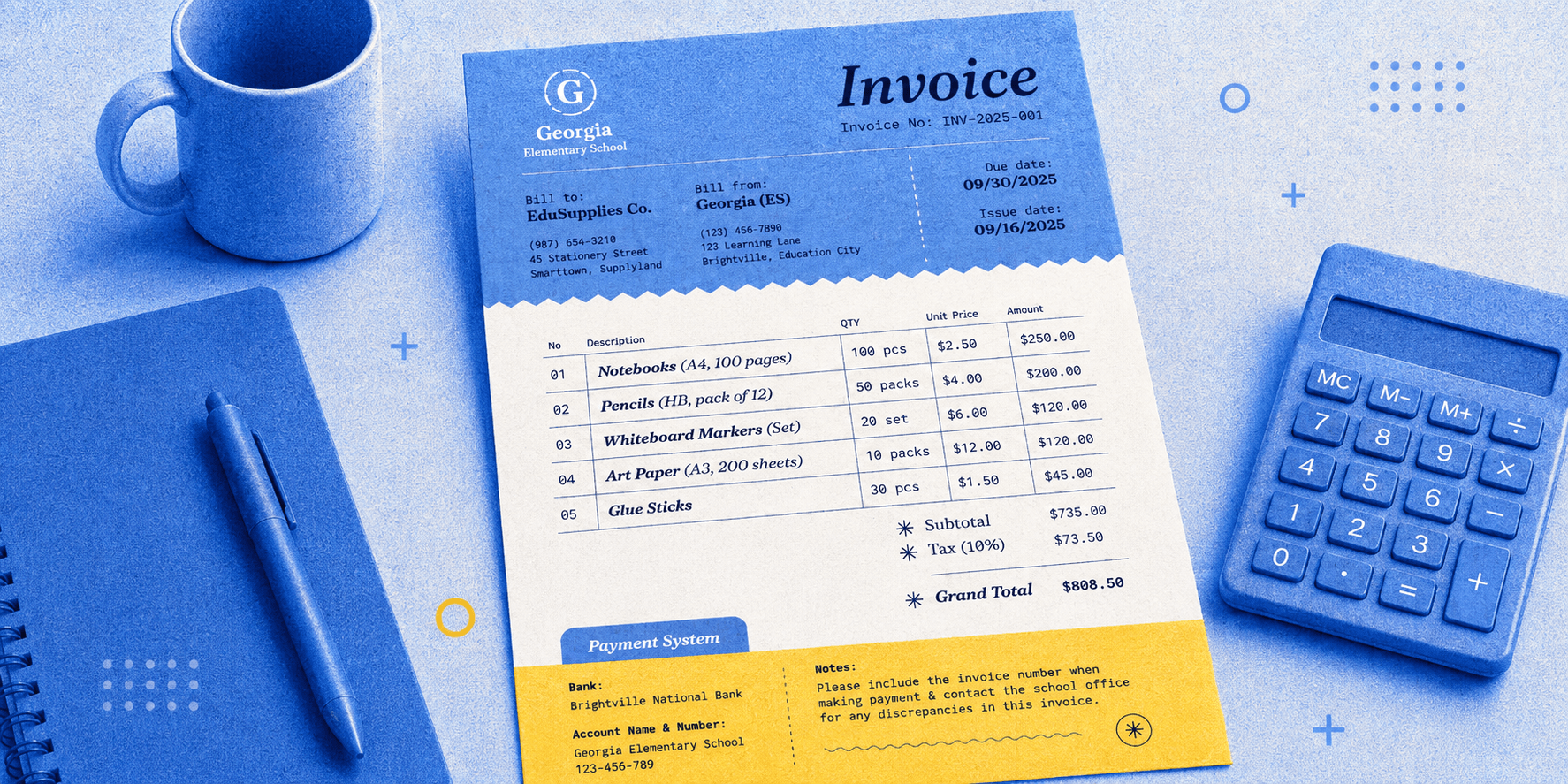

India's services exports reached USD 421.3 billion in FY 2025–26, accounting for nearly half of the country's total exports of USD 863.1 billion. For many agencies, consultants, SaaS companies and other businesses selling services overseas, getting paid has long been a familiar process. Filing a declaration for those exports is now part of that process too.
From 1 October 2026, India's revised Foreign Exchange Management (Export and Import of Goods and Services) Regulations introduced an Export Declaration Form (EDF) requirement for service exporters, including software exporters. The form helps authorised dealer (AD) banks record export values and monitor whether the corresponding payments arrive in India.
This guide explains what an EDF is, who needs to file it, the 2026 deadlines, how to prepare the form and what to do if an invoice remains unpaid.
From 1 October 2026, India's revised Foreign Exchange Management (Export and Import of Goods and Services) Regulations introduced an Export Declaration Form (EDF) requirement for service exporters, including software exporters. The form helps authorised dealer (AD) banks record export values and monitor whether the corresponding payments arrive in India.
This guide explains what an EDF is, who needs to file it, the 2026 deadlines, how to prepare the form and what to do if an invoice remains unpaid.
TL;DR
- EDF stands for Export Declaration Form. From 1 October 2026, it is used to declare the export value of services, including software, under FEMA.
- The standard filing deadline is 30 days after the invoice month ends. One EDF can cover multiple invoices raised during that month. Non-software services have an additional filing option explained below.
- Export proceeds generally have to be realised within nine months of the invoice date, or 12 months where the export is invoiced and/or settled in INR, subject to permitted extensions.
- PayGlocal's free EDF Generator helps prepare a filled form from invoices, but you must sign and submit it to the appropriate authority yourself.
What is an Export Declaration Form (EDF)?
An Export Declaration Form (EDF) is a declaration made by an Indian exporter stating the value of goods or services sold to an overseas buyer. It is prescribed under the Foreign Exchange Management Act (FEMA), 1999 and the applicable RBI regulations.
If you have searched for an “export value declaration form”, the official form you are looking for is the Export Declaration Form. Its purpose is to declare the full export value so that the payment can be monitored and reconciled through the banking system.
For a service exporter, the process looks like this:
- You raise an invoice for a foreign client.
- You declare the export value in an EDF and file it with the relevant authority.
- Your AD bank records the details in the Export Data Processing and Monitoring System (EDPMS).
- When you receive the payment, the bank reconciles it with the export record and marks the relevant entry off, subject to its checks.
Think of the EDF as the declaration of what your business is owed for its exports, and EDPMS as the system that helps banks track what has been received.
What changed in the EDF rules on 1 October 2026?
The RBI notified the Foreign Exchange Management (Export and Import of Goods and Services) Regulations, 2026 on 13 January 2026 under Notification No. FEMA 23(R)/2026-RB. The regulations took effect on 1 October 2026, replacing the earlier 2015 export regulations. A subsequent amendment dated 22 September 2026 changed the export-realisation periods before the new framework came into force.
The biggest change for service businesses is the move towards a unified Export Declaration Form for goods, software and other services. Earlier, software exports had a separate SOFTEX declaration process, while many other services did not require an equivalent export declaration.
| Export category | Before 1 October 2026 | From 1 October 2026 |
|---|---|---|
| Goods | EDF or shipping-bill reporting, depending on the port | EDF at export; for exports through EDI ports, EDF is deemed submitted through the shipping bill |
| Software | Separate SOFTEX reporting framework | Included in the unified EDF framework |
| Services other than software | Generally no comparable routine export declaration | EDF requirement introduced, subject to the applicable filing provisions |
Important: For services other than software, the regulation expressly allows an EDF to be submitted on or before the date of receipt of payment as an alternative to the standard monthly deadline. Confirm with your AD bank how it will implement this provision.
For the legal framework, see the RBI's 2026 regulations and the September 2026 amendment.
Who needs to file an EDF for service exports?
If your business exports services from India and raises invoices on clients or customers outside India, the EDF requirements are relevant to you. This includes businesses that may not have used an export declaration form before.
Common examples include:
- Digital and creative agencies: Marketing, advertising, content, branding and design work for foreign clients.
- Consultants: Management, legal, financial, engineering and other professional advisory services.
- IT and technology companies: Software development, IT services, BPO, KPO and eligible software exports.
- SaaS businesses: Services or software supplied to overseas customers, depending on the nature and classification of the transaction.
- Education businesses: Online tutoring, training and EdTech services sold internationally.
- Other service providers: Research, analytics, business support and similar services provided to overseas buyers.
The obligation depends on the nature of the export and the regulatory provisions, not simply the label you use for your business. Freelancers and individual exporters should confirm the treatment of their receipts with their AD bank, rather than assuming they are automatically exempt.
What information is required for an EDF?
You will need the information that identifies your business, the overseas customer, the services supplied and the amount to be realised.
| Information | Why it matters |
|---|---|
| Export invoices | Show the invoice dates, amounts, currency and customer details |
| Exporter name and PAN | Identify the Indian exporter |
| AD bank name, branch, IFSC and AD code | Identify the bank responsible for handling the export proceeds |
| Service description and SAC code | Classify the services exported |
| Invoice currency and INR equivalent | Record the value in the appropriate format |
| Customer name, address and country | Identify the overseas recipient |
| Contract or agreement reference, where applicable | Link the invoice to the underlying commercial arrangement |
| GSTIN and IEC, where applicable | Provide additional exporter identifiers requested in the form |
The exact details and supporting documents may vary according to your AD bank's process. Check the bank's approved EDF format before submission.
How to file an Export Declaration Form: Step-by-step process
For a service business that invoices multiple overseas clients each month, EDF filing can become a straightforward monthly workflow.
Step 1: Collect the month's export invoices
Gather the invoices raised during the relevant month. Check the invoice number, date, customer country, currency and amount against your accounting records. You can prepare one EDF for multiple export invoices issued to one or more recipients in that month.
Step 2: Gather exporter and bank details
Keep your PAN, AD bank details, AD code, relevant SAC codes and contract references ready. If your business uses different bank accounts for export collections, check with the relevant AD banks about their filing and reconciliation requirements.
Step 3: Prepare the EDF
Complete the general exporter information and the section for details of export value of services. Ensure the declared values, invoice currencies and supporting documents agree. Review the information carefully before signing.
Step 4: Submit the form to the correct authority
For non-software services exported from the Domestic Tariff Area (DTA), the specified authority is the AD bank. For software exports from the DTA, the specified authority can be the AD bank or Software Technology Parks of India (STPI). For services or software exported from a Special Economic Zone (SEZ), the SEZ Development Commissioner is the specified authority.
Step 5: Check the filing deadline
The standard rule is to furnish the EDF within 30 days from the end of the month in which the invoice was raised. For example, an EDF covering invoices raised during October 2026 would ordinarily be due by 30 November 2026.
There are two important qualifications:
- Exporters of services other than software may submit an EDF on or before receiving payment.
- An AD bank may extend the submission period if the exporter requests more time, explains the delay and the bank is satisfied with the reasons.
Step 6: Track payment and EDPMS reconciliation
The AD bank must enter details of a service EDF into EDPMS within five working days of receiving it. When the payment arrives, the bank checks and reconciles the transaction and marks the entry off as appropriate. Keep invoices, remittance records and supporting documents accessible in case your bank asks for them.
What is the deadline to receive payment for exported services?
EDF filing and export-payment realisation are two different deadlines. Filing the EDF declares the export. Realisation means actually receiving the export proceeds within the prescribed period.
Under the 2026 regulations as amended in September 2026, the general realisation periods for service exports are:
| Type of service export | General realisation period | Counted from |
|---|---|---|
| Standard service export | 9 months | Invoice date |
| Service export invoiced and/or settled in INR | 12 months | Invoice date |
An AD bank may allow an extension where the exporter explains the delay and the bank is satisfied with the reasons. The amendment changed the initially proposed 15- and 18-month periods to nine and 12 months respectively, so older explainers may show outdated figures.
What if a foreign client pays late?
Do not wait for the EDPMS entry to become seriously overdue. Follow up with the buyer, keep evidence of the delay and speak to your AD bank about a possible extension. Your obligation to realise the export proceeds does not disappear simply because an EDF was filed on time.
What happens if you do not file an EDF?
Failing to comply with an applicable EDF filing requirement can result in a FEMA contravention. It can also create operational difficulties because your bank needs accurate export records to reconcile incoming payments.
Under Section 13(1) of FEMA, penalties following adjudication can be up to three times the sum involved where the amount is quantifiable, or up to ₹2 lakh where it cannot be quantified. A continuing contravention may attract a further penalty of up to ₹5,000 per day after the first day. These are statutory maximums, not automatic fines for every missed EDF.
Where permitted, FEMA also provides for compounding of certain contraventions. If you discover missed or inaccurate declarations, contact your AD bank and seek professional guidance on how to regularise them.
There is another important consequence relating to unrealised export payments: if export proceeds remain unrealised more than one year beyond the applicable due date or an AD-bank-approved extension, Regulation 13 restricts further exports to those backed by full advance payment or an irrevocable letter of credit. That is a consequence of prolonged non-realisation, not simply filing an EDF late.
Is there relief for export invoices up to ₹10 lakh?
Yes, but it should not be mistaken for an automatic exemption from EDF filing.
Under the 2026 regulations, where a service invoice is up to ₹10 lakh (or its foreign-currency equivalent), an AD bank may close the relevant EDPMS entry on the basis of an exporter declaration about whether payment has been realised, in full or otherwise. Exporters may also submit such declarations quarterly for bulk closure, subject to the relevant provisions and the bank's checks.
Separately, an AD bank may permit a reduction in the export value to be realised, including non-realisation, on an exporter declaration for invoices within the prescribed threshold. This remains subject to the bank's discretion and the regulatory requirements.
The practical takeaway: Ask your AD bank how the self-declaration relief works for your invoices. Do not assume that an invoice below ₹10 lakh requires neither EDF filing nor follow-up.
How PayGlocal's free EDF Generator helps service exporters
Preparing a monthly export declaration form manually can mean copying invoice details into a template, checking SAC codes and verifying bank information every time. PayGlocal's EDF Generator helps simplify the preparation stage for both PayGlocal merchants and businesses that do not use PayGlocal for payment collections.
How the EDF Generator works
- Upload invoices: Add invoice files in PDF, PNG or JPG format.
- Review extracted details: Check invoice information and correct anything the tool has not read accurately.
- Complete required fields: Add your service classification, PAN and AD bank details.
- Download the form: Get a filled EDF as a PDF, ready for review and signing.
- Submit it yourself: File the form with the appropriate AD bank or other specified authority.
The tool is free and does not require sign-up. According to PayGlocal's tool page, your invoices, PAN and bank details stay in your browser rather than being sent to PayGlocal. An optional locally saved draft is retained for up to seven days unless deleted earlier.
Remember: The generator prepares an EDF; it does not file the declaration with your bank. Some banks may require their own form or additional documentation.
Where do FIRA and EDPMS fit into EDF compliance?
The EDF is only one part of the export payment journey. Your AD bank also needs to identify the incoming payment, reconcile it with the export record and complete the relevant EDPMS process.
A Foreign Inward Remittance Advice (FIRA) provides information relating to foreign funds received. Keeping your FIRA or other remittance advice, invoice and payment reference organised can make enquiries and reconciliation easier. But a FIRA alone does not automatically close an EDF or EDPMS entry; the bank performs the required checks and reporting.
PayGlocal supports international collections and offers tools that can help businesses understand their remittance records. For example, the free FIRA Analyzer helps exporters examine the effective exchange-rate markup and cost of receiving a payment.
Why the new export value declaration matters for service businesses
For an Indian service exporter, the new EDF framework is both a compliance obligation and a reason to improve record-keeping. It connects your invoices, declared export values and incoming payments through a more consistent reporting process.
That matters at scale. According to the Ministry of Commerce and Industry, India exported USD 421.3 billion in services in FY 2025–26. Telecommunications, computer and information services accounted for USD 206.6 billion, while business services contributed USD 124.2 billion.
For individual businesses, the most useful improvement is simpler: maintain accurate invoices, know your filing dates, monitor unpaid export amounts and make sure your bank has the documents it needs.
Key takeaways for EDF filing in 2026
- The Export Declaration Form (EDF) is the official declaration used to report the export value of services, software and goods under the 2026 FEMA framework.
- Service exporters should understand the standard 30-day post-month-end deadline, the one-EDF-per-month option and the additional filing provision for non-software services.
- Your AD bank records service EDF details in EDPMS within five working days and reconciles payments with the export records.
- The nine-month service export realisation period, or 12 months for exports invoiced and/or settled in INR, is separate from the EDF filing deadline.
- PayGlocal's free EDF Generator can help prepare the form, but submission remains the exporter's responsibility.